My paper is now published in ACS Nano! We demonstrated that highly aggregative nanopore-forming membrane peptides were synthesized using a liposome-supplemented cell-free protein synthesis system (PURE system) and applied to nanopore measurements.https://t.co/S4jyC0Go5E
Today in @nchembio, we report a new class of synthetic antimicrobial peptides that self-assemble into barrel-stave nanopores in cell membranes, effectively killing drug-resistant bacteria and showing efficacy in mouse infection models.
https://t.co/L9qA2lZOZZ
🧵 1/4
New Huang lab publication at Nature. Our newly developed technique: transient Pore Analyte Looping (tPAL) now achieves “chop and measure” nanopore sequencing of peptide, in an amino acid by amino acid manner. https://t.co/YMUPMckpnx
We demonstrated that Epx4 nanopore with multiple constrictions shows high accuracy when Epx4 identifies two polypeptides. Thank you for the wonderful collaboration with Prof. Tanaka in Tohoku university and Prof. Chinappi in University of Rome Tor Vergata!
https://t.co/9Wg1TAd9jY
【論文情報】
Ayako Ijuin et al., (2026) Epx4 Nanopore With Multiple Constrictions for Single-Molecule Identification. Small Methods
DOI:https://t.co/uDWOoJQY01
Large-diameter DNA-scaffolded nanopores created by @ZPeng_Scientist are now available. Loosely packed alamethicin peptides enabled stable synthetic nanopores that detect DNA and peptides. Thank you for the wonderful collaboration with @futaki_lab !
https://t.co/ESCyFJyJh4
Our work has been selected as a Front Cover in Small Structures. This study describes DNA origami assembly inside liposomes through nanopore mediated DNA transport. We thank all collaborators and members involved in this work!
https://t.co/UAjlyftPHu
The Front Cover Art of our manuscript is now published in ACS Nano.
Huge thanks to my co-authors and the editors!
https://t.co/J4DxlClhA5
@ACSPublications@acsnano@MahendransGroup
🧬New paper in Analytical Chemistry!
We developed a background-free nanopore decoding strategy for microRNA identification using circular diagnostic DNA on a MinION device.
https://t.co/ooO5sKe5Wt
New paper in Analytical Chemistry!
We reconstructed smooth-type lipopolysaccharide (LPS) outer membranes with O-antigen using a microdevice-based droplet contact method.
🔗 https://t.co/yUa6JKVSNm
���New review in Current Opinion in Biotechnology!
We summarize how glass capillary nanopores enable molecular diagnostics for infectious diseases and cancer, from nucleic acids including miRNAs to proteins.
🔗 https://t.co/bnmWZfmxVk
#Nanopore #MolecularDiagnostics #LiquidBiopsy
New paper in NAR to close out 2025!
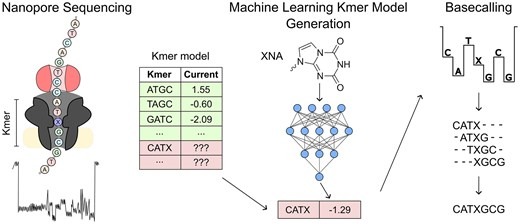
Structure-informed models that predict nanopore ionic current levels for expanded DNA alphabets (XNAs). We show how chemical structure + sequence context can help scale basecalling to new chemistries.
Check it out: https://t.co/WrXsVtQoAp
Finally out! Our de novo designed α-helix nanopore, a project that began back in 2016, is now published in @acsnano !
It was far more challenging to build than our β-barrel nanopores, but we finally made it. This work was led by @ZPeng_Scientist !
https://t.co/8f4b77PuLY
プレプリントが公開されました!ぜひご覧ください!
"Construction and characterization of a nanopore derived from the transmembrane domain of a trimeric autotransporter adhesin"
https://t.co/dJ4SyAoYIo
Our collaborative research on a genetically synthesized de novo nanopore for remodeling mitochondrial properties has just been posted on BioRxiv!
This was made possible through our wonderful collaboration with the Inoue lab at JHU!
Our long-term collaboration with @FurukawaG_Kyoto on a synthetic ion channel has now been completed as the 2nd generation. The 2nd generation has an enzyme responsibility, and is now open on ChemRxiv!
https://t.co/YM4PprE6Sq