Just off the phone with a mathematician friend who shared some profound insights into why it's hard to change deeply held beliefs:
In Bayesian statistics, beliefs are updated by multiplying two curves:
1. The **prior** (your current belief).
2. The **likelihood** (new evidence).
After normalization, the result becomes the **posterior** (your updated belief). Interestingly, numerous neuroscience studies suggest our brain might operate in a Bayesian manner, taking into account prior experiences and new sensory information to make predictions about the world.
Here's the nuance:
- Imagine your prior belief is strongly held and concentrated in one area, resembling a sharp peak on the belief curve. When new, contrasting evidence comes in, it might be so different from your existing belief that the brain treats it as ***noise*** and largely ignores it. The reason? When multiplying the two, "zero times something is still zero." (See examples). This means the contrasting evidence barely influences the original belief. If you repeatedly encounter such contrasting evidence, your belief remains largely unchanged due to its dominance.
- In contrast, if new evidence is closer to your prior belief and is introduced incrementally, each update nudges the belief curve slightly. Over time, these small shifts can cumulatively move your belief significantly.
This has implications for societal "mind viruses" (memes) or entrenched misconceptions: directly confronting them with drastically different truths might lead to those truths being continuously ignored. A more effective strategy might be to introduce corrective evidence in smaller, more digestible increments.
Thinking about this further it's essential to remember that beliefs aren't held in isolation; they interconnect and reinforce each other, creating a paradigm—an apparently stable conformation of individual beliefs. Shifting a critical mass of these beliefs can lead to a sudden state change in the overall paradigm, much like how proteins can fold into certain stable configurations. This means that while individual belief updates are incremental, when enough of them shift, the overarching paradigm might undergo a transformative change.
@johnincarlisle can you relate to this?
@RichDecibels Jordan Peterson has described sanity as being outsourced, meaning it's defined by social interaction. If you live in solely a weaponised information ecology, and you don't conform, you will feel like you're going insane. Hence the need to find like minded people
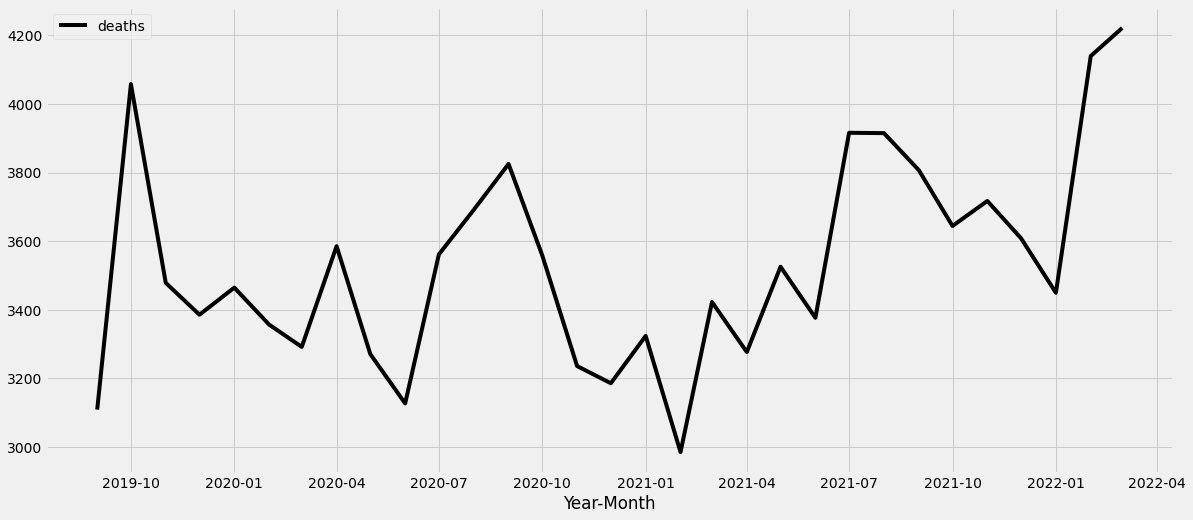
@risemelbourne definite uptrend from 2020 and 2021, though case rates did increase substantially from omicron in late 21. Monthly data of deaths in Victoria dates back to Sep 2019.
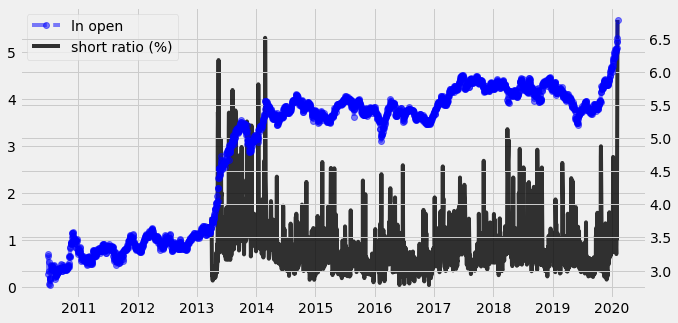
Short squeeze just getting started. $TSLA shorts as percentage of ~diluted shares* at all time high of 5.7%. Prev high of 5.3% on 2014-02-25. Sharp increase in the past few days (0.9%, 2.5%, 1.0%, 4.2%, 5.7%). *diluted shares extrapolated from Sep 2019.