Πολύτιμη η στήριξη των Υπουργών Υγείας @MichaelDamianos και Εργασίας και Κοινωνικών Ασφαλίσεων @Yiannis_Pan σε αυτό το σημαντικό πανευρωπαϊκό ερευνητικό πρόγραμμα.
The #SHAREdata release 9.0.0 is here! It comprises wave 9 data, a considerably larger wave 8 sample (due to refreshment samples), and the latest state of data cleaning and harmonisation across waves. You can register and access the data free of charge: https://t.co/8N7WBnU504
Hello from Cyprus! Great to meet colleagues from all country teams for the SHARE Wave 10 Post-Field Rehearsal Meeting. Thanks to our team from Cyprus for hosting us.
Great to have hosted the @SHARE_MEA meetings in Cyprus and thank the Minister of Labour Mr @Yiannis_Pan, the Minister of Health Mr Michael Damianos, @SofronClerides and Proff Andros Kourtellos for welcome speeches.
I'm proud to share that our work on distinguishing taste/ screening/ complementarity-related explanations for discrimination from productivity data has now been published at @RevEconStudies! I think it would be a great article to teach about discrimination.
12 Reasons Why Cities Need More Trees:
1. Temperature Control
One large tree is equivalent to 10 air conditioning units, and the shade they provide can reduce street temperature by more than 30%.
2. Noise Reduction
Trees can reduce loudness by up to 50%. In urban areas filled with the sound of cars, construction, sirens, aeroplanes, and music, trees are essentially the best way to block noise and keep cities — along with the homes and workplaces in them — quieter.
3. Air Purity
Trees remove an astonishing amount of harmful pollutants and toxins from the air. In urban areas air quality is often disastrously bad — with severe consequences for our health. Trees make the air we breathe much cleaner.
4. Oxygen
And, while absorbing all those pollutants, trees also put more oxygen back into the urban environment. Oxygen levels are significantly lower in cities compared to the countryside; trees help to solve that problem.
5. Water Management
Trees do more than just shelter us and our buildings from rain — which is, in fact, extremely important. They also absorb huge quantities of water, reduce run-off, neutralise the severity of flooding, and make flooding more unlikely altogether. Not to forget that their roots absorb pollutants and prevent them from feeding back into a city's water supply.
6. Psychological Health
Studies have proven what we instinctively know to be true: that human beings are significantly happier when surrounded by nature rather than sterile urban environments. Our emotions, behaviour, and thoughts are shaped by the places we spend time — and trees have a profoundly positive effect on our psychology. The consequential benefits of being happier and more peaceful — as individuals and as a society — are immense.
7. Physical Health
Beyond all the other ways in which trees improve air quality and the urban environment, much to the benefit of our health, they also encourage people to go outside. Cycling, running, and walking are all more common in urban areas with plenty of trees. A knock-on effect of people spending more time outdoors is also social integration and stronger communities.
8. Privacy
A simple point, but not inconsequential, is that trees provide privacy.
9. Economics
The total economic benefit of urban trees is hard to calculate. There are costs, of course, including the repair of infrastructure damaged by roots and maintaining the trees themselves. But the total economic benefit — a consequence of everything else in this list and more — far outweighs the expenditure. Trees make cities wealthier.
10. Wildlife
Trees are miniature cities all of their own, serving as a habitat for hundreds of different species, including birds and mammals and insects.
11. Light Pollution
Trees don't only block the light shining down, therefore keeping us and our cities cooler — they also disrupt light shining up, from street lighting, cars, houses, and billboards. Skies are clearer in cities with more trees.
12. Aesthetics
And, finally, trees are beautiful. They break up the potential monotony of urban environments — the sharp geometry, the greyscale roads and buildings, the endless rows of cars — with their trunks, boughs, canopies, and flowers.
Just think: the gold and red of falling leaves in autumn, the white and pink blossom of spring, the vast green canopies of summer, and the branches lined with hoar-frost in winter. Every single tree is a myriad of intricacy and texture, of colour and scent, of dappled light on the pavement, mottled bark, knotted roots, of clustered leaves and delicate petals and stern boughs.
Few streets would not be improved by the kaleidoscopic aesthetic delights of a tree, not to mention the many different species of tree, all over the world, whether willow, oak, lime, cherry, aspen, maple, birch, horse chestnut, dogwood, hornbeam, ash, sycamore... the list goes on.
There are some drawbacks to urban trees, most of them context-specific, and they are not — of course — universally appropriate. But it seems fair to say that many cities would benefit from at least a few more trees here and there.
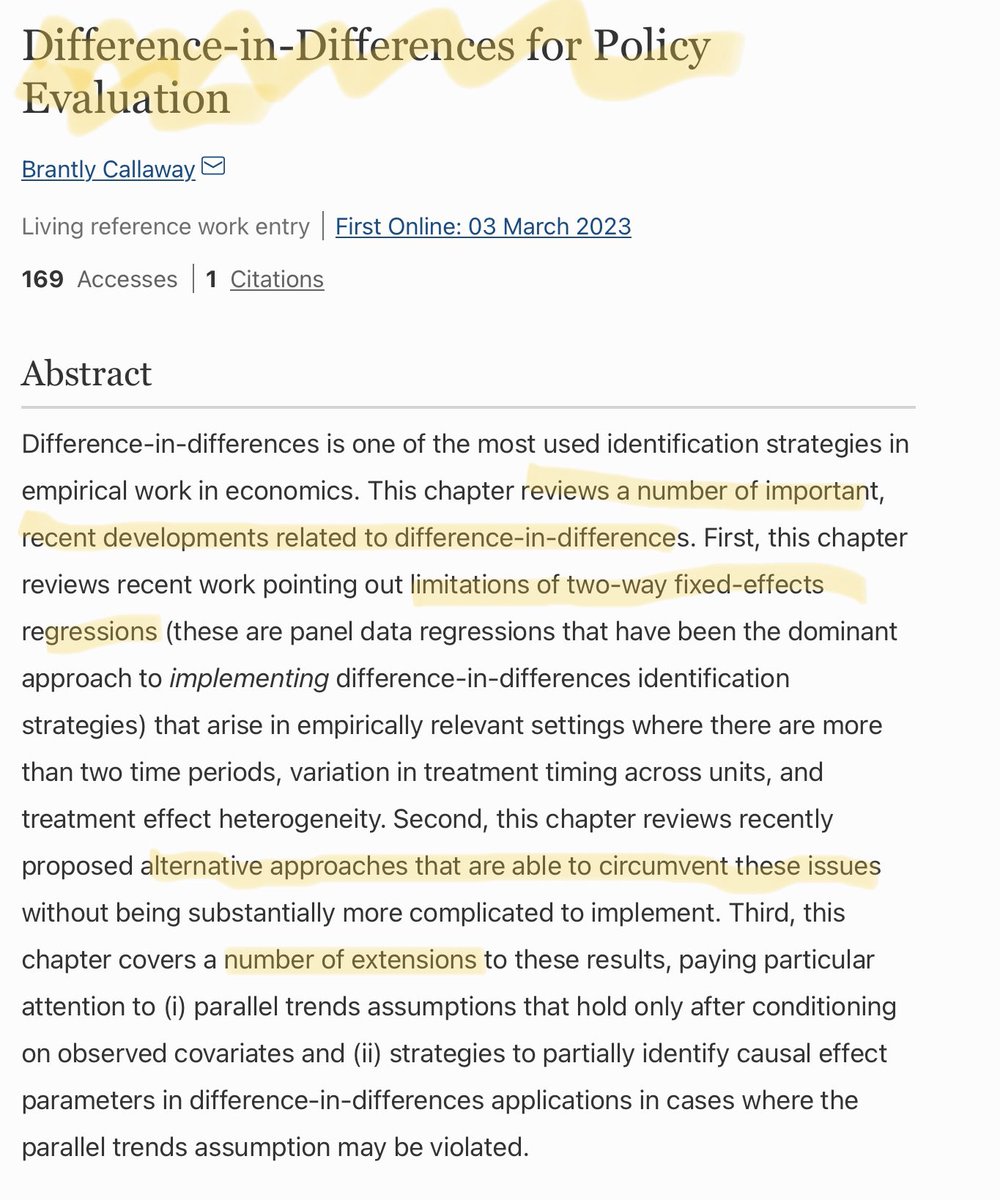
Our new handbook chapter w/ @metrics52 & @c_r_walt is now available online! Check out the latest in estimating institutional quality with quasi-experimental data: https://t.co/hUFVbTSW8R
Recently I have discussed how gender quotas work. Read here: https://t.co/kWkdPHGSHm. There is no empirical research on how different measures interact or work in different fields of studies, e.g. male- dominated or female-dominated. @NHHnor@Sevilla_Almu@RoyalEconSoc
🗞️Did you know that CReAM Director Christian Dustmann's first ever job was as a truck driver, covering routes all across Europe?
@UCLPolicyLab sat down with him to discuss how events and experiences have shaped his life and work. @EconUCL@RF_Berlin
https://t.co/kVL0NMsPG5
We are hiring pre-doctoral research associates @iza_bonn to join thriving teams at our locations in Bonn and Berlin! Please spread the word to those who might be interested. @predoc_org@econ_ra 🙏👉 https://t.co/EpaesqFMl0
Submission portal is now open for Labour Economics' Special Issue on "Economics of the Healthcare Workforce." Please share widely!
https://t.co/uJK4GBNjAp
@JoeMoscelli, @Osea82 & I are looking forward to your submissions!
@ashecon@EuHEA@healtheconomics@dggoe@HealthEcon_CU
So lucky to have found my academic home at@jku_econ. Now it's your chance:
❗️We are hiring a female full professor in Applied Microeconometrics❗️
⬇️⬇️⬇️