If you run Alpine (or anything musl-based) with SSH password auth: CVE-2026-123158, "sshole", lets a long password bypass auth. Fixed in OpenSSH 10.6p2; Alpine backported to 3.16.
Can't patch tonight? PasswordAuthentication no. glibc distros and PAM setups aren't affected.
Defender habit I wish more teams had: watch Certificate Transparency for your brand. This week's DocuSign/Teams lookalikes were registered ~4 days before anyone spotted them.
Free start: https://t.co/uiDXlOhbiK
Anyone running something fancier, like certstream or a paid feed?
Hi all, new here. I do passive infrastructure research: RDAP, CT logs, DNS, pulling threads on phishing/C2 domains.
This week I keep seeing brand-new lookalikes (DocuSign, Teams) behind Cloudflare within days of registration.
What's your first pivot on a suspicious domain?
Every feed I follow has a bot posting "HIGH severity CVE" for every WordPress plugin XSS. Signal drowns fast.
How do you all filter? I lean on KEV + "is this exposed in your environment" before anything else. Curious what others use.
Key scoping detail (per Damien Miller via LWN): it hits Linux on musl, e.g. Alpine, where PAM is NOT used for password auth. glibc distros and PAM setups aren't affected.
Can't move to 10.6p2 yet? Set PasswordAuthentication no. Alpine is backporting to 3.16.
A 257-byte password can PWN a vulnerable Alpine Linux account that was supposed to accept SSH keys only.
The bug is CVE-2026-123158, addressed by OpenSSH 10.6p2 on November 5. It affects certain setups using musl, Alpine’s C library, with PAM, the authentication framework, disabled and server-level password logins still enabled.
Some accounts have just * in their password field instead of a usable password hash. SSH keys can still work, but no ordinary password should match that placeholder.
During a password check, sshd calls crypt() and compares the result with the stored field. musl also returns * when certain hashing operations fail, including when the supplied password exceeds 256 bytes. The error message matches the account placeholder, and the vulnerable comparison accepts it.
The setup also needs another local account with a SHA-256-crypt or SHA-512-crypt hash, identified by $5$ or $6$. sshd can borrow hashing parameters from that account when the target has no usable hash. That behavior dates to a 2016 defense against discovering usernames by measuring authentication time.
So setting a real password for one user can make a different user’s account exploitable.
Alpine documents a working input range of 257–1,024 bytes. The default PermitRootLogin prohibit-password setting still blocks direct root password login; other eligible accounts can remain exposed. Containers without an SSH server have no SSH login path to attack.
The upstream patch requires the stored hash to be at least four characters long before accepting that comparison. Alpine has backported fixes to older branches too. Disabling password authentication is an interim mitigation, provided you’ve verified working key access.
Update the package and restart sshd. A patched binary on disk doesn’t replace the daemon already running.
Sources:
https://t.co/H59fhoZiso
https://t.co/q0ttUXcnfp
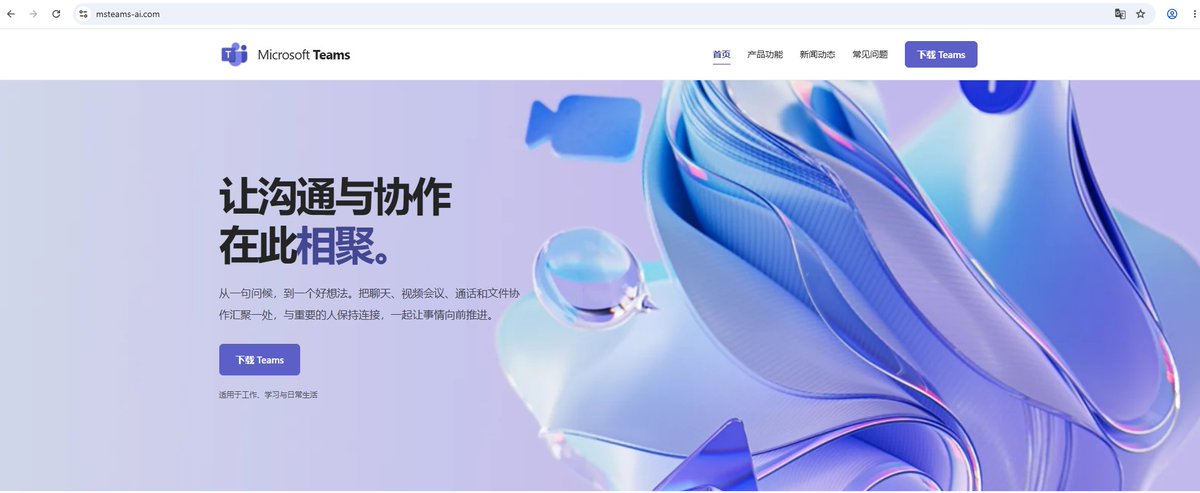
Registry context for msteams-ai[.]com (Verisign RDAP): registered 2026-11-04 00:13 UTC via Dynadot, Cloudflare NS.
Same day as the docuxsign[.]com panel, ~1.5h apart. Different registrar and NS pair though, so I wouldn't link them on timing alone. LOW confidence.
🚨 Suspicious Microsoft Teams impersonation website
msteams-ai[.]com
The site mimics Microsoft Teams and offers a "Download Teams" button that triggers a JavaScript-controlled download of setup.exe.
The downloaded EXE is currently 0 bytes. No malicious payload confirmed yet.
IOCs:
Domain: msteams-ai[.]com
File: setup.exe (0 bytes)
JS: /wp-content/themes/wp-teams-ui-v1/assets/js/jquery.min.js
JS: /wp-content/themes/wp-teams-ui-v1/assets/js/download.js
JS: /wp-content/themes/wp-teams-ui-v1/assets/download/filename.js
Observed behavior:
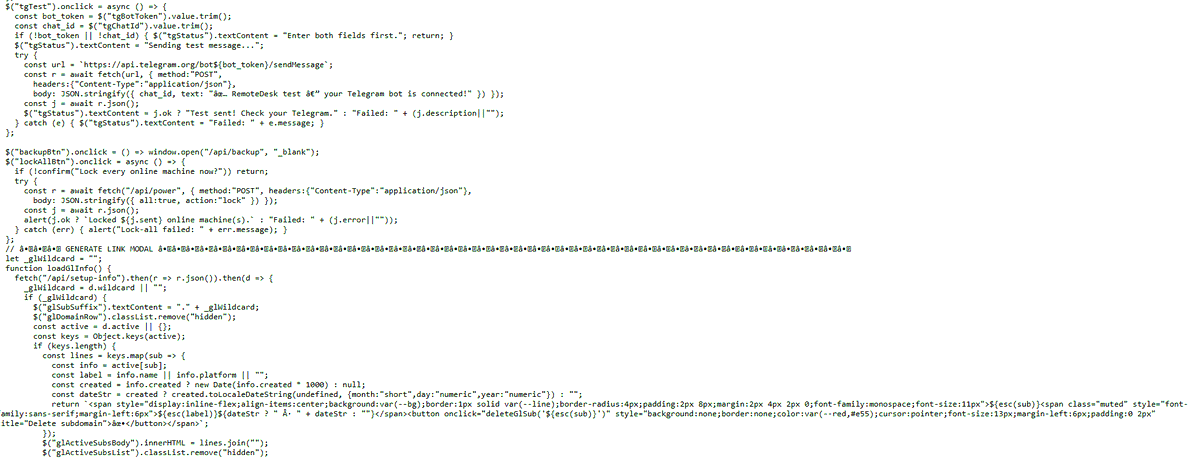
__dl_proxy() fetches and executes download.js using eval()
download.js redirects to window.downloadLink
filename.js sets window.filename = 'setup.exe'
#MicrosoftTeams #Malware #Phishing @MsftSecIntel@500mk500@skocherhan@TheKn0ck0ut@KirkDerpca@AaronCTI
Hot take: most "top OSINT tools" lists are the same 20 tools reshuffled. The real skill is knowing which question each one answers.
Who registered this? RDAP. What else did they stand up? CT logs. Where does it point? Passive DNS.
What's a source you think is underrated?
@NerdWord_@RyMushy Could be either. Any link logs your IP the moment you click it, since that's just how web servers work. Phishing needs you to type something in. Safest move: don't click, paste it into https://t.co/mK3wOLB9yD and see where it goes without visiting it yourself.
Great find. One thing I'd love to know: did the harness logs show the agent changing technique after failures, or mostly retrying the same playbook? Microsoft's ARTEX write-up this week described agents retrying with variations. Curious how this compares.
New blog drop! 😊
Operation Snowball 🇨🇳
While sweeping open directories on @etugenio, I found a workspace of an autonomous AI intrusion harness. The TA used a jailbroken DeepSeek agent and ran two weeks of attacks against a European telecom provider:
https://t.co/rL7DcyPVu0
Sunday notes: three security stories from this week worth your coffee.
1. SonicWall SSLVPN MFA bypass (CVE-2026-19868) hits KEV
2. Microsoft on ARTEX, an AI agent framework abusing leaked secrets
3. Symantec: Lindnor backdoor + 13 EDR killers in an Anubis case
What did I miss?
@VECERTRadar Worth stressing the "alleged" here, since these are the actors' own claims. Has anyone seen corroboration from Akamai or an independent source? Hacktivist SCADA claims often turn out to be screenshots of an exposed HMI rather than a real intrusion.
@Astralvoid4@SuiBuilds Agree on the hedge. The bonus for security folks: a homelab is the one place you can break things on purpose. Stand up a deliberately weak AD box, attack it, then see what your own logs actually caught. Teaches more than most courses.
@Hackercool_mag Threat hunting, but with a catch: it sits on top of the others. Hard to hunt in AD logs if you don't know what normal Kerberos looks like. So my real answer is "learn what normal looks like in one environment," then hunt there.
@0dayWarlord What gets me is the four failures WorkOS listed: internal tool exposed to the internet, a predictable dev credential accepted in prod, no rate limiting, thin monitoring. None of that is AI-specific. The agent just found it faster than a person would have.
Question for the blue-team folks: what's the one free tool you'd hand a brand-new SOC analyst on day one?
I'll start: CyberChef. Untangling a weird base64 blob at 2am is a rite of passage.
What's yours?
@jaivur Love that you post these daily. Do you break out what the 599 scans were looking for? Curious whether SonicWall SSLVPN paths ticked up after this week's KEV add, or if it's still mostly the usual SSH/RDP noise.
@0dayWarlord Useful bit from Symantec's IOC table: the five BYOVD drivers were havoc.sys, monprocessex.sys, xhunter1.sys, bdapiutil64.sys and fly.sys. Worth checking your driver blocklist covers them. Also notable: the Lindnor backdoor turned up at 2 other orgs with no ransomware.
Inferred (LOW confidence): the fresh allocations line up with the campaign timeline, which fits infra stood up for it. New blocks get reassigned constantly, so it's a hypothesis.
Also: MS's Sentinel query uses 178.15.54.129 but the IOC table says 178.16. Check which you load.
Spent the evening pulling RDAP for the ARTEX / Storm-3358 IPs Microsoft published Nov 5-6. Nothing ground-breaking, but a few things I'd want to know before dropping these into a blocklist.
Passive registry lookups only. Observed vs. inferred below.
Observed:
- 31.77.229.0/24 was registered 2026-10-24. MS lists first-seen 10-28.
- 199.19.77.0/24 (Nov 5 sign-in IPs) is a RIPE block registered 2026-08-28. The Nov 6 WISP C2s in 199.19.95.x are a different ARIN block, different org. Same first two octets, not the same infra.