Weeks like this are hard, where an unfortunate event is jumped on by opponents, creating yet another wave of FUD. Reality is that Ethereum is growing to global ubiquity, and the EF is in a net great position with its best strategy ever. ETH will dominate
Ethereum has been winning, is winning, and has never lost.
The most-used subprotocol or subchain by actual users is EVM-based. Every major wallet either supports ETH natively or is built entirely on EVM architecture.
Every chain that tried to compete failed to attract meaningful developer adoption. Algorand, Tezos, Polkadot - none crossed the threshold. Most “ETH killers” eventually found a single niche and settled: NEAR became a solid intent-based bridge layer, TRON became a USDT wallet. That’s not winning, that’s narrowing.
Cheap L2s never retained long-term users either. The pattern is always the same: airdrop announcement, usage spike, MEV bots flood in because gas is cheap, then silence. Base is a clean example of that cycle.
Ethereum sets the vision. Every fork and new proposal chases the EIP backlog because the entire infrastructure stack - Etherscan, Infura, Alchemy, Blockscout - standardized on EVM. Deviate from that standard and you’re on your own. That’s why deploying a forked contract to TRON is a nightmare, why Optimism shipped multiple broken hard forks chasing weird gas estimation edge cases, and why dapp developers refuse to write chains of if/else blocks just to handle behavioral differences across 10+ forked EVMs.
No one wants that complexity in their JavaScript. No wallet team wants to maintain it either.
Conform to EVM or get left behind. Ethereum didn’t enforce that rule - the ecosystem did.
They said photography wasn’t art.
They said cinema wasn’t art.
They said video games weren’t art.
Now they say AI arts/digital art isn’t art.
I’ve spent over a decade with my studio team turning millions of data points into living, breathing artwork experiences ethically — at MoMA, at the Guggenheim, at the Venice Biennale. Not because a machine told me what to create, but because I had a vision that no traditional tool could realize.
Denying all AI technologies as an artistic medium doesn’t protect art. It limits it. The artists who embrace new tools don’t replace the old masters — they join them.
Art is not defined by the brush. It’s defined by the intention, the emotion, and the courage to see the world differently.
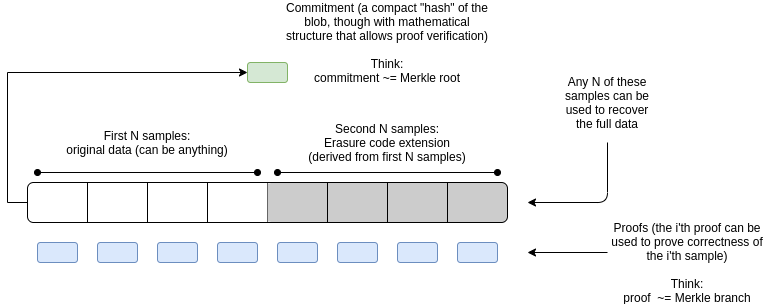
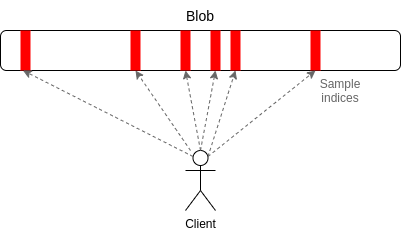
PeerDAS in Fusaka is significant because it literally is sharding.
Ethereum is coming to consensus on blocks without requiring any single node to see more than a tiny fraction of the data. And this is robust to 51% attacks - it's client-side probabilistic verification, not validator voting.
Sharding has been a dream for Ethereum since 2015 , and data availability sampling since 2017 ( https://t.co/Fa0jKFgObW ), and now we have it.
That said, there are three ways that the sharding in Fusaka is incomplete:
* We can process O(c^2) transactions (where c is the per-node compute) on L2s, but not on the ethereum L1. If we want to scaling to benefit the ethereum L1 as well, beyond what we can get by constant-factor upgrades like BAL and ePBS, we need mature ZK-EVMs.
* The proposer/builder bottleneck. Today, the builder needs to have the whole data and build the whole block. It would be amazing to have distributed block building.
* We don't have a sharded mempool. We still need that.
But even still, this is a fundamental step forward in blockchain design. The next two years will give us time to refine the PeerDAS mechanism, carefully increase its scale while we continue to ensure its stability, use it to scale L2s, and then when ZK-EVMs are mature, turn it inwards to scale ethereum L1 gas as well.
Big congrats to the Ethereum researchers and core devs who worked hard for years to make this happen.
0/ the biggest ethereum upgrade since the merge is coming.
and this time, you’ll feel it.
it’s called pectra and here’s why it matters
a guest thread by @binji_x ↓