#Europe cannot patent its way out of the carbon trap. Imandojemu, Orole and Chukwuka argue in Sustainable Development that #green#innovation only breaks fossil inertia when paired with deep industrial restructuring and capital renewal.
https://t.co/cVD5e7J73C
Capital travels easily. Institutional competence does not. David A Wolfe, writing in @RegionalStudies, argues that lasting renewal & #development rests on shared strategy, trusted intermediaries and habits of cooperation. https://t.co/TSfpsfcaAD
Industrial policy is back. Yet pouring capital into weak institutional settings is a triumph of hope over experience.
In my SERIES paper, I argue that the returns on state-led development hinge entirely on #government quality. Money cannot buy competence.
https://t.co/R9lPMUAYXg
#Europe's next budget gets the diagnosis largely right; the treatment is another matter.
In GC&RS, @f_bartalucci & I show how a reform meant to strengthen the #EU risks leaving it less inclusive, less legitimate & democratic and more fragile.
https://t.co/oNQvNo8KNU
Is AI an economic equalizer across Europe, or is it widening the regional divide?🌍 Our new open-access paper in Regional Studies maps the spatial geography of AI across EU NUTS2 regions using a multi-dimensional framework.
Here is what we discovered: 👇
https://t.co/hL1RiOQUWZ
Regional futures are not relics of the past. They are political projects, made through voice, memory and choice.
Farooq and @jolly_suyash show in their new @RSRS_OA paper why studying escape from #development traps matters as much as explaining lock-in. https://t.co/18D4UMpGTZ
A true #CircularEconomy cannot be built by decree. It requires rules that bite and local #trust.
A new European Economic Review article by @dbuyukyazici, Brossard & Boschma reveals that regional #institutions form the infrastructure of a sustainable future
https://t.co/I1xi5dfEsT
#Industrial policy has returned in fine clothes: green missions, digital transitions. However, as I argue in SERIEs, whether it works will not depend on money alone. A successful policy requires effective institutions. Otherwise, grand ambitions will fail.
https://t.co/R9lPMUAYXg
Europe cannot compete by chasing America's #AI, China's #batteries or Taiwan's chips.
Its strength lies in transforming what it has. In GC&RS, @f_bartalucci & I argue that chasing ghosts abroad is both inefficient & a stress test of the #EU's legitimacy
https://t.co/oNQvNo8KNU
Industrial policy is back, greener and better funded.
In my new article in SERIEs, I argue that its fate turns less on bold spending than on solid #institutions and #governance.
Poor governance quality will make any grand #strategy a leaky bucket.
https://t.co/R9lPMUAYXg
#yapayzeka nin isgücü piyasası etkileri Türkiye'de sanılanın çok altında. SGK verisi kullanarak yaptığımız analizde çalışanların ancak %5'inin etkilenebilecegini gösteriyoruz. YZ maruziyet tanımını biraz geniş tutarsak da %17. AB ve Amerika için yapılan tahminlerin epey altında.
Meeting, talking, and sharing ideas with colleagues was an incredibly motivating and inspiring experience. Many thanks to the local organizing committee who made this wonderful conference possible, especially Erja Kettunen-Matilainen and Eva Kiss, for their effort and dedication.
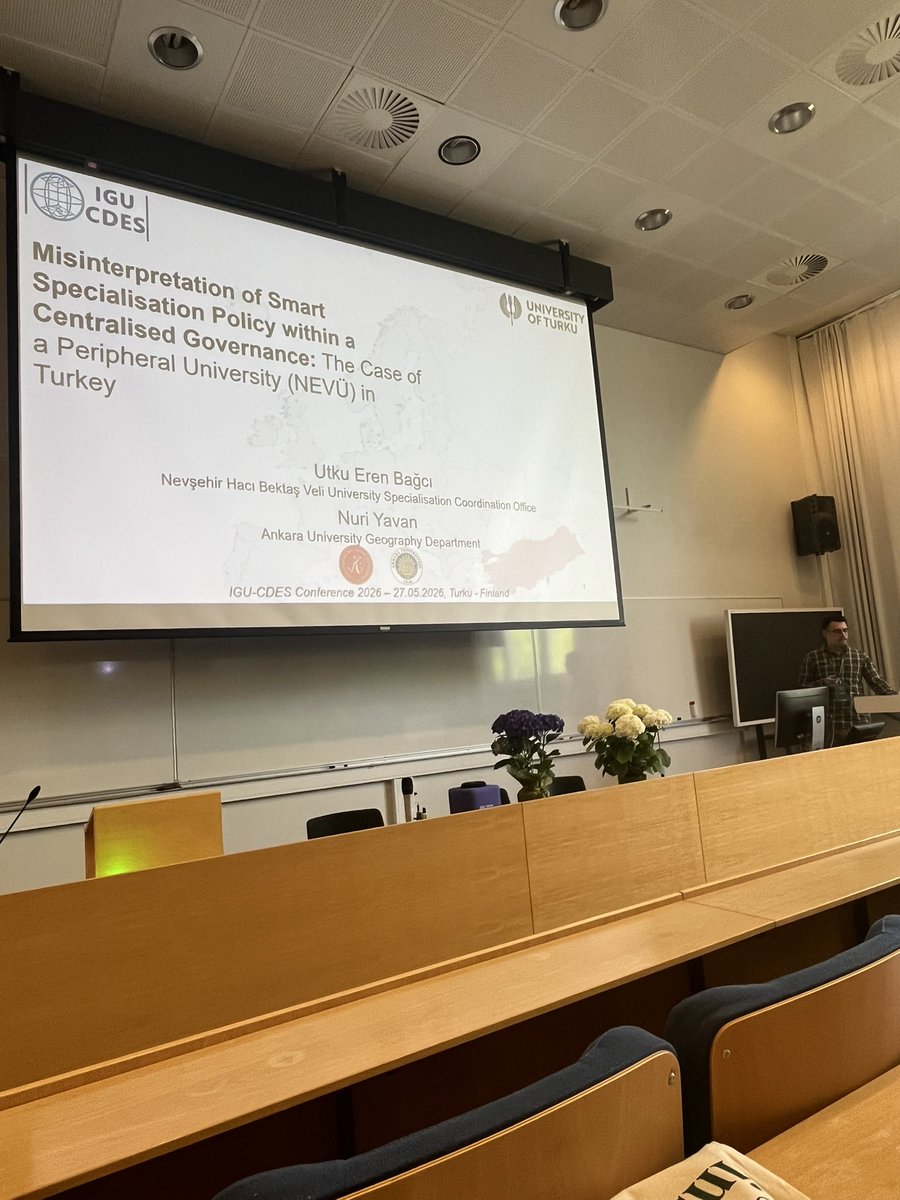
As I do every year, I was in #Turku, #Finland, for the IGU CDES 2026 annual conference. IGU Commission on the Dynamics of Economic Spaces (IGU CDES), which has been bringing together economic geographers from around the world since 1970, held this year’s conference in Turku.
I presented two papers: one with Utku Eren Bağcı “Misinterpretation of Smart Specialization Policy within a Centralized Governance” and another co-authored with Hasan Canbulat and Mehmet Cansız “The Mobility Patterns of the Creative Class: A Case Study of Turkish R&D Employees”.
Norway is reversing its mistaken 2016 decision to give every student an iPad, which damaged education immediately. Many countries are going back to books and handwriting. I hope many American schools will go back to analog next September, and let's see if that works for us too:
Son yıllarda sanayi politikası yani devletin başta teşvikler olmak üzere diğer araçlarla ekonomiye giderek artan stratejik müdahalesi bir norm haline geldi ve bu durum “sanayi politikasının geri dönüşü” olarak adlandırılıyor.
https://t.co/dUk7Om7Muh @OECD_Local
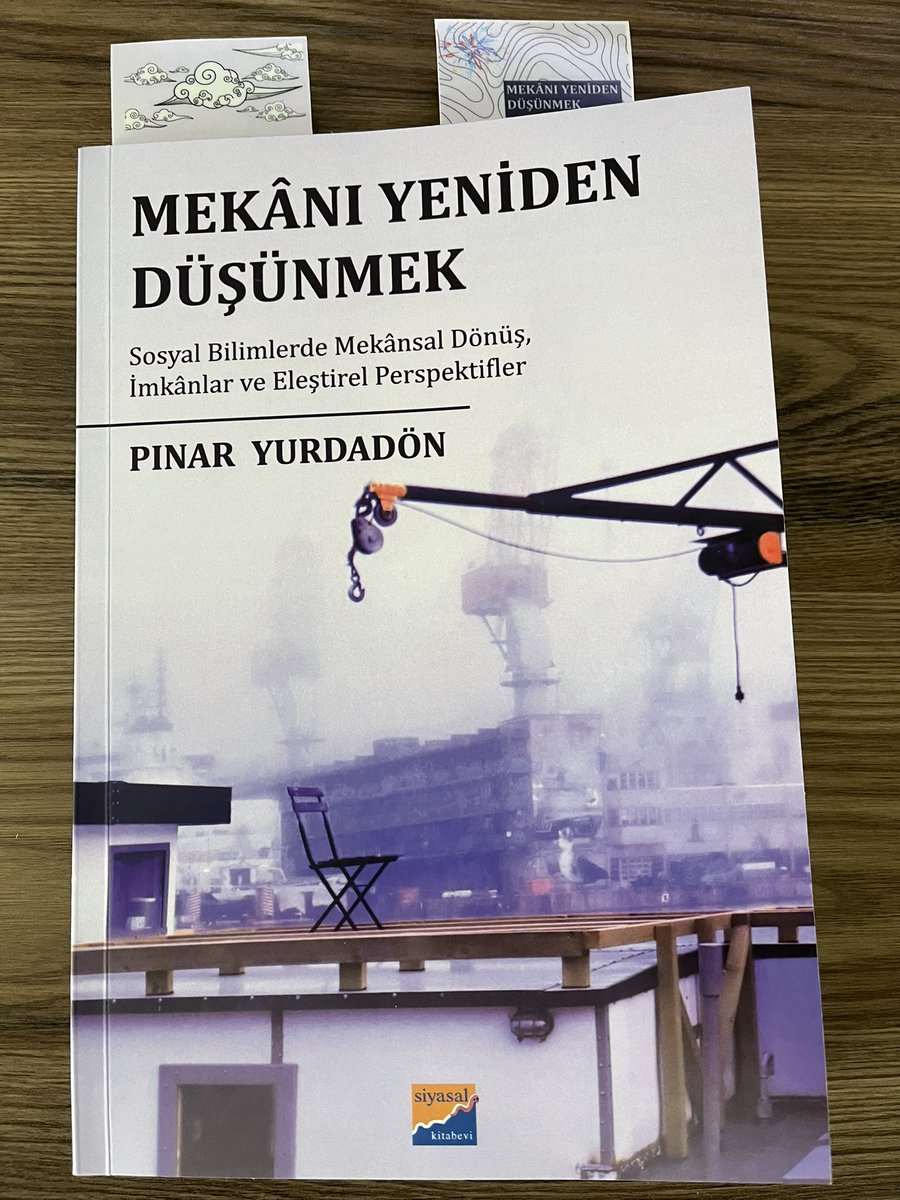
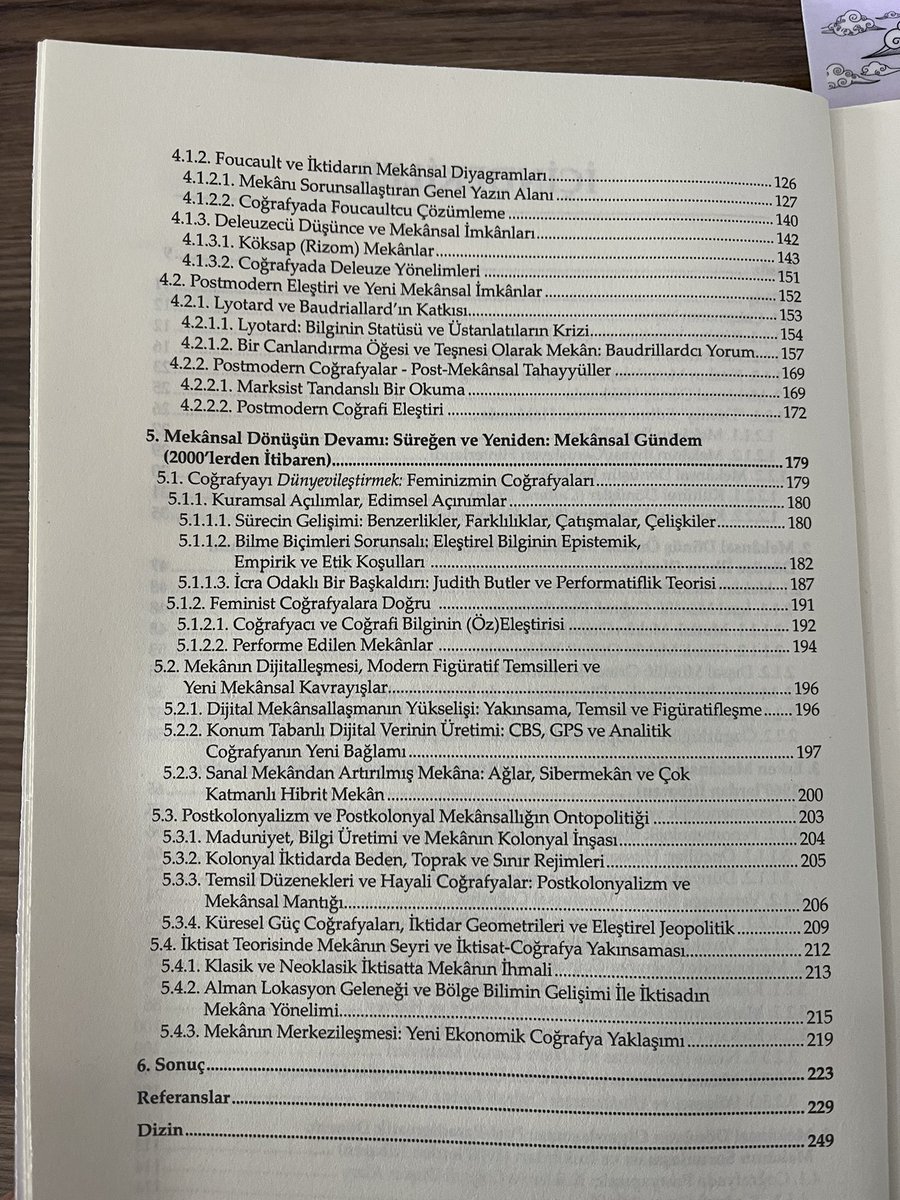
Pınar’ın “mekanı yeniden düşünmek” adlı bu kitabının bir başlangıç olduğunu düşünüyorum, onun uzun yıllar mekan ve coğrafya üstüne nice yeni eserler üreteceğine inanıyorum.
Doktora öğrencim sevgili Pınar Yurdadön tarafından hazırlanan “Mekanı Yeniden Düşünmek” adlı bu kitap, uzun yıllardır üstüne düşündüğümüz ve birlikte çalıştığımız “mekan” ve sosyal bilimlerde “mekansal dönüş” konusunu ele alıyor.
Sevgili Pınar, dün her zamanki inceliği ve samimiyeti ile uzun derin sohbetimiz sonucunda yayınladığı kitabını takdim etti, kendisiyle gurur duydum, insanın böyle doktora öğrencileri olması büyük bir mutluluk.