@ola_supports Hi Team, this is to report your driver's incorrect behaviour. He charged me more (700) instead of estimated (435). Please take action. I have Dm'ed you the details of ride and driver..
@RailMinIndia@indianrail@AshwiniVaishnaw My family is travelling in 22498 - Humsafar express. It's been more than 12 hours since they started their journey..Air Condition has not been working in train since the beginning. No action taken after raising complains. Kindly help.
@RailwaySeva@drmbikaner I sent you the details via DM. Please respond and help at the earliest. They have raised complain on 139 as well but still no response/help.
@IRCTCofficial@PiyushGoyal@AshwiniVaishnaw My family is travelling in 22498 - Humsafar express. It's been more than 12 hours since they started their journey..Air Condition has not been working in train since the beginning. No action taken after raising complains. Kindly help.
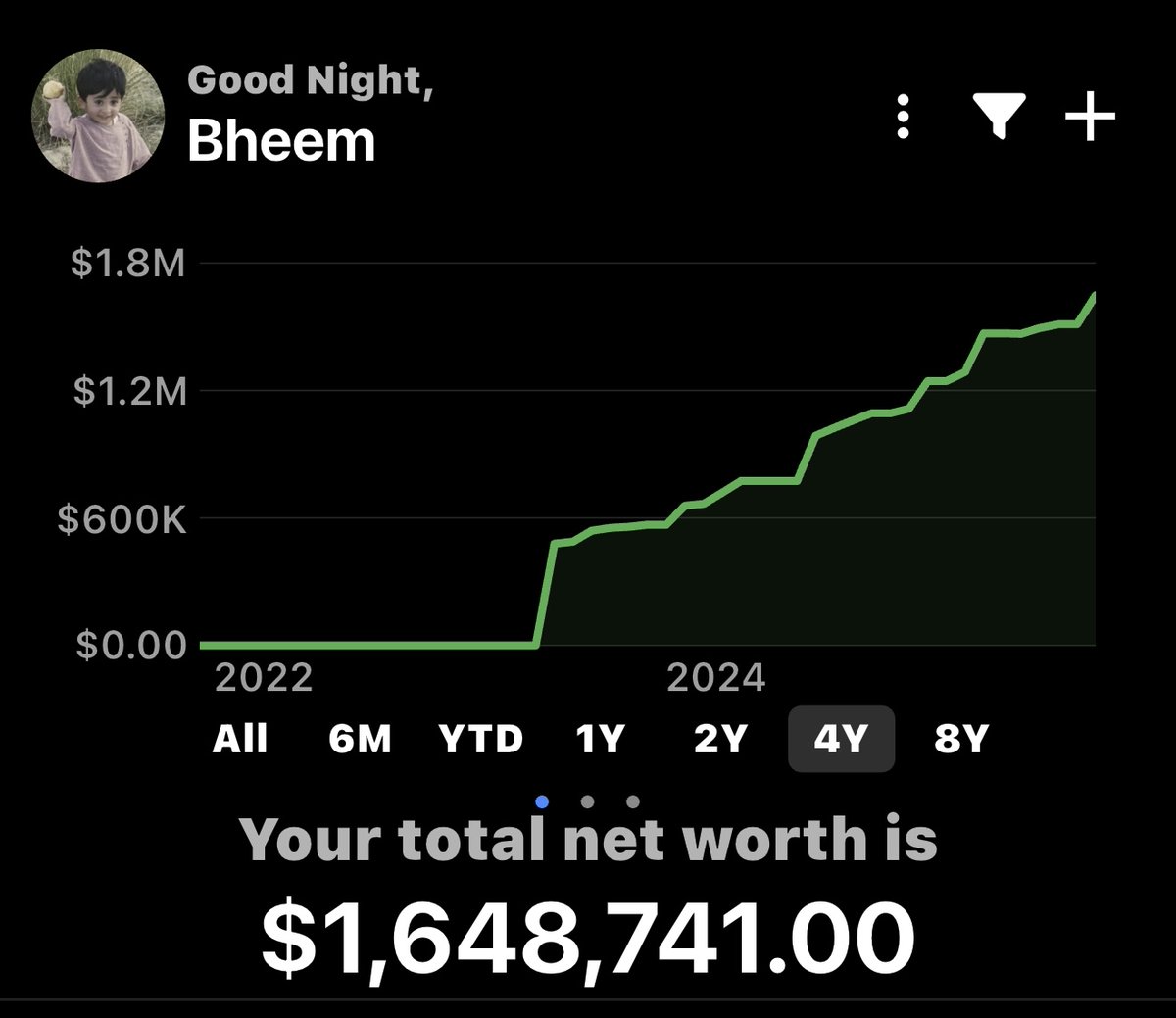
From $1,000 to $1,000,000: A Guide to Strategic Compounding📕
This guide will explore the fundamental principles of compounding gains while simultaneously minimizing losses, a crucial skill for long-term success in trading.
In this comprehensive thread, I will present and detail the 12 entry models that I personally used on a daily basis. These strategies were key to my journey as a spot markets day trader, enabling me to grow my initial capital to over one million dollars, all without the use of leverage or exposure to high-risk, volatile assets🧵
How Token Prices Are Truly Determined (And Why You’ve Been Looking at it Wrong)
Not by market cap.
Not by number of holders.
Not even by just supply and demand.
It’s something far more mathematical and manipulated than people realize.
1. Price on DEX = Function of Liquidity Pool Ratio, Not Just Buyers and Sellers
Most crypto tokens are launched and traded via automated market makers (AMMs) like Uniswap or PancakeSwap.
Here, price is calculated based on the ratio of the token to the base pair (like ETH or USDT) in the pool, using the constant product formula: x * y = k (where x = token amount, y = base pair, and k is constant)
If you add just $1,000 of ETH to a small-cap pool, and remove $1,000 worth of the token, the price changes massively even if no real demand exists.
2. Price Manipulation via Low Liquidity
Most tokens are launched intentionally with extremely low liquidity (e.g., $10K–$50K) because small capital can push the price up 10x to 100x easily by playing with the AMM curve.
👉 That’s why many founders or insiders buy from themselves (looping trades through alternate wallets) to artificially inflate the price before dumping on real buyers.
3. Fake Market Cap = Fake Price Confidence
You’ll often see tokens with “$100M market cap,” but here’s the dirty secret:
📌 Market cap = Circulating supply × Current price
But… what if only 1% of supply is in circulation, and the rest is locked?
Then the price is not real, because it reflects an illiquid supply at a manipulated price.
If even 5–10% of that supply unlocks, price crashes instantly.
4. CEX Price ≠ Real Price
Centralized exchanges don’t always sync with DEX prices in real time.
Often, token teams feed liquidity from DEX to CEX at inflated prices so new users buy at a premium. This creates arbitrage windows and a fake illusion of price support.
⚠️ On many low-volume CEXs, founders can even spoof order books.
5. Token Vesting Schedules Crush Price Later
Early investors and insiders often receive tokens at fractions of the public price but locked under vesting contracts.
⏱ When these unlock:
They dump, no matter the fundamentals.
This unlock schedule becomes a ticking time bomb, and the market structure is usually too weak to absorb the supply.
Even if price is rising, insiders dump into the pump.
6. Social Momentum Controls Short-Term Price More Than Utility
Most people think utility drives token value.
Reality: Narratives and attention do.
Even trash tokens with zero use case can pump 10–100x if influencers, whales, or meme momentum aligns.
This creates a feedback loop:
Price pumps → more eyes → more buyers → price pumps again → crash.
7. True Price = Liquidity Depth × Buyer Intent × Tokenomics Risk
The actual price resilience of any token is a mix of:
📈 Depth of liquidity (Can it absorb large buys/sells?)
🧠 Buyer intent (Are they investors or speculators?)
⚖️ Tokenomics risk (How much supply is locked, vested, or controlled by insiders?)
Even a $1M token can crash to $100K overnight if liquidity is thin and insiders dump.
Key takeaway;
The real price of a token is not what you see on the chart.
It’s what someone is willing and able to pay, across time, across venues, and against the backdrop of token unlocks, liquidity traps, and engineered hype.
Most tokens are engineered like penny stocks, and the “price” is the output of a formula that favors insiders not a true market reflection.
@BitGo@sunil_trades Just wanted to know how many hours it will take to settle it ? The trade executed on 7:50 pm IST is not settled yet. It's been more than 4 hours. Could you please DM..?