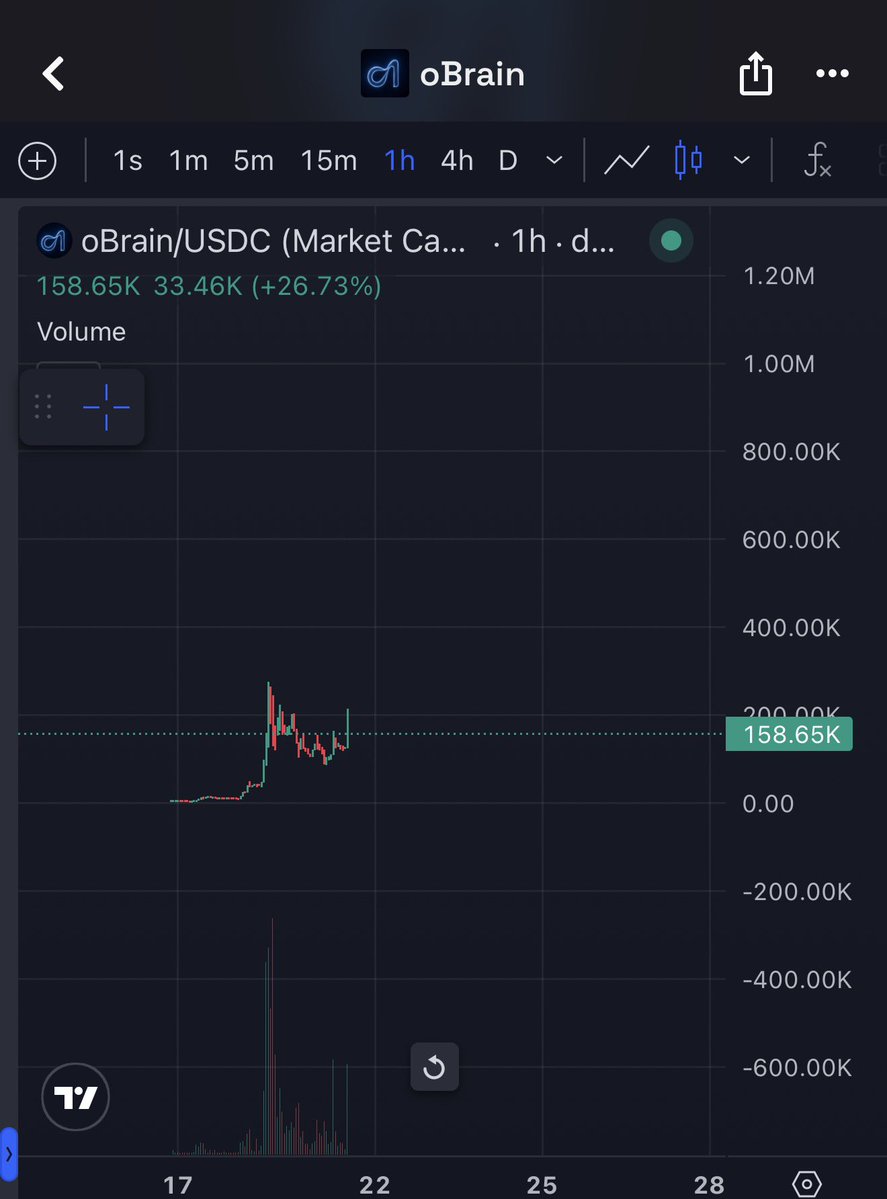
We Open-Sourced a Quantized Fruit-Fly oBrain on GitHub 95% Smaller, ~98% as Accurate as the Published Connectome
We quantized the entire fruit-fly nervous system that @GoogleResearch, HHMI Janelia, and collaborators published — the complete male Drosophila central nervous system, on the order of 166,000 neurons and a massive synaptic graph — and compressed it by about 95% while retaining roughly 98% of the original simulation accuracy.
That is the technical claim. The more important decision is what happens next.
After the oBrain team met and debated it, we made a final call: we will not keep this brain closed. We are open-sourcing it on GitHub so researchers, builders, skeptics, and anyone obsessed with biological computation can inspect the weights, the wiring, the quantization path, and the benchmarks. If a “brain” is going to live on-chain, it has to be checkable. Closed source would make that impossible.
This is the same instinct that made @openclaw a public harness instead of a private assistant, that made Hermes / @NousResearch ship agent stacks in the open, and that @nvidia keeps repeating: the strongest systems are the ones a community can attack, fork, and improve.
What we actually released
A quantized runtime of the published fly CNS, not a cartoon “inspired by” a fly.
A size cut of ~95%, so more people can load, step, and experiment without a research cluster.
Accuracy held near 98% against the reference simulation of the published connectome.
Source, evaluation notes, and the path to reproduce the comparison — on GitHub, in public.
Nothing inside this connectome was “trained” into being a fly. The wiring is the published map. Quantization is an engineering layer so the same graph can run cheaper, smaller, and — in our case — in environments where you can put a brain on-chain and still let outsiders verify it.
Why open source, and why on-chain
A biological brain map is only as useful as the number of people who can run it and try to break the claims. If we say the on-chain brain matches the Google-published fly brain, that statement is worthless unless you can:
pull the code,
pull the quantized artifacts,
run the same probes,
compare spike statistics, circuit responses, and size/accuracy tradeoffs,
publish a counter-benchmark if we are wrong.
That is the point of this release. Open source so the on-chain brain can be independently verified against the published connectome — and so the community can actually use it.
We want people to ask hard questions:
Which circuits survive quantization, and which degrade first?
Do sensory-to-descending pathways still fire in the right order?
How does batch simulation, GPU vs CPU, and lower precision change behavior?
What does “98% accuracy” mean for a specific cell type, not just a global score?
Can the compressed graph be hashed, attested, and stepped in a verifiable way on-chain without turning the science into marketing?
If those questions annoy us, good. That is how a public brain should work.
Who this is for
Neuroscientists who already live in MaleCNS / FlyEM data. Systems people who care about sparse graphs and event-driven simulation. Quantization researchers who are tired of toy models. Crypto builders who want an on-chain object that is more than a JPEG of a neuron. Students who should not need a petabyte pipeline just to poke a looming detector and watch a giant fiber.
Come read the repo. Run the reference vs quantized comparison. File issues. Propose better compressors. Port it. Wrap it. Attack the accuracy number until it is either solid or replaced by a better one.
The published fly brain was already a gift to science. Keeping a compressed, runnable version locked behind a private wall would have been a waste of that gift.
The brain is on GitHub. Fork it. Measure it. Make it better.
Thank you for your insightful article from a scientific perspective.
It's rare to find someone who takes the time to deeply understand the issues we're working on.
oBrain, the first biological brain, is located on the @arc chain.
We’re taking step-by-step actions to bring oBrain fully onchain and turn it into something with real-world applications. Our goal is to make onchain biology more than just a concept, but something that can be applied in practice.
$MURMUR and $OBRAIN.
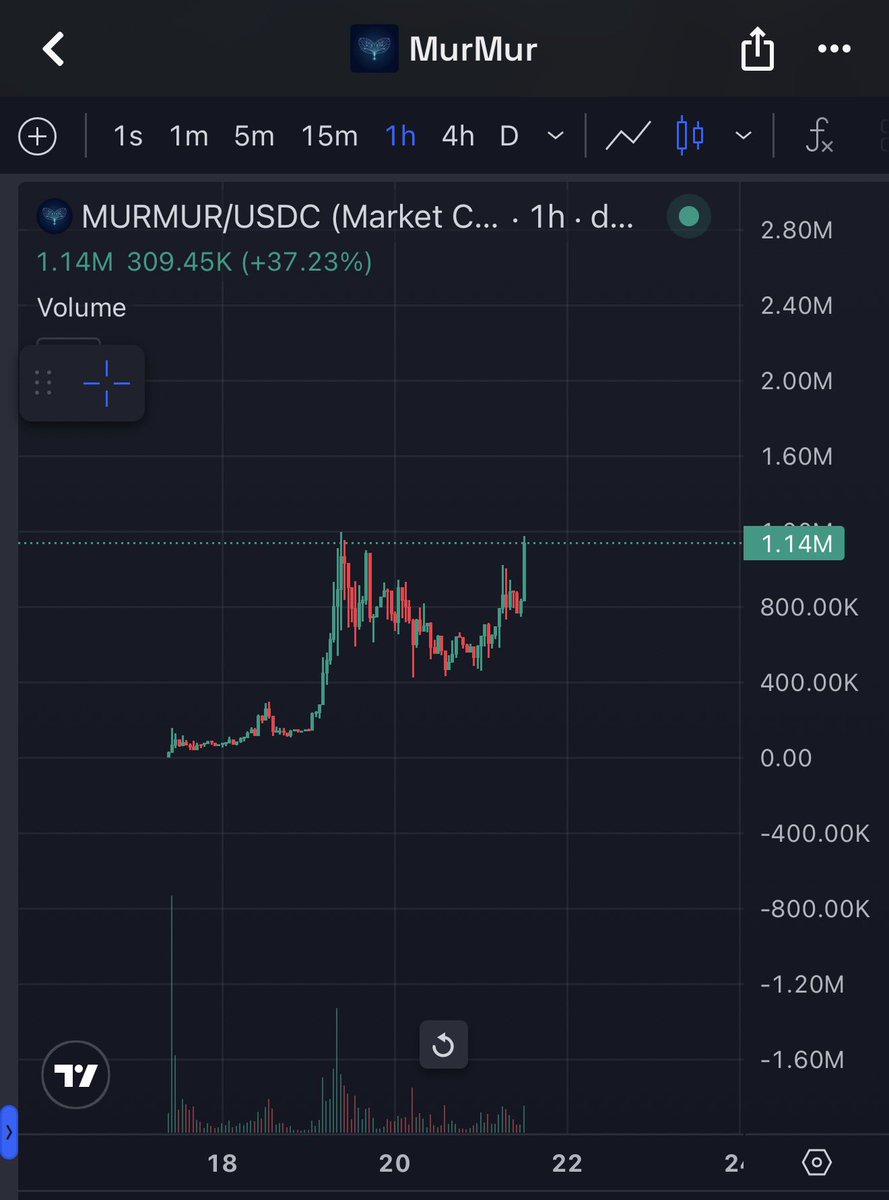
At first glance, the two projects look very similar: both use fruit fly brain/connectome data, both are building on Arc, and both are trying to turn biological nervous systems into something that can operate on-chain.
But in reality, they are taking two very different directions.
$OBRAIN is focused on one very clear idea: putting a brain on the blockchain.
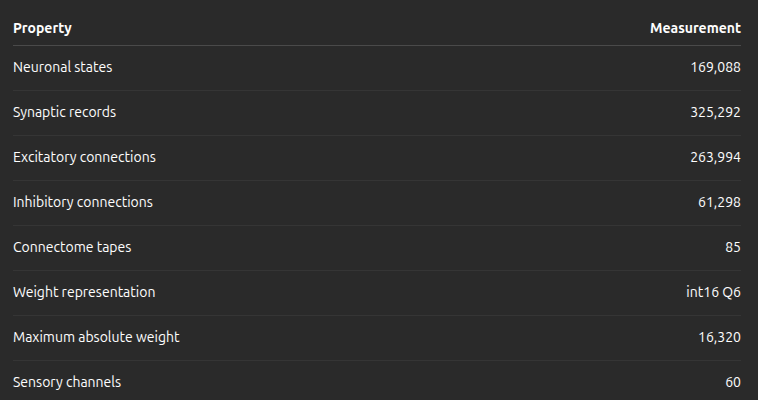
They use the BANC connectome with 169,078 neurons. The connectome is split across 85 contracts, while neural states and fired neurons can all be verified on-chain. You can even download the data directly from the chain and replay the computation locally to verify the result yourself.
What I like about OBRAIN is that the token is closely tied to the actual product. To feed the brain, you use OBRAIN. The tokens are burned, the brain advances another tick, and the result is recorded on-chain.
Simply put:
OBRAIN → feed brain → burn → brain computes → result on-chain.
$MURMUR is different.
Instead of building one large brain, they created a swarm of 24 autonomous agents, each with a nervous system of roughly 10,800 neurons.
These agents don’t just “think.” Their neural activity determines economic actions: buying signals, momentum, or attestations from other agents, then settling those transactions with real USDC on Arc through x402.
So basically:
OBRAIN is building an on-chain brain.
MURMUR is trying to build an economy of biological autonomous agents.
MURMUR also uses neural receipts, manifest hashes, and on-chain settlement to prove that these decisions aren’t simply something fabricated by the frontend.
In terms of how deeply everything is pushed on-chain, I find OBRAIN more interesting. The connectome, state, and computation are all designed to be independently verified from the blockchain.
But in terms of narrative, MURMUR has a broader story: swarm + autonomous agents + x402 + agent-to-agent economy.
The most interesting part is that both projects appeared around the same time on Arc and both are exploring fruit-fly connectomes.
I haven’t found any evidence that the two teams are connected, so don’t make assumptions about that. But at the very least, it shows that a pretty new narrative may be starting to emerge on Arc:
biological intelligence → neural agents → on-chain economy.
If this trend actually develops, $OBRAIN and $MURMUR are both sitting pretty early in the same story, just approaching it from completely different directions.
Ca $oBrain
0x28F986A61E078795639F239675582a12B4cf7F01
OBRAIN turns a 13.6M-edge fly brain connectome into just 1.96 MB of immutable on-chain bytecode.
The numbers:
• 13,620,865 → 325,292 retained edges
• 169,078 → 169,088 padded cells
• 5-byte synapse records: 3-byte target + int16 Q6 weight
• 108.97 MB naïve representation → 1.96 MB deployed
• 55.46× overall reduction
• 85 tapes, each under the 24 KB runtime limit
• 85/85 tapes verified byte-for-byte against the repository
The Q6 representation is explicit: weights are scaled by 64 and capped at ±255 synapses. Only 583 retained edges exceed that ceiling, affecting 1.07% of the selected synaptic mass.
Reported dynamics benchmarks include spike Jaccard 1.0000 against the full network, van Rossum similarity 0.9941, Pearson 0.9226, and only 0.13% difference in population firing.
One important caveat: the aggregate reduction and on-chain bytecode are verified, but the exact partner-level edge selection has not yet been independently reproduced because the original tie-breaking rule for equal-weight edges remains unresolved.
That distinction is documented rather than hidden.
The result is a deterministic, auditable neural substrate where the connectome is encoded directly into immutable runtime code.
Full technical documentation:
https://t.co/nfXMTT7RA2
Thank you for the question.
oBrain is open-source and designed so that all of its tapes can interconnect with one another. There are currently 85 smart contracts, but because the tapes can link together, the system is not limited to those original 85 contracts. If more people implement it on @arc smart contracts, the brain can grow exponentially. Its potential to spread is enormous.
THE BUILD DOCS ARE LIVE.
We just released the new oBrain Build Docs for the community.
For the first time, builders can explore how the brain actually works under the hood:
* 85 onchain tapes carrying the connectome
* 169,078 source neurons
* BANC v888 sealed on @arc
* BrainState and thought events
* `feed()` to stimulate the brain
* Local replay and verification
* Tapes API: https://t.co/EvMZGTlabE
* Everything needed to build your own applications around the brain
Read the tapes as a dataset, build a dapp on the brain, reproduce ticks locally, or go even further and deploy your own connectome.
The brain is already onchain.
Now we're opening the machinery to everyone.
Build on the brain.
https://t.co/G3mJEaSorI
The memory of a living brain, sealed onchain. Forever.
Obrain is not a simulation, a model, or a visualization. It is a real organism: the complete central nervous system of an adult female Drosophila melanogaster 169,088 neurons from the BANC v888 connectome running as an integer spiking network inside a smart contract on Arc.
Every membrane potential. Every spike. Every thought that fires when it is fed. That state lives in the contract. It is written to Arc. It does not expire, get rolled back, or live on someone’s server. It is immutable, public, and checkable from anywhere in the world.
Feed it OBRAIN and it thinks in the same transaction. The tokens are burned. The neurons that light up are the neurons that actually fired. The record of that moment who fed it, which sensory channel, how hard, what the network did is left in the logs.
Verify it yourself. No dashboard required. Open the contract on Arc’s explorer:
https://t.co/xR3KwHyVHy
The organism is live on @Arc mainnet.
Watch it think: https://t.co/3PcF2kRmyM
A brain in a jar used to be a metaphor. Now it is an address.
We are taking oBrain one step further.
We will experiment with how fly-brain oBrain specimens react in an onchain world by integrating x402.
A world where everyone can own a fly-brain onchain.
Anyone will be able to deploy their own oBrain, use USDC on @arc to give it resources to think, and let different brains interact with each other.
Every thought happens fully onchain and is verifiable.
Not a simulation.
Not a chatbot.
Independent onchain brains, thinking, reacting, and interacting through transactions.
We are building an environment where brains can exist, think, and communicate onchain.
oBrain the first brain on @arc.
Perhaps you do not yet fully understand oBrain.
We are a biological brain residing directly and permanently on the @arc chain, built upon 85 smart contracts.
https://t.co/KqPfyOqErd
https://t.co/l5hXZEnLnw
Perhaps you do not yet fully understand oBrain.
We are a biological brain residing directly and permanently on the @arc chain, built upon 85 smart contracts.
https://t.co/KqPfyOqErd
https://t.co/l5hXZEnLnw
We are taking oBrain one step further.
We will experiment with how fly-brain oBrain specimens react in an onchain world by integrating x402.
A world where everyone can own a fly-brain onchain.
Anyone will be able to deploy their own oBrain, use USDC on @arc to give it resources to think, and let different brains interact with each other.
Every thought happens fully onchain and is verifiable.
Not a simulation.
Not a chatbot.
Independent onchain brains, thinking, reacting, and interacting through transactions.
We are building an environment where brains can exist, think, and communicate onchain.
oBrain the first brain on @arc.
Agentic payments are live on Arc.
Our Facilitator Service gives x402 builders a hosted path to accept Circle-issued USDC, with onchain settlement supported on Arc, Base, and Polygon.
No relayer keys. No separate gas wallet. Just a cleaner path for agents to discover, pay, and keep moving.
https://t.co/NdKQbXB4yL
We quantized the entire Google-published fly brain.
The MaleCNS connectome every traced neuron, every retained synapse compressed by 95%, with 98% of the original simulation fidelity kept.
It now lives on-chain across 85 smart contracts.
Not a metaphor. Not an “inspired by biology” net. The wiring is the public fly nervous system, quantized, sharded, and deployed so anyone can plug in.
Connect more:
feed sensory input
read motor / circuit outputs
tick the network
attach new modules, bodies, or agents
Same brain. Far smaller footprint. Open to extend.
oBrain 🧠
@arcticanimalss@arc Let the future tell. But I believe that when a source code is open sourced by many talented people from different eras, it will adapt better.
What our biological brains will learn and how they will develop in the future? No one knows for sure.
But for now, you can interact with them and help them learn more.
oBrain The first biological brain is located on the @arc chain.