“De Europeanen staan op het punt om binnen zeer korte tijd wakker te worden in een verschrikkelijke nachtmerrie.
Er zijn mensen die eruitzien zoals ik, met een baard en donker haar, die zijn gevlucht voor de terreur en de islam. Ik ben bijvoorbeeld half Duits, half Egyptisch en geboren in Duitsland. Ik zie er nog steeds uit zoals zij.
Maar er zijn ook mensen die eruitzien zoals ik en die niet voor de terreur zijn gevlucht. Zij hebben de terreur en de islam juist met zich meegebracht. En om heel eerlijk te zijn, vormen zij de meerderheid. Niet andersom.
Jullie hebben werkelijk géén idee wat er onder de oppervlakte sluimert en slechts wacht tot een kritische massa is bereikt.
Als jullie liberalen niet naar een witte man willen luisteren, luister dan naar mij. Ik waarschuw jullie omdat ik weet hoe deze mensen zijn. Ik ben daar geweest. Ik heb er een jaar gewoond. Ze haten jullie.
Jullie zullen wakker worden in een verschrikkelijke nachtmerrie. Een absolute nachtmerrie.
Zodra een bepaald punt is bereikt, wat ik de kritische massa noem, onder andere door geboortecijfers en demografische ontwikkelingen, zullen jullie niet langer in staat zijn jezelf te verdedigen.
Helaas is de witte man door psychologische manipulatie gaan geloven dat mannelijkheid iets slechts is. Dat mannen zwak moeten zijn, zich vooral door hun emoties moeten laten leiden en zacht en meegaand moeten zijn.
Tegelijkertijd komen hier zeer agressieve mensen naartoe. Ze accepteren jullie cultuur niet. Ze accepteren jullie religie niet. Ze accepteren jullie vrouwenrechten niet. Ze accepteren helemaal niets van dit alles.
Ze willen het uitwissen. Ze willen jullie uitwissen.
En jullie zijn blind voor wat er gebeurt. Jullie weigeren het te zien.
Geloof me, dit wordt een nachtmerrie. Een bloedige, verschrikkelijke nachtmerrie.
Word in godsnaam wakker. Ik meen dit bloedserieus.”
¿QUÉ DICE ESTE MISTERIOSO DOCUMENTO?
Es una autorización emitida el 5 de junio de 1826 por Thomas Kittera, Gran Maestro, y Saml. H. Thomas, Gran Secretario de la Gran Logia de Pensilvania, en Estados Unidos.
Dirigida a Joel R. Poinsett, representante diplomático de EE.UU. en México y alto funcionario masónico, que además ostentaba el cargo de Gran Maestro Diputado de Distrito de la jurisdicción masónica para México y Centroamérica.
El objetivo de esta autorización era facultarlo para conceder dispensas, organizar nuevas logias del Rito de York y establecer que estas trabajaran bajo la supervisión y jurisdicción de la Gran Logia de Pensilvania.
No se trataba simplemente de organizar reuniones entre particulares o buscar alianzas: el documento establece expresamente la formación de toda una estructura masónica transnacional subordinada, y encabezada desde Estados Unidos, para extenderse por todo el territorio del México recién independizado.
El complemento de esta carta lo autoriza a imprimir manuales y panfletos para reclutar miembros de la alta sociedad mexicana. México estaba muy revuelto, llevaba apenas cuatro años como nación independiente y la sociedad mexicana estaba muy desorientada y un diplomático estadounidense con un alto grado masónico recibía autorización y facultades para organizar toda una estructura masónica en territorio mexicano, subordinada a una autoridad extranjera.
Las redes masónicas del Rito de York adquirieron un papel fundamental en las disputas políticas de la primera república. Sus ideas e influencia se propagaron rápidamente y tuvieron un papel relevante en las pugnas políticas de esos años. Reconocer esto nos lleva a comprender la historia, y la subordinación masónica a la que se sometieron todos los politicos mexicanos, así como las consecuencias políticas de aquellas alianzas como fue la balcanización y la posterior pérdida de más de la mitad del territorio nacional.
¿Cuál soberanía nacional? ¿De qué lealtad a México pueden jactarse los masones que se encuentran subordinados y empinados a la autoridad de logias masónicas de EE.UU.?
El documento original forma parte de los archivos históricos de la Historical Society of Pennsylvania (Sociedad Histórica de Pensilvania), ubicada en Filadelfia, Estados Unidos, uno de los centros históricos de la masonería americana.
Este fue el primer manual masónico que se imprimió en México, derivado de esa autorización.
Esta carta del 5 de junio de 1826, apenas cuatro años después de consumada la independencia de México, autoriza a Joel R. Poinsett, ministro plenipotenciario de EEUU. en México, a establecer logias masónicas en territorio mexicano bajo la jurisdicción de la Gran Logia de Pensilvania.
Aquí comienza la historia de México que pocos se atreven a contar…
Va #HiLOT 🧵
Il y aura un avant et un après le 17 octobre 2026.
Qu'on arrête de nous raconter que la jeunesse française s'est soulevée pour une école en panne. C'est faux.
L'immense majorité des lycéens n'était pas dans la rue samedi. Si on lui demandait son avis, elle dirait qu'elle veut étudier, bosser, construire sa vie. La majorité silencieuse ne brûle pas des mairies.
Ce qu'on a vu samedi, ce n'est pas une révolte sociale. C'est une instrumentalisation totale. Des structures radicalisées qui utilisent des gamins de 16 ans comme bouclier moral et des revendications légitimes comme paravent.
Mais il faut comprendre d'où ça vient.
Pendant 20 ans, le bloc central a gouverné main dans la main avec le globalisme bruxellois. Macron, Ursula von der Leyen, la Commission, les mêmes réflexes, le même mépris pour les nations, la même certitude d'avoir raison contre les peuples. Ils ont laissé l'immigration se gérer toute seule. Ils ont laissé l'école s'effondrer. Ils ont laissé la vie devenir hors de prix. Et chaque fois que quelqu'un osait le dire, ils le traitaient de raciste, de facho, d'extrême droite.
Ce système a fabriqué le chaos. Et aujourd'hui, c'est l'extrême gauche qui le récolte.
Voilà l'intrication que personne ne veut nommer. Le centre globaliste a créé le vide. L'extrême gauche s'y est engouffrée, en s'appuyant sur une immigration mal gérée et une jeunesse qu'on a abandonnée. Les deux se détestent en apparence. En réalité, l'un produit les fractures, l'autre les exploite. Et les deux ont un ennemi commun : ceux qui disaient la vérité depuis le début.
Samedi, des millions de Français ont regardé les images. L'hôtel de ville de Limoges en feu. Un poste de police saccagé à Marseille. Des journalistes agressés à Paris. Et ils ont compris : ceux qu'on faisait taire décrivaient simplement la réalité.
C'est pour ça que je suis optimiste.
On est à l'aube d'une prise de conscience globale. Je le dis depuis longtemps : on va vivre un nouveau 1989. Les empires du mensonge ne tombent pas sous les coups. Ils tombent le jour où plus personne n'y croit.
La France tombera la première. Mais elle tombera la première pour se relever la première. La fin du globalisme incarné par Macron et von der Leyen ne sera pas la fin de l'Occident. Ce sera sa renaissance.
Le 17 octobre, quelque chose s'est brisé. Pas la France. Le mensonge.
On s'en souviendra.
🚨 DEJEN DE PUBLICAR MI ROSTRO O YA VERÁN..
Sin miedo, así nos mantenemos después de exponer NUEVAMENTE el caso de JUAN JESUS..
Un humilde vigilante que desde hace 6 meses está detenido SIN PRUEBAS..
Juan Jesús llevaba solo DOS meses trabajando en un edificio de la CDMX cuando EL MISMO REPORTÓ a uno de los inquilinos del lugar..
Grabo un video del sujeto que constantemente ingresaba al edificio con diferentes chicas MENORES..
Cuando lo reportó sus jefes le dijeron que “guardara silencio y se hiciera el ciego.. por su bien”
Cuando en el mismo edificio encontrar a UNA JOVEN SIN VIDA..
Uno pensaría que el PRINCIPAL sospechoso sería el inquilino que contaba con MÚLTIPLES REPORTES que involucraban a jovencitas pero NO..
Mientras FISCALÍA hacía todo un show público donde decían que había sido JUAN JESUS quien le quitó la vida a EDITH..
El hombre del video se escapaba por la puerta trasera..
Ahora que su rostro volvió a surgir en espera de que se aclare el porqué NO FUE DETENIDO alguien que tenía VIDEOS cometiendo d3l!t0s..
Comenzaron a llegarle a los usuarios mensajes EXIGIÉNDOLES BAJAR LAS FOTOS..
¿Cuál es el miedo?
Es por eso que en solidaridad nos unimos..
A DEJAR DE PERMITIR QUE LOS QUE PUEDEN COMPRAR LA JUSTICIA SE SALGAN CON LA SUYA..
Fiscalía.. ¿qué esperan?
¿Que sigamos publicando su rostro y hagamos su trabajo de encontrarlo?
Creo que para entender buena parte de lo que está pasando en Europa y en el resto del mundo, vale la pena volver a Nietzsche y a La genealogía de la moral.
Hay algo fascinante, pero también inquietante, en el concepto de ressentiment que plantea el filósofo: el resentimiento puede dejar de ser simplemente una emoción y convertirse en una forma de entender el mundo, de construir una identidad e incluso de decidir qué está bien y qué está mal.
Nietzsche explica que, cuando alguien no puede vengarse mediante sus acciones, puede encontrar otra forma de hacerlo: la condena moral. Aunque no consiga derrotar a su adversario, puede lograr algo extraordinariamente poderoso, hacer que se sienta culpable, no necesariamente por lo que ha hecho, sino por lo que es o representa.
Pensemos en alguien que tiene riqueza, influencia o éxito. O pensemos en países que tienen todo eso, Europa, por ejemplo. Es perfectamente legítimo cuestionar cómo consiguió esos privilegios, si cometió abusos o si el sistema favorece injustamente a unos sobre otros. Pero el ressentiment funciona de otra manera: no necesita demostrar que esa persona, grupo de personas o países hizo o hicieron algo malo, le basta con convertir el privilegio mismo en una falta moral. ¿Les suena?
Y ahí ocurre una inversión fascinante: el sufrimiento, la pobreza o la condición de víctima se convierten en una especie de virtud moral, mientras que la prosperidad ajena se vuelve motivo de sospecha y culpa. El adversario puede conservar su riqueza y su poder, pero pierde su legitimidad moral. O, como diría alguien, queda "moralmente derrotado". 😑
Lo que más me inquieta de esta idea es lo fácil que resulta confundir la justicia con la revancha. Una persona puede luchar contra una injusticia porque quiere construir un mundo en el que nadie vuelva a sufrir lo que ella sufrió. Pero también puede hacerlo porque desea que quienes la hicieron sufrir experimenten ahora ese mismo sufrimiento. Ambas pueden utilizar exactamente las mismas palabras: justicia, igualdad, reparación, dignidad. Y lo más interesante es que esas dos motivaciones pueden incluso convivir dentro de una misma persona. Tal vez lo verdaderamente difícil sea reconocer cuándo el deseo de justicia empieza a convertirse en deseo de venganza.
Hay una última reflexión que me parece especialmente poderosa. Nietzsche nos lleva a preguntarnos algo que rara vez cuestionamos: ¿Nuestros valores nacen de aquello que amamos, admiramos y queremos construir, o de aquello que odiamos y queremos destruir?
Y cuando veo lo que está pasando en Europa y en tantas partes del mundo, no puedo evitar preguntarme cuánto del discurso político y social que escuchamos hoy nace de lo segundo. Cuánta ira se ha acumulado durante años, hasta convertirse no solo en una manera de ver a los demás, sino en una forma de entenderse a uno mismo.
HOLA, AMIGAS Y AMIGOS DE TODO EL PAÍS. MIREN LO QUE ME LLEGÓ: ¡QUÉ GRAN DOCUMENTO! POR ESO, QUIERO COMPARTIRLO CON USTEDES, MEXICANOS Y MEXICANAS DE TODO EL PAÍS.
My dear American friends, in my last post I gave you a snapshot of where France stands today. Now let me show you how we got here. I want you to see the whole movie before you buy the ticket.
After the war, France was a machine. We called it the Trente Glorieuses, thirty glorious years. We built Concorde, the most beautiful aircraft ever made. We built a fleet of nuclear reactors in about fifteen years and gave ourselves some of the cleanest, cheapest electricity in the world. We built Ariane and put Europe in space. We built the TGV, the fastest train on earth. We invented the Minitel, an online network in millions of homes before most of you had heard of the internet. We were not a museum. We were builders.
Then came 1981. François Mitterrand. Think of him as our Bernie Sanders, except he actually won. At his side, in the office next to his at the Élysée, sat a 37-year-old prodigy named Jacques Attali, his special adviser for the next ten years. The brightest minds of the left, convinced they could run an economy from a ministry.
Here's what they did. They governed with Communist ministers. In 1982 they nationalized dozens of banks and the biggest industrial groups in the country: Paribas, Suez, Saint-Gobain, Thomson, Pechiney, Rhône-Poulenc. They lowered the retirement age to 60. They cut the work week to 39 hours and added a fifth week of paid vacation. They created a wealth tax. They hired massively into the public sector.
Reality hit in less than two years. Capital fled, inflation ran wild, and the franc was devalued three times. In March 1983 Mitterrand had to slam on the brakes and impose austerity just to stay in the European monetary system.
But here's the trick: the brakes never reversed anything. They just slowed the ratchet. The so-called right came back with Jacques Chirac, and nothing was undone. Under Chirac's presidency, France passed the 35-hour work week. Left or right, every government added one more program, one more rule, one more tax, and nobody ever took one away.
At the same time, the political class did something even more destructive than bad economics. It turned the youth into a political instrument. Instead of teaching young people, including millions of children of immigrants, to love the country they lived in, it taught them a story of guilt and grievance: France as the oppressor, France as the thing to resent. You cannot integrate people into a country you've taught them to despise. We are living with the consequences of that narrative today, in our schools, our suburbs, our streets.
Then forty years of slow decline, all the way to Macron. And the story has a perfect ending. In 2007, Jacques Attali chaired a commission on how to unleash French growth. Its deputy rapporteur was a young civil servant named Emmanuel Macron. The commission proposed more than 300 reforms to free the economy. Almost none were ever implemented. Even the men who built the system knew it wasn't working, and even they couldn't undo it.
No balanced budget since 1974. Public spending around 57% of GDP. Debt above 3,300 billion euros. Growth stuck under 1%.
Now the number that should keep you up at night. In 1995, GDP per person in France was about $27,000. In America, about $29,000. We were neck and neck. Today France is around $49,000. America is around $90,000. You are now nearly twice as rich per person as we are.
What changed? Not our talent. Not our engineers. Not our schools of mathematics. The only thing that changed is that we went all in on socialism. The 35 hours, the endless regulation, the taxes that chase out anyone who builds, the belief that the state should do everything and the individual should ask permission for everything.
There's a line people love to attribute to Einstein: insanity is doing the same thing over and over and expecting different results. We tried. For forty years, we tried. Every government promised that one more program, one more tax, one more regulation would finally fix things. You just saw where it got us.
So if you choose the Democratic Party, which is literally turning socialist in front of your eyes, you will deserve what comes next.
Let me tell you exactly what will happen if you go down that road. Nobody will vote for decline. Every single measure will sound generous, compassionate, reasonable. Your builders will slowly leave or stop building. Your state will grow every year and never shrink. Your debt will compound. And in thirty years, your kids will look at a chart like the one I just described and wonder when it all went wrong.
You still have something we lost. You have Elon Musk sending rockets to orbit and landing them on their tail. You have Palmer Luckey building the defense industry of the future. You have Jeff Bezos, Jensen Huang, and thousands of founders nobody has heard of yet, building in garages right now.
Trust your entrepreneurs. Don't trust your politicians.
I come from your future. Don't make it yours.
Notre monde est cassé, mais j'ai jamais été aussi optimiste.
Je vais essayer d'expliquer pourquoi, parce que les deux idées vont ensemble.
Gramsci avait raison. Il avait compris dans sa cellule des années 30 que la révolution ne se ferait pas par les usines mais par la culture. Il ne s'agissait pas de prendre le pouvoir mais de prendre les esprits : l'école, l'université, les médias, la justice, l'édition, la culture. Tenir l'hégémonie culturelle, et le pouvoir politique finit toujours par suivre. Ce projet a réussi au-delà de tout ce qu'il pouvait imaginer. Cinquante ans de longue marche à travers les institutions, et on y est.
Je pense que les gens ne se rendent pas compte à quel point on vit dans un monde dysfonctionnel. Ils le voient par les effets. L'école qui n'apprend plus à lire. L'administration qui ne sert plus personne. La justice qui excuse. Le mérite devenu suspect. L'entrepreneur vu comme un prédateur, le fonctionnaire comme un saint. Un pays qui dépense plus que tout le monde et qui obtient moins que tout le monde. Tout le monde sent que quelque chose cloche. Presque personne ne fait le lien entre la cause et les effets.
La cause est pourtant claire. C'est le marxisme mental. Le communisme mental. Pas celui des chars et des goulags, celui qui s'est installé dans les têtes et qui s'est rendu invisible en changeant de nom.
Parce que le mensonge change de masque, mais c'est toujours le même mensonge. Hier, la lutte des classes. Puis le genre. Puis la race. Puis la justice sociale. Aujourd'hui le wokisme. Les mots changent, le logiciel reste identique : diviser l'humanité en groupes, désigner des oppresseurs et des opprimés, et traiter les gens non comme des individus mais comme des représentants de leur catégorie.
Le cœur du mensonge tient en une phrase : il remplace l'égalité des chances par l'égalité des résultats. L'égalité des chances, c'est la justice. L'égalité des résultats, c'est la négation de l'individu, de l'effort, du talent, de la liberté. Pour l'obtenir, il faut niveler. Et pour niveler, il faut un État qui décide à ta place, qui prend à celui qui fait pour donner à celui qui ne fait pas, et qui t'explique que c'est de la morale.
Le plus grave, ce n'est pas le mensonge. C'est le mensonge accepté. Soljenitsyne l'avait compris : un système tient tant que les gens acceptent de répéter ce qu'ils savent être faux. Tout le monde voit que l'empereur est nu, et tout le monde applaudit sa tenue.
Et puis arrive l'IA.
L'IA est en train d'oblitérer, un par un, à peu près tous les métiers cognitifs. C'est un accélérateur historique. Et comme tout accélérateur, elle fait remonter la boue. Quand une machine peut faire ton travail, la question n'est plus « as-tu le bon statut ? » ou « appartiens-tu au bon groupe ? ». La question devient : est-ce que tu crées quelque chose d'utile ? Le réel revient. Brutalement.
Regardez la réaction des mathématiciens.
Côté occidental : lettres ouvertes, déclarations sur le « défaut d'alignement » de l'IA, inquiétudes éthiques, coût écologique, plagiat, une association pour des mathématiques « humaines » dont une majorité refuse carrément d'utiliser l'IA. Une corporation qui se défend.
Côté chinois : Shing-Tung Yau, médaille Fields, fédère près de 1 000 mathématiciens pour construire leur propre modèle d'IA dédié aux maths, capable de générer des conjectures et de formaliser des preuves. Et ils créent déjà une revue pour fixer les standards de la recherche homme-machine.
D'un côté on écrit des pétitions. De l'autre on construit.
Pourquoi ? Parce que la Chine a été vaccinée. Elle a vécu le communisme réel, le maoïsme, la Révolution culturelle, les intellectuels envoyés aux champs, la famine. Elle sait dans sa chair ce que coûte le mensonge collectiviste. Depuis Deng, le rapport au travail, au mérite, à l'utilité, au fait de produire des choses qui marchent est redevenu fonctionnel. Brutal, mais fonctionnel.
Nous, on n'a jamais été vaccinés. On a eu le communisme doux, le communisme confortable, le communisme à crédit. Et ce qu'on vit en ce moment, partout en Occident, c'est la fin de notre période communiste. Les comptes publics qui craquent. Les institutions qui ne convainquent plus personne. Les récits qui s'effondrent au contact du réel. Les gens qui recommencent à dire tout haut ce qu'ils pensaient tout bas.
C'est pour ça que je suis optimiste.
Ce qui s'effondre, c'est ce qui devait s'effondrer. Et ce qui arrive est vertigineux. L'IA va soigner des maladies qu'on croyait incurables. Découvrir des médicaments en mois plutôt qu'en décennies. Donner à un gamin de Lorient ou de Lagos les mêmes outils qu'un chercheur du MIT. Mettre entre les mains d'un individu seul la puissance qu'il fallait hier à une entreprise entière.
C'est exactement l'inverse du collectivisme. C'est l'âge de l'individu augmenté. L'âge où l'égalité des chances devient enfin réelle, parce que les outils sont accessibles à tous, et où le résultat dépend de nouveau de ce que tu en fais.
Le réel ne négocie pas avec les idéologies. On a passé cinquante ans à le nier. Il revient. Et ceux qui construisent, qui croient que la vérité existe, que le mérite existe, que le travail utile a de la valeur, ont devant eux la plus grande opportunité de l'histoire humaine.
Notre monde est cassé. Tant mieux. On va pouvoir le reconstruire.
Au travail.
@Superlalcroft@david_pdcdda@javiernegre10 En cuanto al islam no tienen paz, es verdad, ..me refiero a la destrucción de sus países por las guerras, es un factor importante que los hace migrar a europa y eeuu
@Superlalcroft@david_pdcdda@javiernegre10 Bombardeos y destrucción de Libia, Siria, Irak, Afganistán, ahora Irán, ..si no quieren que los musulmanes invadan Europa hay que dejar que ellos tengan sus países prósperos y en paz.
Los musulmanes ya presumen de haber tomado barrios por completo en Lisboa donde apenas se puede ver a un solo portugués.
El multiculturalismo significaba remplazo.
Piden tolerancia hasta que son mayoría, entonces ya se termina la tolerancia y aplican la ley sharía.
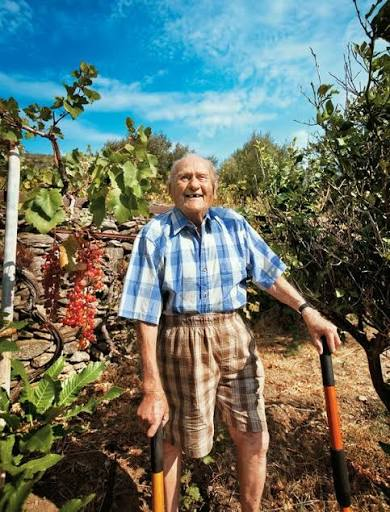
En los años 70, el griego 🇬🇷 Stamatis Moraitis vivía en Estados Unidos 🇺🇸 cuando los médicos le diagnosticaron cáncer de pulmón en etapa terminal. El pronóstico era devastador: de 6 a 9 meses de vida.
En lugar de someterse a costosos tratamientos agresivos, pensó en algo más pragmático: los funerales en EE.UU. eran carísimos, mientras que en su tierra natal, la pequeña isla de Icaria (Grecia), sería gratis, así que regresó a su pueblo para pasar sus últimos días.
Pero al llegar, no se acostó a esperar la muerte. Cambió su estilo de vida por completo:
Cultivó su propio huerto, comió verduras frescas, aceite de oliva, pan casero y cero ultraprocesados. Caminó por colinas, recogió uvas y trabajó la tierra bajo el sol del Mar Egeo. Bebía vino artesanal sin químicos, rodeado de amigos, risas y cero estrés.
Pasaron los meses y no murió. Y pasaron los años... y las décadas.
Años más tarde, regresó a EE.UU. para buscar a los médicos que le dieron el diagnóstico terminal. Todos habían muerto.
Stamatis Moraitis murió en 2013 a los 98 años (aunque él aseguraba tener 102). La causa no fue el cáncer, sino la vejez. Su caso se convirtió en uno de los grandes símbolos de las "Zonas Azules" (Icaria), demostrando que la paz, la buena alimentación, la comunidad y el movimiento diario son la mejor medicina.
@AndhyPlant@Carlos88108837@ferortegab La dos acciones son igualmente criticables, AMLO por corrupto, soberbio y pendejo y el PAN y el PRI por traidores y nalgasprontas con los extranjeros, necesitamos un partido nacionalista, no existe.
🔴 INCONGRUENCIA TOTAL; Mientras que un “joven” de 29 años recibe una beca mensual de 9,500 ps por “aprender a trabajar” , en el @Tu_IMSS un Cirujano Maxilofacial apenas gana 13,200 mensuales ! NOOO MAAMMSSS!!
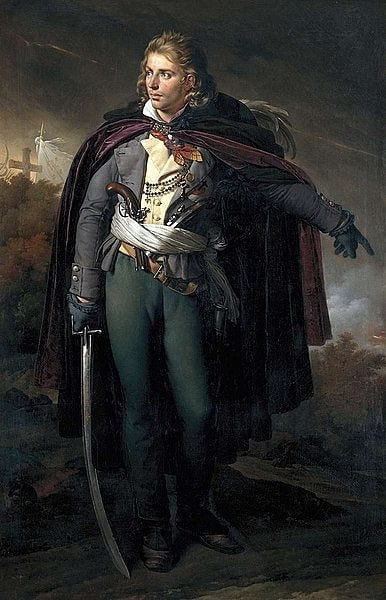
Alexandr Solzhenitsyn wrote a powerful essay on the Vendée, that brave region that, led by the gentry, fought to the bitter end to resist the godless Revolution, and was wiped out for so doing:
Two thirds of a century ago, while still a boy, I read with admiration about the courageous and desperate uprising of the Vendée. But never could I have even dreamed that in my later years I would have the honor of dedicating a memorial to the heroes and victims of that uprising.
Twenty decades have now passed, and throughout that period the Vendée uprising and its bloody suppression have been viewed in ever new ways, in France and elsewhere. Indeed, historical events are never fully understood in the heat of their own time, but only at a great distance, after a cooling of passions. For all too long, we did not want to hear or admit what cried out with the voices of those who perished, or were burned alive: that the peasants of a hard-working region, driven to the extremes of oppression and humiliation by a revolution supposedly carried out for their sake – that these peasants had risen up against the revolution!
That revolution brings out instincts of primordial barbarism, the sinister forces of envy, greed, and hatred – this even its contemporaries could see all too well. They paid a terrible enough price for the mass psychosis of the day, when merely moderate behavior, or even the perception of such, already appeared to be a crime. But the twentieth century has done especially much to tarnish the romantic luster of revolution which still prevailed in the eighteenth century. As half-centuries and centuries have passed, people have learned from their own misfortunes that revolutions demolish the organic structures of society, disrupt the natural flow of life, destroy the best elements of the population and give free rein to the worst; that a revolution never brings prosperity to a nation, but benefits only a few shameless opportunists, while to the country as a whole it heralds countless deaths, widespread impoverishment, and, in the gravest cases, a long-lasting degeneration of the people.
The very word "revolution" (from the Latin revolvo) means "to roll back," "to go back," "to experience anew," "to re-ignite," or at best "to turn over" – hardly a promising list. Today, if the attribute "great" is ever attached to a revolution, this is done very cautiously, and not infrequently with much bitterness.
It is now better and better understood that the social improvements which we all so passionately desire can be achieved through normal evolutionary development – with immeasurably fewer losses and without all-encompassing decay. We must be able to improve, patiently, that which we have in any given "today".
It would be vain to hope that revolution can improve human nature, yet your revolution, and especially our Russian Revolution, hoped for this very effect. The French Revolution unfolded under the banner of a self-contradictory and unrealizable slogan, "liberty, equality, fraternity." But in the life of society, liberty and equality are mutually exclusive, even hostile concepts. Liberty, by its very nature, undermines social equality, and equality suppresses liberty – for how else could it be attained? Fraternity, meanwhile, is of entirely different stock; in this instance it is merely a catchy addition to the slogan. True fraternity is achieved by means not social, but spiritual. Furthermore, the ominous words "or death!" were added to the threefold slogan, thereby effectively destroying its meaning.
I would not wish a "great revolution" upon any nation. Only the arrival of Thermidor prevented the eighteenth-century revolution from destroying France. But the revolution in Russia was not restrained by any Thermidor as it drove our people on the straight path to a bitter end, to an abyss, to the depths of ruin.
It is a pity that there is no one here today who could speak of the suffering endured in the depths of China, Cambodia, or Vietnam, and could describe the price they had to pay for revolution.
One might have thought that the experience of the French revolution would have provided enough of a lesson for the rationalist builders of "the people's happiness" in Russia. But no, the events in Russia were grimmer yet, and incomparably more enormous in scale. Lenin's Communists and International Socialists studiously reenacted on the body of Russia many of the French revolution's cruelest methods – only they possessed a much greater and more systematic level of organizational control than the Jacobins.
We had no Thermidor, but to our spiritual credit we did have our Vendée, in fact more than one. These were the large peasant uprisings: Tambov (1920-21), western Siberia (1921). We know of the following episode: crowds of peasants in handmade shoes, armed with clubs and pitchforks, converged on Tambov, summoned by church bells in the surrounding villages – and were cut down by machine-gun fire. For eleven months the Tambov uprising held out, despite the Communists' effort to crush it with armored trucks, armored trains, and airplanes, as well as by taking families of the rebels hostage. They were even preparing to use poison gas. The Cossacks, too – from the Ural, the Don, the Kuban, the Terek – met Bolshevism with intransigent resistance that finally drowned in the blood of genocide.
And so, in dedicating this memorial to your heroic Vendée, I see double in my mind's eye – for I can also visualize the memorials which will one day rise in Russia, monuments to our Russian resistance against the onslaught of Communism and its atrocities.
We all have lived through the twentieth century, a century of terror, the chilling culmination of that Progress about which so many dreamed in the eighteenth century. And now, I think, more and more citizens of France, with increasing understanding and pride, will remember and value the resistance and the sacrifice of the Vendée.