Be nice to everyone, be friends with a few. Trust one person: you. Don't live to geek; geek to live.Re-tweets don't imply endorsement.1st computer: Atari ST1040
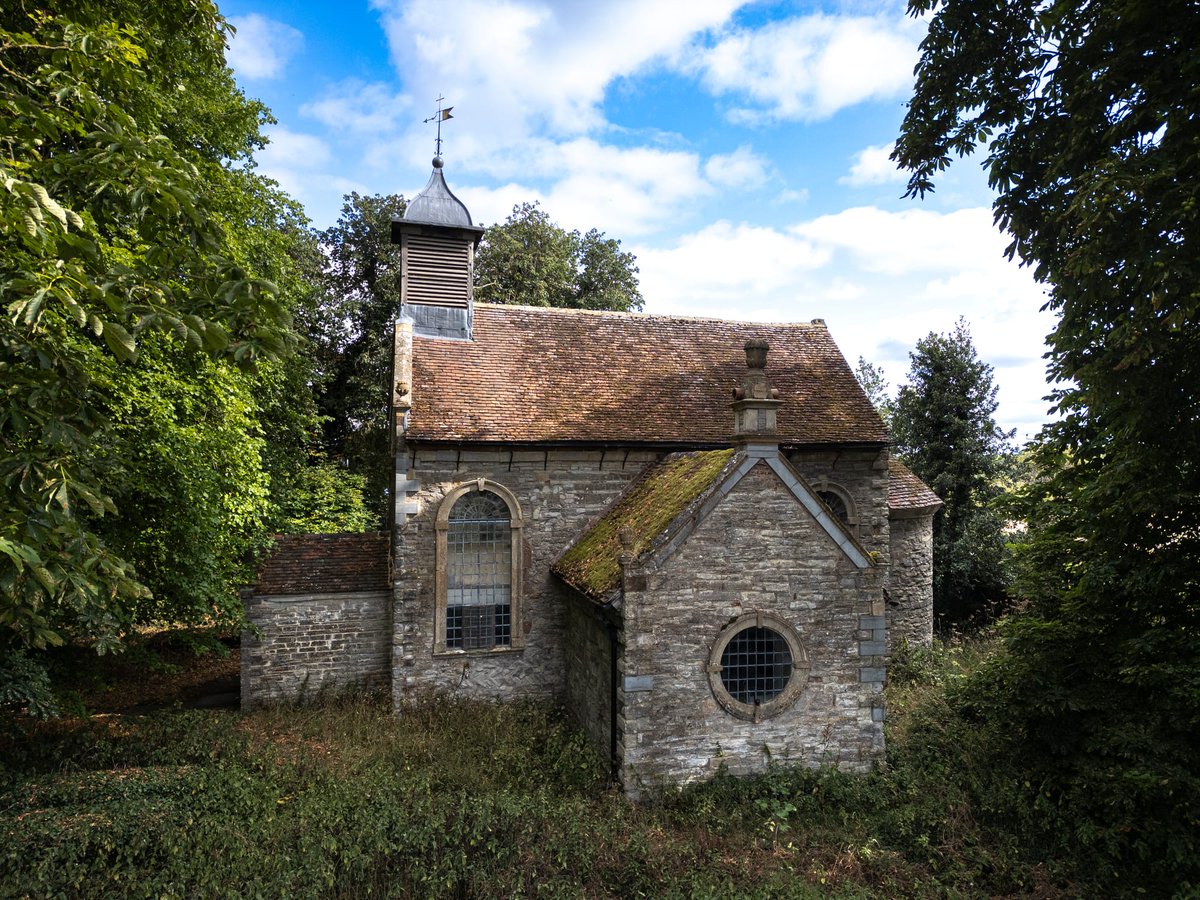
How lovely is this church? Some places carry the whispers of people long after they are gone.
All Saints', Billesley, Warwickshire once stood at the heart of a medieval village. Today, the village is gone and it stands alone in a copse.
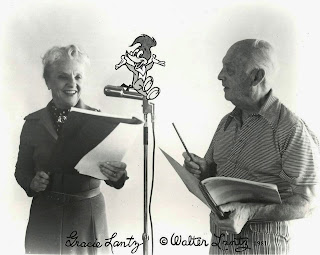
In 1940, Walter Lantz, creator of numerous cartoon characters including Woody Woodpecker, married Gracie.
Gracie was the voice of Woody for over 50 years, and they remained married for over 50 years!
10 July 1964:
The Beatles return to Liverpool for the Northern Première of their first film A Hard Day's Night.
Paul McCartney: "There were crowds everywhere, like a royal do. It was incredible."
Watch news footage from the day here:
https://t.co/uIUWdAERMV
10 July 1963:
The Beatles record two episodes of their BBC radio show Pop Go The Beatles.
They tape a total of 12 songs. Nine are released on 1994's Live At The BBC album, and the remaining three on 2013's On Air – Live At The BBC Volume 2.
See more:
https://t.co/OArNskypp5
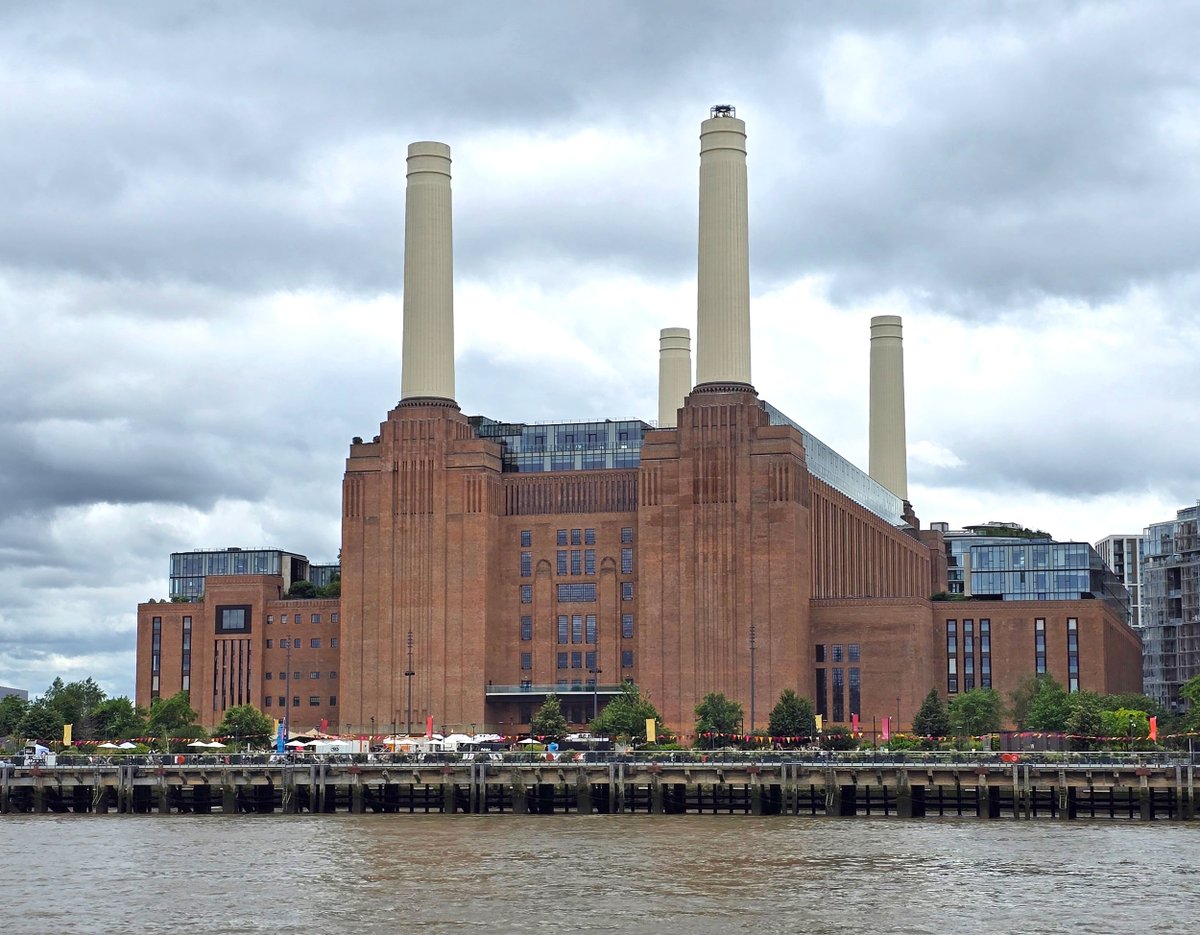
Battersea Power Station was designed by Sir Giles Gilbert Scott. It began producing electricity in 1935, originally with only two chimneys. It was expanded to its current size, beginning in 1944 and completed in 1955. It closed in 1983 and now a shopping and entertainment venue.
Mozart's Queen of the Night Aria: When Fierce Passion Is Placed Within Perfect Order
In Wolfgang Amadeus Mozart's Die Zauberflöte (The Magic Flute), the Queen of the Night Aria, Der Hölle Rache, is one of the most celebrated moments in the history of opera. Many listeners remember it for its astonishingly high notes and the dazzling coloratura passages that seem to stretch the human voice to its very limits.
Yet if we focus only on those breathtaking high notes, we are seeing only the surface.
The aria's enduring power does not come from how high a soprano can sing. It comes from the way Mozart builds immense musical energy from remarkably simple elements—a key, a melodic gesture, dramatic intervals, sharply defined rhythms, and a musical structure of extraordinary precision.
This is the true source of why the Queen of the Night Aria has remained one of the defining masterpieces of Western classical opera.
The Dark Foundation of D Minor
From its very first measures, Mozart draws the listener into a world charged with dramatic intensity.
The aria is written in D minor, a key that frequently carries a sense of gravity, tension, and emotional weight throughout Mozart's works.
Its significance lies not in the idea that D minor simply represents sadness or darkness, but in the way Mozart uses it as a psychological foundation.
The Queen of the Night does not enter as someone expressing ordinary anger. Instead, the music reveals a force of emotion that has been driven almost beyond human limits.
Even the opening harmony suggests that immense power is quietly gathering beneath the surface, waiting for the moment of release.
Small Musical Ideas That Generate Immense Power
One of Mozart's greatest achievements is his ability to create extraordinary expressive power from remarkably modest musical material.
He begins with simple ideas:
bold melodic leaps,
concise musical phrases,
and ascending lines filled with increasing tension.
From these few elements, he constructs an overwhelming current of musical energy.
The human ear naturally responds to upward motion. Rising melodies often create a feeling of striving, growing intensity, and anticipation.
Mozart understood this instinct profoundly.
His highest notes never appear merely for effect. Every ascent is carefully prepared, allowing the listener to experience the gradual accumulation of tension before the music finally reaches its summit.
The beauty, therefore, does not lie in the final high note alone.
It lies in the musical journey that makes that note feel inevitable.
Power Without Chaos
The aria's rapid coloratura passages are often what astonish audiences most.
Yet their artistic value lies in far more than sheer speed.
If a stream of fast notes exists only to demonstrate technical brilliance, it may impress for a moment but rarely possesses lasting artistic power.
In Mozart's music, every coloratura passage remains part of a larger architectural design.
Its rhythms are precise.
Its pitches are carefully organized.
Each phrase moves toward a clear destination.
Every surge of intensity remains under control.
This reflects one of the defining ideals of Western classical aesthetics:
The greatest strength is not power without restraint, but power disciplined by perfect form.
The Queen of the Night expresses overwhelming fury, yet the music itself never descends into chaos.
It is precisely this contrast that gives the aria its extraordinary beauty.
Energy Stretched to Its Limits
Another element that gives the aria its dramatic force is Mozart's use of wide melodic intervals.
The vocal line suddenly soars into the highest register before plunging back downward.
These dramatic leaps create the sensation of energy continually expanding, releasing, and stretching toward its limits.
Musically, this is how Mozart intensifies dramatic expression.
Emotionally, it allows listeners to experience a force that seems almost larger than life, while remaining perfectly contained within an elegant musical design.
Mozart's Musical Principle Reflected in Nature: The Order Within a Storm
The inner logic of this aria bears a striking resemblance to many natural phenomena.
A storm offers one of the clearest examples.
From a distance, a storm appears to be pure chaos—violent winds, swirling clouds, and immense forces colliding in every direction.
Yet beneath its dramatic appearance lies remarkable order.
A storm forms and evolves according to precise physical laws:
differences in temperature,
the movement of air masses,
atmospheric pressure,
and the Earth's rotation.
These invisible principles organize enormous amounts of energy into a coherent system.
Mozart's music operates in much the same way.
The Queen of the Night embodies a storm of human emotion—fierce, powerful, and filled with overwhelming tension. Yet Mozart never allows that emotional storm to become musical disorder. Instead, he shapes it through rhythm, harmony, proportion, and form.
Beauty does not arise from removing power.
It arises from giving power a higher order.
Mozart's Greatest Paradox: Extreme Emotion Within Perfect Form
Perhaps this is the deepest reason why the aria continues to fascinate audiences centuries later.
The Queen of the Night embodies rage, authority, vengeance, and intimidation.
Yet Mozart does not portray these emotions through uncontrolled music.
Instead, he relies on
balanced musical phrases,
logical harmonic progressions,
rhythmic precision,
and structural symmetry.
He places emotions that seem capable of breaking every boundary inside an architectural design of remarkable clarity and balance.
This is one of the enduring ideals of the Western classical tradition: beauty does not emerge from the absence of conflict, but from the transformation of conflict into harmony.
Why Diana Damrau's Performance Is So Highly Regarded
Diana Damrau's performance is admired not simply because she can sing astonishingly high notes.
What distinguishes her interpretation is that every aspect of her virtuosity serves Mozart's musical architecture.
Every soaring note, every rapid coloratura passage, and every dramatic gesture contributes to revealing the structure of the composition rather than drawing attention solely to technical brilliance.
In the classical tradition, a great performer does not seek to overshadow the work, but becomes a faithful interpreter through whom the composer's vision can be fully experienced.
The True Source of the Queen of the Night Aria's Enduring Greatness
If one principle lies at the heart of this extraordinary aria, it is this:
Mozart does not make fury beautiful by diminishing its intensity. He preserves its full emotional force while shaping it within a musical form of remarkable order and balance.
What moves listeners is not merely a voice capable of reaching extraordinary heights.
It is the way every note, every interval, every rhythmic gesture, and every melodic movement is carefully arranged to create a profound equilibrium between power and order.
Like a great storm in nature, its magnificence does not arise from chaos, but from immense energy unfolding according to deeper laws.
It is a storm of sound, yet within that storm stands an architectural masterpiece.
And it is this union of overwhelming emotional energy and perfect musical structure that has made Mozart's Queen of the Night Aria one of the enduring summits of Western classical opera.