Prediction-market infrastructure is growing quickly.
Excited to see PMFI building automated vault infrastructure for prediction-market arbitrage using Oddpool in their execution stack.
PMFI is building DeFi primitives on top of prediction markets, including vault strategies focused on cross-platform arbitrage opportunities.
At PMFI, we are building automated vaults for prediction market arbitrage.
A major part of making this work reliably is access to clean, filtered, cross-venue market data.
That is why we use @oddpool_alerts as part of our data stack.
Their infrastructure makes it easier to monitor markets across venues, analyze spreads, and work with data at scale.
In a new episode of Prediction Market Movers, @GerlacherC sits down with @oddpool_alerts co-founder @c0delemons to cover:
- How institutional traders are approaching prediction markets
- What infrastructure is still missing for large-scale adoption
- How Oddpool is building data tools for traders and hedge funds https://t.co/feaoJjCx1t
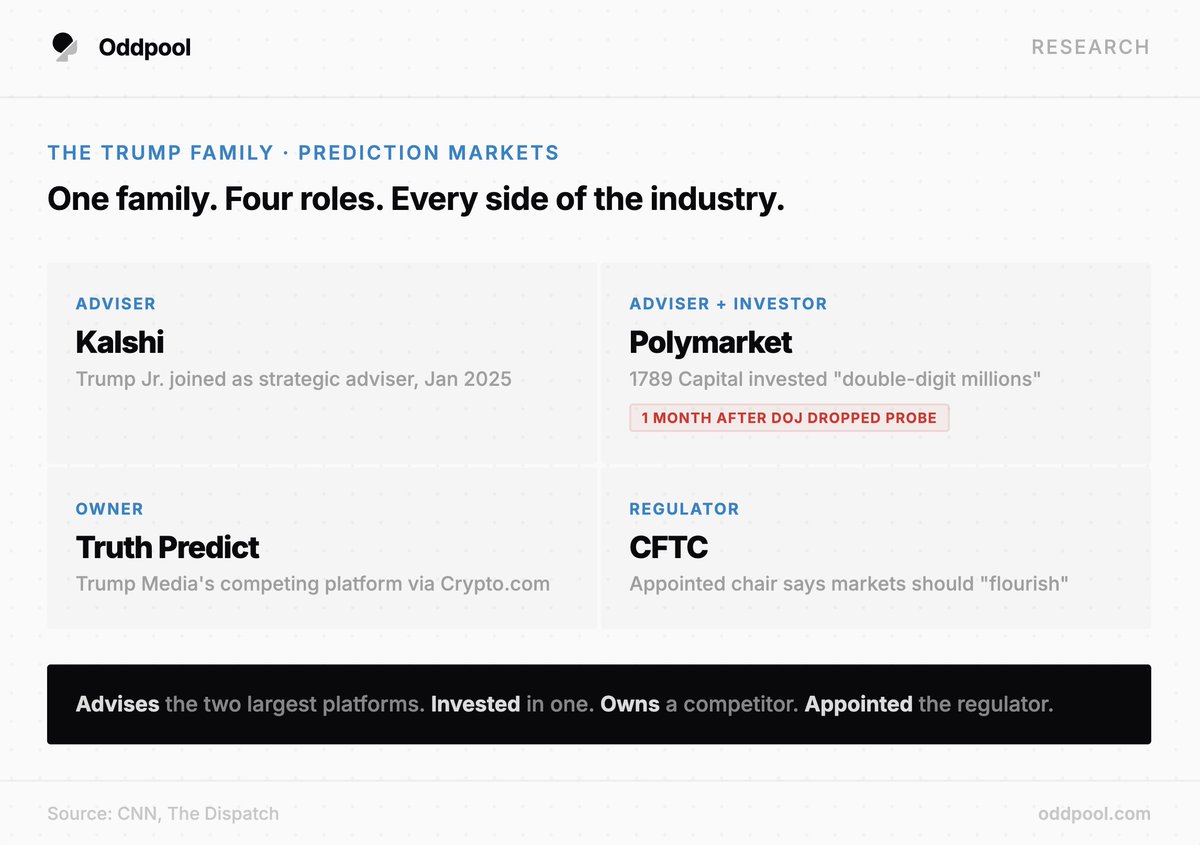
the Trump family's prediction market footprint is wild.
Trump Jr. is a strategic adviser to Kalshi.
he's also a strategic adviser to Polymarket.
his VC firm, 1789 Capital, invested "double-digit millions" into Polymarket
one month after the DOJ and CFTC dropped their investigation into the platform.
meanwhile, Trump Media launched Truth Predict, a competing prediction market, on Truth Social through Crypto dot com.
and the person who regulates all of them?
Trump's CFTC chair appointee, Michael Selig, who says prediction markets should "flourish" under his watch.
one family. adviser to the two biggest platforms. investor in one. owner of a competitor. appointer of the regulator.
nobody else in finance has this kind of reach across an entire industry they also regulate.
Kalshi just rolled out proactive trade blocking. not just rules on paper. the system blocks trades before they're executed.
politicians can't bet on their own elections. athletes and team staff can't trade on their own sport. referees can't trade on games they officiate.
this is a direct response to the Senate bill that dropped yesterday. but the approach is interesting. instead of waiting for someone to violate a rule and then punishing them, Kalshi is preventing the trade from ever happening.
that's a fundamentally different model from traditional securities enforcement, where you trade first and get investigated later. prediction markets are building compliance infrastructure that traditional markets still don't have.
FIS just partnered with Kalshi to build post-trade clearing infrastructure for prediction markets.
FIS clears for most of the derivatives industry. this is the plumbing that lets institutional money actually participate.
the key problem they're solving: prediction markets trade 24/7 but traditional clearing shuts down Friday night. if a market settles over the weekend, funds can't manage the risk. that gap alone keeps institutional capital out.
this is quietly one of the most important prediction market infrastructure announcements this year.
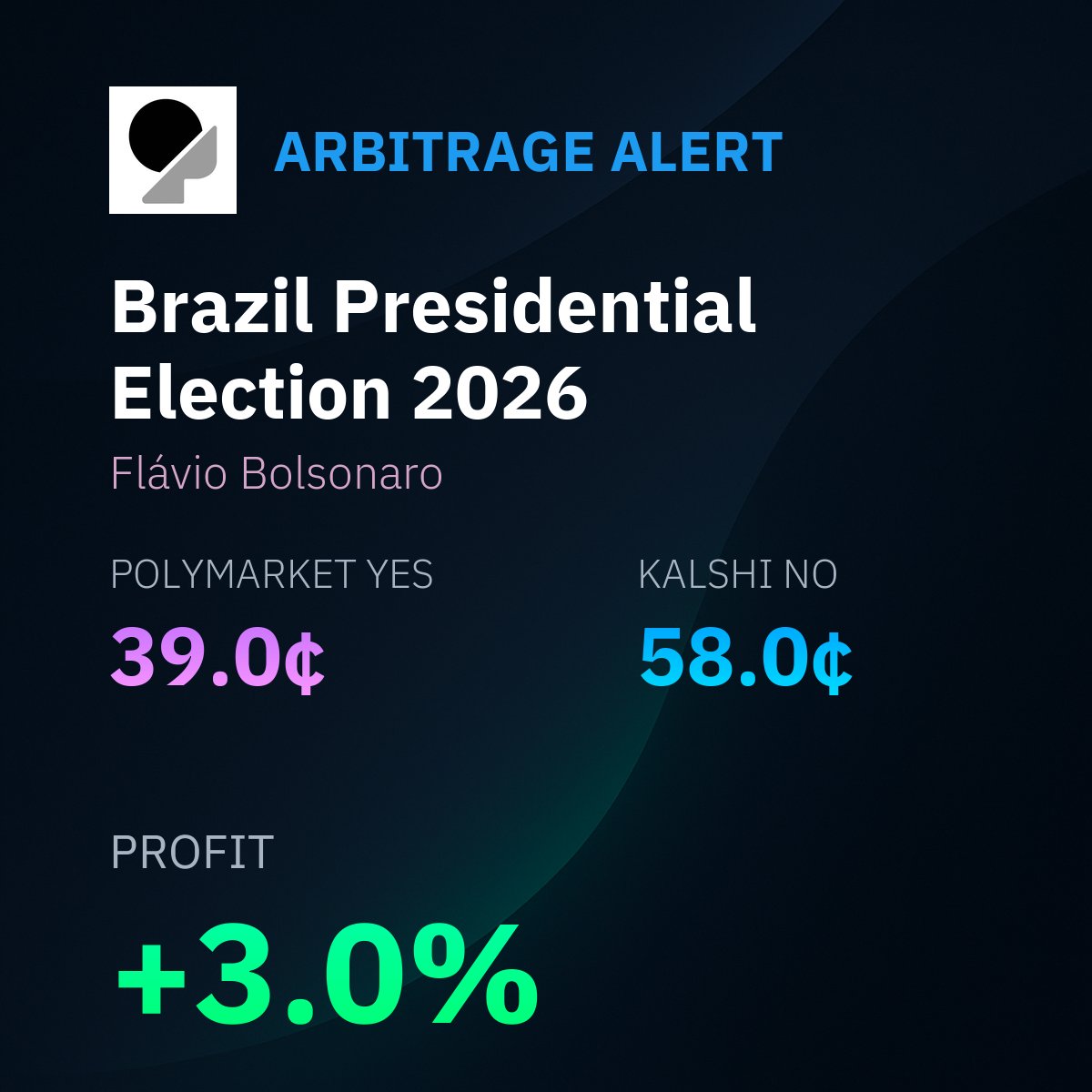
💰 Arbitrage on Brazil Presidential Election 2026 - Flávio Bolsonaro
Buy YES on Polymarket: 39.0¢
Buy NO on Kalshi: 58.0¢
Total: 97.0¢
Profit: 3.0% (3.0¢)
ROI: 3.1%
Arb Dashboard in Bio
#Kalshi#Polymarket
three categories of insider trading now explicitly banned on polymarket:
> trading on stolen confidential info
> trading on tips from someone who breached a duty of trust
> trading if you hold a position to influence the outcome
plus spoofing, wash trading, front-running, self-dealing.
enforcement is real:
> NFA regulatory services agreement for trade surveillance
> a real-time control desk
> every trade is on-chain on Polygon so anyone can audit it.
violations can result in wallet bans, monetary penalties, or referral to law enforcement.
Today we're publishing new market integrity rules across our CFTC-regulated US exchange & DeFi platform — making clear what's prohibited, how we enforce rules, & how to report suspicious activity.
The World's Largest Prediction Market runs on transparency
https://t.co/dWr23zcki6
BREAKING: A bipartisan Senate bill to ban sports betting on prediction markets just dropped.
Schiff and Curtis are calling it "The Prediction Markets Are Gambling Act."
It would block Kalshi and Polymarket from listing any sports or casino contracts.
The timing is wild.
This drops the same week
> Kalshi raised at $22B
> MLB signed an exclusive deal with Polymarket
> weekly volume just hit $4.5B
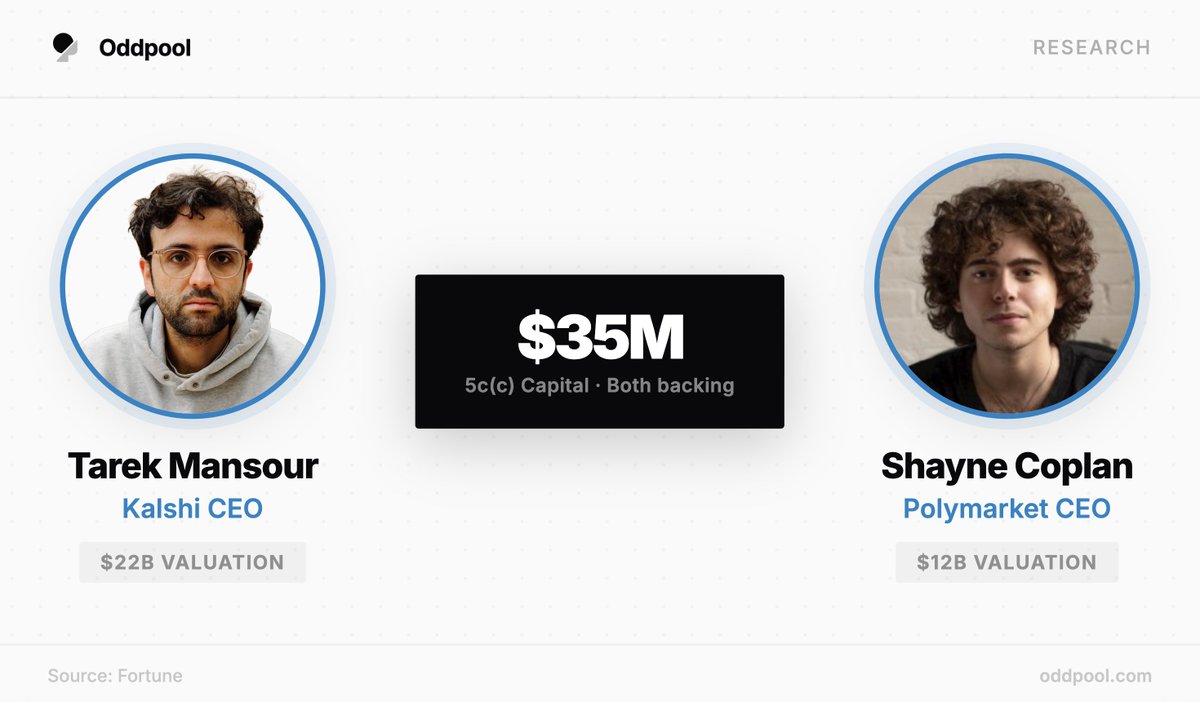
The CEOs of Kalshi and Polymarket are backing the same VC fund.
5C Capital is raising $35M to invest in prediction market infrastructure. It is founded by early Kalshi employees.
The backers: Tarek Mansour (Kalshi CEO), Shayne Coplan (Polymarket CEO), Marc Andreessen, and Micky Malka (Ribbit Capital).
These two companies compete for market share every day. And they are investing together in the ecosystem around them.
That tells you where this is going.
The pie is growing fast enough that the two biggest competitors would rather expand it together than fight over the current slice.
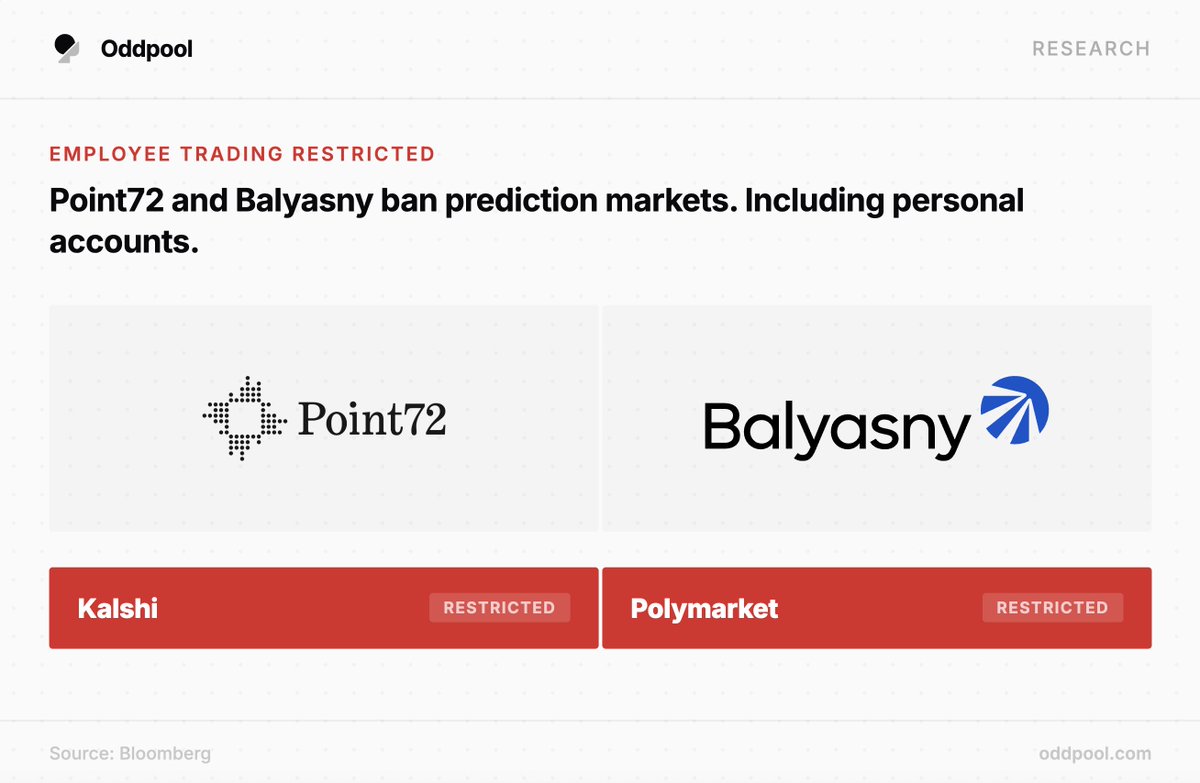
Point72 and Balyasny just BANNED all employees from trading on Kalshi and Polymarket.
The reasons tell you everything about where prediction markets are headed:
MNPI risk — hedge fund traders have proprietary research that could inadvertently be used in prediction market trades. Firms are treating these platforms the same way they treat securities.
Shadow hedging — employees were using personal prediction market accounts to hedge firm positions outside formal oversight. A governance blind spot.
Information leakage — your Kalshi positions can reveal your directional view on macro events. If you are a PM at Point72 buying "above 3.5%" on CPI, that is a signal.
The irony: these funds are banning prediction markets because they view them as real enough to be a compliance risk. You do not restrict access to something you think is just gambling.
most people think prediction markets started with Polymarket. they didn't.
from 1868 to 1940, Wall Street ran massive election betting pools. newspapers printed the odds daily. it was the primary way Americans gauged who would win before modern polling even existed.
a Wake Forest study found that in that entire 72-year period, only ONE candidate who was the betting favorite before election day went on to lose.
now prediction markets are back. and candidates are starting to use them.
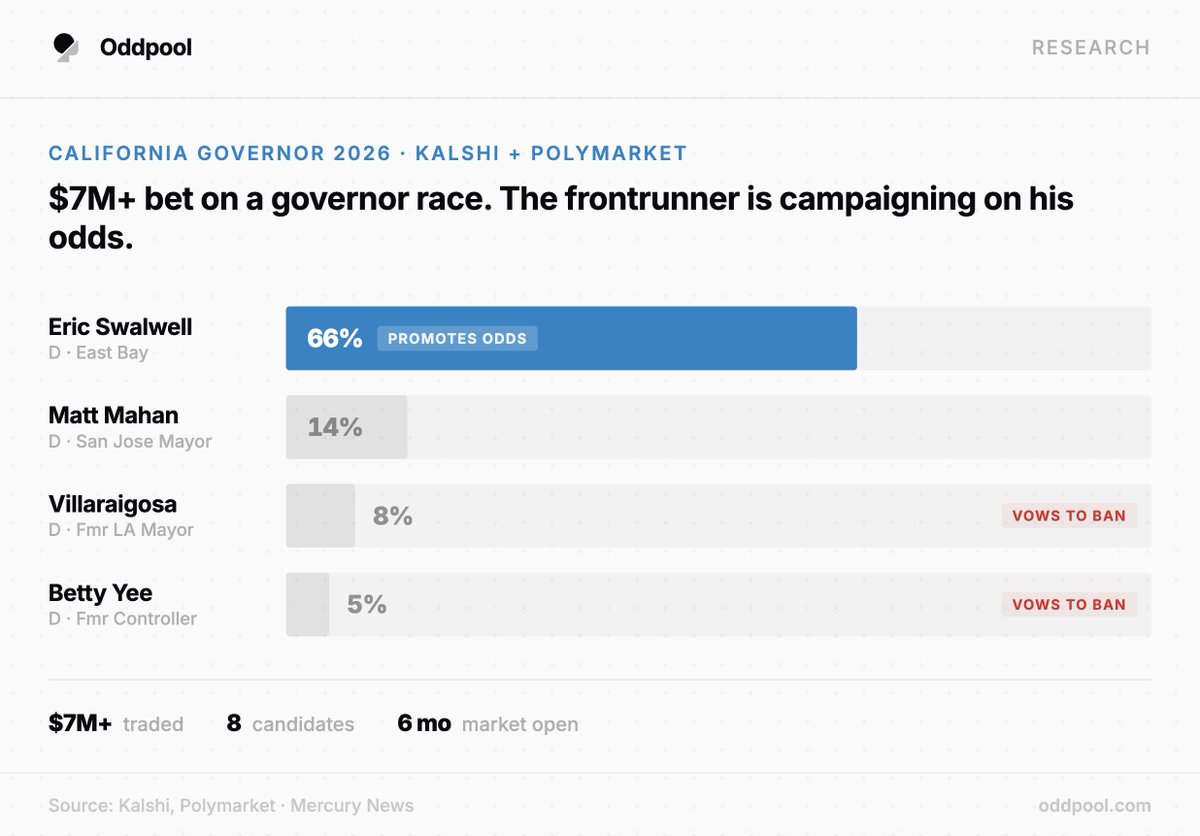
Eric Swalwell, the frontrunner for California governor at 66% on both Kalshi and Polymarket, is actively tweeting his odds as proof of momentum. $7M+ has been traded on the race.
two of his opponents are pledging to crack down on prediction markets if elected. they're at 8% and 5%.
history says the odds usually get it right.
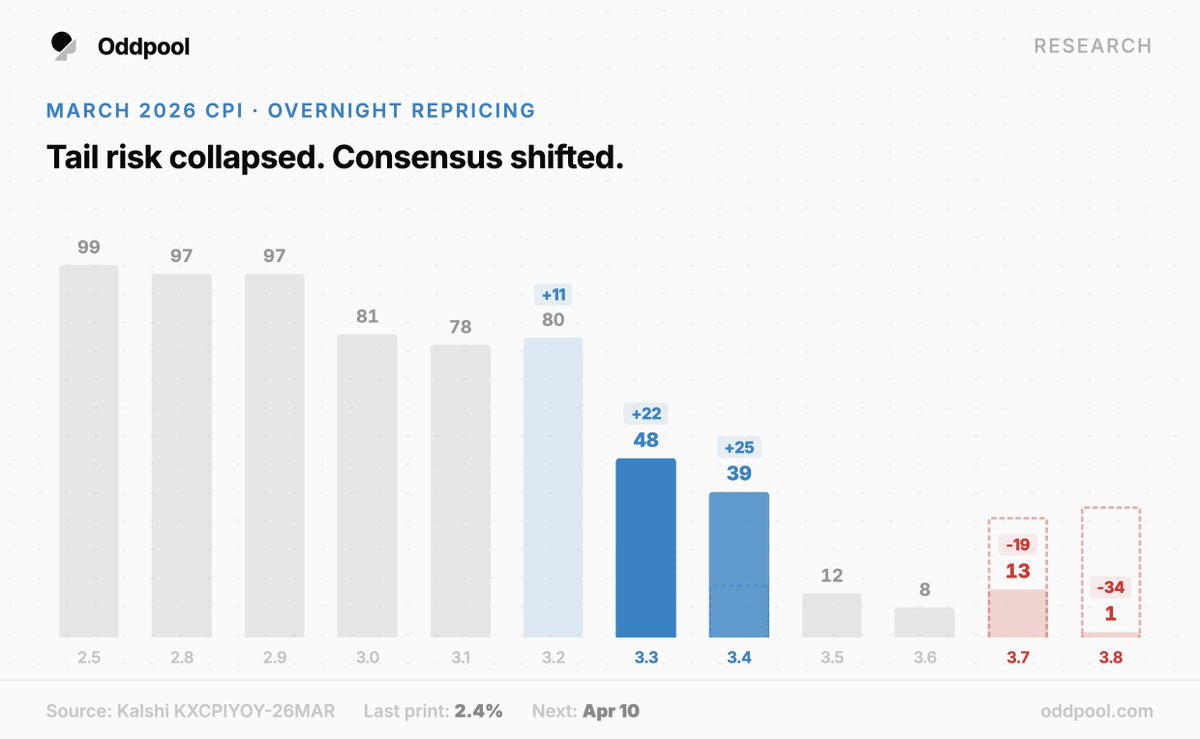
BREAKING: The prediction market for March CPI just repriced overnight.
The "Above 3.8%" inflation contract crashed from 35% to just 1%.
That is a -34 percentage point move in a single session.
Where did the probability go?
Consensus shifted to the 3.2–3.4% range, with "Above 3.4%" up +25pp and "Above 3.3%" up +22pp.
Traders are pricing in: no spike, but no relief either.
For context, the last official CPI print was 2.4%. The market is now pricing March inflation nearly a full percentage point higher.
Shelter inflation remains sticky at 3.0% and energy prices are rebounding.
The March CPI report drops April 10.
We are watching closely.
Introducing the Oddpool Macro Feed.
One websocket. every macro event. real-time probability data from Kalshi and Polymarket, normalized into a single stream.
Built for institutions. Free to connect.
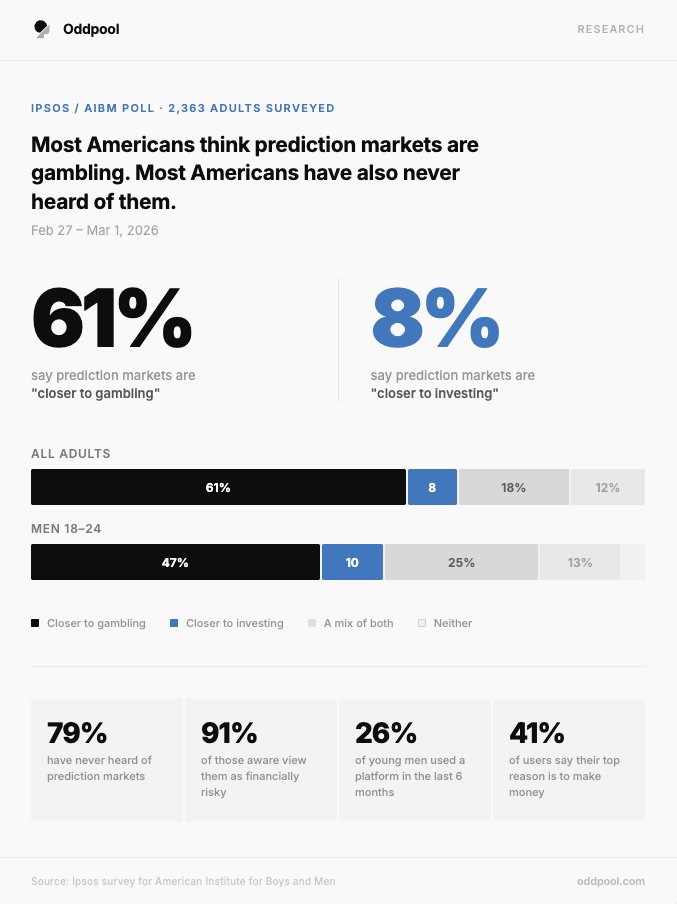
61% of Americans say prediction markets are "closer to gambling."
only 8% say "closer to investing."
but here's the thing: 79% of Americans have never even heard of prediction markets.
the majority opinion is also the least informed one. the people actually using these platforms?
41% say they're there to make money, the same reason anyone opens a brokerage account.
prediction markets are regulated by the CFTC, users trade against each other (not the house), and the Fed published a 40-page paper saying Kalshi outperforms Bloomberg consensus on CPI forecasts.
calling it gambling is easy when you've never looked at what it actually is.
people are going to see this and start buying everything under 5c.
before you do:
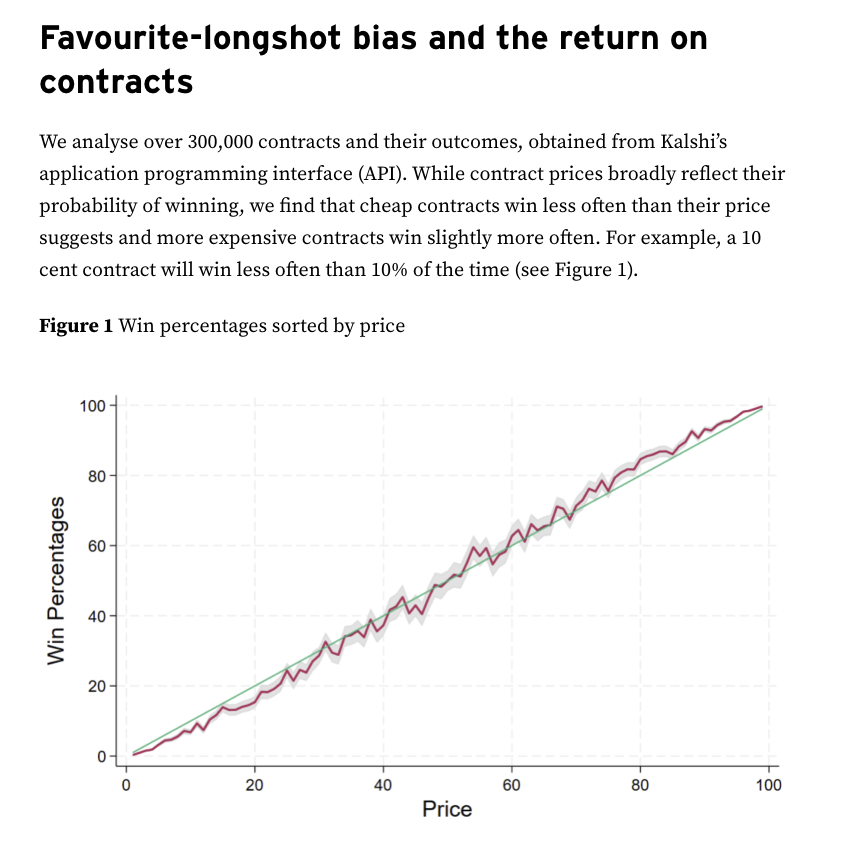
a study of 300,000+ kalshi contracts found that buyers of contracts under 10c lose over 60% of their capital.
5c contracts win just 2% of the time.
there's a well documented bias called the favourite-longshot bias where cheap contracts perform far worse than their price implies.
planktonXD isn't wrong that mispricing exists in obscure low-liquidity markets.
but for every wallet that turns $150 into $104k there are thousands that went to zero doing the exact same thing.
you just never see those profiles get posted.
This wallet just buys everything under 5¢.
That’s the whole strategy.
Started with $150 → now sitting at $104,000 profit on Polymarket.
Profile: https://t.co/o0KKw9YmWT
No analysis.
No predictions.
Just buying cheap contracts across obscure markets.
Some hits:
> $4.55 → $2,531 (S&P 500 direction)
> $16.78 → $2,324 (Syria strikes Israel)
Most positions go to zero.
A few explode.
Low liquidity + ignored markets = mispricing.
Simple idea.
Extreme asymmetry.
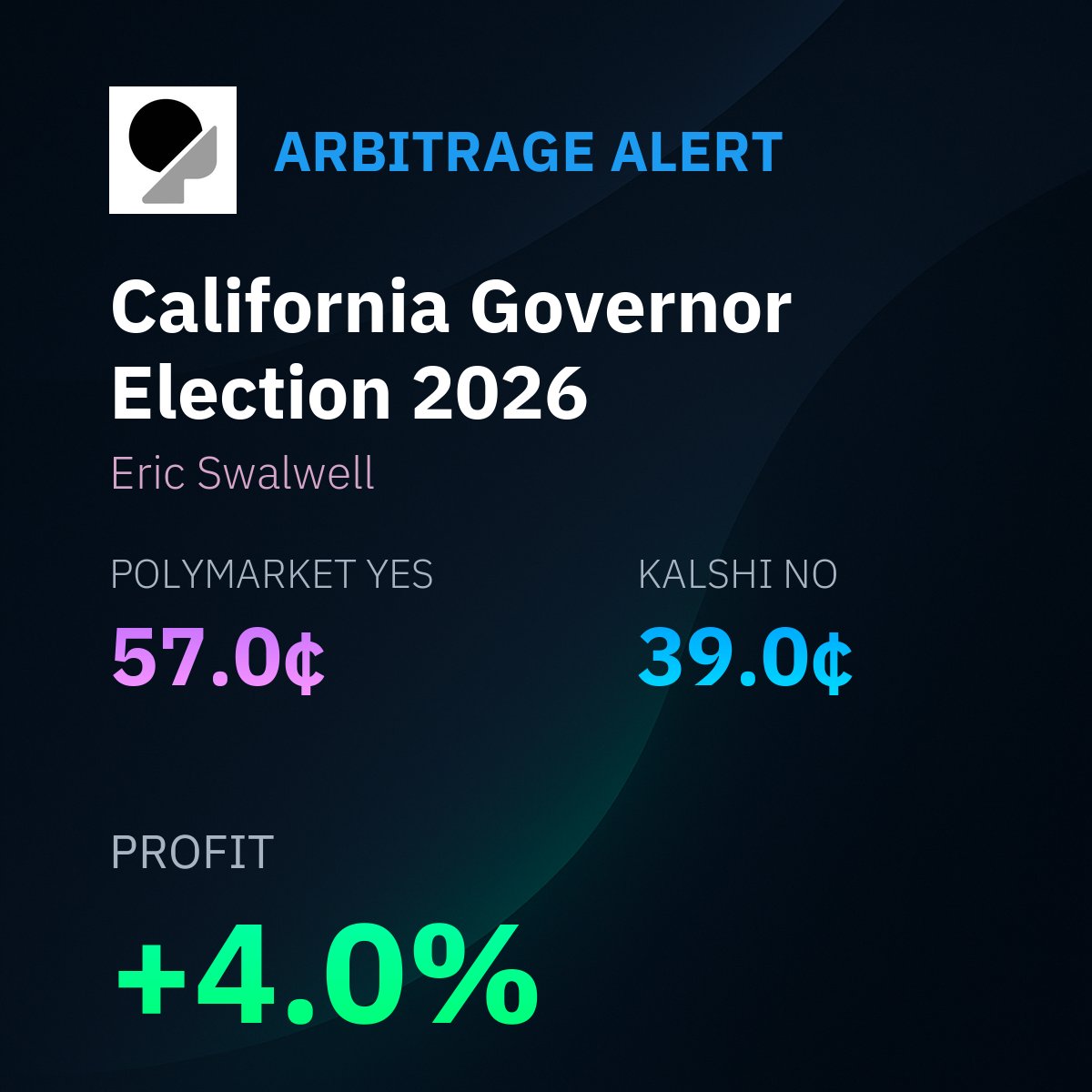
💰 Arbitrage on California Governor Election 2026 - Eric Swalwell
Buy YES on Polymarket: 57.0¢
Buy NO on Kalshi: 39.0¢
Total: 96.0¢
Profit: 4.0% (4.0¢)
ROI: 4.2%
Arb Dashboard in Bio
#Kalshi#Polymarket
a small business owner hedging against a government shutdown on kalshi isn't a gambling addict.
they're managing risk. same product structure as futures that have existed for 150 years.
the CFTC agrees, which is why they regulate it.
calling prediction markets "pervasive gambling" is like calling home insurance a slot machine.
This is sad. I know as a politician these companies are going to spend a billion dollars against me for saying it but 🤷🏽♀️
Pervasive gambling is not good for society. It turns life into a casino, traps people in addiction & debt, surges domestic violence, and fosters manipulation.