.@MinofHealthUG is taking integrated TB, HIV and Malaria screening closer to communities across Wakiso District. With over 440,000 people tested for HIV and more than 8,233 new infections identified, early detection, prevention and timely linkage to care remain critical.
We are strengthening community-based health services to ensure more Ugandans are reached, screened and linked to treatment early where they are. No one should be left behind.
#MOHatWork #IntegratedHealthServicesUG
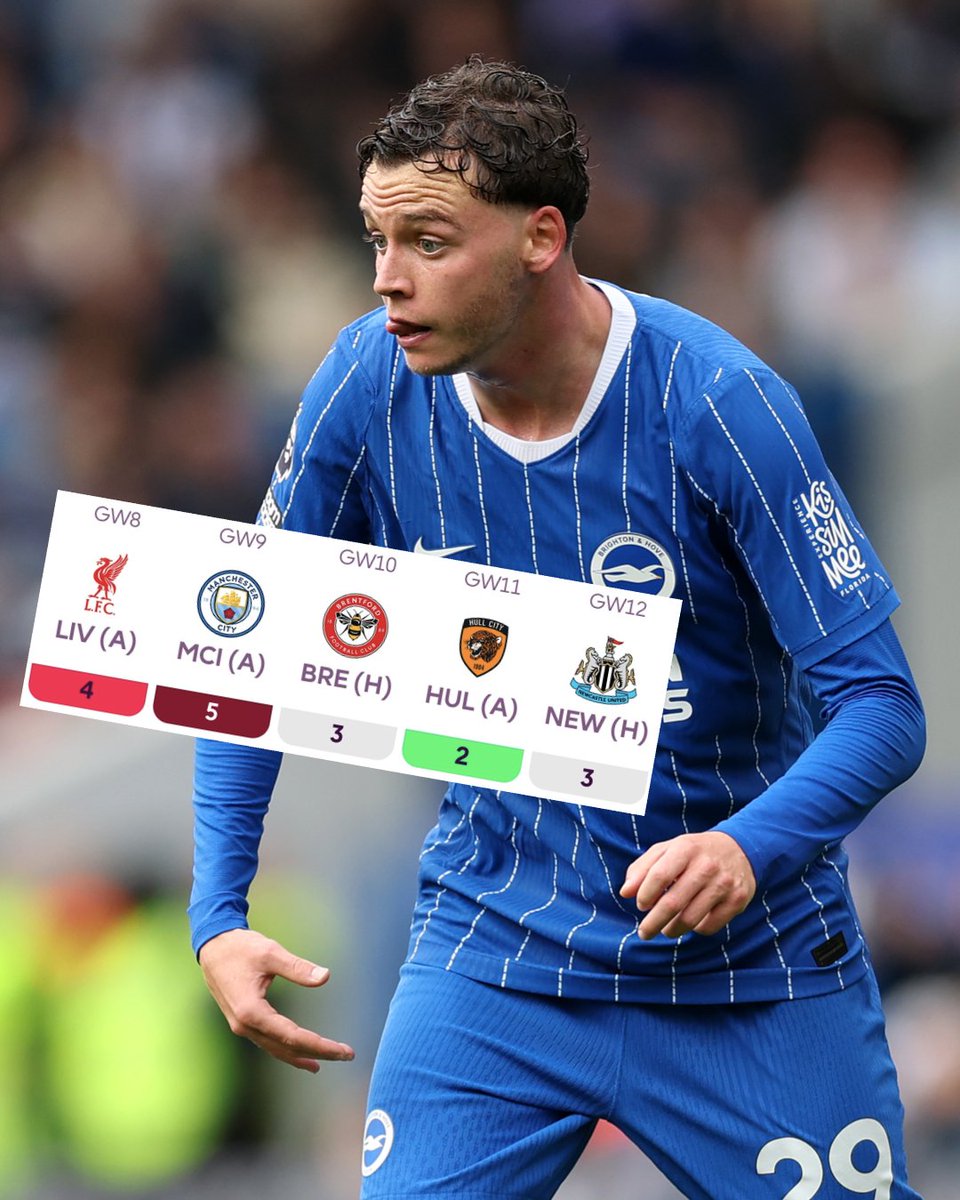
Brighton are THE form team in the Premier League right now 📈
But with a tricky set of fixtures coming up, here's some tips to help you manage your #FPL assets 👉 https://t.co/aysRGsqrCI
When should an LVAD be considered in advanced heart failure?
The 2026 ESC Guidelines identify several situations in which a patient with severely reduced LVEF may be considered for a durable LVAD.
Key indications include:
◻️ INTERMACS 2–4
◻️ Persistent NYHA III/IV symptoms despite optimal FMT and GDIT
◻️ Severe exercise limitation, including pVO₂ <12–14 mL/kg/min and/or <50% predicted
◼️ End-organ dysfunction from low cardiac output, such as worsening renal/hepatic function or cardiac cachexia
◼️Cardiac index ≤2.0 L/min/m² despite euvolaemia or therapy-resistant congestion
◼️Recurrent HF hospitalizations without an obvious precipitating cause
But patient selection is critical.
Major absolute contraindications include severe irreversible RV dysfunction, irreversible kidney/liver or neurological disease, severe pulmonary disease, inability to receive long-term anticoagulation, significant non-adherence/psychosocial limitations, and inadequate social support.
LVAD is not simply a treatment for a low EF. It is a decision based on HF severity, functional capacity, haemodynamics, end-organ status, comorbidities and the patient's ability to undergo long-term device care.
The 2026 ESC Guidelines recommend early assessment at an advanced HF centre for appropriate candidates.
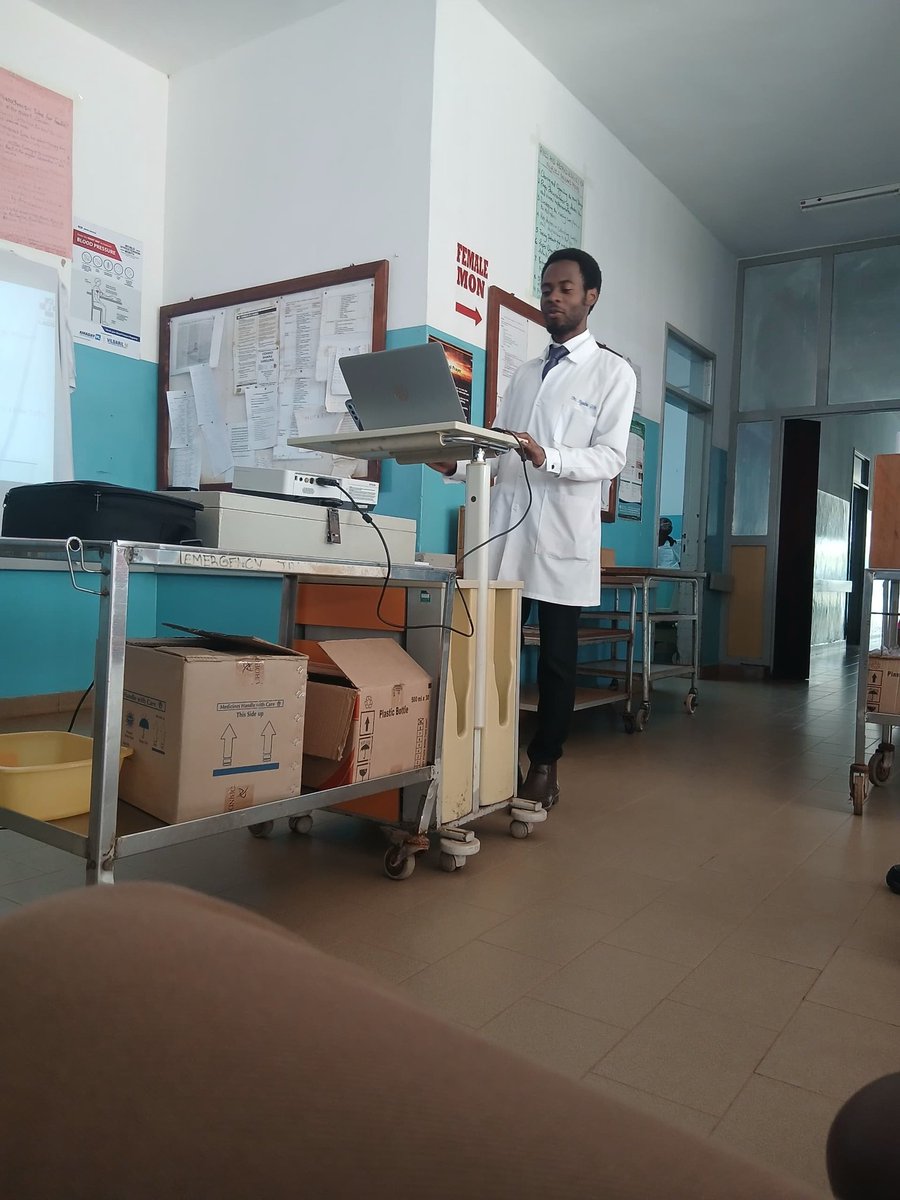
Today, Dr. Kamoga Jovan @kamogajovan10 and I delivered a Compelling and well tailored Presentation about Multiple myeloma. Take home message was "MM is a multisystem disease that requires a comprehensive approach to optimize patient outcomes"
Special thanks goes to our MOs, SHOs and Physicians for continuing to guide us in our Internship.
MEDICAL INTERNS: To Pay or Not to Pay.
I’ve seen raging debates on whether interns should be paid or not.
I think it’s a wrong debate.
We don’t really pay interns in this country. We give them a subsistence allowance.
We basically hand them enough resources to keep them alive (barely) so they can keep millions of Ugandans alive.
Interns and to a lesser extent SHOs are the backbone of Uganda’s public healthcare sector.
It’s not unusual to hear of medical interns who log more than 100 hour work weeks. Back to Back to Back.
In some hospitals in far-flung districts, these interns are usually the only ones on duty. They run the hospitals while their supervisors (hospital superintendents) chill in malwa joints.
We call this learning and say the interns should be grateful and even pay for the opportunity.
The only learning happening in most of these settings is learning how to swim at deep ends because that’s where they’re thrown. ALL THE TIME!
They’re expected to navigate the raging waves of drug stock-outs, shortage of gloves, blood, equipment, name it.
They see their patients succumb to curable illnesses because of lack of antibiotics that cost less than $10 a dose. They hurt, roll over their deceased patients, dust themselves off and come to fight another day. It’s a brutal grind. Emotionally debilitating too. The sense of helplessness is overwhelming.
I can’t imagine having this compounded by constant calls from landlords and hunger pangs because they don’t have any cash to support them.
It’s understandable when the government says it’s embracing austerity measures and thus needs to prioritize its expenses. But to start by cutting off the lifeblood of a nation is a strange approach.
What do we lose, for instance, if we reduce the number of @Parliament_Ug sittings by half and reallocate those funds to areas like this? It’s not like those debates of theirs are moving the Ugandan socio-economic needle that much.
As an austerity measure, we can have less of them in the short term and keep Ugandans alive.
Then you have the budget that supports external healthcare to the higher political classes. This alone can pay interns for a few years.
What does it say that we have some Ugandans with government funded Cadillac healthcare and others with nothing to write home about? Isn’t it time we went back and revised those allocations in an equitable manner?
The other alternative would be a full embrace of co-pay in government hospitals.
One suspects that this has political ramifications that the government wouldn’t wanna see in the short to medium term, especially with 2026 around the corner.
It’s the same reason the National Health Insurance Scheme might never see the light of day.
But ultimately, it will have to come to us tasking anyone looking to access public healthcare to chip in something. A dollar here, a chicken and goat there, a post training income tax break for medical workers etc.
It can’t simply fall on only interns to sacrifice “because they are learning”.
That’s just bad policy. Lazy, crude policy actually.
The deployment of medical interns is not just a matter of fulfilling a professional requirement; it is a matter of national importance. The health of our people and the future of our healthcare system depend on it. @MinofHealthUG @cehurduganda @OPMUganda
Why must professionals of such caliber, after spending 4-5years, acquiring skills relevant to providing healthcare, plead, protest, move from office to office, before they are deployed?! Very absurd @GovUganda
@Thomas_Tayebwa@TheUMAofficial @drstellanyanzi