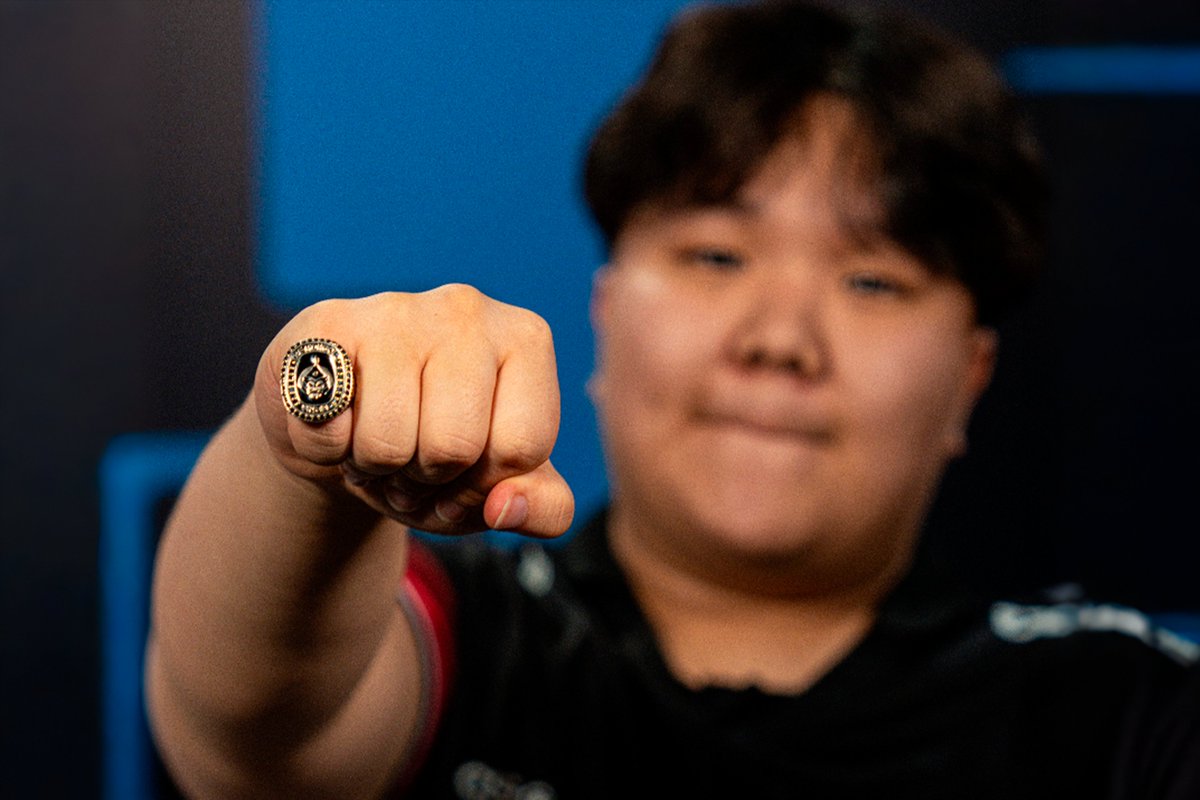
💍 This is what VRS #1 looks like now!
1xBet launches championship rings for its partner CS2 teams — featuring precious metals, gemstones, and custom designs tailored for every roster.
The MongolZ are the first to claim theirs. A new chapter of CS history officially begins.
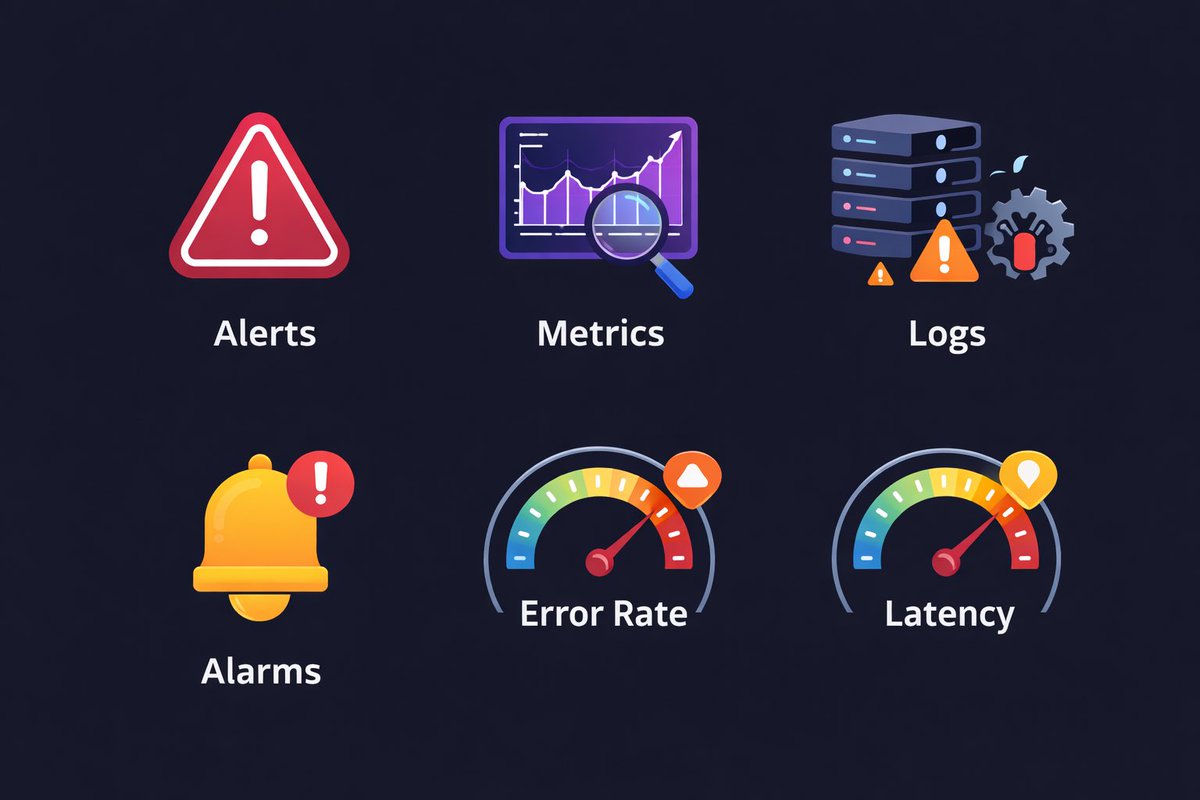
Observability in DevOps in one-liners✅
Metrics – what is happening
Logs – why it is happening
Alarms – when it becomes a problem
Alerts – who needs to act
Latency – how slow it is
Error rate – how broken it is
Availability – is it up or not
If you miss any one of these, you’re flying blind in production.
Tools change, These fundamentals don’t.
https://t.co/A0TmnEzUVa is an open ecosystem for finding and sharing agent skills.
Add a skill to any agent with:
▲ ~/ npx skills add <owner/repo>
Daily Ritual Icons
Gemini Nano Banana Pro Prompt:
Create a collection of icons representing [ROUTINE / PROCESS / HABITS], with each icon depicting one specific routine step and clearly labeled by name.
They belong together as a single cohesive theme. The background is pure white.
Place the title “[ROUTINE NAME]” at the top center of the image, aligned symmetrically above the grid, using a clean, minimal typography style that complements the icon design without overpowering it.
Icons are rendered in a friendly, modern 3D style, featuring smooth gradients and soft shadows.
Maintain consistent proportions, color harmony, materials, and typography across all icons and labels so the set feels unified and easy to read.
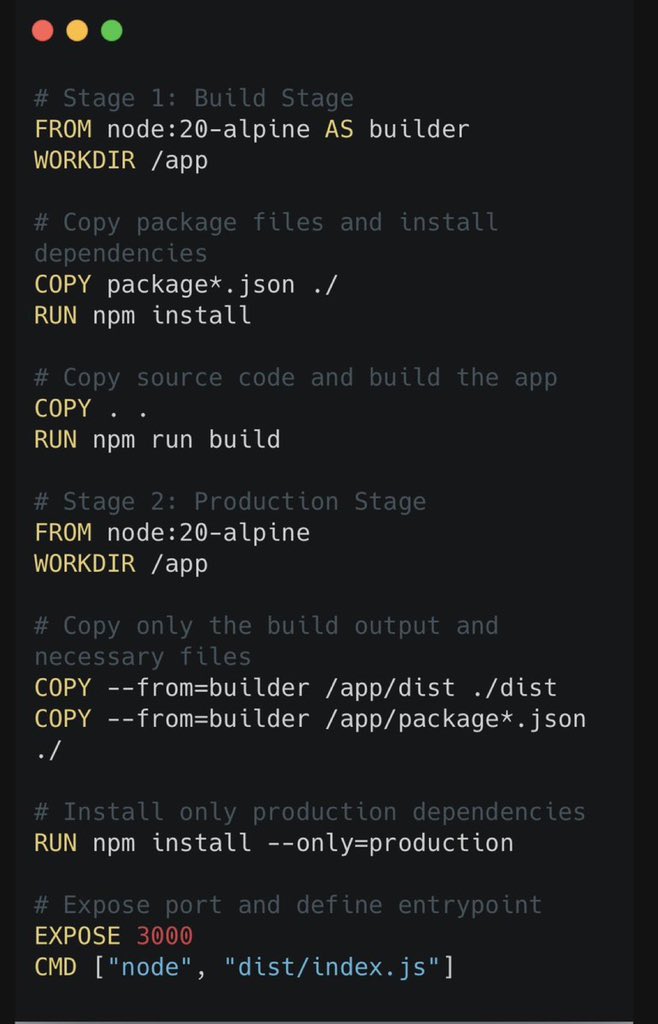
🐳Multistage Docker Build Example:
▫️Stage 1: Builder Stage
- Use node:20-alpine and set working directory.
- Copy package*.json and install all dependencies.
- Copy full source code.
- Run npm run build to generate the final dist folder.
▫️Stage 2: Production Stage
- Start a fresh node:20-alpine image.
- Copy only the built dist folder and package*.json from the builder.
- Install only production dependencies.
- Expose port 3000 and run node dist/index.js.
Save for Later ✅
I wrote two almost identical SQL queries.
One of them was 451x times faster.
I was implementing cursor pagination.
And I thought... Why don't I add an index to make my query faster?
This is where things went terribly wrong.
We have an "Index Scan" using the composite index. Seems good.
But the query is even slower than it was without an index.
What gives?
This might be because the dataset is too small to benefit from the index.
But that wasn't it...
What if we were to use a tuple comparison in SQL?
Finally, the index is working - 0.668 ms.
The query optimizer cannot determine whether the composite index can be used for row-level comparison.
However, the index is effectively used with a tuple comparison.
If I didn't look at the query plan, I wouldn't have figured this out.
Here's the complete performance analysis: https://t.co/8L1W5LmRuY
How often do you examine your SQL queries?
---
Sign up for the .NET Weekly with 74K+ other engineers, and get a free Clean Architecture template: https://t.co/yaJ6HZvgy3









![aleenaamiir's tweet photo. Daily Ritual Icons
Gemini Nano Banana Pro Prompt:
Create a collection of icons representing [ROUTINE / PROCESS / HABITS], with each icon depicting one specific routine step and clearly labeled by name.
They belong together as a single cohesive theme. The background is pure white.
Place the title “[ROUTINE NAME]” at the top center of the image, aligned symmetrically above the grid, using a clean, minimal typography style that complements the icon design without overpowering it.
Icons are rendered in a friendly, modern 3D style, featuring smooth gradients and soft shadows.
Maintain consistent proportions, color harmony, materials, and typography across all icons and labels so the set feels unified and easy to read.](https://pbs.twimg.com/media/G-dhO3JaoAAHLne.jpg)
![aleenaamiir's tweet photo. Daily Ritual Icons
Gemini Nano Banana Pro Prompt:
Create a collection of icons representing [ROUTINE / PROCESS / HABITS], with each icon depicting one specific routine step and clearly labeled by name.
They belong together as a single cohesive theme. The background is pure white.
Place the title “[ROUTINE NAME]” at the top center of the image, aligned symmetrically above the grid, using a clean, minimal typography style that complements the icon design without overpowering it.
Icons are rendered in a friendly, modern 3D style, featuring smooth gradients and soft shadows.
Maintain consistent proportions, color harmony, materials, and typography across all icons and labels so the set feels unified and easy to read.](https://pbs.twimg.com/media/G-dhO3DbEAAQleS.jpg)
![aleenaamiir's tweet photo. Daily Ritual Icons
Gemini Nano Banana Pro Prompt:
Create a collection of icons representing [ROUTINE / PROCESS / HABITS], with each icon depicting one specific routine step and clearly labeled by name.
They belong together as a single cohesive theme. The background is pure white.
Place the title “[ROUTINE NAME]” at the top center of the image, aligned symmetrically above the grid, using a clean, minimal typography style that complements the icon design without overpowering it.
Icons are rendered in a friendly, modern 3D style, featuring smooth gradients and soft shadows.
Maintain consistent proportions, color harmony, materials, and typography across all icons and labels so the set feels unified and easy to read.](https://pbs.twimg.com/media/G-dhO3Da8AEHqgj.jpg)





![aleenaamiir's tweet photo. Daily Ritual Icons
Gemini Nano Banana Pro Prompt:
Create a collection of icons representing [ROUTINE / PROCESS / HABITS], with each icon depicting one specific routine step and clearly labeled by name.
They belong together as a single cohesive theme. The background is pure white.
Place the title “[ROUTINE NAME]” at the top center of the image, aligned symmetrically above the grid, using a clean, minimal typography style that complements the icon design without overpowering it.
Icons are rendered in a friendly, modern 3D style, featuring smooth gradients and soft shadows.
Maintain consistent proportions, color harmony, materials, and typography across all icons and labels so the set feels unified and easy to read.](https://pbs.twimg.com/media/G-dhO5PbcAAQvOu.jpg)