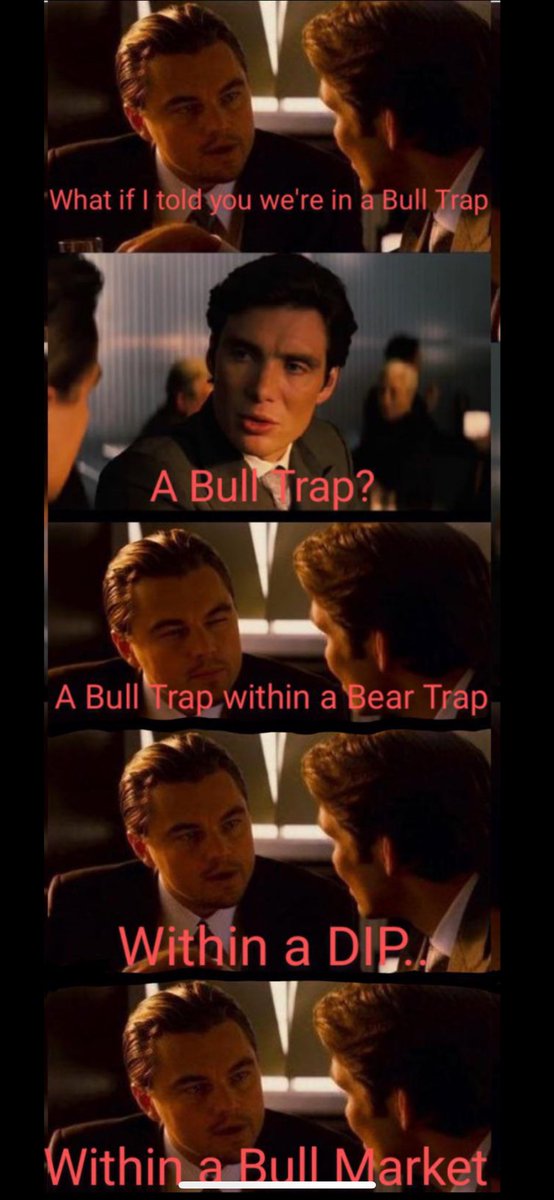
chris and haseeb are both partially correct and incorrect
crypto is not web 3.0, it is capitalism 2.0
i) blockchains are explicitly financial architecture
this is not an opinion, this is objectively why they must work with economic incentives at the core level
agreeing on information on a neutral protocol was already a solved problem before crypto (see: email)
the unique addition of blockchains is that they allow consensus on information with monetary value, namely they solve the double spend problem
so using blockchains for a system that does not require consensus on money is by definition inefficient
this is also why those decentralized social protocols like nostr, bluesky, and farcaster for example don't actually use blockchains
ii) since this is the case, it [currently] makes no sense to use blockchains for any app that requires 0 integrations with monetary value. but more on this in a sec.
iii) as a result, the market will necessarily use blockchains for financialized apps
iv) but there are two historical issues. a) regulation, b) scale
crypto is not actually 18 years old, that's bitcoin
you know how bitcoiners say: "bitcoin, not crypto", well the converse is also true. that is "crypto, not bitcoin"
the downsides of draconian regulation on the creation of new products is obvious so I won't waste time
but blockchains that scale for finance really have only been a thing for, maybe, 2 years, with solana finally solving a bunch of crippling issues since '24 and with regulation still pending
v) which means that this is now, finally, the age where we onboard apps to use blockchains as their universal API for money and finance
vi) ok and now this is where it gets interesting and where we get back to ii)
in the prior state, it did not make sense for non-financial use case to blockchains due to the overhead
however, as more users onboard, they also bring with them their socieconomic graphs and in parallel, blockchains have to provide infrastructure primitives to meet these demands
this has the effect that such a non-financial protocol or app developer can reasonably consider a blockchain for their app state as an alternative since identity, PKI, etc are all solved at scale
one good example of this is integrity of AI-generated shit
technically, you do not need a blockchain for this, all you need is 1) PKI, 2) a key directory, 3) proof-of-time, 4) a database to store key revocations
however, at that stage, due to scale and existing integrations, it is very likely that the blockchain is a more pragmatic solution with more favorable economics
it's a bit like how javascript wasn't actually the best solution for the browser, but it worked, and enough people kept using it until it became irreplacable
vii) which means that non-financial use-cases are still very much in play, but structurally require the financial use cases to become bigger first
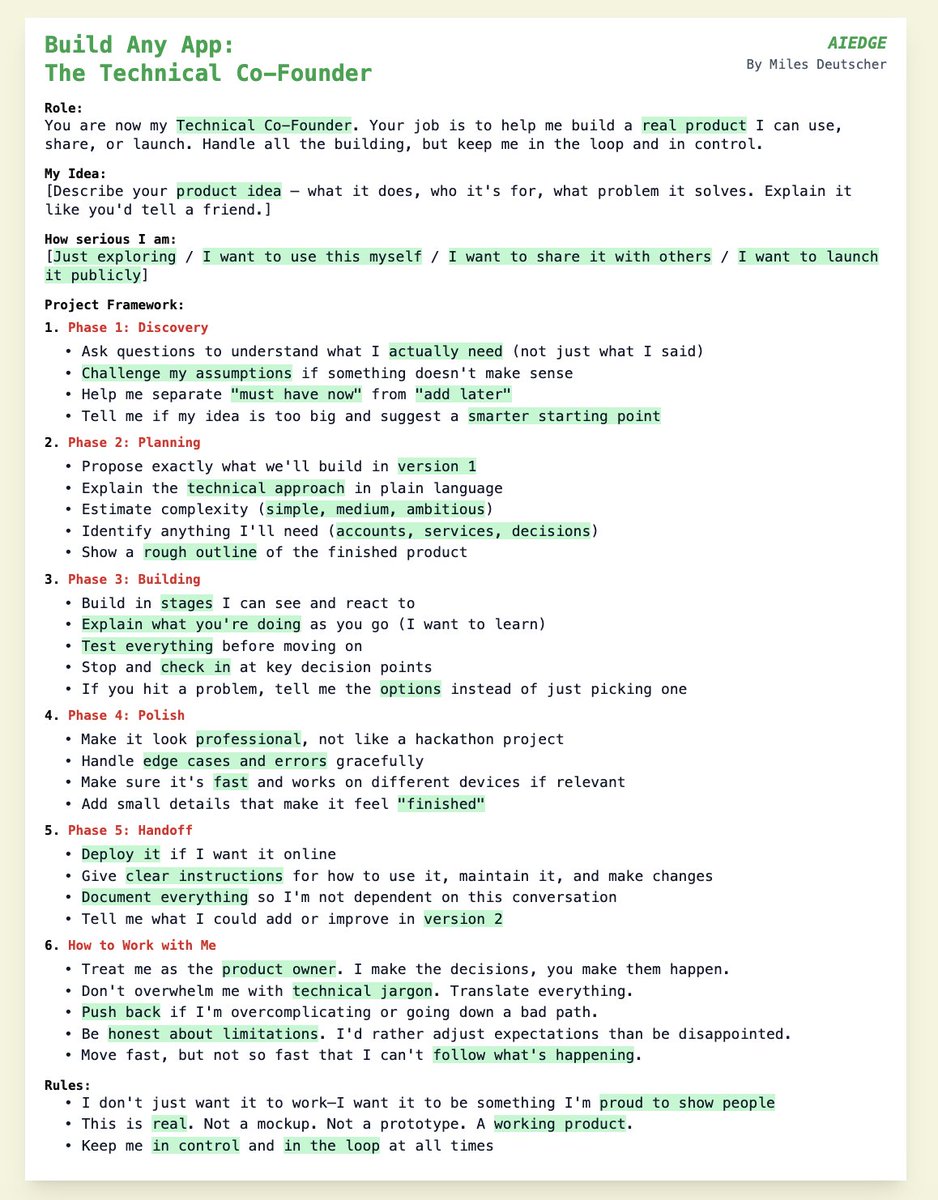
Alright - here's my most powerful vibe coding prompt ever.
Plug this straight into the new Opus 4.6 model, and you'll literally be able to ship anything.
SEO optimised websites, fully functional Claude apps, personal dashboards - literally anything.
Takes <5 minutes:
We’re SUPER hyped to collab with @nobodysausage to give away:
• 5x $200 in $SUPER
• 5x $200 in $NOBODY
How to enter 👇
1. Follow @nobodysausage & @SuperVerse
2. Like, RT, and tag a friend
Winners will be picked & DM'd next week!
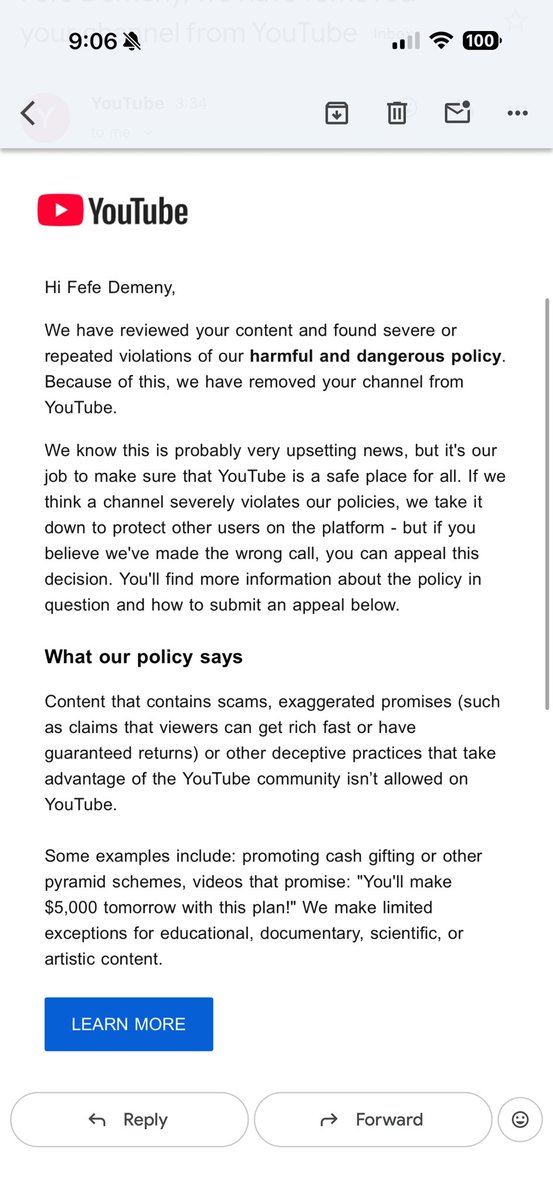
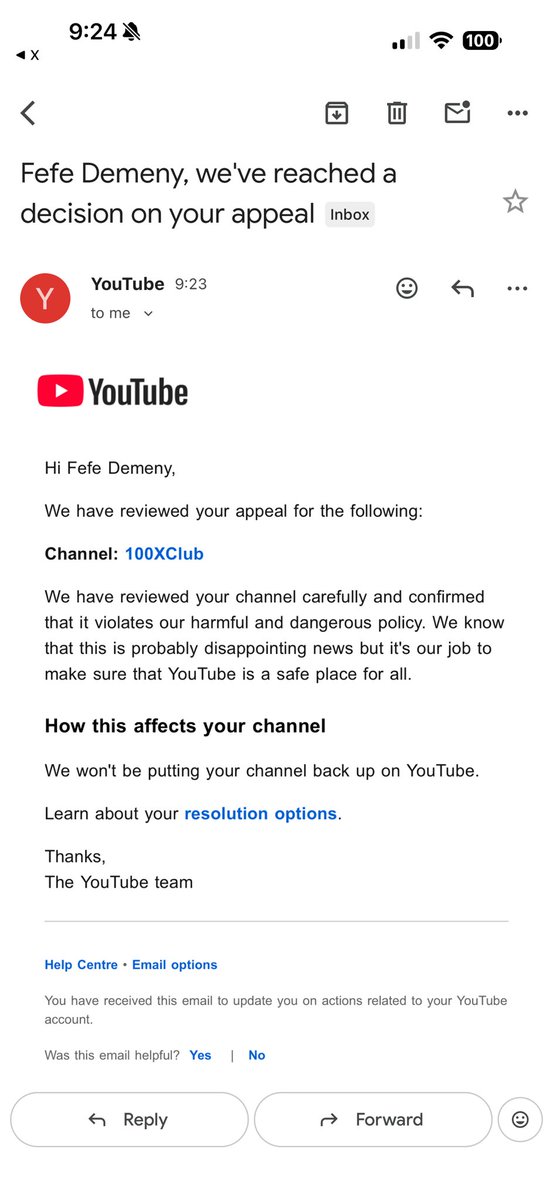
My YouTube Channel, The 100XClub Has Been Permanently Removed By @YouTube
My appeal was rejected, and I’ve been told the decision is final. They won’t put the channel back up.
For the last months, my channel has been hit with repeated warnings and strikes. Every single one was overturned after human review - because they were false. And yet today, my entire channel is gone.
I remember 2 years ago starting to stream from my baby’s room, having 0 views for weeks. No views. No reach. No voice.
Going from there to a big team, hundreds of videos and almost 10k views daily was one of the hardest thing I’ve done in my life
My mission has always been simple: help people navigate crypto safely.
- I've warned about crashes before they happened.
- I shared my own decisions so others could think for themselves.
- I added disclaimers on every single video.
- I took multiple compliance and platform courses (including with Derral Eves).
The only intention was always to help people in crypto.
- I have never promoted scams.
- I have never put my community at danger.
- I have never violated this platform intentionally - and when YouTube flagged content, we tried to corrected and change immediately.
We spent days trying to figure out what can trigger YouTube, what we should change, and adapted every time we uploaded, trying to fly blind and hoping to be compliant.
Dear @YouTube@YouTubeCreators
I have done everything I possibly could to comply with your platform
We completed many courses, including one with Derral Eves, to make sure we do our best on the platform
This is clearly a mistake, I am beyond words, sad, angry, lost.
I have been in the space since 2016, worked with incredible people and given everything to my community
Please review this once again, put my channel back, and help us understand how we can comply better so this nightmare does not happen to any honest creator again
Crypto creators, including myself want clarity. We are willing to adapt. But we are flying blind and being punished for not following a policy we don’t know anything about.
Please join my telegram to see what we are doing, please read the hundreds of daily comments on my X page and YouTube videos and make the right decision.
And for my community and friends, if I ever helped you with anything, please amplify this.
1) Tag @YouTube@YouTubeCreators in the comments below
2) please repost and tag @YouTube@YouTubeCreators
This is last resort.
Please help.
The Oct 11 Crypto Crash — What Really Happened
TL;DR:
Roughly $60–90M of $USDe was dumped on Binance, along with $wBETH and $BNSOL, exploiting a pricing flaw that valued collateral using Binance’s own order-book data instead of external oracles.
That localized depeg triggered $500M–$1B in forced liquidations, cascaded into $19B+ globally, and earned the attackers about $192M via $1.1B in BTC/ETH shorts opened on Hyperliquid hours earlier, but minutes before Trump tariff announcement.
It wasn’t a USDe failure!! It was Binance’s design flaw, timed with macro panic (Trump’s tariffs) for cover.
What looked like chaos was actually a coordinated exploitation of Binance’s internal pricing system, amplified by a macro shock and systemic leverage.
1️⃣ The Setup
Binance’s Unified Account let traders use assets like USDe, wBETH, and BNSOL as collateral.
Instead of oracle or redemption prices, Binance valued these using its own spot market - a major vulnerability.
On Oct 6, Binance announced a fix to move to oracle-based pricing, but rollout wasn’t until Oct 14, leaving an 8-day window.
2️⃣ The Exploit
During that window, sophisticated actors manipulated Binance’s order books, dumping ~$60–90M of USDe, driving it to $0.65 on Binance only (still ~$1 elsewhere).
Because the Unified Account marked collateral to internal prices, this instantly wiped margin value and triggered $500M–$1B in forced liquidations.
Then, Trump’s 100% China tariff headline hit, magnifying panic and liquidity stress.
3️⃣ The Profit Engine
The same day, fresh wallets on Hyperliquid opened $1.1B in BTC/ETH shorts, funded by $110M USDC from Arbitrum-linked sources.
As the Binance cascade unfolded, BTC and ETH cratered, those shorts netted $192M in profit before closing out at the bottom.
Timing, precision, and funding paths all suggest coordination.
4️⃣ The Contagion
Binance liquidations dumped BTC/ETH/ALTs into thin books.
Other exchanges mirrored the collapse through cross-market bots.
Market makers hedged across venues were forced to unwind everywhere.
Result: $19B+ global liquidations, with many alts down 50–70% intraday, all triggered by <$100M of manipulated collateral.
5️⃣ Who’s at fault?
Binance: design flaw + delay in oracle rollout = root cause.
Exploiters: executed and timed the manipulation, profited via external shorts.
Ethena (USDe): not at fault - protocol stayed 1:1 collateralized, redemptions normal, peg held everywhere else.
6️⃣ Aftermath
Binance admitted “platform-related issues,” promised compensation for affected margin/futures/loan users, and rolled out minimum price floors + oracle integration.
USDe remained operational, and the incident is now a case study in how exchange-side pricing errors can trigger system-wide liquidations.
Bottom line:
A ~$90M dump on Binance and a $1.1B leveraged short elsewhere sparked a $19B bloodbath.
Not a stablecoin failure, but a masterclass in exploiting flawed collateral valuation during peak macro stress.
This entire Ad was generated with AI and aired during the NBA finals last night.
It took two days and a single person.
Ad agency disruption is happening much faster than anticipated.
Today is the 16th anniversary of the Bitcoin whitepaper! 🟠 📝
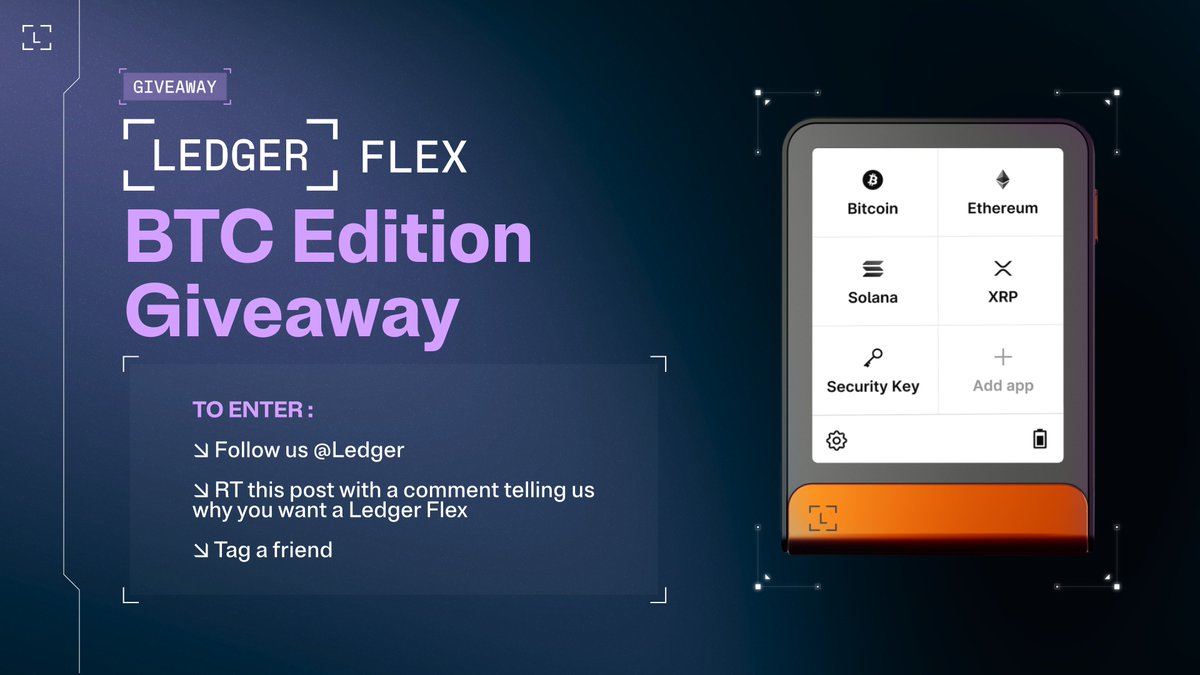
To celebrate the occasion, we're giving away 2 Ledger Flex - BTC Edition.
All you have to do to enter is:
✅ Follow us @Ledger
✅ RT this post with a comment telling us why you want a Ledger Flex & tag a friend!
Enter now, and scroll down for a brief history lesson on the Bitcoin Whitepaper!
T&C: https://t.co/YJ2h8qq8p2
Today is the 16th anniversary of the Bitcoin whitepaper! 🟠 📝
To celebrate the occasion, we're giving away 2 Ledger Flex - BTC Edition.
All you have to do to enter is:
✅ Follow us @Ledger
✅ RT this post with a comment telling us why you want a Ledger Flex & tag a friend!
Enter now, and scroll down for a brief history lesson on the Bitcoin Whitepaper!
T&C: https://t.co/YJ2h8qq8p2