Global Management Expert | IT Consultant | Educator @BMOD Academy | President & CEO @BMOD Network Solutions, BMOD Properties and Birth Right Charity Foundation.
@officialABAT@BwalaDaniel@aonanuga1956@OfficialAPCNg
From Subsidy Removal to Shared Prosperity
President Bola Tinubu’s removal of the fuel subsidy in 2023 improved Nigeria’s fiscal position, increased government revenue, strengthened foreign reserves, and supported economic stability. International organisations such as the IMF and World Bank have acknowledged these macroeconomic gains. However, many Nigerians have not felt the benefits. Rising fuel prices, inflation, higher transportation costs, and increasing food prices have reduced household purchasing power and deepened economic hardship. While government revenues have grown, poverty, unemployment, and the cost of living remain major concerns.
A key challenge is ensuring that subsidy savings translate into visible improvements in people’s lives. Although states received increased federal allocations, many citizens have seen limited progress in infrastructure, healthcare, education, and job creation, raising concerns about accountability and transparency.
To bridge the gap between macroeconomic success and household welfare, Nigeria should adopt a Shared Prosperity
Framework focused on:
Transparency in subsidy savings and spending.
Performance-based funding for states.
Cost-of-living relief programs.
Youth employment and entrepreneurship support.
Investments in roads, healthcare, education, and rural infrastructure.
Conclusion
Economic reforms can only be considered successful when ordinary citizens experience tangible improvements in their quality of life. The real challenge is not generating more revenue but ensuring that the benefits reach households, communities, and businesses across Nigeria.
Lessons from Osun: The Road to 2027
One lesson from the just concluded Osun election is that no political party should ever take the people for granted. The people may be quiet, but they are watching and they will speak through their votes.
As we look toward 2027, politicians must understand that leadership is about service, not power. Respect the people, engage the grassroots, deliver results, and avoid desperation. Elections are won by the trust of the people, not by intimidation or political might.
Osun has shown once again that the voice of the people remains the strongest force in any democracy.
BMOD
@OfficialAPCNg@davido@AAdeleke_01
Osun people are educated, informed, and strategic. They may be quiet, but they understand the power of their vote.
To APC leaders, members, and supporters: politics should be about serving the people, not building a career. Allegations of intimidation and violence have no place in a democracy. When leaders genuinely serve the people, there is no need for desperation.
This election should be a lesson in people centered leadership. Governance must be about the people, for the people, and with the people.
Congratulations to Governor Ademola Adeleke. Special appreciation to the Adeleke family and Davido for standing firm in support of the people and resisting what many viewed as political oppression.
Long live Osun State. Long live democracy.
Dr. Oluwole
BMOD
@davido@AAdeleke_01
IMOLE 💪
Osun people have spoken loudly despite APC’s alleged manipulation and thuggery.
Congratulations, Governor Ademola Adeleke (Imole), on defeating the desperate APC. Proud to call you my State Governor. The people have spoken; keep up the good work.
Reforms are happening at the macro level, but the pain is felt at the micro level.
Economic reforms are often designed to correct structural imbalances, improving government revenue, stabilising the exchange rate, reducing fiscal deficits, and strengthening long-term economic foundations. At the macro level, indicators may show progress: higher state allocations, improved revenue inflows, or better debt management. On paper, the economy may appear to be adjusting.
However, at the micro level, the reality is different. The removal of fuel subsidies and currency reforms has led to higher transportation costs, rising food prices, and increased business expenses. Wages have not kept pace with inflation, and households are feeling the strain. For many Nigerians, daily survival, feeding their families, paying rent, and covering school fees has become more challenging.
Beyond the economic hardship, there is a deeper concern: corruption, impunity, lack of transparency, and a deficit of public trust. These factors have historically weakened reform efforts in Nigeria. Even well-designed policies can fail if implementation lacks accountability and openness. When citizens do not trust that public resources are managed fairly and efficiently, confidence in reforms declines.
This creates a fear that, without genuine institutional discipline and visible integrity, the four or eight years of President Bola Ahmed Tinubu's administration could end up repeating familiar rhetoric rather than delivering transformative results. For reforms to truly work, economic restructuring must be matched with strong governance, transparency, and restored public trust. Without these, macro-level progress may never translate into meaningful micro-level improvement.
BMOD
@abati1990 @OfficialNRSNG
Nigeria Tax Reform Acts, 2025: Benefits, Burdens, and the Need for Fairer Enforcement
The Nigeria Tax Act 2025 serves as a comprehensive legislative framework that consolidates and modernizes the nation's fiscal policies by repealing several legacy tax laws. It establishes clear protocols for the taxation of individuals and companies, covering diverse categories such as personal income, capital gains, and value-added tax. A significant portion of the document is dedicated to the petroleum industry, detailing specific levies for upstream, midstream, and downstream operations, including hydrocarbon and petroleum profits taxes. The Act also introduces the Economic Development Incentive system, which provides tax credits and exemptions to priority sectors such as agriculture, manufacturing, and renewable energy to stimulate national growth. Furthermore, it outlines administrative procedures for stamp duties, double taxation relief, and the taxation of digital assets. Overall, the text serves as a definitive guide to revenue collection and fiscal compliance in the Nigerian economy.
The key reforms detailed in the sources include:
1. Consolidation and Repeal of Existing Laws
The Act serves as a "One-Stop-Shop" for tax legislation by repealing several major acts, including the Capital Gains Tax Act, Companies Income Tax Act, Personal Income Tax Act, Stamp Duties Act, and the Value Added Tax Act. It consolidates these frameworks into a single legislative document to provide clarity and a unified objective for Nigerian taxation. (SEE Nigeria Tax Act, 2025 2025 No. 7 A 393NIGERIA TAX ACT, 2025 ACT NO. 7)
2. Taxation of the Digital Economy
The Act modernizes the tax system by specifically targeting digital activities: • Significant Economic Presence (SEP): Non-resident persons are now taxable if they have a "significant economic presence" in Nigeria, which includes activities such as electronic commerce, online adverts, digital content services, and cloud computing.• Digital and Virtual Assets: The definition of chargeable assets for capital gains tax now explicitly includes digital or virtual assets. Profits or gains from transactions in these assets are also listed as chargeable income. (SEE Nigeria Tax Act, 20252025 No. 7A 404 insurance premiums or risks insured from the territory of Nigeria)
3. Corporate Tax and Global Minimum Tax Reform
Small Company Exemption: Small companies (those with a gross turnover of N50,000,000 or less) are now subject to a 0% tax rate.• Effective Tax Rate (ETR): To align with global minimum tax standards, the Act mandates that large companies (turnover of N20 billion and above) and constituent entities of multinational groups must pay an additional tax if their effective tax rate falls below 15%.• Development Levy: A new 4% development levy is imposed on the assessable profits of all companies (except small and non-resident companies) to fund various national sectors, including the Tertiary Education Trust Fund (50%) and Nigerian Education Loan (15%). (SEE Revenue Service (Establishment) Act, 2025; "services" for the purposes of Part IV of Chapter Eight of this Act, means – (a) anything, other than goods, or services provided under a contract of)
4. Introduction of New Levies and Surcharges
• Fossil Fuel Surcharge: A 5% surcharge is imposed on chargeable fossil fuel products provided or produced in Nigeria. This surcharge excludes clean/renewable energy, household kerosene, cooking gas, and compressed natural gas (CNG).
5. Value Added Tax (VAT) Reforms
• Incorporeal Supplies: VAT is now explicitly charged on the exploitation of incorporeal rights (intangible assets) registered or exercised in Nigeria.• Digital Platforms: Non-resident suppliers using online electronic or digital platforms are now required to register and collect VAT.• Focalization: Taxable persons must now implement focalization systems (electronic devices or software solutions) for electronic invoicing and real-time data transfer to the revenue service. (SEE Nigeria Tax Act, 2025 2025 No. 7 A 471 person in Nigeria, regardless of whether the payment for its exploitation is made within or outside Nigeria, or)
6. Petroleum and Energy Sector Reforms
The Act integrates and refines fiscal terms previously found in the Petroleum Industry Act: • Hydrocarbon Tax: Levied on profits from upstream petroleum operations (crude oil, field condensates, and liquid natural gas liquids).• Gas Incentives: Investors in gas pipelines are granted a five-year tax-free period. Additionally, specific gas production tax credits are provided for Non-Associated Gas (NAG) greenfield developments in onshore and shallow water terrains.
7. Personal Income Tax and Individual Reforms
Chargeable Income Adjustments: The Act introduces a rent relief of 20% of annual rent paid (up to N500,000) as an eligible deduction for individuals.• Presumptive Taxation: For individuals whose income cannot be easily ascertained due to a lack of records, a presumptive tax regime is established.• Exemptions: Individuals earning the National Minimum Wage or less are exempt from income tax.
8. Economic Development
Tax Incentives Act replaces older incentive regimes (like Pioneer Status) with a new Economic Development Tax Incentive system. Eligibility is based on a company investing a minimum threshold in "priority sectors" listed in the Act, such as aquaculture, manufacturing of electrical equipment, and renewable energy.
9. Business Restructuring
The Act provides specific rules for mergers and sales of businesses, ensuring that unutilised capital allowances and losses can sometimes be carried over to the surviving entity, provided the restructuring is not deemed "artificial or fictitious
Benefit to the Poor
The Nigeria Tax Act, 2025, includes several provisions designed to alleviate the financial burden on low-income earners and ensure that essential goods and services remain affordable. The specific benefits to the poor are outlined in the following areas: (See Nigeria Tax Act, 2025 2025 No. 7 A 411 PART V – ASCERTAINMENT OF ASSESSABLE PROFITS)
1. Personal Income Tax Relief• Minimum Wage Exemption: Individuals who earn the National Minimum Wage or less are completely exempt from paying income tax.• Zero-Tax Bracket: For those earning above the minimum wage, the Act introduces a 0% tax rate on the first N800,000 of taxable income, ensuring that the lowest portion of every individual's income is not taxed.• Rent Relief: Individuals can claim a rent relief deduction equal to 20% of their annual rent (up to a maximum of N500,000) when calculating their chargeable income. (see Nigeria Tax Act, 20252025 No. 7A 538)
2. VAT Exemptions and 0% Rating on Essentials To keep the cost of living down, the Act identifies critical items that are either exempt from Value Added Tax (VAT) or charged at a 0% rate:• Basic Food Items: A wide range of staples are VAT-rated at 0%, including bread, cereals (rice, maize, wheat, etc.), cooking oils, fish, flour, starch (such as garri), fruits, raw meat, milk, nuts, pulses (beans), and tubers (yam and cassava).• Health and Hygiene: Medical services, pharmaceutical products, and locally manufactured sanitary towels, pads, or tampons are protected from VAT.• Education: Tuition fees (from nursery to tertiary levels) and educational books and materials are charged at a 0% VAT rate.• Childcare: Essential baby products, including clothes, feeding bottles, and diapers, are exempt from VAT.• Disability Support: Assistive devices such as wheelchairs, hearing aids, and braille materials are exempt from VAT. Additionally, expenses incurred by any person on these devices are tax-deductible. (Nigeria Tax Act, 2025 2025 No. 7 A 489 (b) any instrument for sale, transfer or other disposition, either)
3. Affordable Energy and Transport• Fossil Fuel Surcharge Exemptions: While a 5% surcharge is imposed on most fossil fuels, household kerosene and cooking gas (LPG) are specifically exempted to protect the energy costs of average households.• Public Transportation: Shared passenger road-transport services are exempt from VAT, which helps keep commuting costs lower for the public (this excludes private car-hailing services).• Electricity: Electricity generated and supplied to the national grid or distribution companies (DISCOs) is 0% VAT-rated, which helps manage the end-user cost of power.
4. Social Funding and Incentives• Education Funding: The Act establishes a 4% Development Levy on large companies. A significant portion of this revenue is dedicated to the Tertiary Education Trust Fund (50%) and the Nigerian Education Loan (15%), increasing access to higher education for those who cannot afford it.• Incentives for Wage Increases: To encourage higher pay, companies are granted an additional 50% tax deduction for costs associated with wage awards or salary increases for low-income workers (those earning N100,000 or less monthly).
How Nigeria Can Improve Its Tax System
(My Recommendation Based on Nigerians’ Concerns, Compared with the United States)
Earlier access to courts and independent review
Nigeria can improve its tax system by allowing courts or independent tax tribunals to become involved earlier in tax disputes. In the United States, before payment is required, a taxpayer may go to the United States Tax Court without paying the tax first. This early judicial access protects taxpayers from premature enforcement and strengthens confidence in the system. In contrast, in Nigeria, the tax authority’s “direction” often creates liability first, with court review coming later. Allowing court review before enforcement, as practiced in the U.S., would significantly improve fairness and trust.
Faster and more accessible appeals process
The appeals process should be simpler and faster. Clear timelines, suspension of enforcement during active appeals, and the use of digital platforms for filings and hearings would reduce stress and prevent unnecessary harm to taxpayers before disputes are resolved.
Clear explanation of tax decisions
The government should require tax authorities to clearly explain every assessment or directive. Simple written explanations showing how tax amounts are calculated and which rules apply would reduce confusion, limit disputes, and encourage voluntary compliance.
Limits on administrative direction powers
Tax authorities should have clear and narrow limits on their power to issue unilateral directions. These powers should be used primarily for serious cases of deliberate tax avoidance and should be backed by internal checks, such as senior-level approval for major or sensitive cases, to prevent abuse.
Protection for small and medium-sized businesses
Small and medium-sized businesses are particularly vulnerable to sudden tax actions. The government should emphasize warnings, reasonable timelines for correcting errors, and flexible payment plans, while focusing on strict enforcement of large-scale, intentional tax evasion rather than honest mistakes.
Separation of tax enforcement from politics
To strengthen public confidence, tax enforcement must be clearly separated from political influence. Transparent rules, consistent application of the law, and independent review of high-profile cases will help ensure taxation is seen as fair and neutral, not punitive.
Education before enforcement
The government should priorities education before punishment. By providing simple tax guides, public awareness programs, and grace periods when new laws are introduced, most taxpayers will be better equipped to comply willingly and correctly.
BMOD
@officialABAT
One of the clear goals of these terrorists is to wipe out Western education in Nigeria. They openly declare that education is forbidden, and now some schools in Kwara State have already been shut down because of their attacks. If the President allows this to continue, then the government has failed in its most basic responsibility. This administration must urgently rise to its primary duty of protecting Nigerians and securing our nation.
BMOD
President Tinubu should stop all 2027 campaign moves and focus fully on fixing Nigeria’s insecurity.
Lives are being lost daily, communities are under attack, and citizens are living in fear.
This is not the time for politics
It’s a time for urgent action.
#EndInsecurityNow #SecureNigeria #ProtectNigerians #LeadershipFirst
@officialABAT@RealAARahman
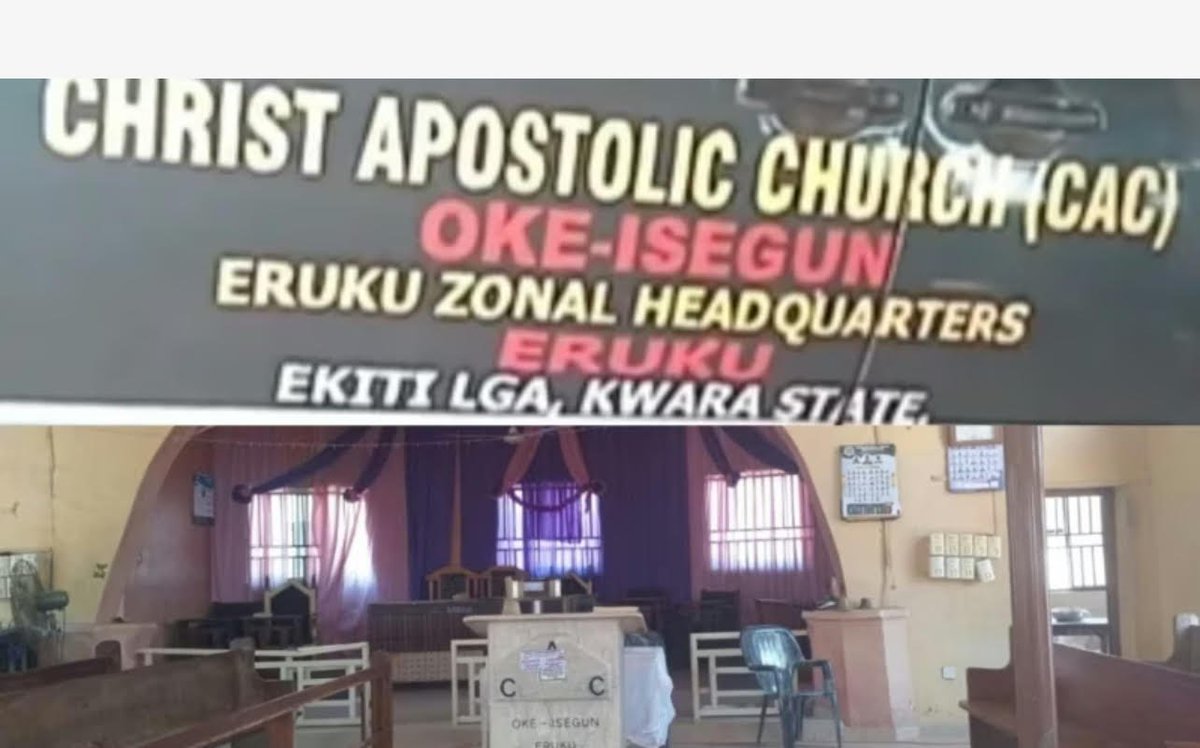
I strongly condemn the attack on CAC Oke Isegun in Eruku. This is especially painful for me because my mother is from this community, and my grandmother still lives there. I have barely been able to sleep after seeing that terrifying video.
I call on President Tinubu to act swiftly and protect the people of Eruku, who are currently gripped with fear. I also urge the Governor of Kwara State, AbdulRahman AbdulRazaq, to take decisive action and work closely with security agencies to identify these attackers and bring them to justice.
Above all, President Tinubu must ensure the safety of every Nigerian and make our country secure for all.
#PrayForEruku #SecureKwara #StopTheViolence #ProtectNigerians #KwaraState #Nigeria
BMOD
Research Participation Request – Agile & CMMI Professionals Needed
Dear Participant,
Participant Informed Consent Recruitment
Letter for Study Participation.
I am Biodun Paul Oluwole, a Doctoral Candidate in Business Analytics & Data Science at Capitol Technology University. I am conducting a study on how the integration of Agile and CMMI impacts regulatory compliance and operational efficiency across sectors such as finance and healthcare.
If you choose to participate, please complete a short online survey (about 15 minutes). Some participants may also be invited for a brief follow-up interview (20–30 minutes) to share additional insights.
Your participation is voluntary, anonymous, and confidential. You may stop at any time, and no personal identifying information will be collected.
All responses will be securely stored and reported only in an aggregated form. I kindly request your participation in this short anonymous survey. Your insights will make a meaningful contribution to my doctoral research.
Survey Link: https://t.co/t7HLJVsnIj
Thank you for supporting this academic research. Please feel free to share with other professionals who may qualify.
#Agile #CMMI #ProjectManagement #Compliance #Healthcare #Finance #DataScience #Research #PhDResearch#Survey
Research Participation Request – Agile & CMMI Professionals Needed
Dear Participant, Participant Informed Consent Recruitment Letter for Study Participation I am Biodun Paul Oluwole, a Doctoral Candidate in Business Analytics & Data Science at Capitol Technology University.
I am conducting a study on how the integration of Agile and CMMI impacts regulatory compliance and operational efficiency across sectors such as finance and healthcare. If you choose to participate, please complete a short online survey (about 15 minutes). Some participants may also be invited for a brief follow-up interview (20–30 minutes) to share additional insights.
Your participation is voluntary, anonymous, and confidential. You may stop at any time, and no personal identifying information will be collected. All responses will be securely stored and reported only in an aggregated form.
I kindly request your participation in this short anonymous survey. Your insights will make a meaningful contribution to my doctoral research.
Survey Link: https://t.co/t7HLJVsnIj
Thank you for supporting this academic research. Please feel free to share with other professionals who may qualify. #Agile #CMMI #ProjectManagement #Compliance #Healthcare #Finance #DataScience #Research #PhDResearch#Survey
Research Participation Request – Agile & CMMI Professionals Needed
Dear Participant,
Participant Informed Consent
Recruitment Letter for Study Participation
I am Biodun Paul Oluwole, a Doctoral Candidate in Business Analytics & Data Science at Capitol Technology University. I am conducting a study on how the integration of Agile and CMMI impacts regulatory compliance and operational efficiency across sectors such as finance and healthcare.
If you choose to participate, please complete a short online survey (about 15 minutes). Some participants may also be invited for a brief follow-up interview (20–30 minutes) to share additional insights.
Your participation is voluntary, anonymous, and confidential. You may stop at any time, and no personal identifying information will be collected. All responses will be securely stored and reported only in an aggregated form.
I kindly request your participation in this short anonymous survey. Your insights will make a meaningful contribution to my doctoral research.
Survey Link: https://t.co/t7HLJVsnIj
Thank you for supporting this academic research.
Please feel free to share with other professionals who may qualify.
#Agile #CMMI #ProjectManagement #Compliance #Healthcare #Finance #DataScience #Research #PhDResearch#Survey
@abati1990
🎉 Happy 60th Birthday, Dr. Reuben Abati!
Warmest congratulations on this remarkable milestone. You have been an exceptional and sound journalist whose voice continues to shape national discourse with intelligence, courage, and integrity. Your commitment to truth, accountability, and balanced analysis has greatly contributed to Nigeria’s growth and democratic progress.
As you celebrate six decades of impact, may you be blessed with continued wisdom, good health, and fulfillment in all your endeavors.
With deep respect and admiration,
Biodun Paul Oluwole
🎉 Happy 60th Birthday, Dr. Reuben Abati!
Warmest congratulations on this remarkable milestone. You have been an exceptional and sound journalist whose voice continues to shape national discourse with intelligence, courage, and integrity. Your commitment to truth, accountability, and balanced analysis has greatly contributed to Nigeria’s growth and democratic progress.
As you celebrate six decades of impact, may you be blessed with continued wisdom, good health, and fulfillment in all your endeavors.
With deep respect and admiration,
Biodun Paul Oluwole
Revenue Growth Must Reflect Human Development: A Policy Reflection for President Tinubu’s Administration
Nigeria’s fiscal performance in recent months has shown a positive trajectory, with significant growth in government revenue and improved federal allocations to states. This progress deserves acknowledgment, especially as it reflects better fiscal coordination and efficiency within the system. However, from an analytical standpoint, it is important to emphasize that revenue growth alone does not equate to national development.
While it is legally appropriate for the federal government to distribute funds among the three tiers — federal, state, and local — the real question remains: how effectively are these funds impacting citizens at the grassroots? The process of sharing revenue should not end at disbursement; it should begin with accountability, transparency, and measurable outcomes.
There is a growing perception among citizens that recent patterns of fund distribution may carry political undertones, particularly as the 2027 election cycle draws nearer. As an analyst, I prefer not to dwell on speculation or political conjecture. My focus remains on credible data and governance indicators. Available socio-economic data consistently show a limited correlation between increased allocations and improvements in key welfare metrics such as employment, education, healthcare access, and infrastructure quality.
President Bola Ahmed Tinubu’s administration has an opportunity to redefine how Nigerians perceive fiscal performance. Beyond the numbers, leadership is about ensuring that financial gains are translated into tangible social and economic progress. This can be achieved through stronger intergovernmental accountability frameworks, performance-based allocation models, and a renewed emphasis on data-driven governance.
Ultimately, Nigeria’s success will not be measured by the size of revenue distributed but by the extent to which those funds uplift communities, empower citizens, and enhance the nation’s overall quality of life. Revenue growth is commendable — but it becomes meaningful only when it reflects in the daily experiences of ordinary Nigerians.
BMOD
With love, we can build.
@officialABAT@channelstv@ARISEtv
Revenue Growth Must Reflect Human Development: A Policy Reflection for President Tinubu’s Administration
Nigeria’s fiscal performance in recent months has shown a positive trajectory, with significant growth in government revenue and improved federal allocations to states. This progress deserves acknowledgment, especially as it reflects better fiscal coordination and efficiency within the system. However, from an analytical standpoint, it is important to emphasize that revenue growth alone does not equate to national development.
While it is legally appropriate for the federal government to distribute funds among the three tiers — federal, state, and local — the real question remains: how effectively are these funds impacting citizens at the grassroots? The process of sharing revenue should not end at disbursement; it should begin with accountability, transparency, and measurable outcomes.
There is a growing perception among citizens that recent patterns of fund distribution may carry political undertones, particularly as the 2027 election cycle draws nearer. As an analyst, I prefer not to dwell on speculation or political conjecture. My focus remains on credible data and governance indicators. Available socio-economic data consistently show a limited correlation between increased allocations and improvements in key welfare metrics such as employment, education, healthcare access, and infrastructure quality.
President Bola Ahmed Tinubu’s administration has an opportunity to redefine how Nigerians perceive fiscal performance. Beyond the numbers, leadership is about ensuring that financial gains are translated into tangible social and economic progress. This can be achieved through stronger intergovernmental accountability frameworks, performance-based allocation models, and a renewed emphasis on data-driven governance.
Ultimately, Nigeria’s success will not be measured by the size of revenue distributed but by the extent to which those funds uplift communities, empower citizens, and enhance the nation’s overall quality of life. Revenue growth is commendable — but it becomes meaningful only when it reflects in the daily experiences of ordinary Nigerians.
BMOD
With love, we can build.
@ARISEtv@channelstv@officialABAT@ruffydfire
Breaking the Silence: Nigeria’s Path to True Sovereignty in Global Diplomacy
My friend I discussed with recently argued that there are double standards in international diplomacy—when America freely comments on political or human rights issues in Nigeria, yet Nigeria cannot do the same about problems in the United States, such as gun violence or racial injustice. From an analytical standpoint, this observation raises valid questions about fairness and balance in global relations. Smaller nations often find themselves constrained by diplomatic norms, fearing that open criticism of major powers might affect economic aid, trade benefits, or political alliances. As a result, many developing countries, including Nigeria, exercise caution when responding to Western commentary, even when such issues directly affect their image and sovereignty.
As an analyst, I have mixed feelings about this. On one hand, the United States positions itself as the global defender of democracy and human rights, which explains why it comments on governance and security issues abroad. On the other hand, it reflects double standards when America overlooks its own challenges—mass shootings, racial discrimination, homelessness, and social division—while lecturing others. This behavior often reinforces perceptions of moral hypocrisy and undermines the credibility of U.S. foreign policy in the eyes of developing nations who are expected to “listen” rather than “respond.”
For true sovereignty, developing nations like Nigeria must take decisive steps toward self-reliance. Nigeria should gradually stop depending on foreign aid and assistance, which often come with conditions that weaken national independence. Instead, the country should focus on building a resilient economy, investing in technology and innovation, strengthening its military capacity, and ensuring food and energy security. A nation that feeds, defends, and finances itself commands respect on the world stage. To be heard equally in international diplomacy, Nigeria must rise from the shadow of dependency and assert itself as a sovereign, self-sufficient, and confident nation.
BMOD
With Love We Can Build
To address the root causes of conflict in Nigeria, President Bola Ahmed Tinubu, alongside the new service chiefs, legislators, and cabinet members, must work collectively to strengthen national institutions and promote inclusive governance. Effective collaboration between the executive, legislative, and military arms of government is crucial to tackling insecurity, corruption, and inequality—the major drivers of unrest.
The Tinubu administration should prioritize policies that ensure equitable resource allocation, uphold justice, and reinforce law enforcement structures that respect human rights. By fostering synergy among the armed forces, judiciary, and lawmakers, Nigeria can build a foundation for peace, stability, and national unity across ethnic and regional lines.
Moreover, sustainable prosperity requires establishing strong economic and social structures that empower citizens and promote shared growth. The Tinubu-led government, in partnership with legislators and cabinet members, must implement strategic reforms in education, job creation, and industrialization to reduce unemployment and poverty, which often fuel conflict. Encouraging transparency, youth participation, and regional development will build trust between citizens and government institutions. Through collective leadership, visionary governance, and strengthened democratic institutions, Nigeria can overcome its deep-rooted challenges and chart a new path toward enduring peace, prosperity, and national cohesion.