Marc Andreessen just shocked the world on JRE.
He revealed the government is:
• Kicking people off banking networks
• Using NGOs to do their dirty work
• Secretly trying to control AI
I took a day to digest it all...
And these are the 11 things I can't stop thinking about:
🚨Win an Antminer S21 + 1 Year of Free Hosting🚨
~$8,400 of value!
How to enter?
Like, RT, Follow, and Sign up for the Blockware Marketplace = 1 Entry
Buy an ASIC on the Blockware Marketplace = 10 Entries
The giveaway runs through the end of January.
Good luck!
Whats "next", after BTC ETF [assuming BTC doesnt shit the bed]:
1. ETH ETF narrative, benefits LSD's and L2 tokens
2. Eyeballs back on unlaunched L2s to play same games again [memecoins, defi on zk, scroll, strk]
3. Restaking tokens [Eigenlayer and others]
4. BTC "ecosystem"
As someone who works in crypto, but has a background in both reinsurance and tradfi, I have some views here. To give a little background, I've been involved in the tokenization of assets at scale, I've traded all kinds of fixed income, and I've managed one of the largest ILS portfolios in the world. I'm not speaking as a casual here.
Some thoughts:
1 - You do not get to magically say blockchain lowers risk and wave your hand at it, then move on. In many cases, tokenizing assets and putting them on a blockchain is adding a layer of risk (you've added another ledger and a 24/7 system with different behavior on top of your already existing ledger, often on a different timescale), not removing it. Yes, there are theoretical benefits to using a blockchain, such as transparency of the token, tracking, and so on... but many of the alleged benefits (such as eliminating counterparty credit risk) have not even been competently built on-chain yet for abstracted or generalized use cases, much less in a way that also would eliminate it in the underlying market. In short, the majority of tokenized real assets probably add risk, not reduce it, in the current environment.
2 - One of the reasons I am so deeply skeptical of the tokenization of assets by crypto natives is that to understand how to tokenize an asset, especially off-the-run assets that already have not gained significant real-world adoption, you need to have a deep understanding of the asset itself. Raising parametric insurance contracts as an example here with absolutely zero discussion of the core problems with the parametric insurance contract market (namely basis risk and measurement disputes) that have nothing to do with a blockchain is just absolutely wild. This is like saying the core problem with horse adoption is lack of awareness or distribution of horses and completely ignoring the existence of the automobile. I want to be clear as someone who has worked in these markets: parametric insurance and private debt markets are deep expert markets with real-world structure problems that blockchains do not solve. Tokenizing and distributing markets that are complex and explode like live grenades in the hands of even sophisticated investors, but doing it retail? That is nothing more than a deeply cynical and morally repugnant cash-grab. Again, throwing these out casually is precisely the problem; this is classic hype merchant behavior of dispensing magic keywords without any understanding of the underlying structure, and indicative of the sort of thing that should cause you to throw out an entire pitch from someone when you see it.
3 - You do not disintermediate many of the things referenced (IBs, trustees, servicers, lawyers, auditors, etc.) by tokenizing assets. Unless the asset is a natively crypto asset, which is demonstrably not the case if we are tokenizing real assets, you still need all those things back out in the real world. Yes, for purely crypto applications or clever designs for some specific real-world use cases, it's possible to have some degree of "code is law" type implementation, though man, I really do not think people understand both the implications of that or how to do that in an effective manner. @lex_node writes about this often and far more effectively than I could, so let me just shill his handle here as someone who has opinions so informed on this topic it's probably unhealthy.
4 - You also don't get to magically say all this data exists on blockchains. It's often the collection of the data itself that is the problem. Slipping in references about sensors, drones, and wearables as though we are going to live in a 24/7 complete and total surveillance state to get slightly better settlement on a blockchain is again, deeply cynical (that, or the author genuinely believes in a more authoritarian dystopia than anything which currently exists on the planet). How, precisely, are we going to have real-time data about many private credit agreements? Do we think businesses are going to publicly put every single shred of their data on-chain to be analyzed? Track their employees in real time like they are automatons and put it all on-chain? Again, this is just confounding and unprofessional stuff.
I suppose I simply find it profoundly disappointing and sad that this is the state of the pitch for real assets on chain. If an intern had handed me something like this when I ran a trading desk, I'd have sent them home for the summer and told them they weren't getting a job. This is so far below replacement level in terms of how to think about or build fundamental structures on chain that I would have to write a post 20x as long just to explain how broken some of this thinking is, and how fundamentally we have to re-work some of these assumptions to get to a place where we can truly get useful things on-chain in a way that will improve the lives of people in the real world.
1/ Just finished reading the draft plan of reorganization filed by FTX (i.e. JR3 and team).
Headline points:
- US and Intl recover from separate pools
- Maybe restart FTX Intl
- Crypto claims going to be assessed in USD at Ch 11 date
- Mostly waffling
Quite disappointing.
So BlackRock, Citadel, Deutsche Bank and NASDAQ have all started to enter the crypto space in the last week.
They've bullied out participants so they can scoop up cheap coins.
The trajectory for crypto has never been more clear.
After the Celsius claims deal, there’s a big question:
“What could FTX2.0 learn from it?”
What if you combined ideas from both the Celsius deal and the 2016 Bitfinex IOU token deal? What might it look like?
Here’s an FTX2.0 🧵 to spark ideas 👇 pls share+comment. Never know!
1/ BREAKING: The U.S. Chamber of Commerce has just filed a brief in the @Coinbase v. SEC case, calling out the SEC for acting "unlawfully" in the digital asset space.
This is The U.S. Chamber of Commerce--not the Chamber of Digital Commerce.
This is a Big Deal.
Here's why...
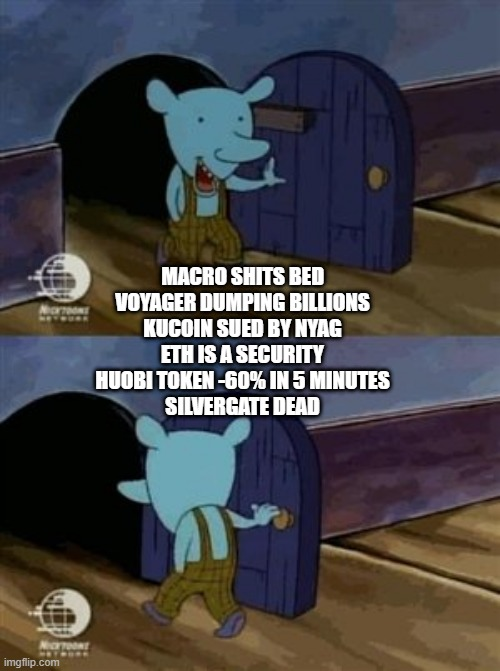
Pour one out for Voyager creditors
FTX gonna save us🙏
FTX implodes 💀
Binance gonna save us 🥳
US blocks sale 😳
Court allows sale to go through 😩🙏
Binance pulls out 🪦
For two years, Democrats gave @GaryGensler a pass for his disastrous agenda. It's time for accountability. From his destructive climate disclosure rule to his regulation by enforcement of digital assets, Chair Gensler’s agenda has weakened capital markets & stifled innovation.
Some of this year's biggest pumps have been driven by aggressive Korean bidding.
$APT and $ARB are recent examples.
I've found a method that you can use to spot Korean pumps EARLY.
🧵: Here's your full guide.👇
[DB] US Govt Sold 9,800 BTC on March 14, Intends to Sell a Further 41,500 BTC Connected to Silk Road in Four Batches Over the Course of the Year: Court Filing
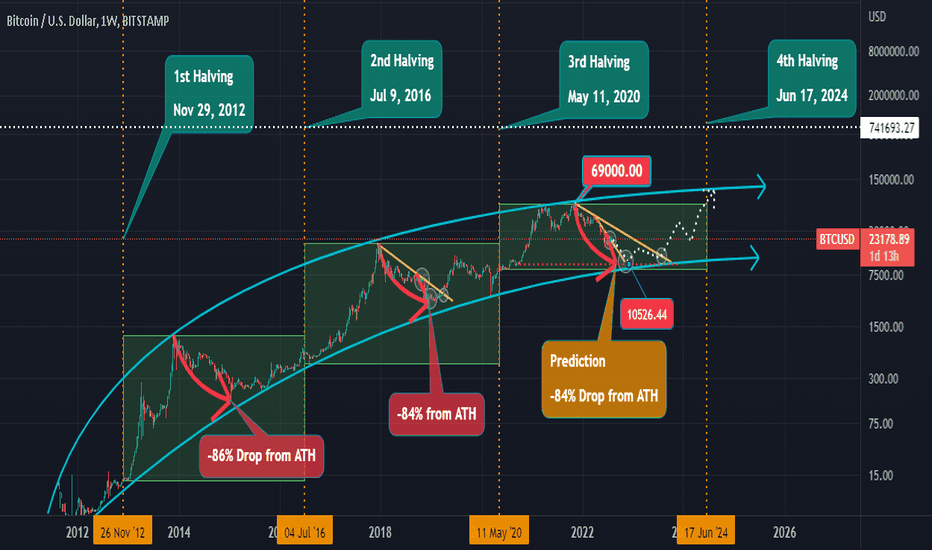
$BTC Halving: Do you want DCA or stay poor
Halving cycle returns:
1st cycle: 50,000%
2nd cycle: 12,000%
3rd cycle: 2,000%
4th cycle (expected): April-May 2024
As with all new assets (Bonds, Commodities, Derivatives, etc) as adoption continues it leads to lower volatility.
1/n
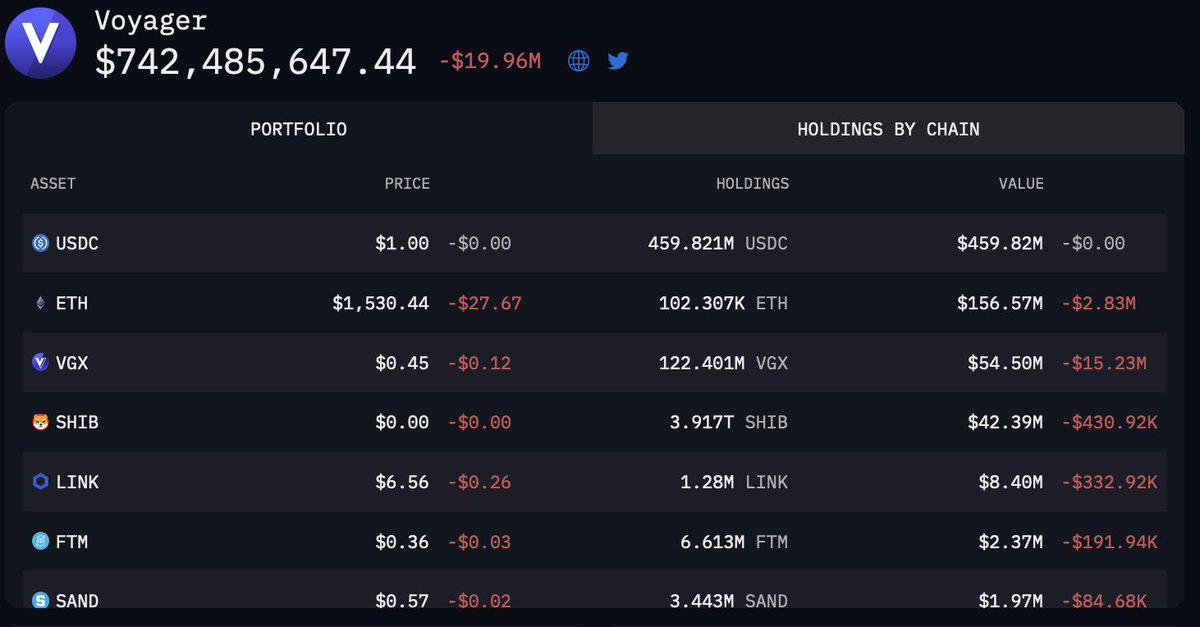
Voyager is in the process of liquidating their on-chain assets.
They are currently sending 7-8 figures of crypto to Wintermute and Coinbase addresses daily.
They have over 100K ETH remaining to sell off - that's over $150M!
Arkham will be dropping a deep-dive at 12:00 EST.
$FLEX is up more than 20% after a Seychelles court approved the restructuring plan for crypto exchange CoinFLEX.
@oknightcrypto reports
https://t.co/GPrAq6ckoH