Video needs a lot of work.
I'm going to make two posts. The first is about what Chainlink actually is and the other is about the token.
1. You have an early slide about how Chainlink processes $18B in cross-chain volume each month and then all of the rest of your discussions were about Chainlink as "price feeds or a "data layer."
You have entirely missed what Chainlink actually is:
Chainlink is the global orchestration layer that sits above and across all blockchains and external systems.
Think like this:
Blockchains have nodes that generate consensus only around two things: They order transactions and agree to state changes about their own state.
These nodes know nothing about anything happening in the real world or even on other chains.
Developers can write and excute code using the EVM or SVM on these chains, and then add oracles and bridges at the end to give them more features.
^ This is the *old* way of how apps used to get built.
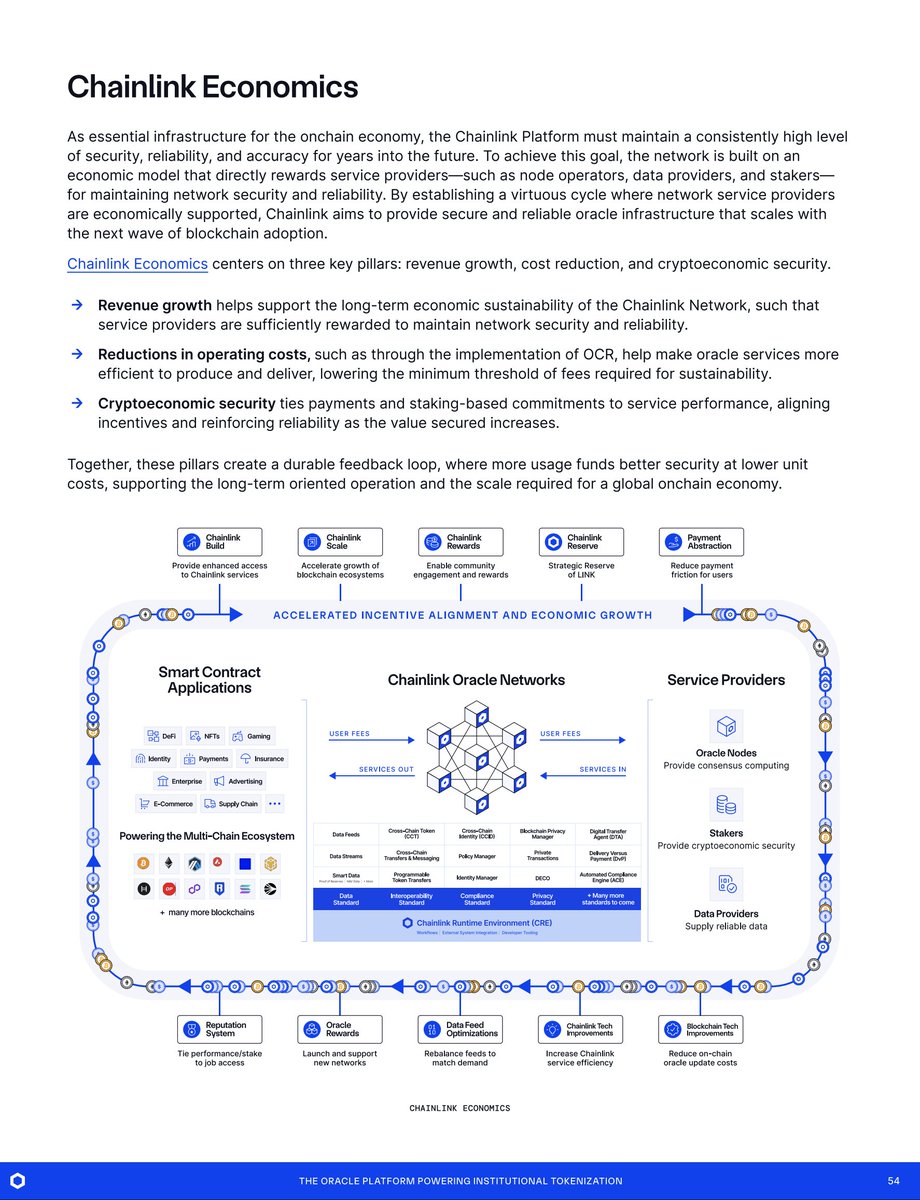
Chainlink rebuilt its entire protocol from scratch into a fully programmable platform. What does that mean?
What the EVM or SVM were to a blockchain network, CRE (Chainlink Runtime Environment) is to oracle networks.
You can now program networks of oracle nodes (just like with blockchains) do perform "consensus computing" about a much wider range of tasks and services than what blockchain nodes can.
Using CRE, you can now build applications that are natively data-enriched (have access to any API or access any market data), cross-chain, cross-system (yes chains are now connected to non-chain networks like Swift, DTCC, credit cards, Fedwire, etc), have onchain identity, end to end privacy (yes Chainlink makes smart contracts on public chains private), and compliance.
You now *WRITE* and *EXECUTE* this workflow code that now runs on top of Chainlink networks the same way you would with a blockchain.
This is how institutions adopt blockchains, not by betting on specific chains, but integrating with a unified platform that provides them access to any public or private chain
While blockchains fiercely compete amongst each other to become the transactional database layer, Chainlink wins regardless of which chains are used
For Chainlink, every new blockchain introduced to market is all the more justification for why organizations need a global orchestration layer to manage the complexity
Financial market infrastructures like Swift, DTCC, and Euroclear understand this, which is why they have adopted Chainlink alongside J.P. Morgan, Mastercard, Central Bank of Brazil, UBS, SBI, Fidelity International, ANZ, and many others
Developers used to build on blockchains and plug in Chainlink at the end.
Now, developers build on Chainlink and plug in whichever number of blockchains they want to be live on.
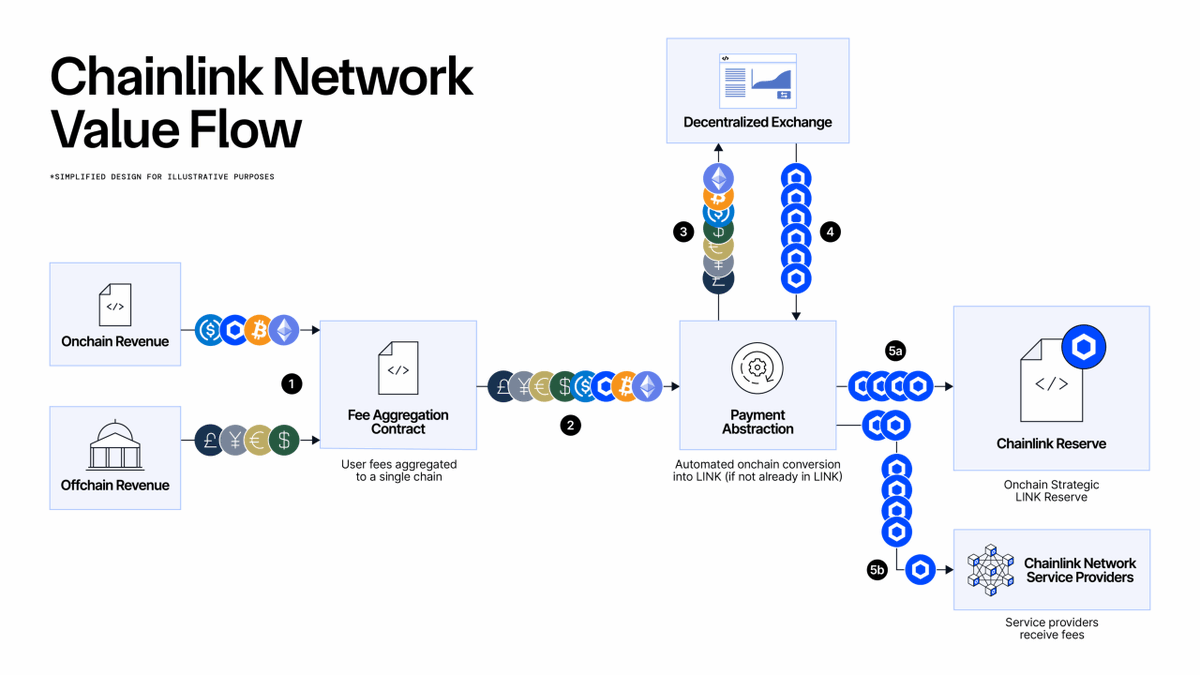
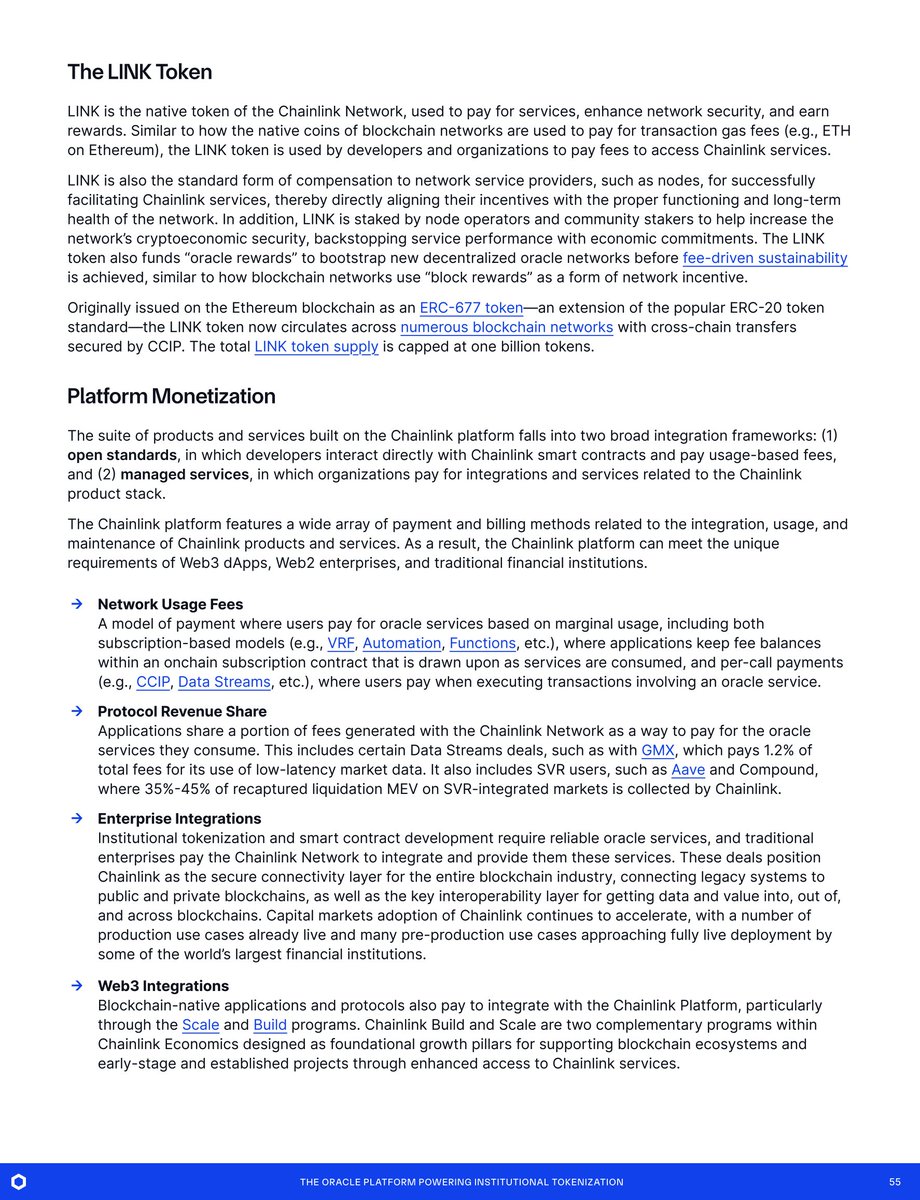
See the two images at bottom.
Rob asked why a powerhouse like @coinbase would select @chainlink's CCIP as its interoperability standard.
Charles Dunkin’s response highlights the two most critical components for any institution moving assets onchain: Data Reliability and Global Liquidity.
He says that Coinbase is utilizing CCIP to unlock the "liquidity of the entire DeFi community."
I believe the bull case for $LINK is straightforward, I would distill the thesis down to:
1. Chainlink continues to expand its dominant market share as the critical infra platform powering the most important crypto use cases (institutional DeFi, RWA tokenization, prediction markets, stablecoins, etc)
2. Growing demand for Chainlink's data, interop, privacy, compliance, & orchestration services leads to increasing demand for LINK tokens (native payments, programmatic buybacks, staking collateral, etc)
3. LINK is a digital commodity whose total supply is capped at 1 billion, meaning when growing demand combined with expanding supply sinks outpaces available on-market supply → buyers must raise their bids to find a willing seller
4. All 1 billion LINK tokens can only be acquired from someone who already owns it, no new units can be printed → demand-drive scarcity becomes an inherent property of the asset
In short, the thesis is that $LINK becomes increasingly scarce as the value that the Chainlink platform generates is captured by the token
Naturally, this story will need to prove itself over time, job's not done
But the hardest part is not perfecting the economics today (this can always be fine-tuned), it's becoming the indispensable industry standard whose value is unquestionable. The economics will naturally flow from there
As former Google CEO Eric Schmidt put it at Chainlink's SmartCon 2022: "Give me a hundred million users, and I will find a way to monetize them"
@vibhu@drip_haus Only minting base/common collectibles by claim is the easiest solution to control numbers but that may lead to inactive users getting airdropped Rare/Legendaries - doesn't seem right when you need to interact to get a common
@vibhu@drip_haus Like your idea to mint all collectibles only by claim (1-2 week expiry).
Downside would be an uncontrollable number of Rare/Legendaries as it would depend on how active users are (e.g. would an unclaimed Rare just disappear?)
Appreciate your transparency
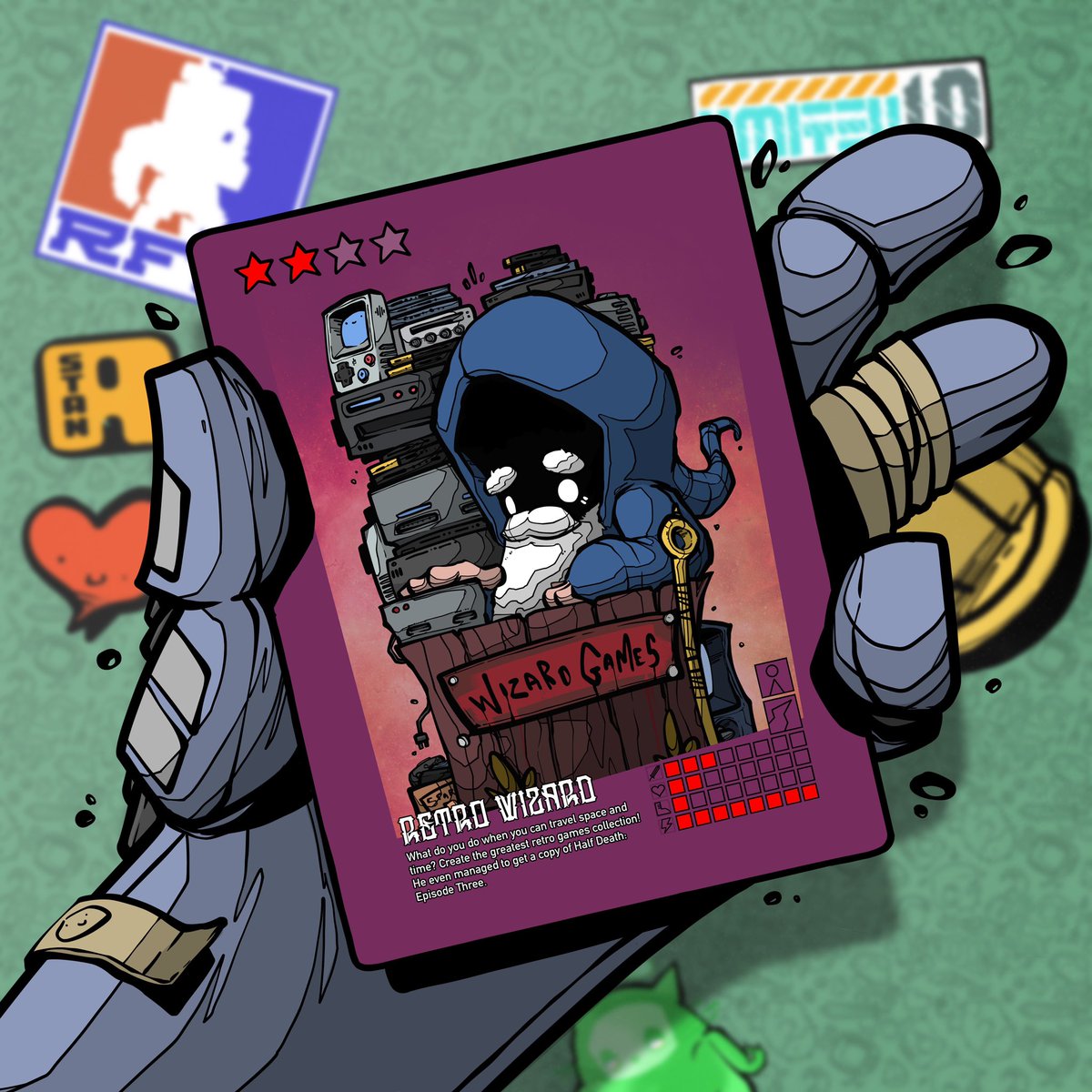
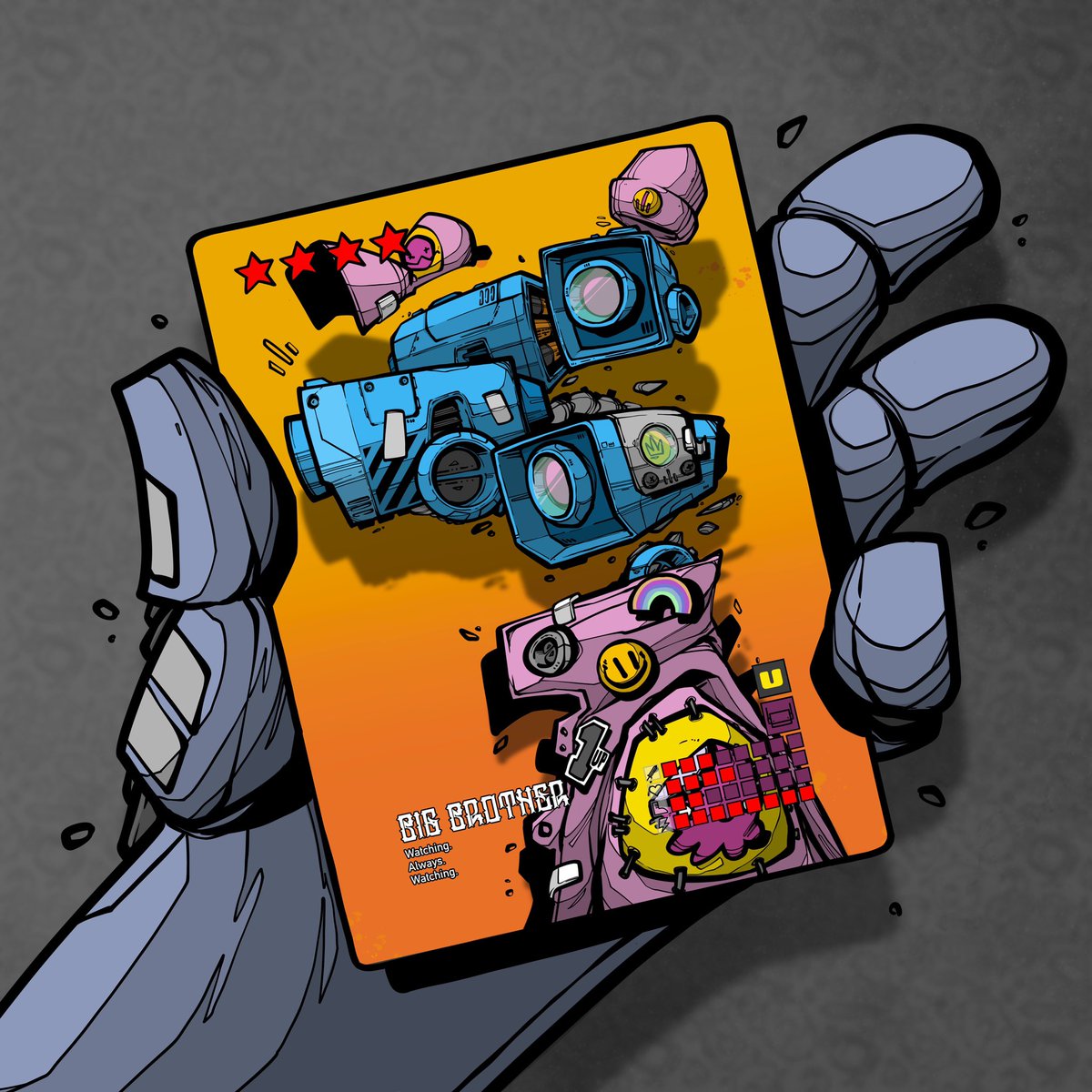
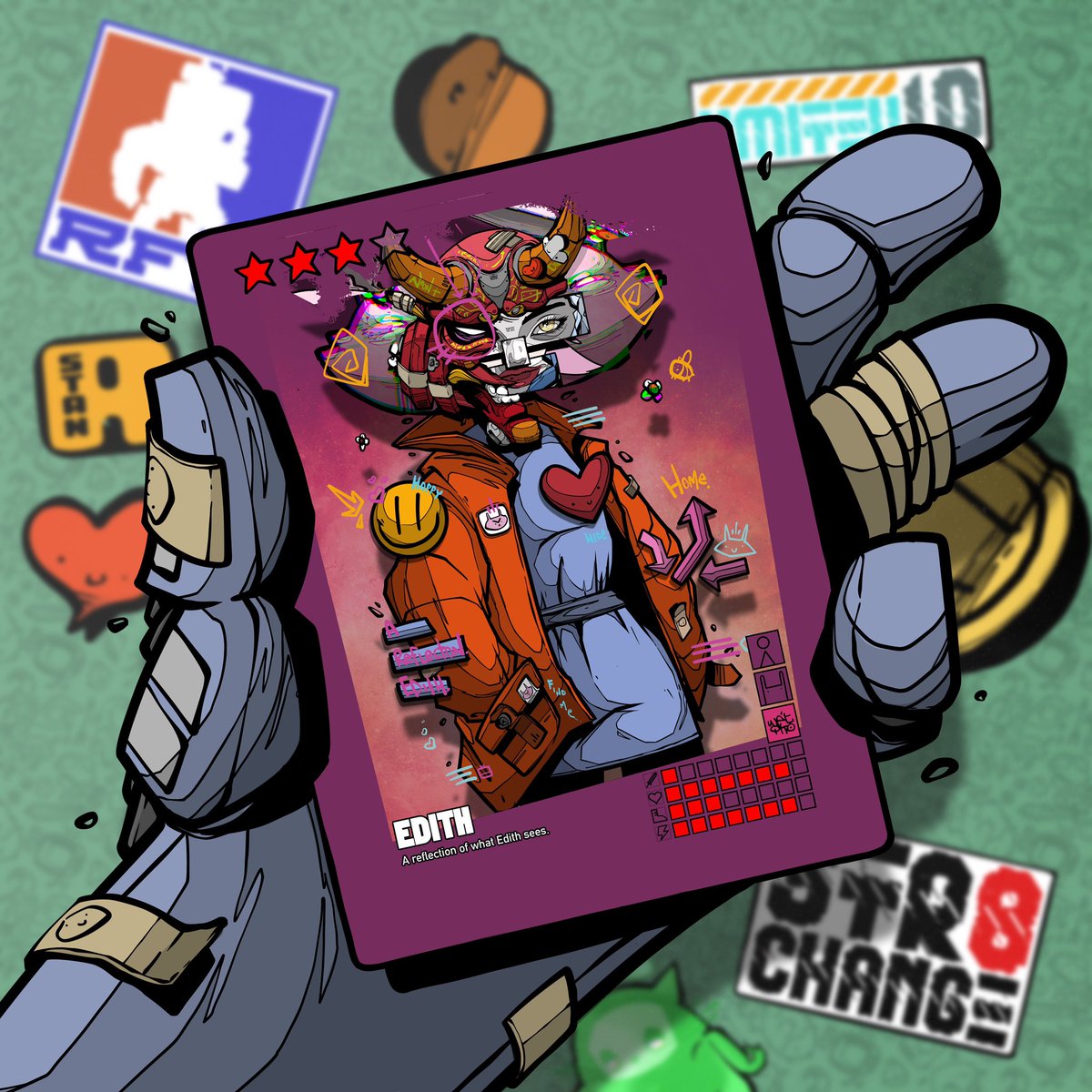
And speaking of @drip_haus here is the three cards you can get this week plus the Ultimate that was won.
Makes sure to get top 20 on the leaderboards and guarantee that Legendary featuring last months Doombox week winners idea @wetikos
Shout out to @Createdby_imrie, dude dropped hidden easter eggs in his NFTs that led to his first @drip_haus Ultimate!
Could have easily gone to whoever could throw down the highest bid; mad respect for giving everyone a shot
Watch this cryptic MF, more are coming...
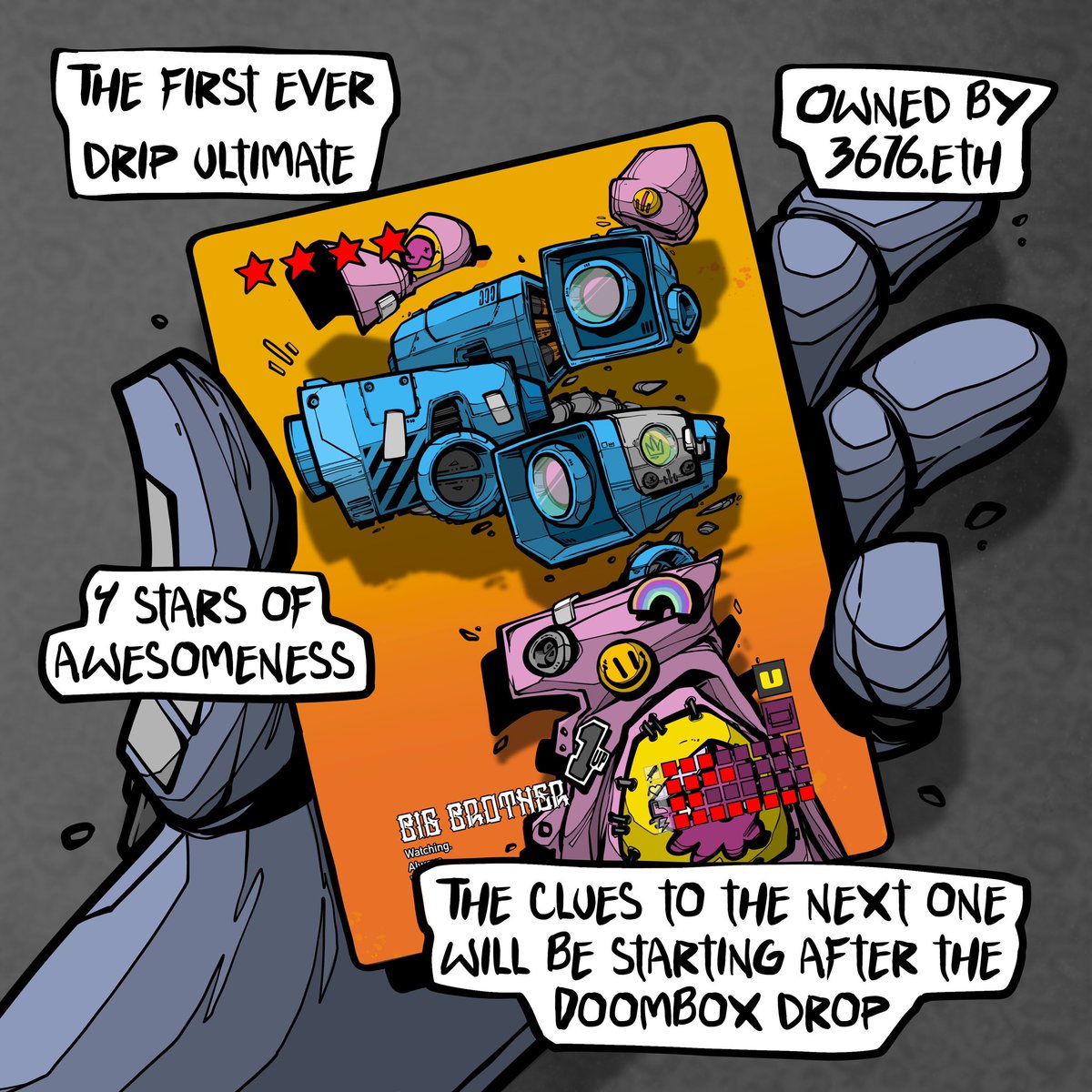
The first ever @drip_haus ultimate!
Clues solved by @offtrail_eth pretty quickly too, might need to make them a wee bit harder next time :)
Who will solve the next one?