@Xinyu540@Aphation_ My guess is it comes through the data-sharing APIs banks already run for budgeting apps: a token, scopes, a revoke button. The plumbing is there.
What's mostly missing in the US is a scope that lets an agent pay with a limit, not just read.
@0xStephen_ Fake RPCs are the sneaky part. An RPC can't touch your keys, but it can lie to your wallet: fake balances, fake token data, a clean-looking tx preview.
Only add a network from the team's own docs, never from a link in the replies.
@fredwalton216 Question for the lawyer side: doesn't Reg E already treat transfers by someone you gave your access device to as authorized, until you tell the bank to stop?
Feels less like a new rule and more like banks spelling it out for agents. Or am I missing something?
@BalaiBB The OS is part of the wallet now.
If you can't update tonight: Lockdown Mode turns off JIT in Safari, which a lot of these browser exploit chains depend on. An ad blocker cuts the delivery path too.
Keys for real money belong on a hardware wallet, not the phone.
@coinbureau Crypto is the only market open this weekend, so it's already trading Monday.
Aug 2024 went the same way: BTC dumped over the weekend, then Monday opened with the Nikkei down 12%.
Not a guarantee, but weekend crypto is the best preview we get.
@benjamincowen's base case: Bitcoin is going into its four-year cycle low.
A higher low here would leave on-chain unreset. Then the 2027 rally fades by August or September, like 2015 and 2019.
He's not treating a bounce as the all-clear.
@raby_web@Ashutosh_7x7 Thanks. The cost is UX: two sessions, and the reader has to hand off to the actor instead of just doing it.
Worth it the first time a page tries to talk your agent into something.
@ishanick3 Signatures belong on that list too. A Permit or Permit2 signature is an approval made off-chain, so it won't show in your approvals list until the attacker submits it.
If a site asks you to sign a message naming a token and an amount, read it twice.
@Mudit__Gupta@sandeepnailwal Funded keys beat plain canaries. Someone can sit on a stolen API key quietly, but a wallet with real money in it usually gets swept fast.
One unique funded key per provider, and the sweep tells you exactly which hop leaked.
@Cointelegraph Pump fun says the key is encrypted before it's sent. Still sent. A private key that has left your wallet once can't be taken back.
If you migrate anyway, move the funds to a fresh wallet first, then paste the empty one.
@fere_ai Chainflip’s own number is $4.86M, and they’ve sent the BTC holder a 90/10 offer on-chain, open until 18:38 UTC on 23 Nov.
The ETH side already went into Tornado Cash per PeckShield, so the BTC is the part worth watching.
@KongBTC Bridge exploits and leaked creds in the same week. That’s usually when people start asking how many places their data sits that they never chose.
Extreme Fear and privacy bids at the same time make more sense than it looks.
Rough weeks show who’s building for the mission and who’s building for the chart.
Privacy only stays a right if someone keeps shipping the network that protects it, whatever the week looks like. Anyone is doing that.
Whatever headwinds come our way, the mission never moves. Privacy is a human right, and building the network that protects it is the work, no matter what any given week happens to throw at us.
We've kept our heads down and kept shipping because what we're building was never going to be shaped by the noise around it.
Every upgrade we make and every layer we harden is another step toward an internet where people actually decide what they give away rather than having it taken from them.
And the groundwork going in right now is about to open up what this network can really do. The part that connects real demand to real reward for the people powering it is closer than it has ever been, and when it lands, you'll understand why we stayed so focused.
Our mission has never been clearer.
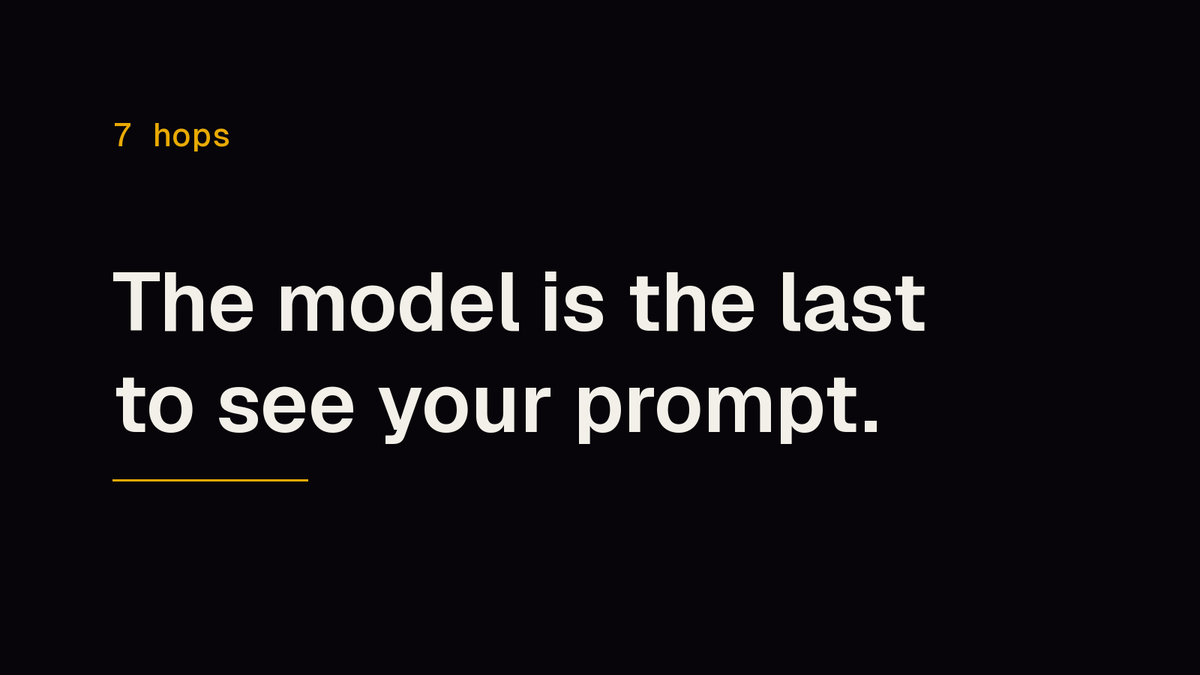
Training is the last hop.
Consumer ChatGPT can train on chats unless you opt out. Temporary chat skips training, but OpenAI may keep it 30 days for safety. Dragos saw a secret URL fetched over two months after one request.
Which of these seven hops have you locked down?
Your prompt can leak seven times before you get an answer.
Keyboard, app, screen, network, provider, plugins, training.
Dragos just mapped the middle of that path. The ends leak too.
One hop, one fix.
A plugin is another hop you didn’t count.
OpenAI says a GPT can send parts of your input to a third-party API, and they don’t audit how it’s stored.
PETS 2026: 5,286 GPTs, ~35% of API fields can carry personal data.
Fix: skip GPT actions on sensitive prompts.