Introducing Starbase, Louisiana – a high-cadence launch site that will enable Starship to open a pathway to the stars for humanity.
Thank you to @LAGovJeffLandry and the great people of Louisiana for all of their support as we work together on this audacious project → https://t.co/zGKVOGSxfW
Starbase Louisiana will ultimately have over a dozen launch towers, enabling more than 30 Starship flights per day and making it the biggest launch site on Earth!
SpaceX makes sci-fi real.
Astronomers have identified a growing list of exoplanets that resemble Earth in size, composition, and potential habitability. These “Earth-like” worlds orbit distant stars but may share some of the same life-friendly conditions as our home planet.
Some of the most intriguing include Kepler-69c, Kepler-452b, Kepler-186f, and Kepler-438b, all discovered by NASA’s Kepler Space Telescope. Others, like TRAPPIST-1e and Kepler-1649c, sit within their stars’ habitable zones regions where liquid water could exist. Additional candidates such as Kepler-362c, Kepler-220e, and Kepler-344c further expand the list of potential Earth analogues.
While we don’t yet know if these worlds harbour life, each discovery pushes us closer to answering one of humanity’s oldest questions: are we alone in the universe? Upcoming missions like the James Webb Space Telescope are now studying these planets’ atmospheres in search of chemical fingerprints of life.
Zooming into Kepler-444—one of the oldest planetary systems ever discovered, dating back over 11 billion years to the dawn of our galaxy. Orbiting dangerously close to its host star lies a scorching lava world, where extreme stellar radiation bakes the surface into glowing rivers of molten rock and fiery magmatic seas. Free of any atmosphere to block the intense heat, this ancient terrestrial world stands as a haunting, hellish reminder of just how extreme and brutal rocky planets can become across deep time.
🌍🌌 Mission: Kepler-186f. Meet Kepler-186f — the first Earth-sized exoplanet ever discovered orbiting within the habitable zone of another star. Located about 500 light-years away, this distant world circles a cool red dwarf, completing one orbit roughly every 130 days. But here's the crucial distinction: being in the habitable zone doesn't mean it's actually habitable or inhabited — we still don't know if it has an atmosphere, surface water, or any real conditions for life. Imagine standing on a rocky world hundreds of light-years from Earth, beneath the faint glow of an alien red star ✨🔭
🌌💥 Over 25 years of observations reveal a cosmic explosion still changing before our eyes. NASA’s Chandra X-ray Observatory has tracked Kepler’s Supernova Remnant, the expanding remains of a stellar explosion first witnessed in 1604. The blast began when a white dwarf reached a critical limit—likely through interaction with a companion star. Centuries later, its shockwaves are still racing through space. 🔭✨🔥
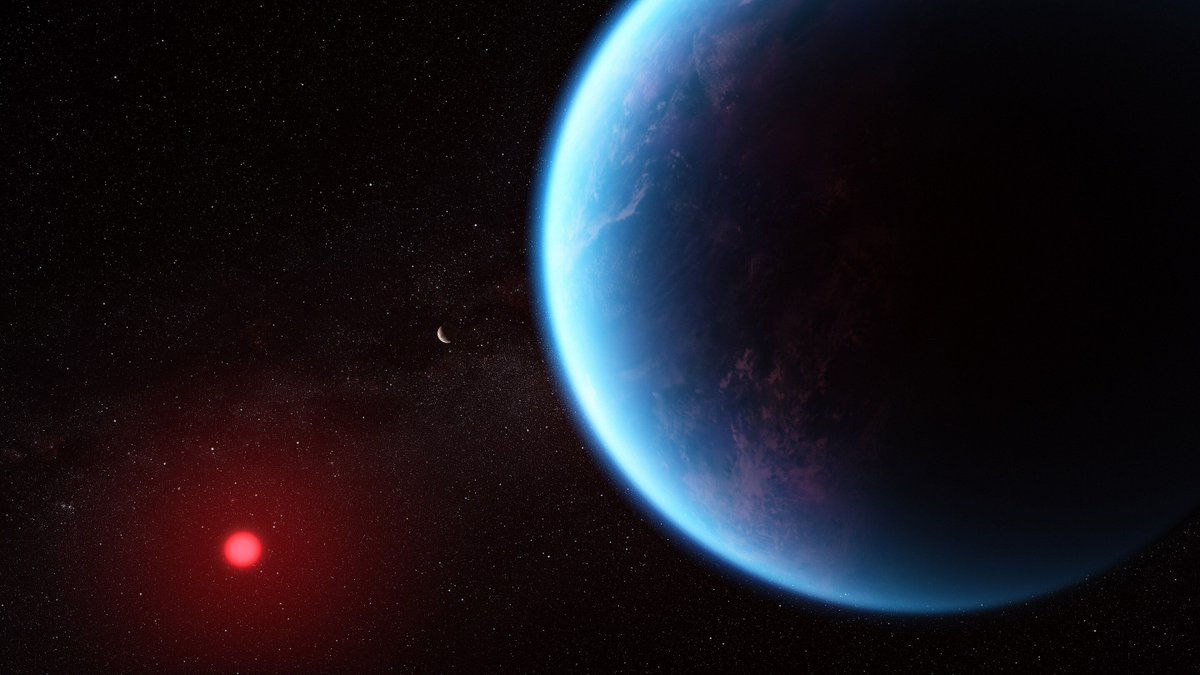
The James Webb Space Telescope detected dimethyl sulfide in its atmosphere (on Earth that comes from marine microorganisms).
K2-18b is potentially habitable super-Earth about 2.6 times the size of our planet. It is located 124 light-years from the Solar System.
Astronomers say they’ve found the strongest evidence yet for life beyond our solar system — on exoplanet K2-18b 🪐
• 124 light years away in the habitable zone of its star
• Detected potential biosignatures that are typically produced by life on Earth
• More data is needed to rule out non-biological explanations or confirm the detection
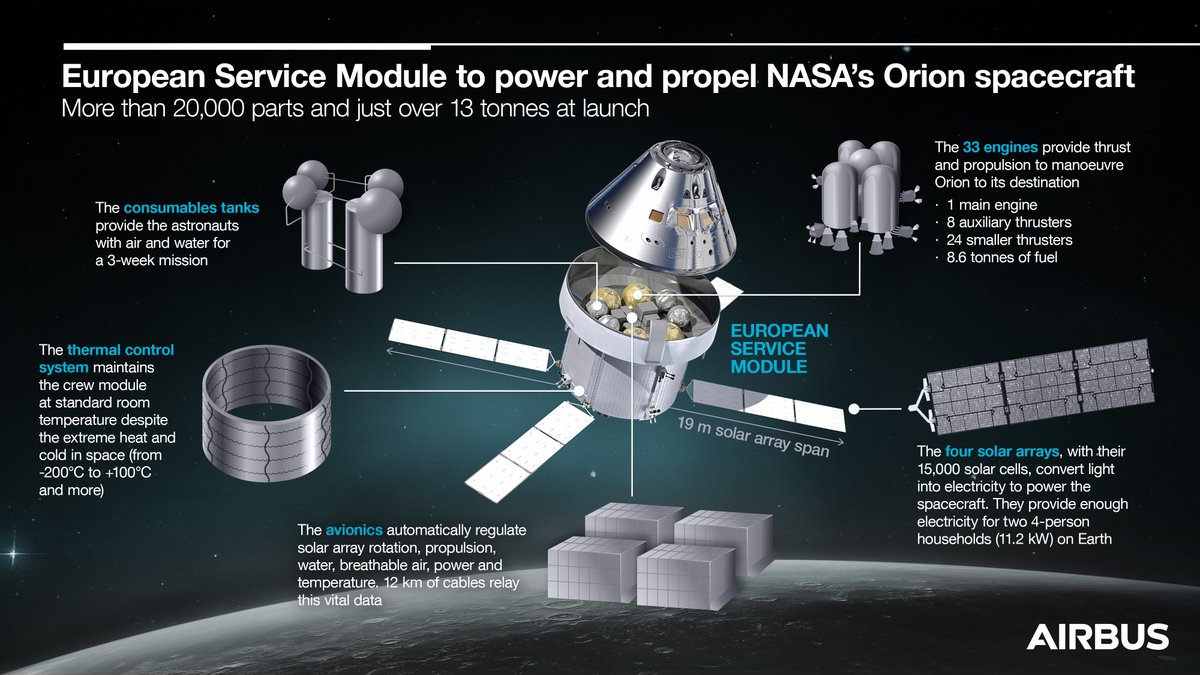
The third mission of NASA’s #Artemis programme will mark the first human return to the lunar surface since Apollo 17 in 1972.
ESM-3, the European Service Module 3 built by Airbus under contract to @ESA, will play a critical role in supporting 4 astronauts during their three-week mission aboard the @NASA_Orion spacecraft: from the moment they leave Earth, their journey into lunar orbit, docking with the lunar landing system Starship HLS, and their safe return to Earth.
Learn more in our latest webstory: https://t.co/tMPqkE3NDP
This is how majority of people in Northern US, Canada, United Kingdom, Ireland and Northern Europe countries will witness their night sky today - full of Northern Lights/Aurora due to ongoing Solar Storm!
#solarstorm#aurora
This is how Jupiter has protected earth for billions of years. The gravity of Jupiter keeps most asteroids and space rocks away from Earth. Without it earth would most likely be uninhabitable for humans. Mad respect for Jupiter. ⬇️
Breaking: Planet Nine has just been found by astronomers.
This is image was taken by the James Webb Space telescope.
NASA is proclaiming it the ninth planet in the solar system and are naming it G34.
This comes after rumors of a ninth planet have been speculated for decades.