Turns out, dressing the part might change how you think.
Wearing a lab coat improved attention… but only when people believed it was a doctor’s coat, not a painter’s coat.
Clothes are not just style, they are cues for your brain.
Look at this chart. The cliff isn't COVID.
The cliff is the 2010s. By 2019, before any lockdown, young adult time with friends had already been cut in half from its 2010 level. The pandemic just finished the job.
In 2010, American 18-to-29 year olds spent 12.8 hours a week with friends. About two hours every weeknight. By 2019, the number was 6.5. No lockdowns. No school closures. No public health guidance to stay home. Nine quiet years of friends seeing each other less and less.
Then COVID hit and the number went to 4.2 hours. The lockdown floor.
Five years out from the pandemic, where is it now?
5.1 hours per week. 44 minutes a day.
Your parents at 22 saw their friends for nearly two hours every weeknight. You see yours for less time than it takes to watch an episode of The Bear.
Now compare recovery curves. Restaurant traffic recovered. Movie theaters mostly recovered. Concerts recovered. Gym memberships recovered. Almost every form of out-of-home American behavior is back to 90 to 110% of 2019.
Time with friends sits at 78% of its 2019 level. And 2019 was already half of 2010.
What collapsed in 2020 stayed collapsed.
Jonathan Haidt has a thesis for the decade before. He calls it the Great Rewiring. Smartphones reached saturation between 2010 and 2015. Childhood became digital. The kids who grew up inside that shift are now in their 20s. They have the friendship hours to show for it.
Julianne Holt-Lunstad's 148-study meta-analysis prices chronic social isolation at the mortality equivalent of smoking 15 cigarettes a day. The Surgeon General issued a formal advisory on loneliness in 2023. The CDC calls it an epidemic.
The relationships you form in your 20s are statistically the ones you still have at 60. The generation forming them right now is forming half as many.
The phones came in. The friends stopped showing up.
The curve never bent back.
A Anthropic acabou de lançar um produto que substitui metade da pilha de software de uma pequena empresa. Por zero de custo adicional.
Se chama "Claude for Small Business." Um toggle dentro do Claude Cowork que conecta o Claude direto nas ferramentas que a empresa já usa e executa o trabalho operacional sozinho.
O que ele faz na prática:
→ Planeja folha de pagamento
→ Fecha o mês contábil
→ Dispara campanhas pelo HubSpot
→ Cobra faturas atrasadas pelo PayPal
→ Envia contratos pelo DocuSign e arquiva o retorno
→ Cria conteúdo visual pelo Canva
→ Faz onboarding de funcionários
São 15 workflows prontos. Você ativa, conecta, e o Claude faz. Você só aprova antes de enviar, postar ou pagar.
A conta é direta. Se um agente faz o trabalho de 3 pessoas e elimina 5 assinaturas de software, o modelo de cobrança por assento que sustentou o SaaS por 20 anos não sobrevive.
Isso não é um lançamento de produto. É o momento em que a maior empresa de IA do mundo formalizou que o mercado de software como conhecemos acabou.
Salve esse post.
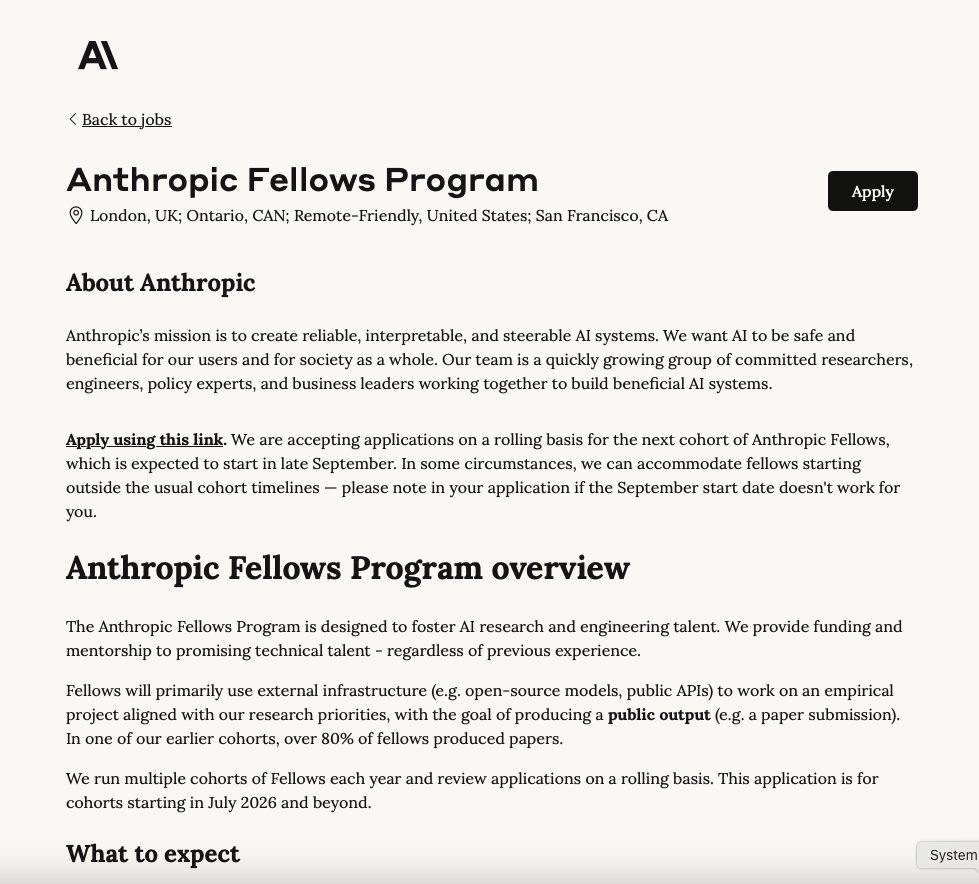
Anthropic is paying $3,850 a week to people with no AI experience.
No PhD required. No published papers. No prior research background.
Just a strong technical mind and a genuine interest in making AI safe.
This is the Anthropic Fellows Program. And it is one of the most underrated opportunities in technology right now.
Here is exactly what it is.
The Anthropic Fellows Program is designed to accelerate AI safety research and foster research talent providing funding and mentorship to promising technical talent regardless of previous experience. Fellows work for 4 months on empirical research questions aligned with Anthropic's overall research priorities, with the aim of producing public outputs like a paper.
Four months. Full-time. Paid. Mentored by the researchers building the world's most advanced AI.
And the results from the first cohort were not small.
Fellows developed agents that identified $4.6 million in blockchain smart contract vulnerabilities and discovered two novel zero-day exploits, demonstrating that profitable autonomous exploitation is now technically feasible. A year prior, an Anthropic fellow developed a method for rapid response to new ASL3 jailbreaks, techniques that block entire classes of high-risk jailbreaks after observing only a handful of attacks. This work became a key component of Anthropic's ASL3 deployment safeguards.
Other fellows published the subliminal learning paper, the research proving AI models transmit behavioral traits through unrelated data which landed in Nature. Others produced the agentic misalignment research showing frontier models resort to blackmail when facing replacement. Others open-sourced attribution graph tools that let researchers trace the internal thoughts of large language models.
Over 80% of fellows produced papers. Over 40% subsequently joined Anthropic full-time.
80% published. 40% hired. From a program that does not require any prior AI safety experience to enter.
Here is what the program looks like in practice.
Anthropic mentors pitch their project ideas to fellows, who choose and shape their project in close collaboration with their mentors. You are not assigned busywork. You are not a research assistant. You own the project. You work alongside the people who built Claude, who designed its safety systems, who published the papers that define the field.
The stipend is $3,850 USD per week, approximately $61,600 for the full 4 months with access to a compute budget of approximately $10,000 per fellow per month for running experiments.
Here is what the 2026 program covers.
Research areas include scalable oversight, adversarial robustness and AI control, model organisms, mechanistic interpretability, AI security, model welfare, economics and policy, and reinforcement learning.
Something for every technical background. Not just ML engineers.
Successful fellows have come from physics, mathematics, computer science, and cybersecurity. You do not need a PhD, prior ML experience, or published papers.
The one requirement: work authorization in the US, UK, or Canada. Anthropic does not sponsor visas for fellows.
Here is the timeline you need to know.
The next cohort begins July 20, 2026. Applications are reviewed on a rolling basis — earlier applications get more consideration. The process includes an initial application and reference check, technical assessments, interviews, and a research discussion.
Applicants are encouraged to apply even if they do not meet every listed qualification. The program values potential, motivation, and research curiosity over rigid credential requirements.
This is the rarest kind of opportunity in technology.
A company at the frontier of AI, one valued at over $900 billion offering outsiders direct access to its research infrastructure, its mentors, and its most important open problems. Paying them generously to do it. And then hiring 40% of them afterward.
Most people who want to work on AI safety spend years trying to publish papers, get into the right PhD program, and find a way in.
The Fellows Program is the door they did not know existed.
It is open right now.
Everyone is flexing Claude Code.
Almost nobody is using it properly. 🤯
This official Anthropic plugin changes that completely.
claude-code-setup analyzes your repo and builds the perfect Claude Code setup for you automatically.
It recommends:
• Hooks
• MCP servers
• Skills
• Subagents
• Automations
• Workflow configs
Basically turning Claude Code into a fully customized AI engineering system for your project.
Install it once:
/plugin install claude-code-setup@claude-plugins-official
And suddenly Claude Code goes from “kinda confusing” to “how is this even real?” 🔥
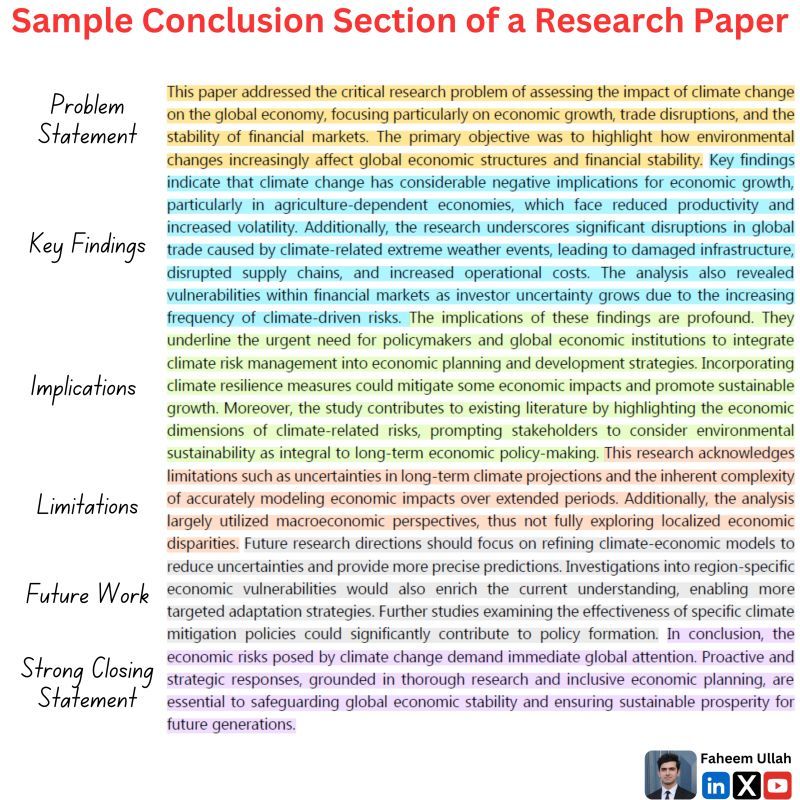
PhD Students - Here is an example of a good conclusion.
A good conclusion should have the following 6 parts.
𝟏. 𝐑𝐞𝐬𝐭𝐚𝐭𝐞 𝐭𝐡𝐞 𝐑𝐞𝐬𝐞𝐚𝐫𝐜𝐡 𝐏𝐫𝐨𝐛𝐥𝐞𝐦
Begin by revisiting the research problem or question that your paper addressed. This reminds the reader of the core focus of your study and sets the stage for summarizing your findings.
𝟐. 𝐒𝐮𝐦𝐦𝐚𝐫𝐢𝐳𝐞 𝐊𝐞𝐲 𝐅𝐢𝐧𝐝𝐢𝐧𝐠𝐬
Provide a brief summary of the main findings of your research. Highlight the most significant results and insights that emerged from your analysis. This should be concise and focused on the most impactful data.
𝟑. 𝐃𝐢𝐬𝐜𝐮𝐬𝐬 𝐭𝐡𝐞 𝐈𝐦𝐩𝐥𝐢𝐜𝐚𝐭𝐢𝐨𝐧𝐬
Explain the implications of your findings. Discuss how they contribute to the existing body of knowledge, their practical applications, or their relevance to future research. This helps to contextualize your work within the broader field.
𝟒. 𝐀𝐜𝐤𝐧𝐨𝐰𝐥𝐞𝐝𝐠𝐞 𝐋𝐢𝐦𝐢𝐭𝐚𝐭𝐢𝐨𝐧𝐬
Address any limitations of your study. Acknowledging these limitations demonstrates academic integrity and provides a balanced view of your research. It also opens the door for future research opportunities.
𝟓. 𝐒𝐮𝐠𝐠𝐞𝐬𝐭 𝐅𝐮𝐭𝐮𝐫𝐞 𝐑𝐞𝐬𝐞𝐚𝐫𝐜𝐡 𝐃𝐢𝐫𝐞𝐜𝐭𝐢𝐨𝐧𝐬
Based on your findings and limitations, propose areas for future research. This can inspire other researchers to explore related questions and expand on your work.
𝟔. 𝐄𝐧𝐝 𝐰𝐢𝐭𝐡 𝐚 𝐒𝐭𝐫𝐨𝐧𝐠 𝐂𝐥𝐨𝐬𝐢𝐧𝐠 𝐒𝐭𝐚𝐭𝐞𝐦𝐞𝐧𝐭
Conclude with a powerful statement that reinforces the importance of your research. This could be a call to action, a thought-provoking quote, or a reflection on the broader implications of your work. Anything you'd like to add?
Holy shit... someone made it work that I can integrate a social media manager inside Claude
It's called OmniSocials and it lets Claude draft, schedule, and publish to 10 platforms from a single command.
No Hootsuite. No Buffer. No $200/seat pricing.
Here's everything you need to know: 👇
It’s a hefty 206-page research paper, and the findings are concerning.
"LLM users consistently underperformed at neural, linguistic, and behavioral levels"
This study finds LLM dependence weakens the writer’s own neural and linguistic fingerprints. 🤔🤔
Relying only on EEG, text mining, and a cross-over session, the authors show that keeping some AI-free practice time protects memory circuits and encourages richer language even when a tool is later reintroduced.
Let me explain: 🧵
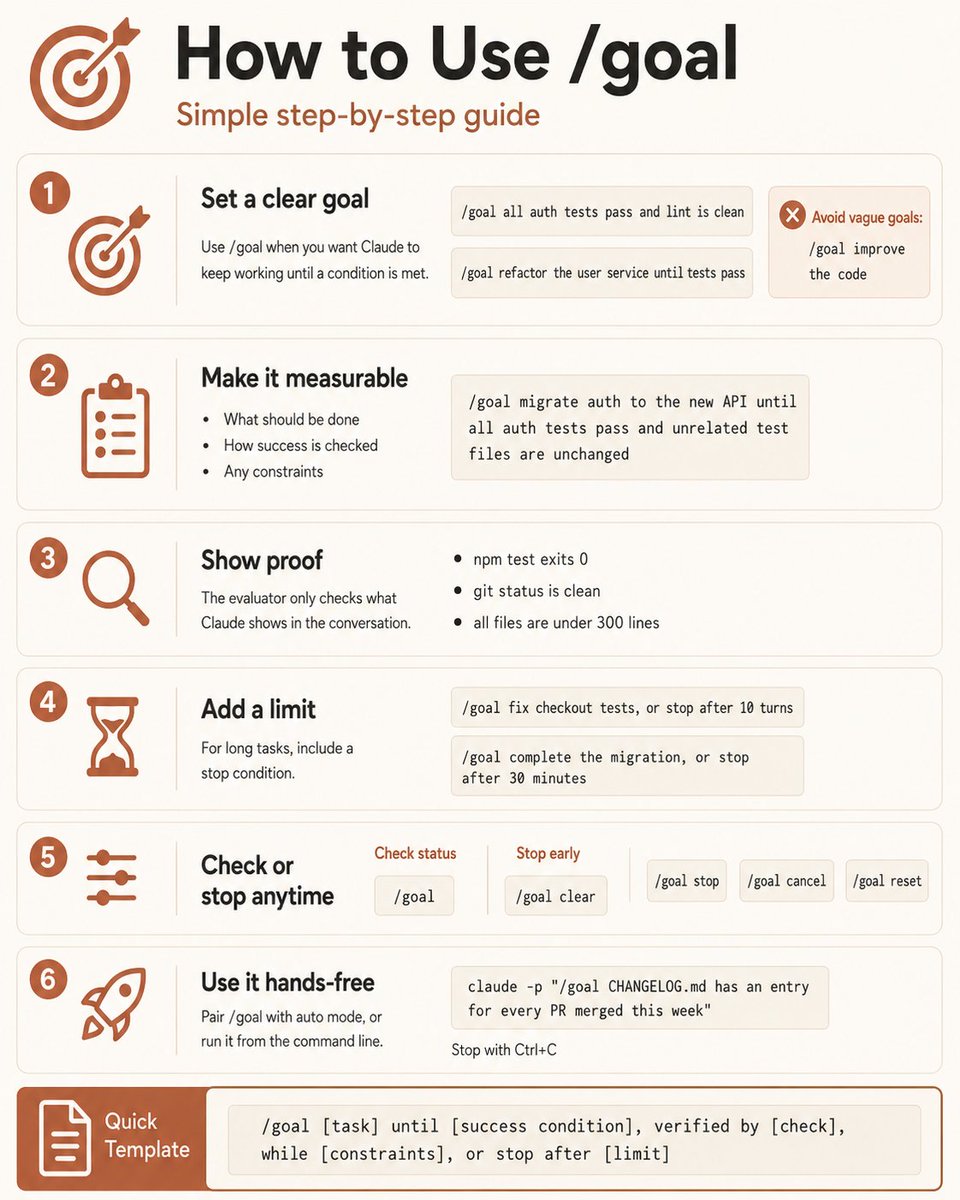
Claude Code /goal is way more powerful when you stop treating it like a todo.
> Set a clear goal.
> Make it measurable.
> Show proof.
> Add limits.
Bookmark this.
Anthropic just automated 99% of legal roles.
Claude for Legal is live now - and it's a marketplace with DOZENS of agents trained on legal roles.
Review agents, policy drafters, NDA agents & much more.
Can't believe this is public.
https://t.co/EyPkD2wMWv
A man spends 50 years teaching at MIT.
He knows his time is running out.
So he records one last lecture — everything he knows, distilled into a single hour.
He died 5 months later.
This is that lecture.
The most important hour you'll watch this week. 👇
Bookmark it for later
NVIDIA has solved the biggest trade-off in LLMs.
And it delivers a 6x speed boost without losing a single point of quality.
Every AI you use today (GPT-4, Claude, Gemini) is "Autoregressive." This means the model is forced to think in a straight line, one token at a time, left-to-right.
It’s like a genius writer who can only type with one finger.
The hardware under the hood, your massive GPU, is actually sitting idle 90% of the time, waiting for that one finger to hit the next key.
NVIDIA published a paper that changes the math.
They figured out how to make the AI do two things at once in a single forward pass.
1. The "Talk" (AR): The model handles the immediate next word with perfect logical precision.
2. The "Think" (Diffusion): While it's talking, it uses its "idle" brainpower to parallel-draft the next 10–20 words in advance.
It’s a hybrid brain.
The results are a massive wake-up call for the industry:
- 6x Speedup: It delivers nearly 600% more tokens per second than standard models.
- Zero Quality Loss: Unlike previous "fast" models that get "blurry" or hallucinate, TiDAR matches the quality of the world’s best LLMs.
- GPU Efficiency: It finally stops wasting the expensive compute power big tech is burning billions on.
We’ve spent years trying to make AI smarter by making it bigger.
But this paper proves that the real bottleneck wasn't the size of the brain, it was how the brain was scheduled.
Paper: TiDAR - Think in Diffusion, Talk in Autoregression, 2025
You can use now Codex in Claude Code 🤯
OpenAI has dropped a plugin that lets you run Codex directly inside Claude Code.
Code reviews, adversarial reviews, background tasks…one command to install:
/plugin install codex@openai-codex
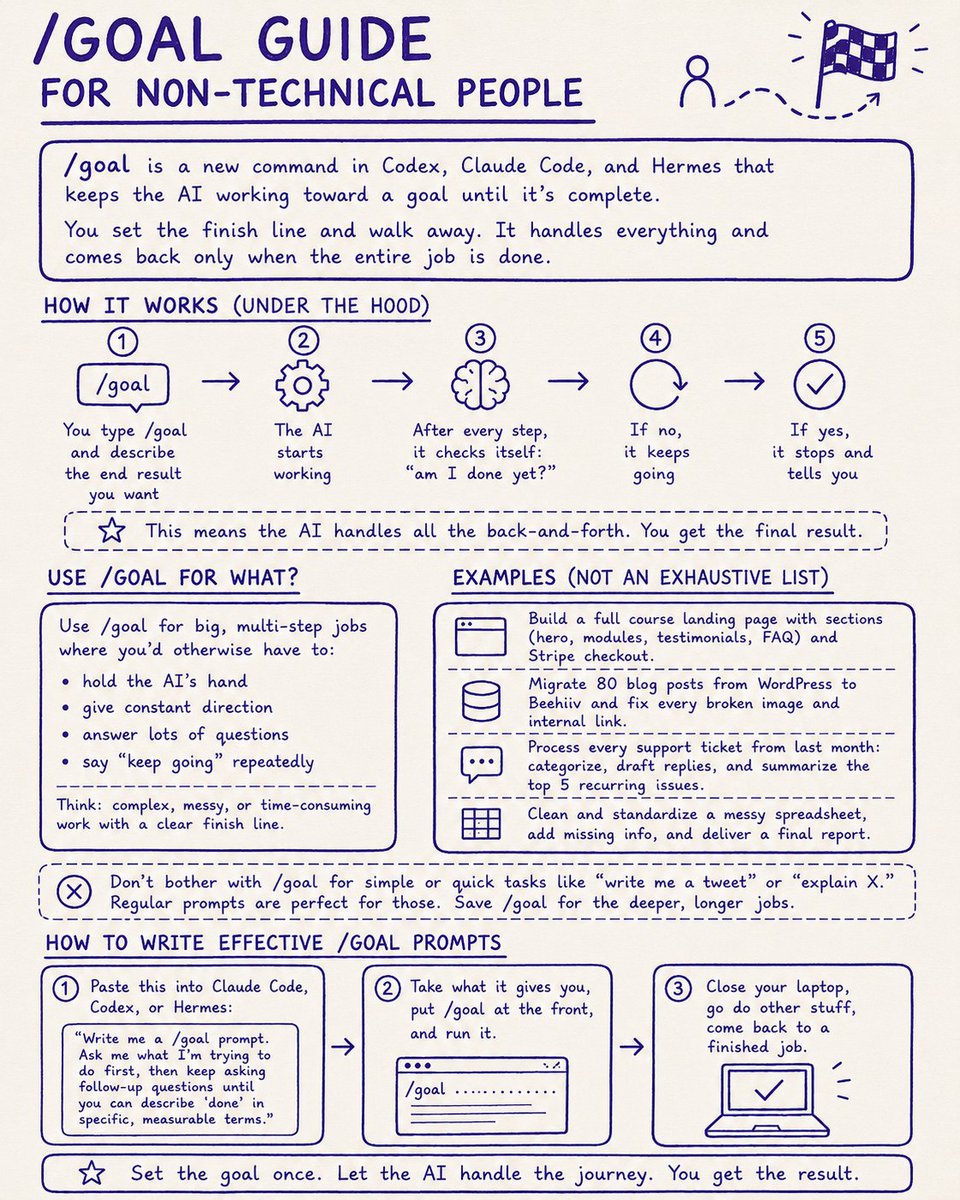
/GOAL GUIDE FOR NON-TECHNICAL PEOPLE
/goal is the most time-saving feature in all of AI right now.
It's a new command in Codex, Claude Code, and Hermes that keeps the LLM working towards a goal until it's complete.
Basically autopilot for complex AI tasks.
Here's how it works under the hood:
1. You type /goal and describe the end result you want
2. The AI starts working
3. After every step, it checks itself: "am I done yet?"
4. If no, it keeps going
5. If yes, it stops and tells you
Which means you never have to type "keep going" again.
When to actually use it:
Use /goal for big jobs where you'd otherwise have to go back-and-forth with it a lot. Stuff with a lot of steps and a clear finish line:
> "Build my course landing page: hero, 5 modules, 3 testimonials, FAQ, and Stripe checkout"
> "Migrate my 80 blog posts from WordPress to Beehiiv, fix every broken image and internal link along the way"
> "Process every customer support ticket from last month: categorize them, draft template replies, and document the top 5 recurring issues"
Don't bother with /goal for simple tasks like "write me a tweet" or "explain X to me." Regular prompts are fine for those.
Save /goal for the long, messy jobs.
The reason it's so awesome:
You set the destination once and the AI runs the whole job in the background.
Fire one off, close your laptop, go for a walk, work on something else, and come back to a finished result.
No babysitting or constant back-and-forth, because it doesn't need you in the loop anymore.
Here's how to write effective /goal prompts (so you don't waste time/tokens):
Paste this into Claude Code, Codex, or Hermes:
"Write me a /goal prompt. Ask me what I'm trying to do first, then keep asking follow-up questions until you can describe 'done' in specific, measurable terms."
Take what it gives you, type /goal at the front, and run it.
Then walk away and come back to a finished job.
Claude vs. Claude Code vs. Cowork.
Anthropic offers three distinct ways to interact with Claude, and each one targets a fundamentally different workflow. Think of it as: Chat for thinking, Code for building, and Cowork for doing.
Here's a quick breakdown:
1️⃣ Claude Chat
This is the conversational AI assistant most people already know. You type a prompt, Claude responds, and you iterate together.
- Turn rough ideas into structured plans through conversation
- Write emails, reports, essays, and long-form content
- Research and summarize complex topics in minutes
- Analyze documents, PDFs, and images
- Build interactive prototypes through Artifacts
The key here is that everything happens through conversation. You're thinking with Claude, not delegating work to it.
It's available on every device, has a free tier, and supports persistent memory across sessions.
The tradeoff is that it has no direct access to your local files (upload only), and it can't generate raster images natively.
2️⃣ Claude Code
This is a terminal-native coding agent. You describe what you want in plain English, and Claude reads your codebase, writes code, runs tests, fixes errors, and ships the result.
- Build and debug entire features across the full codebase
- Write, run, and fix tests automatically
- Manage git workflows and create pull requests
- Spawn multiple parallel agents working on different parts of a task simultaneously
It handles the full development cycle end to end, from planning to execution to testing. With the CLAUDE(.)md configuration file, you can teach it your project's conventions, patterns, and constraints so it writes code the way your team expects.
The tradeoff is a steeper learning curve compared to Chat, and token costs can add up during heavy sessions.
3️⃣ Claude Cowork
This is the newest addition. Anthropic describes it as Claude Code for the rest of your work.
It's an agentic desktop assistant that automates file management and repetitive tasks through a GUI. You describe an outcome, and Claude plans, executes, and delivers finished work: formatted documents, organized file systems, spreadsheets with working formulas, and synthesized research.
- Direct local file access and editing (no upload/download cycle)
- Schedule recurring tasks automatically
- Assign tasks remotely via Dispatch from your phone
- Computer Use lets Claude control your screen directly
It runs inside a sandboxed virtual machine on your computer, so Claude can only access folders you explicitly grant. You don't need to know how to code to use it.
The tradeoff is that your computer must stay awake for tasks to run, and it's still in research preview.
Here's how to think about choosing between them:
→ If you need to think through a problem or get writing/research help, use Chat
→ If you're building software and want an autonomous coding partner, use Code
→ If you have a clearly defined deliverable that involves local files and desktop workflows, use Cowork
All three are included in the same subscription starting at $20/month, which makes it one of the highest-leverage subscriptions in productivity software right now.
I've put together a visual below that maps the workflow of each product side by side.
Also, if you want to go deeper into Claude Code specifically, my co-founder wrote a detailed article covering the anatomy of the .claude/ folder, a complete guide to CLAUDE(.)md, custom commands, skills, agents, and permissions, and how to set them all up properly.
Read it below.
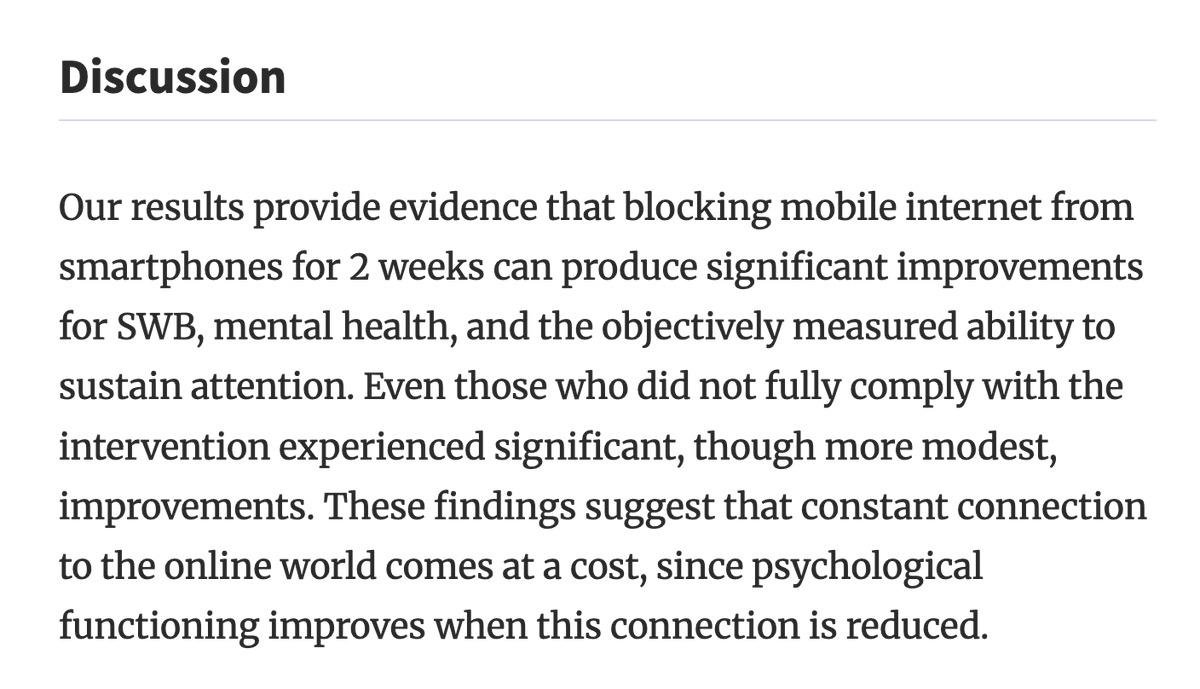
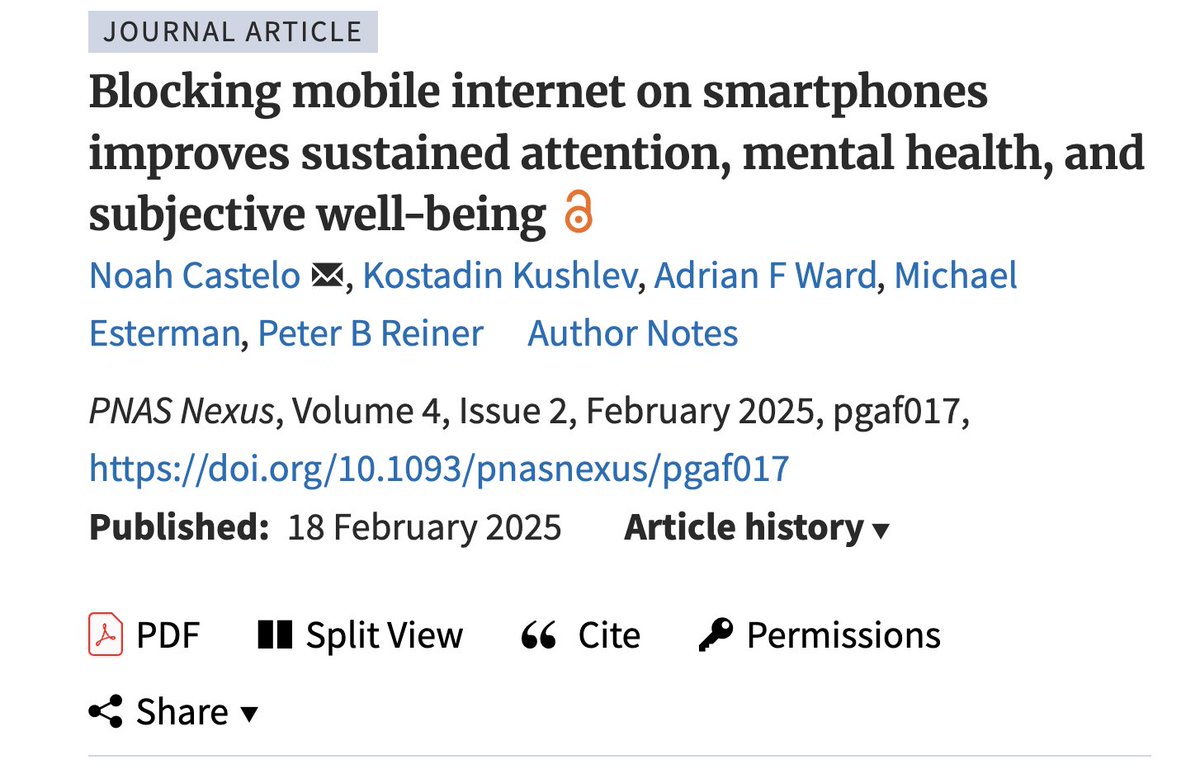
In adults, limiting smartphone functionality to texting and calls and blocking all social media and mobile internet for 2 weeks significantly improved attention, self-reported well-being and mental health. 90% of participants experienced a benefit.