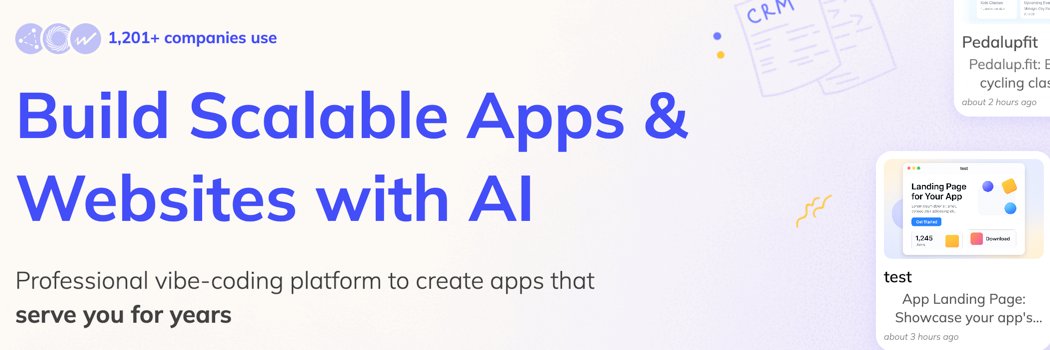
🧵 I'm thrilled to officially announce @appwizzyai, a professional vibe-coding platform or as I lovingly call it, "vibe-coding for dads" :)
After 15+ years in software development and 13+ years running Flatlogic, here's what I've learned and why AppWizzy exists
👇
@levelsio The problem is that US wealth and income are much less equally distributed. So $100k per capita is a more an imaginary number. USA is like 10% millionaires, 90% 3rd world country. That's why "average" is higher
The difference is, if something is regulated, it is usually regulated as a class/type of product, while in the Anthropic case they simply name commercial company and it's product rather than defining clear standards for regulation. Which makes me think this it not true regulation, but a coordinated marketing campaign to make people believe that exclusively their models are so powerful and hence require regulation
Btw, I'm pretty confident this entire "Fable banned" saga is a coordinated marketing campaign designed to make people think:
"Anthropic models are so powerful they must be regulated by the government. So when I use their models, I belong to a noble club that gets exclusive access to the best technology."
Here's why I think so:
1. Why would the US government specifically name certain technologies from one private company? Usually, if the government wants to regulate something, they define clear rules or conditions for any technology. But here, they specifically name Anthropic. So, what if OpenAI releases an even more powerful model tomorrow? Would the government issue another special regulation?
2. Based on publicly available information, Amazon-already a major partner of Anthropic-submitted the report to the regulating body. Should we really believe Anthropic's biggest partner did something harmful to Anthropic's business interests?
3. This entire incident fits perfectly into Anthropic's known tendency to paternalize everyone. Their typical message has always been: "We are the only ones smart and responsible enough to handle advanced technology safely. That's why we can't trust others, and everything must be regulated."
This looks suspiciously like a marketing campaign rather than real regulation to me
Anthropic is limiting access to Fable; and we somehow forgot about "Don't build your startup on someone else's API".
This was a very obvious phrase a few years ago.
Don't build your company on Facebook.
Don't build your company on Twitter.
Don't build your company on one App Store.
Don't let one platform decide if your business lives or dies.
Then AI came
And somehow everyone started building products, workflows, agents, and even whole companies on top of a few closed model APIs.
Yesterday Anthropic turned off access to one of their newest models, and this was sort of a reminder for me.
Access can disappear because of pricing.
Because of rate limits.
Because of safety rules.
Because of bans.
or whatever reason API provider can come up with.
So if you rely heavily on one API, you are not building on infrastructure.
You are building on permission.
Which means having your own standalone AI setup is the long-term way to go, as it has always been for other technologies.
That's why I believe in local models, open models, owned code, owned data, and systems that can keep working when the magic API disappears.
@appwizzyai is live on @ProductHunt today!
https://t.co/f2lSEsNOcS
Please support us with your upvotes and comments!
With AppWizzy, you rent a private VM with Codex installed (by @OpenAI ), and use it to build and host production web apps.
I know the market is very saturated. There are many AI app builders and vibe-coding tools already.
But our main difference is simple: AppWizzy gives you a real virtual machine in the cloud where your app actually runs. You can build inside it, host inside it, and keep control over your stack and code.
This is much closer to how I would actually deliver software for clients: real environment, real backend, real hosting, real source code - not just a nice demo that becomes painful later.
We are also some already and we are preparing more tailored vertical templates for different use cases, so users can start from a stronger production-ready foundation instead of a blank page.
Please support us today and help us bring a bit more professionalism to vibe-coding development!
Huge thanks to the team and to everyone who helped make this possible 🙌
Anthropic raised $65B at a $965B post-money valuation.
Idk, for me this this feels broken.
A nearly trillion-dollar "private" company that already behaves like a public giant.
An IPO used to mean you could invest early and share the future upside. But now, IPOs are often just moments where private investors simply dump fully-inflated valuations onto public investors.
Private investors get all the upside-the early risk discount, private-market valuation inflation, and quiet cash-outs through secondary markets and private sales.
Public investors don't get real opportunity-they get leftovers.
I seriously doubt that the original definition of a "public company" was meant to allow cases like this.
Maybe legally this is still a private company.
But in the spirit of the law? Absolutely no.
A nearly trillion-dollar company with massive institutional money, global influence, secondary liquidity, and public-market-level attention is not really "private" in any normal sense.
It is public-scale, but without public-company transparency.
And that is exactly the problem.
IPO and stock market laws definitely need to change, because the current rules allow companies to stay "private" long after that word has stopped meaning anything real.
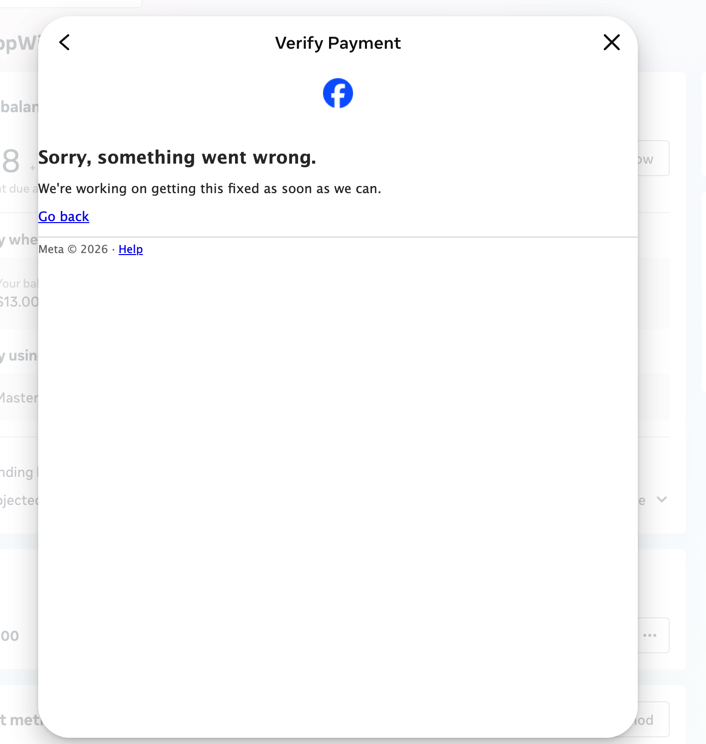
A truly pathetic experience by Facebook Ads:
I can neither see active campaigns, nor remove credit card, because, neither campaign view, nor paying outstanding balance functions work.
A great example of enshittification
Just read that the 🇺🇸 U.S. is trying to make many legal immigrants leave the country to finish their green card process from abroad.
In my opinion, this is one of the dumbest immigration moves imaginable.
People on O-1 and H-1B visas include top scientists, engineers, startup founders, and people building billion-dollar companies. More than half of U.S. unicorns have immigrant founders.
And now the message is: "Stop working legally in the U.S., go back to your country, wait years in a broken backlog, and maybe come back."
Indians may wait decades. Belarusians don't even have a normal U.S. embassy to go to.
In practice, this may just send talented people to Europe, Canada, or anywhere else that understands their value
@Nick_Davidov@Carmen50 Maybe it is time to look back at our home countries and make them prosper?
USA is obviously shooting itself in the foot with this change, and worse, it keeps contributing to its declining reputation
Since OpenAI was trained on public data and sells regurgitated content I believe it would be fair to give back some percentage of your revenue to general public. tl;dr: trained on public data -> give back to public
@jaydrogers this is exactly why we're building @appwizzyai! same codex workflow, but running inside an isolated, production-ready vm. if an agent goes rogue with a command, it's contained to the sandbox - not your laptop, not your backups, not your personal data
a 150-day promise turning into 1+ year is brutal-bureaucracy risk is part of the tax rate. also worth sanity-checking what exactly the ruling covers (asset types, residency timing, sourcing) and how durable it is if the rules or enforcement change. did they specify conditions you must keep meeting each year?
Пад помнікам Тадэвуша Касцюшкі ў Швайцарыі зьявіцца падмурак з Беларусі :)
Вельмі рады ў чарговы раз падтрымаць добрыя справы!
https://t.co/TwJaYu8sJM
Добра, што ў помніка нацыянальнага героя Беларусі ⚪🔴⚪, Злучаных Штатаў 🇺🇸 і Польшчы 🇵🇱 будзе падмурак створаны з валуна з радзімы :)
Дзякуй @RyhorAstapenia, @PMatsukevich , Maldzis за запрашэньне і ініцыятыву!
@denisyurchak One of Lithuanian banks demanded same bs from us: we refused to provide, because it is not their business. They threatened to close the account, but eventually did nothing.
The only thing you risk is account closure; i.e. commercial relationships with this specific institution
Most AI website builders fake it . They generate a frontend, but there is no real backend underneath. This one runs real WordPress. That means real server-side logic, real infrastructure, and a real website you can actually own and use. Because there’s a big difference between showing a demo and running the real thing.
#vibecoding #wordpress #websitebuilder #flatlogic #appwizzy
🚀 Do you actually own your code when using AI builders? Most businesses don’t ask this question… until it’s too late.
AI app builders can launch products in days instead of months, but there’s a catch: 👉 Many platforms don’t give you real ownership.
That means:
❌ Vendor lock-in
❌ Limited customization
❌ Risk if the platform disappears
💡 The key difference?
Some platforms generate real, production-ready code that you fully own, not just "rent". Owning your source code means full control, flexibility, and long-term security for your product.
Why it matters for businesses:
✅ Full control over your product & IP
✅ Freedom to scale, customize, and migrate
✅ Your app survives even without the platform
👉 AI speed is powerful, but ownership is what makes it sustainable
Before choosing any AI builder, ask one simple question: Can I take my code and run independently? If not… you’re building on borrowed ground.
🔗 Read more: https://t.co/3BfBlTWokD
#AI #Startups #SaaS #TechLeadership #ProductManagement #DigitalTransformation #NoCode #LowCode #SoftwareDevelopment
🚀 @v0 vs @appwizzyai : UI Generation vs Full-Stack Runtime?
AI tools are transforming how startups build, but also introducing a critical decision: are you generating interfaces, or launching real products?
Tools like @v0 by Vercel make it incredibly fast to create polished UIs. Platforms like @appwizzyai go further, enabling teams to ship fully functional apps with backend, database, and deployment included.
That difference directly impacts:
- time to market
- validation speed
- engineering costs
Many startups unknowingly optimize for design speed instead of product execution, delaying real user feedback and traction.
💡 The key question is: Are you building something that looks ready, or something users can actually use?
This guide breaks down:
- UI generation vs full-stack runtime
- When each approach makes sense
- How to choose based on your stage
If speed and validation matter, this is a decision worth getting right early.
👉 Read more: https://t.co/pJ7agajIBD