Recently, @BGDA_UK, one of the UK's largest asset managers, launched the Baillie Gifford Enhanced Yield Fund ($BAGEY) on @ethereum. As a UK-regulated, natively tokenised fund, the blockchain serves as its legal register of record, setting a structural precedent for public blockchain settlement in the UK.
The onchain structure removes offchain transfer agents and manual database reconciliation.
→ This is not a wrapper over a traditional fund; native onchain issuance means the token is the fund interest itself, with direct ownership of the underlying short-duration government and corporate bonds recorded on Ethereum.
→ Operating directly on a public L1 removes the intermediary layers characteristic of traditional wrapper structures
→ Ethereum’s public base layer provides transparency, auditability, and reduced transaction costs for regulated financial instruments
Financial institutions like Baillie Gifford building on the Ethereum network as foundational infrastructure demonstrates regulatory acceptance of public mainnet settlement, countering the misunderstanding that institutions require private chains.
Our team members are proud to have supported Baillie Gifford’s builders throughout the process - huge congratulations on the launch to all of the teams involved!
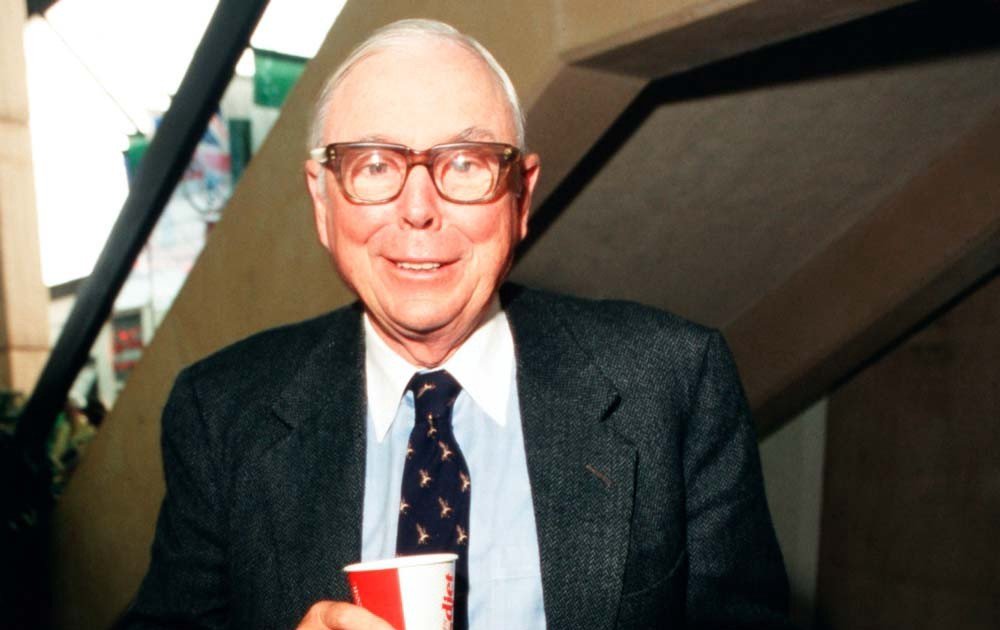
Charlie Munger attributed all his success to one thing;
↳ understanding psychology
As a 99 y/o he had one regret;
↳ not understanding this earlier
24 principles you need to understand to succeed:
Ethereum is for shipping.
Here’s 21 things the global @ethereum ecosystem got done in the last few weeks:
1. The latest upgrade to Ethereum, Pectra, went live.
Pectra introduced smart account wallet features to improve UX, increased capacity for Ethereum L2s by 2x, and activated validator UX improvements.
Ethereum is for 0 downtime upgrades.
2. @Stripe announced their stablecoin financial accounts. Now Stripe users in 101 countries can use Ethereum to hold, send, and receive stablecoins like USDC. Ethereum is for global financial freedom.
3. @Uniswap crossed $3T in all-time swap volume. Ethereum is for 24/7 decentralized markets.
4. @Coalapay deployed > $40,000 raised on Ethereum for the victims of the Myanmar earthquake, using the power of stablecoins to get funds directly to aid recipients. Ethereum is for helping those in need.
5. @Superstatefunds announced Opening Bell, enabling companies to issue public equity onto Ethereum. Ethereum is for public markets.
6. @NasdaqBTCS announced plans to bring ETH exposure into public markets. Ethereum is for ETH.
7. @CoWSwap hit a new record of 24K unique traders, helping protect all of them from the hidden costs of MEV. Ethereum is for the average user.
8. @Aave announced their work with the ANT group to build a real world asset (RWA) marketplace on Ethereum. Ethereum is for tokenization.
9. @ETHRNSM launched a marketing collective for Ethereum, where anyone can submit content that pushes Ethereum culture forward and get rewarded based on performance. Ethereum is for internet culture.
10. @Coinbasewallet announced that @Farcaster will be integrated directly into the wallet feed (early beta), which will enable millions of people to easily use decentralized social media built on Ethereum. Ethereum is for building better social media.
11. @Focustree_app hit 1M downloads & 100K MAUs on @Starknet, helping students earn rewards for staying focused on their studies. Ethereum is for onboarding.
12. @MorphoLabs on @Base reached $1B TVL, The first DeFi protocol to cross this mark on the Base rollup. Ethereum is for DeFi.
13. @World_chain_ now has over 12.5M verified humans on their Ethereum L2. Ethereum is for humans.
14. @ZKsync is now fully EVM equivalent, meaning devs can deploy existing Solidity contracts easily and use existing EVM tooling. Ethereum is for developers.
15. @aztecnetwork launched their public testnet, the next step towards a fully private L2 built on Ethereum. Ethereum is for privacy.
16. Wonder L2 went live, built on @zksync by @WonderFiLabs, which was recently acquired by @RobinhoodApp. Ethereum is for L2s.
17. @SuccinctLabs and @RiscZero announced tech that can prove Ethereum blocks in under 12s, a 10x improvement since last year. This major advancement will accelerate Ethereum’s roadmap and scaling efforts to fully leverage ZK cryptography. Ethereum is for pushing the frontier forward.
Oh, and a few more things…
18. @Base reached stage 1…
19. and @Kinto_xyz reached stage 1…
20. and @Scroll_ZKP reached stage 1…
21. and @Starknet reached stage 1!
Ethereum’s L2 ecosystem is now stronger and more secure than ever before, thanks to the hard work of all these teams. Ethereum is for secure, decentralized L2s that grow the Ethereum ecosystem.
FUSAKA MAKE OLD MONEY PEOPLE HAPPY
old money people like burn ETH, today no burn ETH, no happy
fusaka make ETH burn more
old money people now hungry for ETH cause they dumb and only think today not tomorrow
number go up
@EAThomson The biggest risk I see is when $ETHSR’s market price is less than the strike price, bondholders can redeem the bonds for their principal in USDC. So dumping eth? Could see large sell offs?
@gakonst Based rollups. Why would you want to delegate the liveness of your app to unaccountable third parties and expose your users to the MEV supply chain? Own the end to end experience without compromising on the property rights of users, censorship resistance and ability to exit
Proposal: The World on Ethereum
The Vision
Imagine a world where:
1. All financial systems—from banking to stock trading to payments—run on Ethereum-based decentralized protocols, enabling instantaneous, trustless transactions.
2. Data management systems for enterprises, governments, and individuals operate on immutable and decentralized protocols, ensuring transparency, security, and efficiency.
3. Global enterprises and supply chains are coordinated via smart contracts, eliminating inefficiencies, fraud, and the need for centralized intermediaries.
Ethereum and its scalability solutions (e.g., zk and optimistic rollups, sharding, merged staking) offer a platform for this vision, replacing legacy systems which are comparatively plagued by inefficiency, monopolistic rent extraction, and systemic abuse.
What the World Gains
1. Lower Economic Rent
Legacy Rent Extraction:
• Governments and banks expand the money supply by $2 to $3 trillion per year
• Banks charge $1.5 trillion/year in transaction fees globally.
• Payment processors like Visa and Mastercard take a 2-3% cut on $20 trillion/year in global retail payments (~$400B/year).
• Monopolistic tech platforms (Google, Amazon, etc.) extract ~30-50% margins on ads, cloud services, and logistics, costing the global economy hundreds of billions annually.
• Total rent extraction: >$4-5 trillion/year.
Ethereum Economic Rent:
• Assume Ethereum’s global adoption leads to $100 trillion/year in transaction volume (payments, DeFi, enterprises, data storage).
• At 0.7% effective economic rent (fees paid to validators and Ether holders), the total cost would be: $700 billion/year.
• Result: A system that is 8-10x cheaper than the current rent extracted by legacy systems.
2. Greater Efficiency
• Legacy Inefficiencies:
- Cross-border payments take days and cost 7-10% of the transaction amount.
- Supply chains lose 5-10% of value due to fraud, errors, and inefficiencies.
- Data breaches cost companies $4.35M/incident on average (~$600B/year globally).
• Ethereum Efficiencies:
- Near-instant transactions reduce payment settlement times from days to seconds.
- Immutable records and smart contracts eliminate intermediaries, cutting costs by 5-10% in global trade (~$2T/year savings).
- Decentralized storage (e.g., IPFS, Arweave) and Ethereum-native protocols reduce breach risks, saving hundreds of billions annually.
3. Trustless and Immutable Systems
• Ethereum’s decentralization ensures no single entity can manipulate financial markets, censor data, or engage in monopolistic behavior.
• Immutable ledgers prevent fraud, protect property rights, and build trust across borders.
4. Unlocking Innovation
• Open protocols mean anyone can build on Ethereum, fostering innovation and creating trillions of dollars in new value from DeFi, NFTs, DAOs, and other applications.
• Lower barriers to entry empower startups and small businesses, fueling global economic growth.
What the World Pays
Economic Rent to Ether Holders
• Valuation of Ether:
- With $100 trillion/year in global volume and Ether serving as the network's collateral, Ether’s market cap could stabilize around $30-50 trillion (~30-50% of yearly volume, in line with historical M2 money supply ratios for economies).
- At a maximum annual inflation rate of 1.91%, newly issued Ether would result in a maximum of $573–955 billion/year in staking rewards, distributed to validators and stakers.
• Comparison to Legacy Systems:
- Ethereum would extract far less economic rent (~$723–1,105 billion/year) (including both inflation and fees) than legacy institutions’ $2-3 trillion/year.
- This economic rent would directly support network security and decentralization, avoiding the monopolistic abuse and inefficiency characteristic of legacy systems.
Gas Fees:
• Rollup-based scaling solutions (e.g., Optimism, Arbitrum, zkSync, StarkWare, Fuel) reduce fees to fractions of a cent per transaction.
• Total annual fees across Ethereum’s ecosystem are estimated at ~$150 billion/year, a fraction of the $1.5 trillion/year extracted by legacy transaction fees.
• For individual users, Ethereum’s costs are 10-30x lower than traditional bank fees or payment processing charges.
Why Ethereum Is the Future
1. Resilient and Decentralized
• No monopolist can censor or control the system.
• Immutable records prevent fraud and manipulation.
• Open-source protocols ensure continuous improvement.
2. Inclusive and Borderless
• 1.4 billion unbanked people gain access to financial services.
• Cross-border payments and global trade become seamless, driving inclusive economic growth.
3. Environmentally Sustainable
• With Ethereum’s Proof-of-Stake, energy consumption is 99.95% lower than Proof-of-Work systems like Bitcoin, and even lower than the data centers of legacy financial systems.
4. Users Won’t Be Locked into Platforms
• Current Problem: Legacy platforms like Facebook, Google, and Amazon lock users into closed ecosystems, using proprietary data formats and siloed networks to limit interoperability.
• Ethereum Advantage: Ethereum enables self-sovereign identity and data portability, allowing users to move seamlessly between services without losing access to data or networks.
• Projected Economic Benefits:
- Unlocking locked-in users could reduce dependency on monopolistic pricing, saving businesses and users ~20–30% of current digital platform costs.
- Global digital ad spending ($700 billion/year) and cloud services ($600 billion/year) could see ~$260 billion in annual savings from enhanced competition and lower fees.
- Additional savings from debundling could reach $50–100 billion/year, as services compete individually rather than bundled within monopolistic platforms.
5. Replaces Siloed Platforms with an Open Sea
• Current Problem: Legacy systems are siloed, with each platform building its own infrastructure (e.g., Facebook, Amazon, or Google).
• Ethereum Advantage: Ethereum creates a universal, open platform where all participants—individuals, businesses, or governments—can operate in a shared, permissionless environment.
- Open Protocols: Enable permissionless entry, allowing any developer, business, or government to deploy applications without barriers or gatekeeping.
- Interoperability: Data and services seamlessly interact, reducing redundancy and creating a network effect of economic value.
• Projected Economic Benefits:
- Replacing siloed platforms could eliminate duplicated infrastructure costs (~$1 trillion/year globally in IT and data infrastructure savings).
- Permissionless participation could add ~$300–500 billion/year in global economic output by enabling more startups, SMEs, and underrepresented regions to compete in open markets.
so many of you will remember my reporting around "operation choke point 2.0" from the spring of 2023; TLDR, Biden's financial regulators, namely the Fed, FDIC, and OCC launched a crackdown on banks covering the crypto space...