How do pathogens sneak past plant defenses? Join Dr. Quan Zeng in "Illustrating a Novel Host Entry Mechanism of Plant Pathogenic Bacteria."
Don’t miss this event in our Advances in Phytobacteriology series on January 15!
https://t.co/wwpbkWifZC
#planthealth#plantscience
Join Dr. Quan Zeng for "Illustrating a Novel Host Entry Mechanism of Plant Pathogenic Bacteria," part of our Advances in #phytobacteriology series.
Save your spot, and we'll see you Jan 15, 2026: https://t.co/wwpbkWifZC
FREE for members!
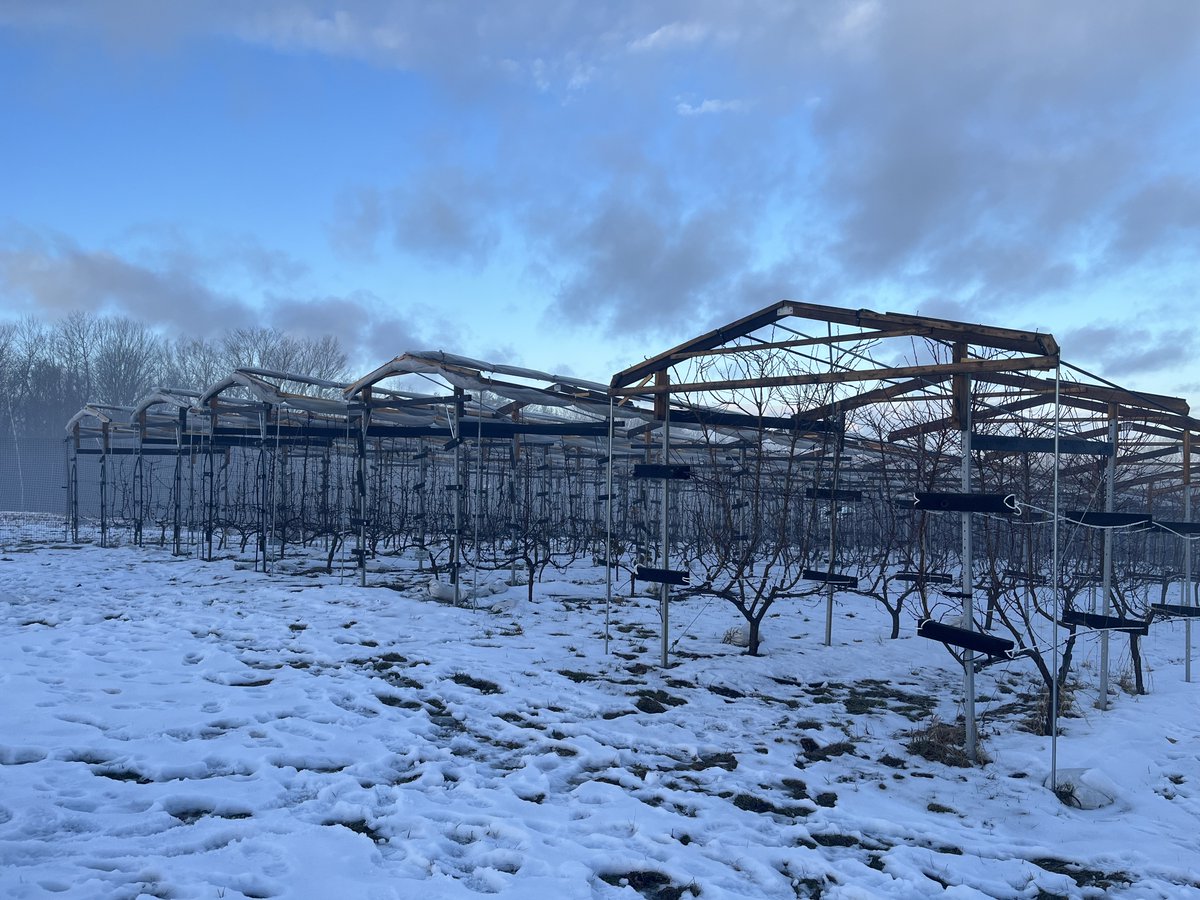
I had a great visit to Off the Wall Orchard in Concord New Hampshire, and learned about their successful story of using protective agriculture to grow organic apples under a humid climate. no water=less disease Thanks Ron for hosting me!🌿🍎
Excited to share our new preprint that shows a bacterial plant pathogen (Erwinia amylovora) can enter plants through naturally-occurring wounds from the abscission of trichomes https://t.co/AlUJiin5OF
Check out our recent publication which characterized the role of foraging pollinators in assembling the flower microbiota and transmitting the fire blight pathogen Erwinia amylovora! Nice work @SalmaMukhtar04 and all! https://t.co/1jLOiDcqgn
@QuesadaLabNCSU @plantdisease One of your mentees just provided an excellent review for a paper I edited for Phytopathology. Your entire team is in support for our society journals in different ways. Thank you!
We are excited to recruit a PhD/MSc student to work on the bacterial plant pathogen P. syringae and its interactions with plasmids and phage. My group utilizes genomics, molecular bacteriology, protein biochemistry and fieldwork to study bacterial evolution 🧫🌱 Please share! 🤩
Check out our new Phytobiomes first look paper led by Stephen Taerum! He observed that inoculating plants with a low number of rhizosphere protist isolates consistently established protist community. https://t.co/uLJx7FozMM
I'm very excited to share our work in preprint! We show the critical role of Pantoea agglomerans plasmids in onion pathogenicity. Thanks to Gina Shin, Jo Ann Asselin, Paul Stodghill, Lindsey Du Toit and the entire Stop the Rot team!
Excited to learn our non-transgenic canker-resistant citrus generated by crispr genome editing exempted by EPA, by APHIS, for use by growers! They are the 1st to receive EPA exemption for gene-edited plants! ThanksNIFA funding!Thanks@usda_nifa @EPA@USDA_APHIS
Our bacterial genome annotation tool Beav is now published in mSphere! The newest version also supports gbk files as input to add to previous annotations. Available on bioconda. https://t.co/4HpTpEBFnL
Very happy to see our recent manuscript on microbe-pathogen interactions affecting pathogen behavior is published on Mbio. Congratulations to Amine and @CuiZhouqi! #nifaimpact https://t.co/ODtSSIs79A
Glad to see this "Burning Questions for fire blight research I" is published online today. Part II is under review and will be coming soon! Congratulations to Rex, George and all co-authors! 🔥🦠🌳
https://t.co/WbtBxJ3HuT
Open Access and Reproducibility in Plant Pathology Research: Guidelines and Best Practices | Phytopathology®
Congratulations Nik and all the co-authors! 🥳https://t.co/IZXn7YsROo