I study Tech governance since 1992. I focus on AI since 2018. Lecturing on Power and Ideas at @unicomplutense
#AI#democracy#citizenship
Grateful #Fulbright
DEMOCRACY, ACCOUNTABILITY, CITIZENSHIP IN MY WORKS 2022-2018: I am studying Tech Governance since 1992 and focusing on artificial intelligence (AI) since 2018. I am heavily introducing the axis of political theory, making contribut…https://t.co/ri9gb5gYGQ https://t.co/0qKjRzbIyo
"desertification, recurrent droughts and fires, changes in agricultural practices, overexploitation of natural resources, rural exodus, and the sharp drop in the water table are all imminent threats to the existence of oases"
https://t.co/gUupo7pq3A
"54.012 militares en activo, de los que 48.237 son hombres y 5.775 mujeres, con una edad media de 43,34 años"
Un ejército de mayores
https://t.co/7PDuKL2wau
La experoencia positiva del gobierno con políticas públicas y ayudas a Las Planas podria servir para diseñar planes de ayuda en las áreas y los frentes arrasadas por el fuego
Entender los adjetivos a la Mezquita musulmana de Córdoba... Ejemplo de setecientos años de arquitectura y ciencia árabes y esplendor peninsular
"El techo de la capilla de la Encarnación se hunde..." https://t.co/kHGDeIoskA
📚 Os presentamos la programación educativa del Sistema Atapuerca Cultura de la Evolución para el curso 2025/26. Consulta todas las actividades, talleres, visitas y fichas educativas en el siguiente enlace 👇:
https://t.co/gUbyvEEKYd
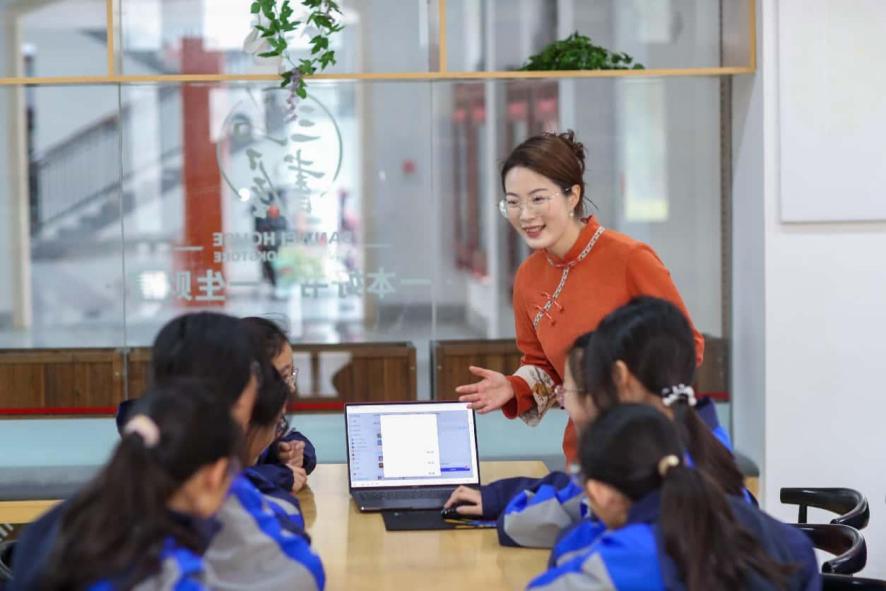
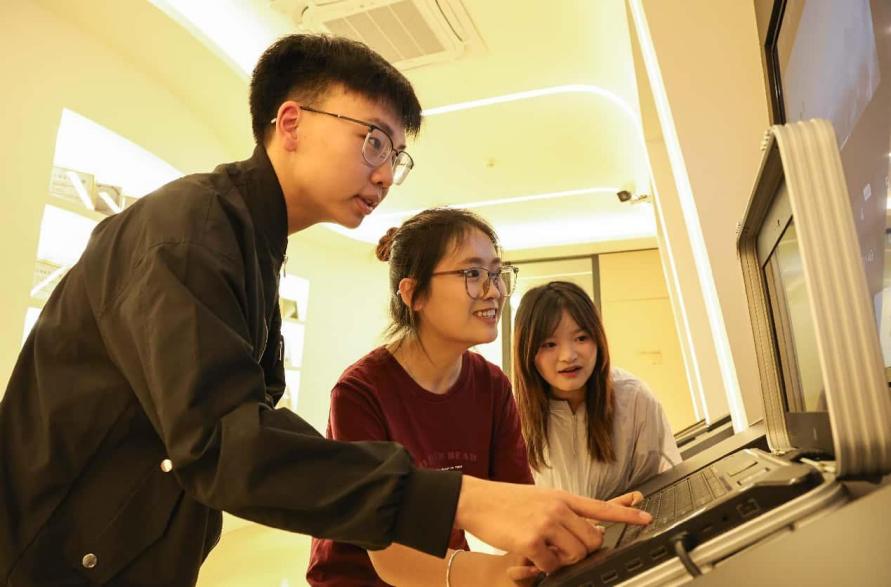
Chinese schools embrace AI for smarter learning
As artificial intelligence (AI) rapidly advances, it is reshaping educational tools and methodologies across China. AI is being put to practical use in practical teaching, learning, administrative processes, assessment, and research, playing an increasingly important role in both student development and broader education reform.
At Tsinghua University, AI-powered "learning companions" support more than 220 pilot courses spanning multiple disciplines. For Yuan Bingjie, a chemical engineering student, this innovation enables flexible review of materials and practice exercises anytime. After class, Yuan would always log onto an online platform for the chemical thermodynamics course and interact with the AI assistant.
"Having 24/7 access to the AI teaching lets me learn at my own pace," Yuan said.
When revisiting the topic of chemical equilibrium, he simply requested practice problems; the system immediately generated tailored exercises with foldable answer to encourage independent problem-solving. This responsive tool has become an integral to his self-directed learning.
In the same course, professor Lu Diannan assigned students to pose questions to a large language model and critically evaluate its responses using the concepts they've learned. He believes this exercise cultivates critical thinking and problem-solving skills. "It's about teaching students to harness AI, not be controlled by it," said Lu.
In the previous semester, students attending the chemical thermodynamics course spent over 8 hours on average interacting with the AI assistant - "equivalent to a one-on-one eight-hour tutoring session with each student," Lu noted. AI is enabling more personalized learning experiences and fostering a new dynamic of interaction among teachers, students, and intelligent tools.
Across China, many schools are adopting AI to provide students with real-time, interactive, and personalized support, reigniting students' passion for learning. At the Open University of China, for example, students use an AI-powered English platform to practice speaking and receive feedback on writing. Sichuan University has developed a smart medical training platform where students conduct simulated consultations with AI-based virtual patients.
AI is also proving to be a valuable ally for teachers, helping them prepare lessons more efficiently, improve instructional quality, enhance professional development, and lighten administrative burdens.
At Xiamen Shuangshi High School in southeast China's Fujian province, physics teachers used AI to generate dynamic simulations. When creating a bullett-woodblock collision demonstration, the system generated the relevant code that rendered working animations in graphics software - significantly reducing preparation time..
At Gulin Township Junior High School in Ningbo, east China's Zhejiang province, an AI-powered grading machine has been adopted. Teachers submit assignments into the machine, which identifies common errors, frequently missed questions, and individual student performance at a glance. This not only reduces grading time but also gives teachers more bandwidth to tailor lesson plans and offer targeted support.
In 2018 and 2021, China's Ministry of Education launched two rounds of pilot programs promoting AI-assisted teacher development in 103 cities, counties, and universities. By the end of 2024, these programs had provided AI literacy training for over 2.97 million teachers and resulted in the development of more than 700 AI tools designed to support teaching, research, and professional learning.
Local governments and educational institutions across China the integration of AI and big data to enhance evidence-based education evaluation and policy decisions. For example, Baotou in north China's Inner Mongolia autonomous region has built an education big data analytics platform capable of comprehensive assessment of teacher demographics, institutional comparisons, and identification of high-potential educators. This system provides real-time analysis of staffing gaps - pinpointing specific schools and subjects experiencing teacher shortages.
Similarly, Fuyang District in Hangzhou, Zhejiang province, collaborated with universities to develop a Teacher Resource Balance Index Model. This tool identifies staffing disparities and informs strategies for equitable teacher recruitment and allocation.
According to an official with the Ministry of Education's department of science, technology and informatization, the next step will be to fully integrate AI across the education system, supporting data-driven management, evidence-based policy-making, and more convenient public services while optimizing the distribution of educational resources.
Education experts underscore that AI's role is not to replace teachers, but to empower them, allowing educators to focus on more creative, high-value work such as designing interdisciplinary projects and building imaginative learning environments. As digital literacy becomes increasingly essential, AI can help ensure every student achieves comprehensive, individualized development. (By Wu Yue, Ding Yasong, People's Daily)
Compartiendo lectura vía @LaVanguardia: “El #MeToo genómico es necesario y contamos con las herramientas para impulsarlo”, sostiene el investigador, quien dice que “las mujeres son las grandes olvidadas de la investigación en medicina"
https://t.co/qy5TJDhSxV
Oil supply chain stable, says minister Hardeep Puri, in India latest Business News Today: Stock Markets, Financial News, India Business & World Business News https://t.co/iZ9RoACiPU