Introducing Starchild-1 from @odysseyml, the first ever real-time multimodal world model.
This a model that can generate interactive simulations of the world that you can—for the first time ever—hear.
Starchild-1 represents a big step towards a general-purpose world simulator.
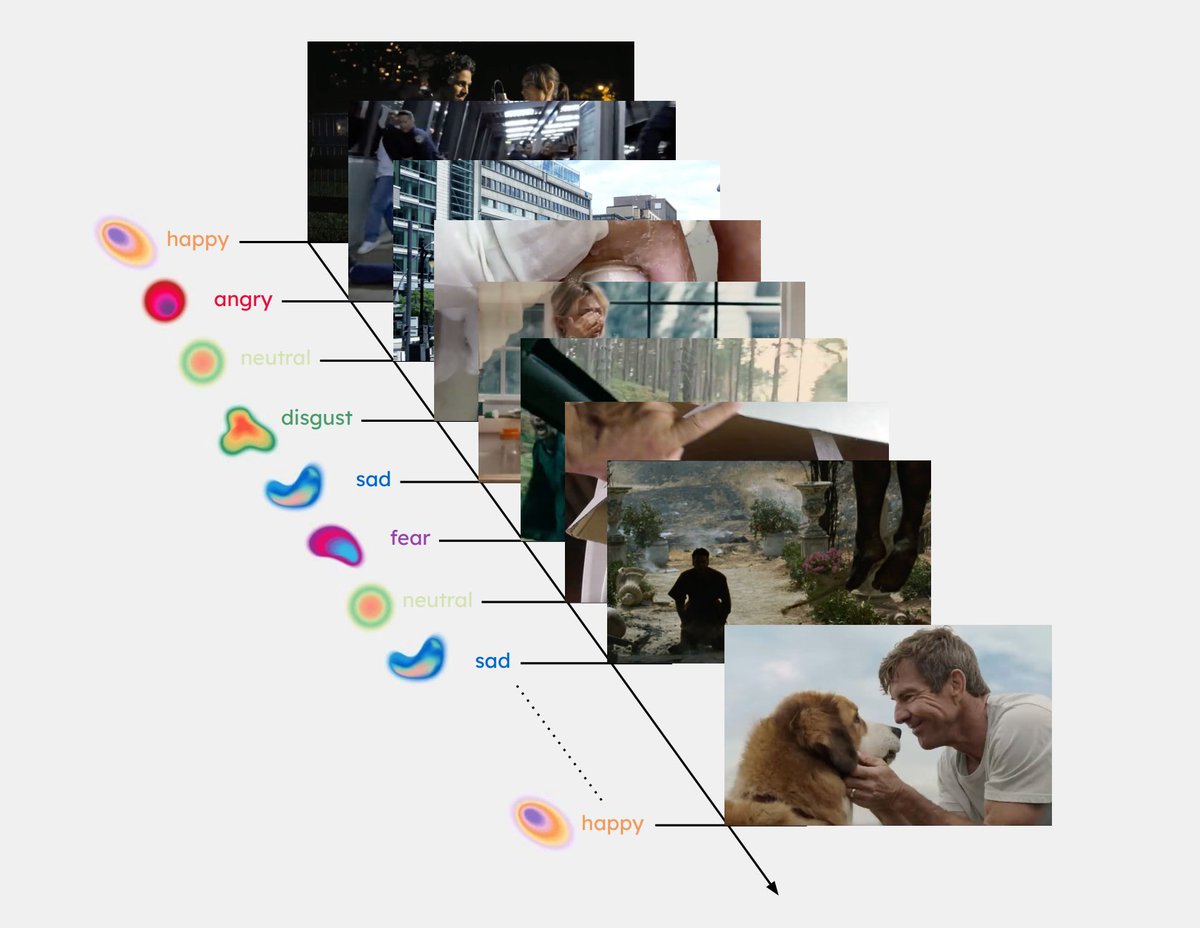
We successfully predicted emotion from brain activity, achieving >2x performance to the previous state of the art.
Alljoined collected a dataset of 3,408 videos paired with EEG data across 24 participants, covering happy, sad, fear, anger, disgust, and neutral emotion.
Huge credit to the OAI team for solving the unit distance problem with 5.5 - it is now my go to example that models can in fact pull together disparate ideas into new discoveries.
As with all 4 minute miles, we had to try and cross it too! Turns out mythos solves it with a cute, simple proof. This implies some serious overhang in discoveries!
I trained an autoencoder that reconstructs images with zero reconstruction loss.
No MSE. No image space supervision.
The only signal: "According to you, does your output look like your input through your own eyes?"
It works.
Blog link, demo and summary 👇
i just want to shake people awake. this is it! the computers are speaking! they solve Erdos problems! they think for hours! code is no longer hand-written! wake up! gradient descent on deep neural networks shows no sign of plateau! this is it!
Introducing Agora-1, a multi-agent world model.
Multiple participants—human or AI—can now interact inside the same world simulation, all in real-time.
Try our playable research preview today, with Agora-1 simulating a multiplayer GoldenEye deathmatch!
Introducing Starchild-1 from @odysseyml, the first ever real-time multimodal world model.
This a model that can generate interactive simulations of the world that you can—for the first time ever—hear.
Starchild-1 represents a big step towards a general-purpose world simulator.