Kier Starmer's integrity, along with his experience, wisdom, calm approach to dealing with complex issues and plain good manners put him head and shoulders above all contenders for the keys to No 10.
Dear @Keir_Starmer , I am speaking for myself, but I do not think I am alone in my thoughts
My message is simple,please don't step down, it frightens me to think you will. You are the prime minister we desperately need, the only one who can lead this country into the future.
Once again, @AndyBurnhamGM - is ‘open to’ a lot of things, or will ‘consider things’ or ‘do things over a long period of time’. No details. Nothing different. Certainly no change. Waffle. All he ever mentions are moans or buses. Why the left want him, I don’t know. #newsnight
Labour is now in the same self destructive mode that destroyed the Tories when they replaced governing with introspection, people on manoeuvres, and internal warfare. The country doesn’t forgive this sort of self indulgence. Get on with your jobs.
Glad to hear that Keir Starmer has said that he will not back down. If there is a leadership challenge, as @AndyBurnhamGM suggested tonight on #bbcqt, he will fight. Go Keir Starmer , there are many #labourpartymembers supporting you! #newsnight
After weeks' spent focusing on judges getting it wrong in their sentencing remarks, here is Mr Justice Bright with a moving tribute to a victim.
In fact, he refuses to use that word, or complainant or survivor, saying they're 'demeaning'.
He instead refers to her as the 'hero'.
It wasn't easy putting myself out there.
Some people were cruel. Not about my art — about me.
But I refused to stop creating.
Every order I receive feels like a reminder that kindness still exists.
Thank you for seeing the art, not just the artist. ❤️
You’re the artist, you should take the casting vote! For what it’s worth people should take pride from the Clyde’s Industrial past, so it’s got to the Titan for me
🥁 July voting is complete!
After 100 votes, we have a tie:
🏗️ Titan at James Watt Dock – 32
🏖️ Luskentyre Beach – 32
Rather than a tie-break, both make the Scotland in Frame 2027 Calendar:
🏖️ July = Luskentyre
🏗️ August = Titan
#ScotlandInFrame#Scotland#Photography
A divorced single mother was fired from her bank secretary job in 1958. Twenty-one years later, she sold her side business for $47.5 million, and the teenage helper who once worked beside her went on to help create MTV.
Her name was Bette Nesmith Graham.
She was born in Dallas in 1924. Bette left high school before graduating. At nineteen, she married a soldier named Warren Nesmith. In 1942, she had a son named Michael. After her husband returned from World War II, the marriage fell apart. By 1946, she was twenty-two, raising a child alone, with no diploma, no career, and no clear plan.
She earned her GED by going to night school. She found work as a typist. By 1951, she had become executive secretary to the chairman of the board at Texas Bank and Trust in Dallas, earning about $300 a month. She was capable and hardworking. But she was also a very poor typist.
The bank had just brought in new IBM electric typewriters. The keys were sensitive. The carbon-film ribbons left ink that could not be erased neatly. One small typing mistake could force her to retype an entire page. Her son Michael later remembered seeing his mother at the kitchen table in the evenings, trying to repair mistakes and sometimes breaking down in “tears of panic” because she feared losing her job.
But Bette had a side hustle that helped her survive. She earned extra money painting holiday displays on the bank windows.
One day, while painting over a mistake on a window with a small brush, calmly and without needing an eraser, an idea came to her.
“An artist never corrects by erasing,” she later said. “They paint over the error.”
That night, she went to the public library and found a recipe for tempera paint. Then she went home and used her kitchen blender to mix a thin white liquid. She poured it into an empty nail polish bottle. She tinted it to match the bank’s stationery. The next morning, she brought it to work with a small watercolor brush.
When she made a typo, she brushed a little white paint over it, waited for it to dry, and typed over the same spot.
Her boss never noticed.
For five years.
But the other secretaries noticed. They asked her for some. Then their friends asked. Soon, strangers from other offices were coming to her. By 1956, she was making batches in her kitchen and selling them in nail polish bottles. She called it Mistake Out. Her son Michael, who was fourteen by then, and his friends filled the bottles in the garage for one dollar an hour.
In 1958, she was fired.
She had accidentally typed the name of her own company, Mistake Out Co., onto a letter for her boss. He dismissed her.
It became the best thing that could have happened.
She changed the product’s name to Liquid Paper, patented it, and gave herself to the business full time. In 1958, a mention in a trade magazine called The Office brought 500 inquiries from around the country. General Electric ordered 400 bottles in three colors, which was four times what she could produce in a month. By 1968, she was selling one million bottles a year. By the mid-1970s, she was selling 25 million bottles a year.
She built company headquarters in Dallas and ran the business the way she wished her former bosses had treated people. The Liquid Paper Corporation had an on-site library. It had child care for employees’ children. She placed women in management. She integrated her staff. She hired workers with disabilities, including blind employees and wheelchair users. She drew the company structure as a circle instead of a pyramid. She paid 75% of employees’ continuing education costs. She allowed employee committees to vote on company decisions.
This was the late 1970s. Most of corporate America was far behind her.
Then, in 1975, her second husband, Robert Graham, whom she had married in 1962 and brought into the business, divorced her and tried to force her out of her own company. He changed the formula. He cut off her royalties. Bette, ill and worn down, fought back and kept a 49% share.
In 1979, with her health failing, Bette sold Liquid Paper to Gillette for $47.5 million in stock, about $173 million in today’s money, plus a royalty on every bottle sold for the next twenty years.
Six months later, on May 12, 1980, she suffered a stroke and died.
She was fifty-six.
Half of her fortune went to two foundations she had created to support women in business and women in the arts. The other half went to her son.
That son had spent his teenage years filling Liquid Paper bottles in her garage. By the time his mother died, he was already famous for a very different reason. His name was Michael Nesmith. He was the wool-cap-wearing guitarist from The Monkees, one of the biggest pop groups of the 1960s.
But what came next is the part people rarely mention.
Michael used his Liquid Paper royalties to fund a small experimental television show he had imagined, one built around short promotional films set to popular songs. He called it PopClips. It aired in 1980 and 1981 on a cable network called Nickelodeon.
PopClips became the direct prototype for MTV, which launched in August 1981. Music industry historians credit Michael Nesmith’s work with helping create the modern music video format that would reshape pop music for the next thirty years.
So the next time you find an old bottle of Liquid Paper in a desk drawer, remember this:
A divorced single mother who was fired from her secretary job for being a poor typist created a kitchen-blender solution, built one of the most forward-thinking workplaces in 1970s America, sold her company for almost fifty million dollars, and her son used the money to help invent MTV.
Bette Graham proved something her old boss had failed to see for five years.
The mistakes were not the problem.
They were the opportunity.
Have you ever turned something you thought was a failure into the best thing that ever happened to you?
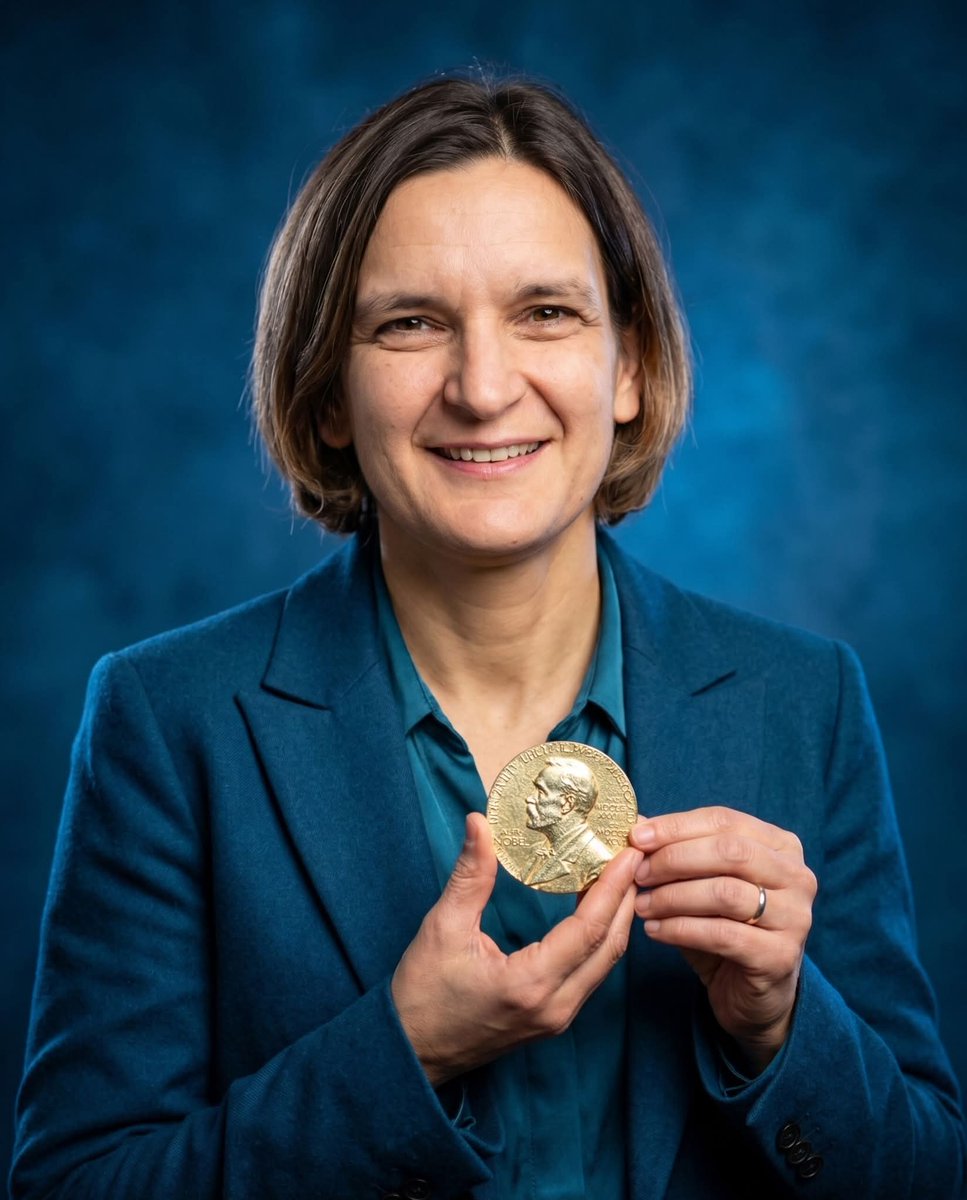
4:45 AM. Phone rings. Esther Duflo thinks: “Who dies at this hour?” She picks up. Hears the words: “You’ve won the Nobel Prize.”
Her first reply? Not “Oh my god.”
She says: “With who?”
They tell her: “Abhijit Banerjee and Michael Kremer.”
She laughs. Passes the phone to her husband — Abhijit — who’s half asleep next to her.
Then she learns she has 45 minutes before the world starts asking her questions.
At 47, Esther Duflo just became the youngest Nobel Prize winner in Economics. Ever.
Only the 2nd woman to win it. The 1st woman economist. Period.
But forget the records. Here’s why this moment broke the internet:
For decades, experts talked about “ending poverty” like it was one giant puzzle. Big speeches. Huge budgets. Zero proof.
Esther and her team did the opposite.
“We stopped asking ‘How do we fix poverty?’” she said. “We started asking ‘Does this one thing actually work?’”
Free uniforms — do kids show up more?
Smaller classes — do they learn better?
A tiny reward for vaccines — do parents come?
They borrowed an idea from doctors: test it. Like medicine. Randomly give some villages the help, others not. Then measure what changes.
People called it crazy in the 1990s. Now it’s how we fight poverty.
They went to Kenya. India. Indonesia. Not to lecture. To listen. To watch. To learn.
And they found something powerful:
“Poor families aren’t making bad choices,” Esther explained. “They’re making smart choices with impossible options.”
Some “solutions” failed hard. Those famous microloans? Didn’t magically lift people up like everyone hoped.
But other things? Tiny. Cheap. Game-changing.
Deworming pills = kids in school for years.
A bag of lentils for a vaccine = disease rates drop.
In 2003, Esther helped start the Poverty Action Lab at MIT. By 2019, their research had touched over 400 million lives.
When she took the stage for the Nobel, she didn’t say “We solved it.”
She said: “Evidence doesn’t care about ego. It cares about truth.”
She also had a message for every girl who loves math:
“I didn’t see women like me in economics. So I became the one I needed to see.”
The lesson?
You don’t beat giant problems with giant speeches.
You beat them with small questions. Honest answers. And the guts to test everything.
Esther Duflo didn’t promise to end poverty.
She proved we can understand it. One piece at a time.
And that changes everything.
Digital Artwork | AI Generated Image by Fresh Mind |
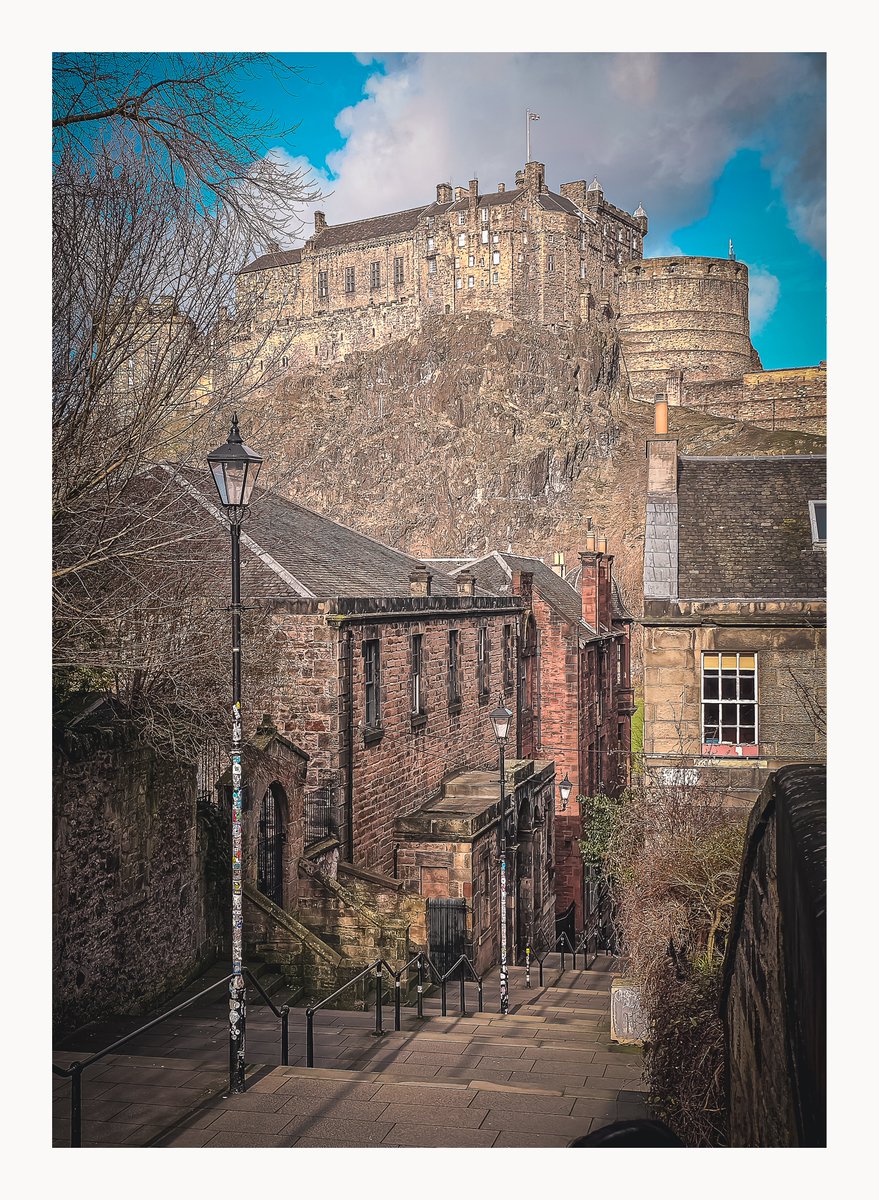
SCOTLAND IN FRAME-2027 CALENDAR
Four very different sides of Scotland.
From Skye and Glencoe to Edinburgh and Gourock, which image sums up June for you?
1. The Quiraing
2. Gourock Outdoor Pool
3. Buachaille Etive Mòr
4. The Vennel
Vote below
#ScotlandInFrame#Scotland
When I first looked into the UK debate on a national prostate cancer screening programme, especially with the advent of gamechangers like mpMRI, had to ask, does any Western country actually do mass screening?
It turns out Lithuania does & it’s the ultimate cautionary tale.
It was launced in 06 with routine PSA blood tests for men aged 50–74 & if the PSA was elevated it triggered a direct referral for a TRUS biopsy.
Within a year, prostate Ca incidence rates skyrocketed to the highest in the world (peaking at over 182/100,000) with mostly indolent cancers being found that would've never caused symptoms or affected their lives. —Overdiagnosis.
With it they also recorded massive rates of unnecessary radical prostatectomies leaving healthy men with lifelong incontinence & erectile dysfunction (as high as 50% in some areas)—Overtreatment.
It is like a living example of everything the NSC is worried about could happen if the UK blindly deploys a programme and fails to follow available evidence.
They are not shutting the door on prostate cancer screening, for now, the committee has taken a cautious but responsible position, pledging to review new evidence as it becomes available & to revisit its recommendations when the science supports doing so.
These "interventions" by David Cameron and Rishi Sunak however well intentioned are now verging on irresponsible. There is good reason why activism even by ex PMs should not dictate national screening decisions. As a surgeon, researcher and recent health minister I'll explain why......
Screening for any disease is not a risk and harm free exercise both in terms of harms of the test itself and the complications of unnecessary treatment. That is why they are carefully balanced decisions based on whole populations not individual case studies as emotive as they might be.
Current studies and evidence from international trials in prostate cancer are not representative of the UK population which has higher numbers of black men who are indeed at higher risk of prostate cancer but need evidence and data tailored to their needs.
What we need is better modern screening tools rather than a blanket application of suboptimal tests which may miss cancers and lead to unnecessary treatment. And there is a clinical trial ready to answer exactly these questions set up by some of the brightest minds in the UK and backed by the @NIHRresearch and @ProstateUKVoice https://t.co/ExdKV1MOMQ
So please do use your activism to push politicians and researchers to answer these questions faster, to break the mould, to push the boundaries to get the science done. But do not inadvertently become complicit in an uncontrolled screening experiment of men and black men because of your desire to do “something”.
Poor communication has definitely been one of Starmer’s weaknesses. But the issue runs deeper than “hostile media”.
Too often Labour policies have been heard as isolated announcements rather than part of one bigger story about security, dignity, stability and national renewal.
That matters because people do not experience politics as spreadsheets or policy papers. They experience it through bills, wages, waiting lists, housing and whether they feel optimistic about the future.
What was interesting about Starmer’s response to Blair is that, for perhaps the first time, he connected all of those things into a clearer political argument about why people turn to populism and what Labour is trying to rebuild.
The challenge now is consistency and repetition. Governments only get credit for achievements when people emotionally feel the direction of travel.
#KeirStarmer #Labour #Politics #UKPolitics
I'm older than John Swinney and Nicola Sturgeon. I was an independence supporter when they were still at school. Between them they've totally destroyed the possibility of independence for a generation. Maybe even forever. They did that in 12 years. Liars, cheats, bullies. But