An iPSC-derived heart muscle cell assembling sarcomeres videoed through a spinning disk confocal microscope by Burnette Lab graduate student, @EmmaKoory. Alpha-actinin-2 is shown. Colors denote Z slices (red-bottom; green-middle; blue-top). Movie length- 40 hours.
Evolution seemingly builds complexity from the familiar molecular foundations.
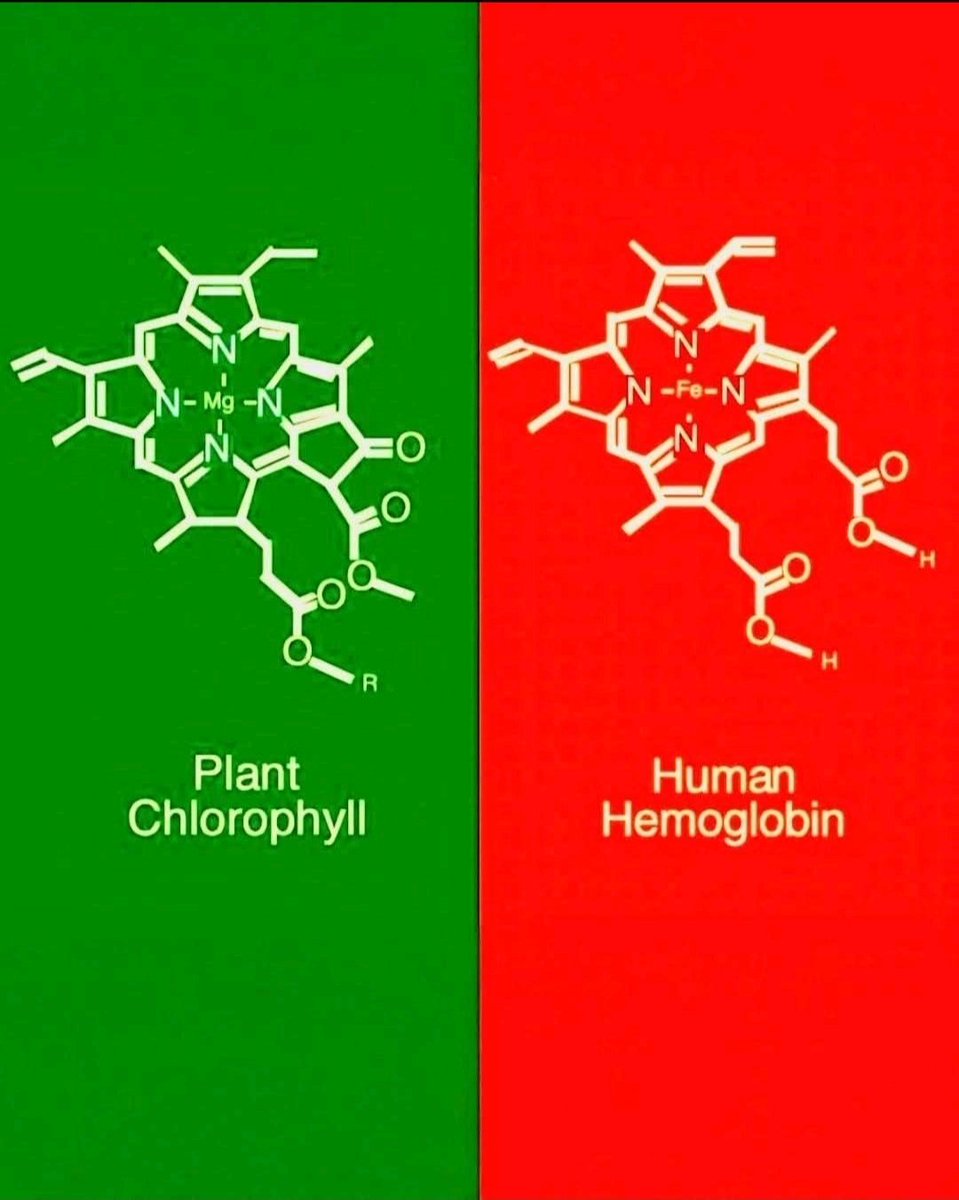
At first glance, plants and humans seem worlds apart, but at the molecular level, the chemistry of life speaks a shared language.
The green pigment chlorophyll, which lets plants capture sunlight for photosynthesis, and hemoglobin, the red protein that carries oxygen in our blood, are strikingly similar in structure. Both molecules share a ring-shaped framework called a porphyrin ring, responsible for binding metal atoms at their center.
The only major difference?
In chlorophyll, the central atom is magnesium (Mg) - tuned to capture light energy.
In hemoglobin, it’s iron (Fe) - perfectly suited to bind and release oxygen.
This variation shows how life can reuse successful designs, adapting them to serve entirely different purposes: one molecule turning sunlight into chemical energy, the other carrying oxygen to sustain that energy in animals.
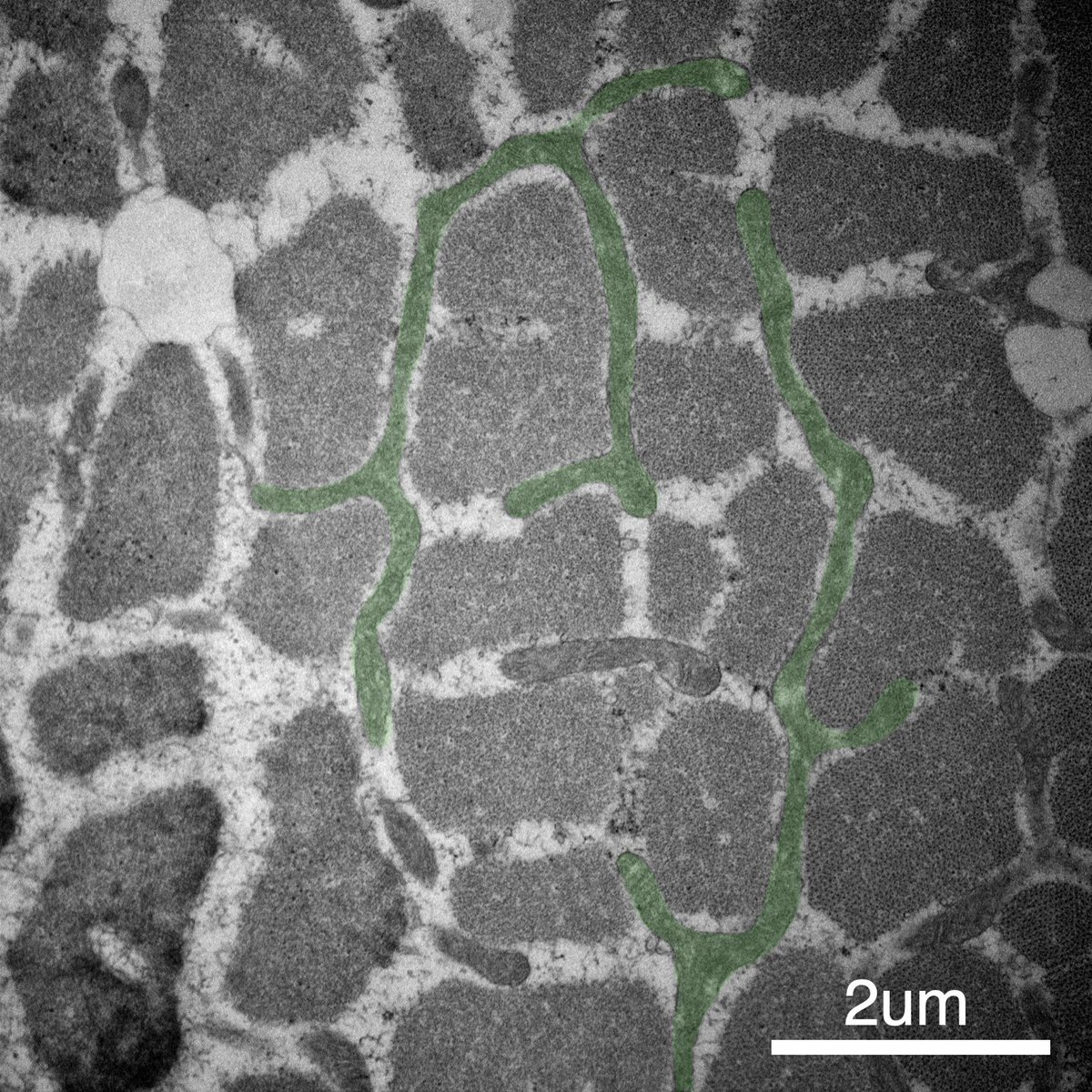
Exercise triggers mitochondrial biogenesis, increasing the number and size of the mitochondrial collective in various cell types
What else do we know increases mitochondrial content?
What else should we test?
Seeing this mitochondrial reconstruction for the first time with @MitoLoveLab was one of the most exciting sight ever! It changed my life.
What do you see?
The story behind cristae alignment here: https://t.co/MPIUrLRxJH
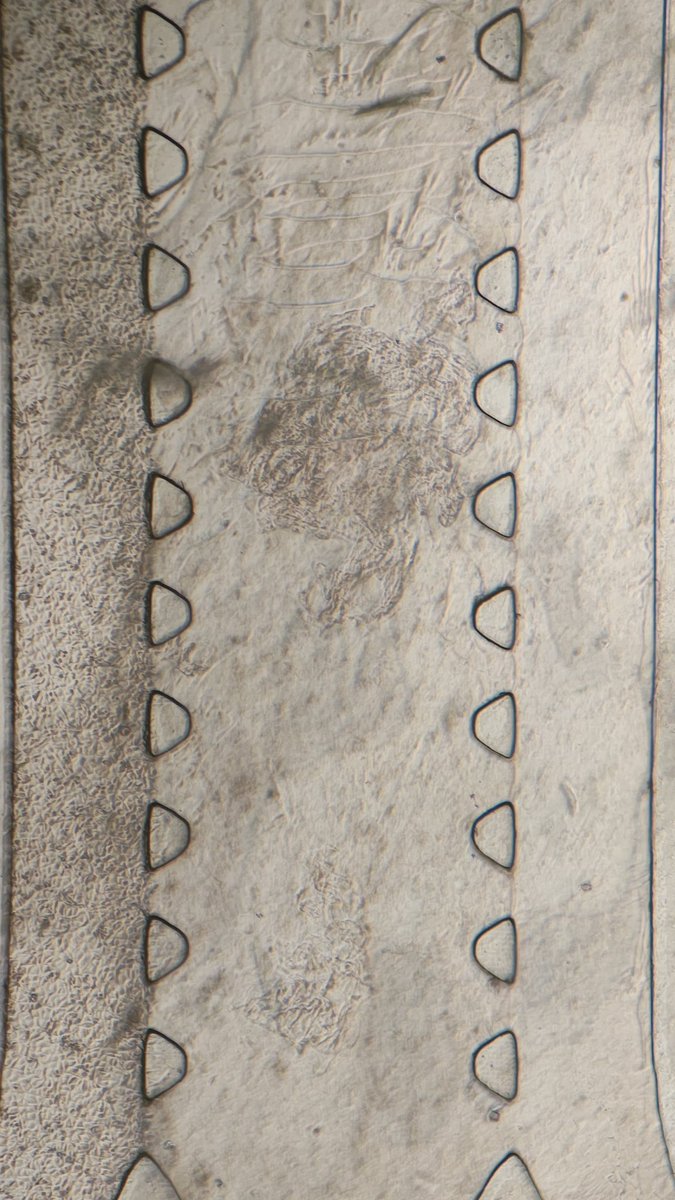
Ya esta en Open Access nuestro trabajo de un organo en un chip (OOC). El primero de este tipo en Mexico. Nuestro Laboratorio de Mecanobiología esta muy orgulloso de este trabajo, esperando seguir siendo un referente de esta tecnología en el país.
https://t.co/fr4PccFLYq
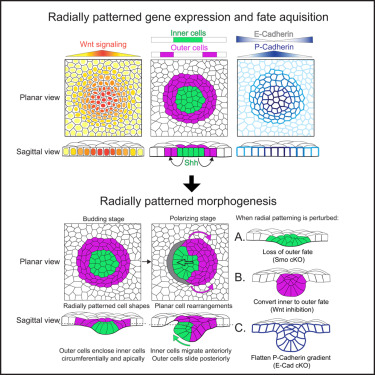
Proud to have contributed to this story from @lleybova and others, now out in @Dev_Cell! We show that hair follicle cell fates are radially patterned by Wnt and Shh gradients and that position and fate determine morphogenetic behavior. https://t.co/O1aMI8beFL
Scientists have designed a new form of insulin that can automatically switch itself on and off depending on glucose levels in the blood https://t.co/uD9Emdjsce