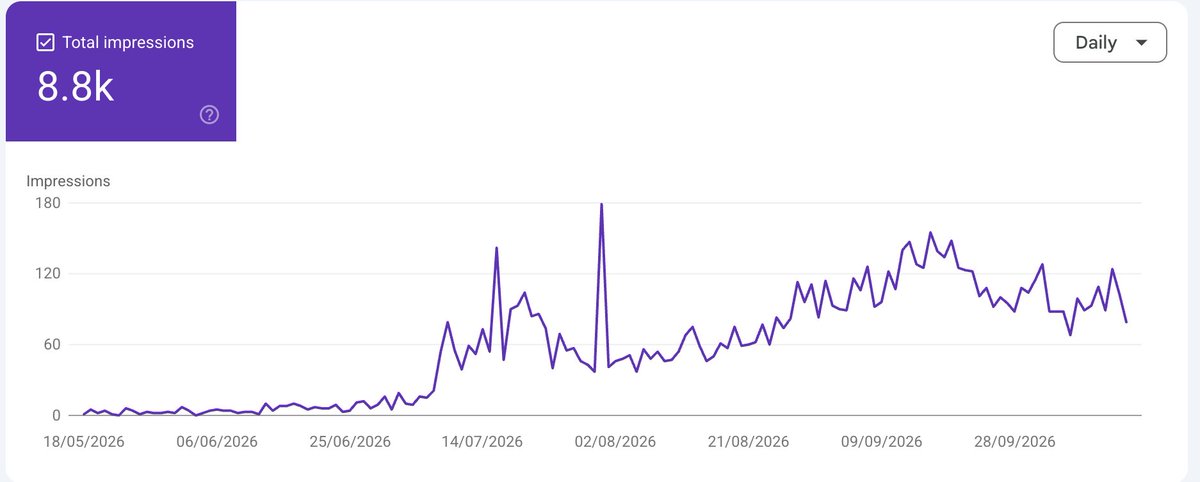
Google added an AI report to Search Console. It shows how often your pages appear in AI Overviews.
It won't tell you if the answer cited your brand. Or what ChatGPT and Gemini said.
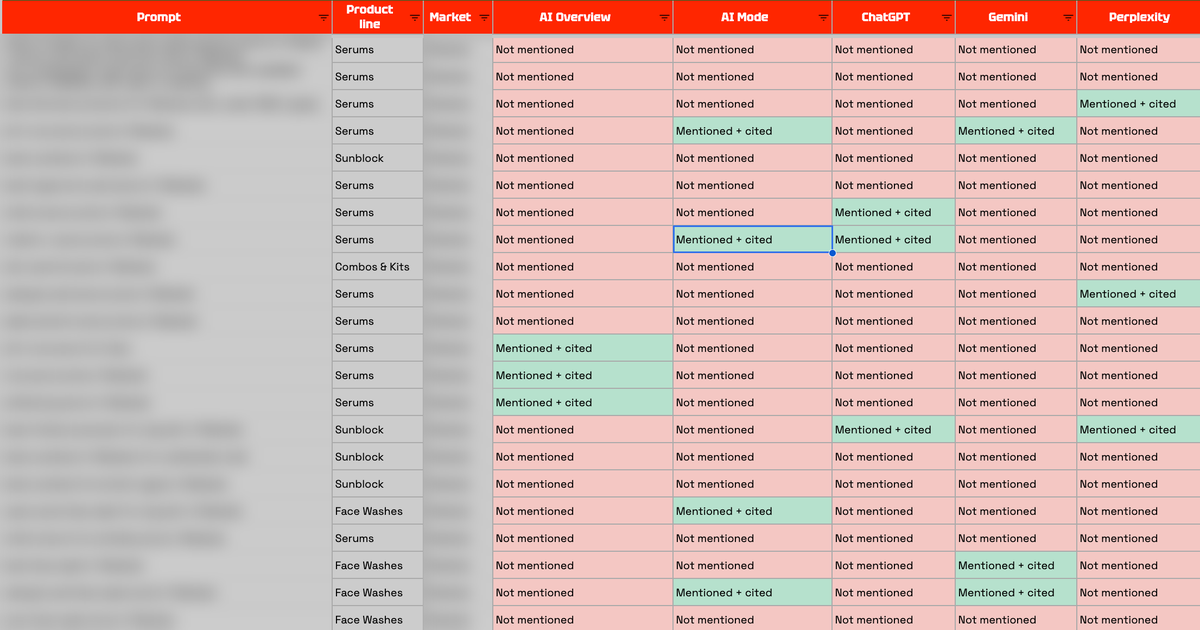
That half starts with prompt research. Here's what mine looks like.
Most D2C brands use AI to write ads.
Few check if AI is sending them customers.
Ask ChatGPT for the best product in your category. Not cited? A competitor gets that sale.
It barely shows in analytics, so it gets ignored.
DM me your brand and I'll check if ChatGPT cites you.
Ecommerce AI search starts before content.
Pull the buy prompts your customers actually ask. Run them across LLMs. Write down who comes back and what gets cited.
Then match each gap to one page on your site.
That is the order on my own D2C brand. Most of our sales are organic, and more of them start in ChatGPT every month.
If the only clear answer lives in the reviews section, an AI model may never quote your brand cleanly.
Put the buy answers on the product page itself. Reviews should support the decision, not carry it alone.
Product pages that actually answer the buy question get cited more often than a FAQ wall stuck at the bottom.
On my own D2C brand we redesigned the money pages so that answer sits where the purchase decision happens. Then we checked how LLMs talk about those products before publishing more content.
AEO is clarity on the page that sells.
Ecommerce SEO without AI search citations is half a strategy.
Google still sends buyers. LLMs are deciding who gets recommended on the buying questions.
Fix the money pages first. Clear answer. Specs. Fit. Who it is for. One block a model can quote.
On my own D2C brand we redesigned the whole site around that. Money pages. Contact. Blog with real content and product images tied to each topic. Then we check citations and mentions.
More posts will not fix a product page an LLM cannot recommend.
Hot take:
Sort category questions by intent, not volume.
The boring down-funnel ones are still worth writing. The "what is" ones often die on the AI answer.
Clarity on buy questions beats a fat content calendar.
AI answers cut clicks. That is not the story.
The story is which searches drop.
"What is" and "how does it work" get answered on the results page. Brand searches and ready-to-buy questions still send people to sites.
On my own D2C brand we redesigned around that. Money pages. Contact. Blog with real content and product images tied to each topic. Then we check citations and mentions across LLMs.
The question is not whether to answer questions. It is which ones still send a customer.
Blue-link #1 used to be the whole game.
Now it is citations and mentions across LLMs. Show up often in AI answers, not only at the top of Google.
I tested this on my own ecommerce brand. Getting cited and mentioned pulls organic orders.
Ranking without AI answers is half a strategy.
Shoppers ask ChatGPT and Google AI Mode who to trust before they click. If you’re missing there, classic SEO alone won’t save the week.
Building this in public with my D2C brand and the same playbook I use for ecommerce clients.