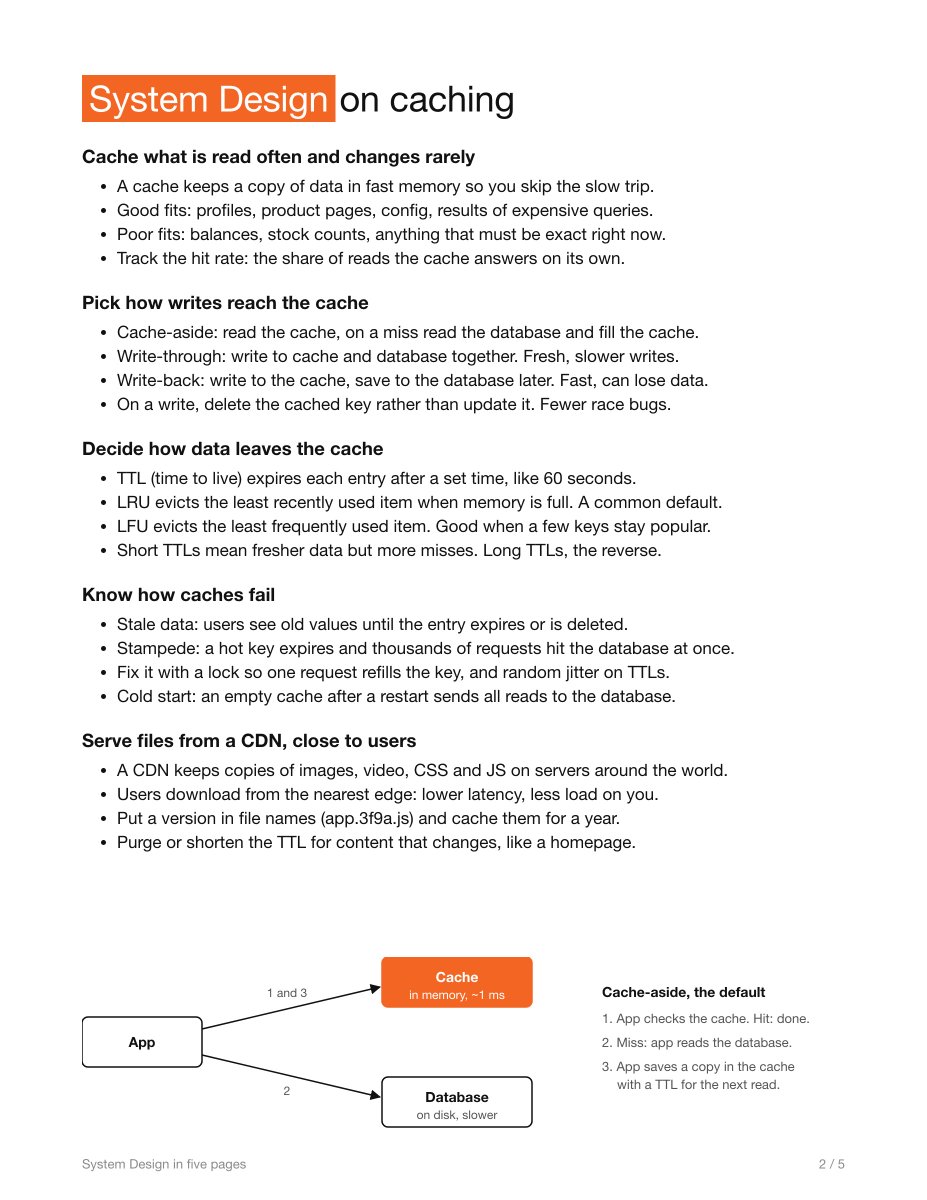
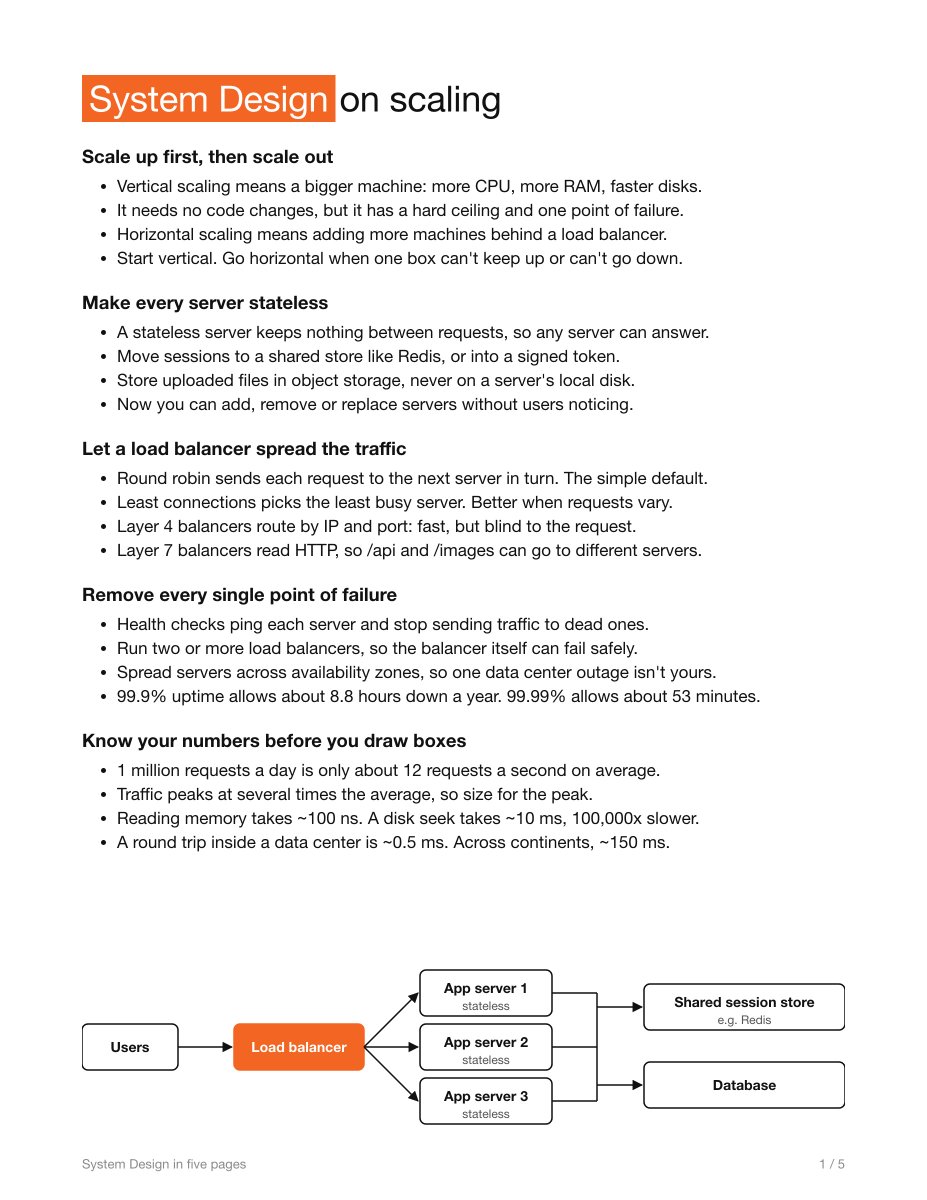
uno de los mejores resúmenes de system design que vi. en 5 páginas cubre los conceptos más importantes:
1) escalado -> primero agrandás el servidor. cuando no alcanza, sumás más servidores detrás de un load balancer y guardás las sesiones en un store compartido como Redis.
2) caching -> guardás en memoria lo que se lee mucho y cambia poco, como perfiles o productos.
3) bases de datos -> SQL para la mayoría de los casos, índices para las queries más frecuentes y transacciones cuando se mueve plata o stock.
4) escalar datos -> réplicas para repartir las lecturas y sharding cuando un solo servidor no aguanta las escrituras.
5) picos de tráfico -> una cola recibe las tareas y los workers las procesan a su ritmo, así la API sigue respondiendo rápido.
si estás preparando entrevistas o querés entender cómo se diseñan sistemas a escala, estos conceptos son clave.
Uwekezaji unaoweza kufanya maishani ni kuwekeza ndani yako mwenyewe.
1. Change your mindset.
2.Jifunze kujitambua na kujitawala
3. Jifunze human behavior.
4. Elewa namna pesa inavyofanya kazi.
5. Jenga discipline na good habits.
6. Invest in knowledge and valuable skills.
System design is basically:
High global latency? Use a CDN.
Slow database reads? Add a cache.
Sudden write spikes? Add a queue.
Distributed transactions? Use Saga.
Need ACID transactions? Use SQL.
Flexible data models? Consider NoSQL.
SQL database too large? Shard the DB.
Growing server load? Scale out.
High traffic? Add a load balancer.
Critical service failures? Add redundancy.
Need data durability? Use replication.
Too many requests? Add throttling.
Unpredictable traffic spikes? Enable autoscaling.
Realtime updates? Use WebSockets.
Retries causing duplicates? Use idempotency keys.
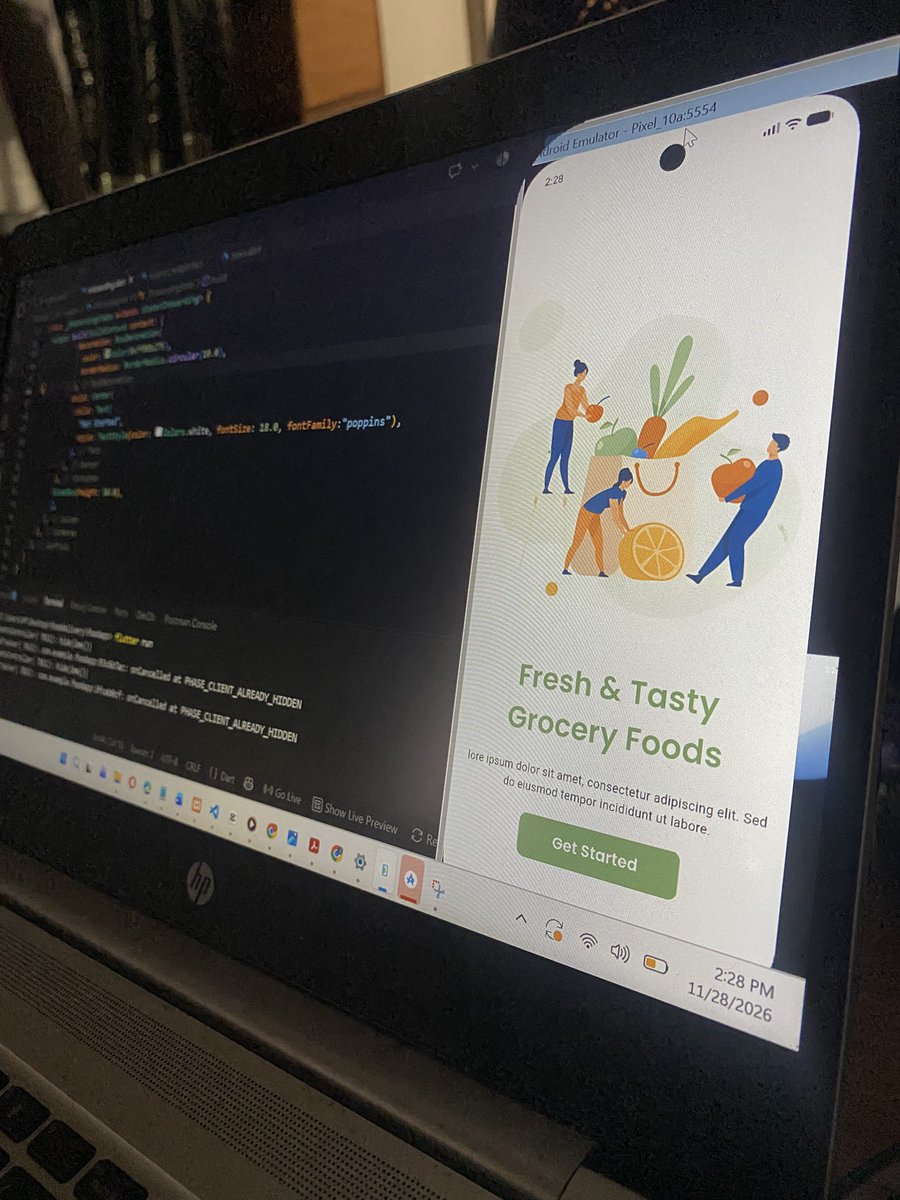
We just released the parcel delivery feature on @ChopGrub, and I did some interesting engineering work on it,
People in Kuje, Abuja, and its environs can check it out
Hoping for a restful weekend 😃
𝗦𝗦𝗢 𝘃𝘀 𝗢𝗔𝘂𝘁𝗵 𝘃𝘀 𝗢𝗜𝗗𝗖 𝘃𝘀 𝗦𝗔𝗠𝗟.
Do you know the differences?
𝗦𝗦𝗢 is a user experience, not a protocol. It lets users log in once and access multiple apps without re-authenticating; providing seamless access across tools. It relies on protocols like SAML or OIDC.
𝗢𝗔𝘂𝘁𝗵 is for authorization. It lets apps access user data or services without sharing credentials. It controls what an app can access, not identity.
𝗢𝗜𝗗𝗖 is an authentication layer on top of OAuth 2.0. It verifies user identity and provides user info via ID tokens (usually JWTs). It’s the standard for login + identity in modern apps.
𝗦𝗔𝗠𝗟 is an older, XML-based standard primarily used for enterprise SSO. It’s still widely used in legacy and enterprise systems, though newer applications increasingly adopt OIDC. It’s powerful but more complex than OIDC.
OAuth = access.
OIDC = identity.
SAML = older enterprise SSO.
SSO = the experience.
But getting identity right doesn’t solve the whole access problem.
As more apps and AI agents connect to production data, managing permissions separately in every tool gets harder.
Retool centralizes that with SSO, role-based permissions, and Data Access Enforcement, giving teams shared guardrails underneath the apps and agents they build.
Build with the tools you already use. Run with Retool's enterprise controls.
𝗚𝗿𝗲𝗮𝘁 𝘀𝗵𝗼𝗿𝘁 𝗿𝗲𝗮𝗱 𝗼𝗻 𝗵𝗼𝘄 𝗶𝘁 𝘄𝗼𝗿𝗸𝘀 → https://t.co/NPyc5W8kjn
What else would you add?
——
💾 Save it for later.
🙏 Thanks to @retool for sponsoring this post.
➕ Follow me to improve at system design and AI engineering.
It all starts somewhere, bro. Every successful man was once broke, confused, inexperienced, and doubted by people around him. The difference is he didn't quit at the beginning.