Check out this incredible 3D trajectory of the parachuted sensor as it completed three revolutions around the #tornado, with widet circumference with height. The sensor then sampled the “vent” at the upper reaches of the dynamic pipe. It reached velocities of at least 140 mph. This is a historic accomplishment in science and engineering by @WillClay25
A NEW WHELAN?
by Michael Whelan
For most of my life, I was never much of a cat person. Dogs made sense to me. Dogs loved loudly. They greeted you like you mattered. Cats always seemed distant and aloof, as if they were merely tolerating your existence until dinner arrived.
And then, sixteen years ago, Rebecca and I rescued a ten-week-old Siamese kitten named Elliott.
From the very beginning, he changed me.
Elliott didn’t just meow — he talked. Constantly. He followed Rebecca and me from room to room as if he were part child, part therapist, part tiny furry supervisor. He slept curled against my chest every night and somehow always knew when one of us was hurting.
When I was battling stage 4 cancer, Elliott rarely left my side. Through the surgeries, the fear, the exhaustion, and those endless nights where sleep refused to come, there he was. Quiet. Loyal. Loving. Sometimes I think he carried parts of me emotionally when I no longer had the strength to carry myself.
He wasn’t just a pet. He was family.
In 2025, with Rebecca’s Parkinson’s worsening and our world already emotionally collapsing around us, Elliott passed away at seventeen years old. Losing him devastated us. The house changed afterward. Even with Bella, Bambi, Winston, and Penny still filling our home with love, there was an unmistakable silence where Elliott used to be.
And then last night, something unexpected happened.
A local Siamese show breeder heard our story and offered me one of her beautiful blue Siamese cats for only the cost of the shots instead of the usual price. I sat there stunned, wondering if this was simply coincidence… or something more.
I’ll never replace Elliott. I could never replace Rebecca either.
But maybe love isn’t about replacing what was lost. Maybe it’s about finding the courage to let your heart open again after it’s been shattered.
Living with #epilepsy in the USA has always come with a steep price tag. Now families have to choose between the rising costs of their life-saving meds, gas, and beef. -- Is the current economy pushing you to the brink? #Affordability#EpilepsyAwareness
Unsolicited advice to "stop your meds" ignores the dangerous reality of uncontrolled #epilepsy. Side effects are a challenge, but uncontrolled seizures can cause lasting neurological damage, injury, or SUDEP. -- Has anyone advised you to stop your meds? #EpilepsyAwareness
The Things I Never Thought I’d Have to Learn Alone.
by Michael Whelan
There are things you expect to learn in a lifetime—how to work, how to endure, how to love someone so deeply that they become part of your breathing.
And then there are the things you never imagine learning alone.
No one prepares you for the quiet education of loss. There’s no manual, no gentle instructor guiding you through the moments that follow after the person you built your life around is suddenly… not there. The world keeps moving, but your classroom has been reduced to silence.
I am learning how to wake up without turning to her.
That sounds simple. It isn’t. It’s a small, daily unlearning of habit, of instinct, of love. My body still reaches—still expects warmth, a voice, a shared beginning to the day. Instead, there is space. And I am left to understand that space on my own.
I am learning how to make decisions that used to belong to “us.”
What to eat. Where to go. Whether to leave the house at all. These were never just choices—they were conversations, collaborations, quiet rituals of partnership. Now they arrive like questions with no right answers, and I sit with them longer than I should, as if waiting for her to weigh in.
I am learning how to carry memories that used to be shared.
There are stories only we knew. Moments that lived in the space between us. Without her, they feel unanchored—like they could drift away if I don’t hold them tightly enough. So I replay them, over and over, afraid that forgetting even a detail would be losing her again.
I am learning how to exist in a world that still expects me to function.
People mean well. They offer advice, timelines, gentle nudges toward something that resembles normal. But there is no normal here. There is only adaptation—slow, uneven, often painful adaptation to a life I never asked to live.
And perhaps the hardest lesson of all—
I am learning how to survive the hours that used to be filled with her presence.
The evenings stretch the longest. That was our time. The conversations, the quiet companionship, the simple act of being together without needing anything more. Now those hours feel exposed, like something sacred has been taken and not replaced.
I never thought I’d have to learn how to live without her.
But here I am—studying grief like a language I didn’t choose, trying to understand its rules, its rhythms, its relentless vocabulary of absence.
And the cruelest part?
There is no graduation.
Only the slow, aching realization that this is the rest of the course. 💔👩❤️💋👨
LOTS OF NEWS!
MY NIECE GAVE BIRTH TO TWINS ( 2 GIRLS) LAST NIGHT. NO NAMES YET.
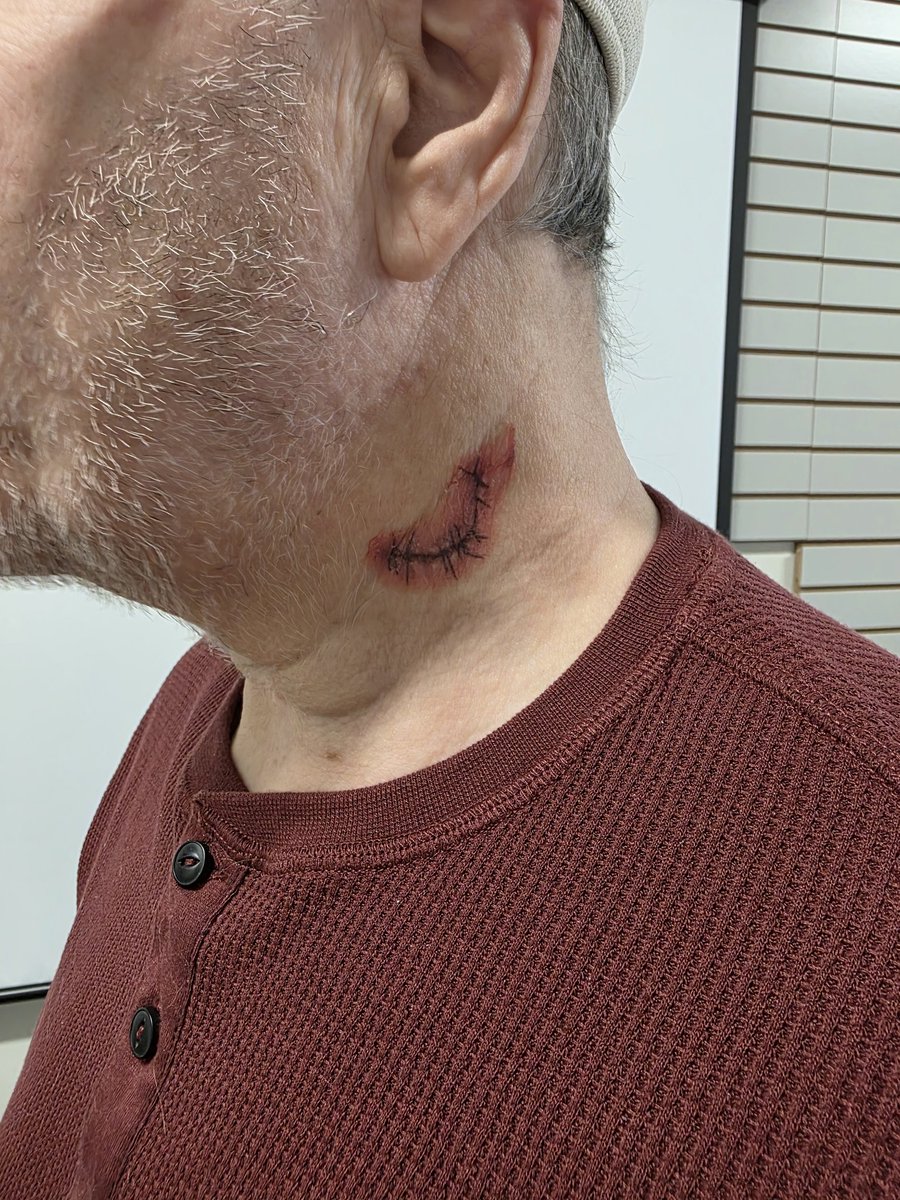
I HAD TO GO TO HOSPITAL YESTERDAY. WHILE CUTTING BOXES, THE SHARP EDGE STRAIGHT EDGE BOX CUTTER FELL OFF THE TOP LEDGE AND PLUNGED INTO MY NECK. LUCKILY, 5 STITCHES FIXED THE PROBLEM. JUST ANOTHER DAY AT THE WHELAN HOUSE. 😎
MY LOVE WAS SO DEEP.
by Michael Whelan
There are people who believe sadness arrives all at once, like a thunderstorm rolling in over the horizon.
Mine didn’t.
Mine arrived molecule by molecule.
A doctor clearing his throat before speaking.
A hospital hallway at 2:17 in the morning.
The sound of Rebecca falling in the bathroom.
The silence after another MRI.
A pharmacy receipt folded inside my pocket like a ransom note.
A neurologist glancing at the clock while my wife disappeared in front of him.
For six years, sadness became the climate of our home.
It sat beside us during dinner.
It slept at the foot of our bed.
It rode shotgun in the car while I drove Rebecca to appointments that always seemed to end with another prescription, another warning, another version of “we’ll try.”
And somehow, in the middle of all of it, the world itself began breaking too.
COVID arrived like an invisible fire.
The isolation was brutal. No visitors. No certainty. Just fear wrapped in latex gloves and hand sanitizer. Rebecca’s Parkinson’s worsened behind closed doors while her mother’s dementia erased pieces of herself thousands of miles away in Northern California. Every phone call felt like standing at the edge of another cliff.
Then came the cancer.
Stage 4 head and neck cancer.
Even now, those words sound like they belong to somebody else. Somebody in a movie. Somebody you pray for before going back to your normal life.
But it was me.
My tongue. My throat. My body collapsing while I was still trying to hold everybody else together.
There is a particular loneliness that comes when you are fighting to survive while simultaneously trying to keep another human being alive. It changes you. It strips away vanity, certainty, and eventually even language itself. I stopped asking, “Why is this happening?” because there was never time for philosophy. Rebecca needed medication. Insurance companies needed paperwork. The dogs needed food. Her mother needed help. Bills needed paying.
Then I lost the career that had protected us for decades.
One day I was a respected television executive. The next I was a full-time caregiver standing in a kitchen at midnight Googling symptoms while trying not to cry loud enough for Rebecca to hear me.
People love to use the phrase “be strong.”
I have grown to hate those words.
Strength is overrated.
Love is what carried me.
Love carried me into oncology appointments.
Love carried me through sleepless nights cleaning up accidents.
Love carried me while watching the woman I adored slowly disappear behind Parkinson’s and dementia.
Love carried me all the way to March 5th, 2026 — the day my heart finally broke completely.
Because Rebecca died suddenly.
After everything.
After all the caregiving.
After all the terror.
After surviving cancer myself.
After believing somehow we had earned peace.
She was just gone.
And the horrifying part about grief is this:
The world does not stop because yours did.
People still laugh in grocery stores.
Neighbors still mow their lawns.
Television commercials still try to sell happiness for $19.99.
Morning still comes.
Meanwhile, I sit in a quiet house filled with ghosts.
I have learned that sadness is not poetic when you are living inside it. It is exhausting. It is lonely. It is carrying memories so heavy your chest physically hurts.
But I have also learned this:
The depth of my grief is the final measure of how deeply I loved her.
And my God…
I loved her beyond words.
And even now, in the unbearable quiet that follows me from room to room, my heart still reaches for her instinctively. I loved Rebecca with every fragile, exhausted, beautiful piece of my soul.
WHY I LOVED REBECCA
by Michael Whelan
I spent most of my childhood believing love was something people survived rather than something they felt.
My parents hated one another, and our house carried the tension of two people emotionally trapped together. As a little boy, I listened to every screaming match through dark hallways and thin walls. Even now, decades later, I can still hear the sharpness in their voices. Children aren’t supposed to become experts at reading moods, but I did. I learned how to detect anger before it arrived. How to emotionally disappear inside myself when the yelling started.
But there was one thing that helped me escape it.
My father worked for the Pittsburgh Pirates, and in the early 1960s he would sometimes take me to Forbes Field. Those afternoons became salvation for me. The smell of cigars, popcorn, and fresh-cut grass drifting through the air. The organ echoing through that beautiful old ballpark. The impossible green of the field beneath the summer sky. For a few precious hours, baseball distracted my mind from the sadness waiting back home. Inside Forbes Field, life finally made sense.
Then, when I was eight, the marriage finally collapsed. My mother packed up her three children, loaded our old Pontiac station wagon, and drove us across America to Northern California to live with our grandparents. I remember staring silently out the window during that drive wondering if every family in the world felt this broken.
That kind of childhood leaves fingerprints on your soul.
Long before people understood dyslexia, I struggled through school feeling stupid while other kids seemed to move effortlessly through life. I stuttered whenever anxiety tightened around my throat. Panic attacks and bipolar disorder quietly wired themselves into my future while I was still just a frightened kid pretending to be okay. Most of the time I felt defective.
And when you grow up that way, you don’t suddenly become whole as an adult. You become a sad young man learning how to trust people without expecting abandonment. Learning how to love while still carrying fear. Truthfully, life dealt me one weird, painful, often brutal hand of cards. But I honestly believe I played that hand the best I could.
Then I met Rebecca when we were thirteen.
Two awkward kids with old souls carrying invisible pain.
She saw through every wall I built around myself and loved me anyway.
That changed everything.
Rebecca taught me that love was not control, screaming, or fear. Love was patience. Love was staying. Love was sitting beside someone during the darkest nights of their life and quietly whispering, “I’m still here.” Over fifty years together, we grew up side by side. Two wounded kids slowly becoming safe adults for one another. And even now, after losing her, I still carry the warmth of her hand on my heart.
And now that she’s gone, the silence feels unbearable some nights. The world keeps moving while mine feels permanently paused somewhere beside her hospital bed. But loving Rebecca taught me something profound: trust is giving someone the power to break your heart someday… and loving them so completely anyway that the risk becomes worth it.
Rebecca taught me I wasn’t broken.
For more than fifty years, we held onto one another through cancer, caregiving, financial fear, Parkinson’s, dementia, sleepless nights, and heartbreak so profound it barely feels survivable now that she’s gone.
A little boy raised in chaos spent the rest of his life loving the woman who finally taught him what peace sounded like.