Yesterday, I saw a young boy with rabies following a stray dog bite.
Every time I see a patient like this, I am reminded that rabies is probably the only neurological disease where the most important treatment should have happened weeks before the patient reached the neurologist.
By the time we see hydrophobia, aerophobia, autonomic storms, agitation, dysphagia or paralysis, the virus has already travelled silently through the peripheral nerves into the brain. At that stage, despite all advances in critical care, our options become extremely limited.
A few practical points that every clinician and every family should know:
• The first treatment is not the anti-rabies vaccine. It is immediate washing of the wound with soap and running water for at least 15 minutes. This simple step can significantly reduce the viral load.
• Never judge the severity of a bite by the size of the wound. A tiny puncture over the finger or face may be more dangerous than a large wound over the leg because these areas are densely supplied with nerves and are closer to the brain.
• Every Category III exposure should make you ask one important question. Was rabies immunoglobulin infiltrated into and around the wound? Injecting it only into the arm or gluteal region misses its main purpose, which is to neutralize the virus where it entered.
• Vaccine schedules save lives only when completed correctly. Missing doses or delaying treatment can have devastating consequences.
• If a patient develops burning or tingling at the old bite site, difficulty swallowing, fear of water, fear of air drafts, unexplained agitation, acute weakness or rapidly progressive encephalitis after an animal bite, rabies should be considered immediately.
For the public, one message is enough.
Never ignore even a stray dog bite. Never rely on home remedies. Wash the wound immediately, seek medical attention the same day and ask whether rabies vaccine and immunoglobulin are required.
Rabies remains one of the deadliest diseases we know, yet it is also one of the most preventable.
The tragedy is not that we cannot treat rabies once it reaches the brain.
The tragedy is that we often miss the opportunity to stop it before it enters the nerve.
#Rabies #Neurology #EmergencyMedicine #DogBite #PublicHealth #NeurocriticalCare #Neurotwitter
Learning curves are climbed 1 step at a time over 7 long yrs. Seeing a resident at the end of chief residency march thru a delicate aneurysm dissection is the mentor's reward. Surgery is delicate, technical demands are high, & w/the right coaching, they get there. #GraduationWeek
The 22nd edition of the @SNISinfo annual meeting has come to an end!
We'd like to thank the SNIS team and all the faculty members who made this edition of the SLICE Hands-On Challenge possible.
We would like to thank our partners for their support.
Not to steal @drmikeselby 's thunder, but seriously, how is ALIF not the best approach for L5-S1 spondy's?
Recent case involving a Grade 2 with a high PI (88). During the ALIF, putting a roll under the buttock and using angled instruments made the disc space readily accessible.
Equally important as the interbody are the screws. Interbody distraction only gets you 50% of the way there in terms of reduction! If you do perc screws, you have to use a system that has powerful reduction capabilities. Globus (NuVasive) Reline has been my workhorse for years - the movie shows why.
⭐️ Anatomy on coronal T2 shows nicely shows the proximity of the oculomotor nerve to the uncus and posterior communicating arteries explaining why uncal herniation and PCOM aneurysms can cause oculomotor nerve compression 👇
Oculomotor nerves 🔵 ➡️
Posterior communicating arteries 🔴 ➡️
Uncus(i?) 🟠 ➡️
💡 Left Pcom in this case is compressing the oculomotor nerve at the cavernous sinus even without an aneurysm
#Neurology #neurosurgery #Medicine #meded #Ophthalmology #radres #futureradres @ASHNRSociety@AlbanyMedRadRes
Corticobasal degeneration is the most asymmetric of Parkinson plus syndromes characterized by various combinations of bradykinesia, rigidity, dystonia, focal myoclonus, ideomotor apraxia and alien-limb phenomena.
🚨 AEDs & Their DRUG WARFARE! 💊🔥
Imagine this: You're in clinic.
J, your patient, storms in, "Doc, I STILL have seizures! And now I feel like I got hit by a truck!" 🚑😵
He's on Carbamazepine & Phenytoin. A classic TOXIC combo.
Welcome to the wild world of AED relationships – some are soulmates, others are toxic exes, and a few are serial cheaters who sabotage other meds.
Let’s break it down:
✅ Best AED Combinations – Who should be together? 💕
❌ Worst AED Combinations – Who’s DESTROYING each other?
⚠️ AEDs That Cheat on Other Drugs – Who’s breaking hearts & birth control?
👇 Let’s fix your patient’s life before they break up with you!
✅ Levetiracetam + Lamotrigine – "The Balanced Duo"
🔹 Great for focal & generalized epilepsy (when Valproate isn’t an option).
🔹 Leviteracetam works fast, Lamotrigine smooths things out.
📌 How to start:
👉 Lev 500 mg BID → Increase to 1000–1500 mg BID
👉 Lamotrigine 50 mg → 200 mg/day.
Final Takeaways: The Art of AED Polytherapy!
✅ Best Combos?
Pair different mechanisms (Na+ blocker + SV2A/GABA).
❌ Avoid Toxic Exes!
No enzyme inducers together or double-down on bad side effects.
⚠️ Watch for AEDs cheating on other meds!
(Birth control, Warfarin, Antibiotics, Statins).
🚨 AED therapy isn’t just about seizures – it’s about keeping the WHOLE BODY safe!
💬 What’s the worst AED disaster YOU have seen? Drop your stories below! 👇
#Neurology #Epilepsy #Pharmacology #MedTwitter
Join us for Neurosurgery Grand Rounds on Monday, March 17th from 8-9 AM! Dr. Ali A. Baaj, MD (@AliBaajMD) present: "Leveraging Technology to Improve Technique in Spine Surgery."
Teams Link: https://t.co/wuiyGmLQNN
1. Evidence of a carotid ring sign which is enhancement of the vessel wall suggesting an acute cervical carotid occlusion. Images below show it in red arrows.
https://t.co/JjKucqeqw0.
Dear @mtlawton
Your commitment to surgical excellence has been a tremendous inspiration for me and countless neurosurgeons.
Thank you for inviting me to the Spetzler Course; it was a privilege to learn from and work beside you. Your endless striving elevates us all. What a treat!
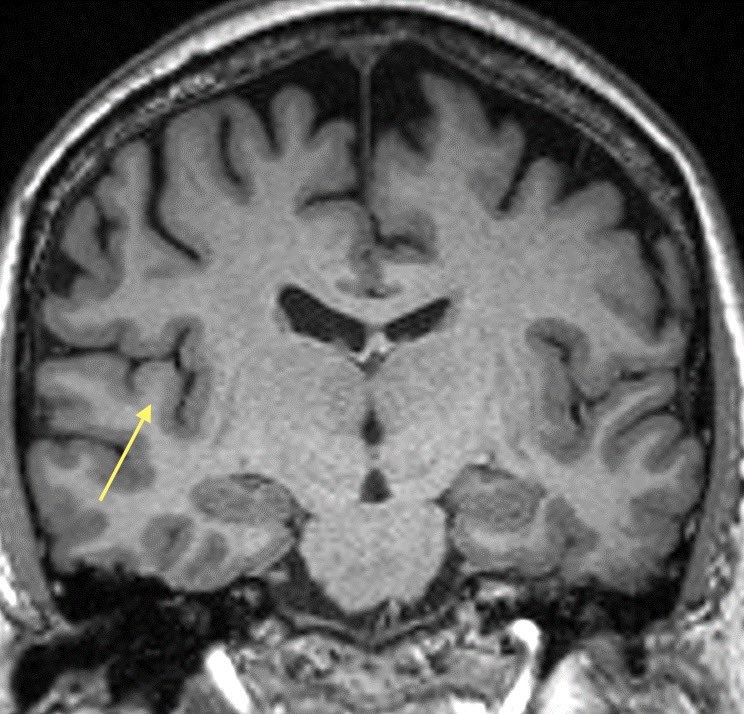
Heschl’s gyrus contains the primary auditory cortex (Broadmann areas 41 & 42)
💡 Hints to find it:
▶️Arises just posterior to the insular cortex on axial
▶️Look within the Sylvian fissure on coronal
▶️Runs inferior to the post central gyrus on sagittal
#Neurology#radres#ENT
Around 6.8 million Americans have an unruptured brain aneurysm and 1 in 100,000 are diagnosed with an AVM each year. @mtlawton has dedicated his career to treating these and other patients with cerebrovascular disorders. https://t.co/XfoEHLD7Zk @BarrowNeuro@MissionBrainOrg