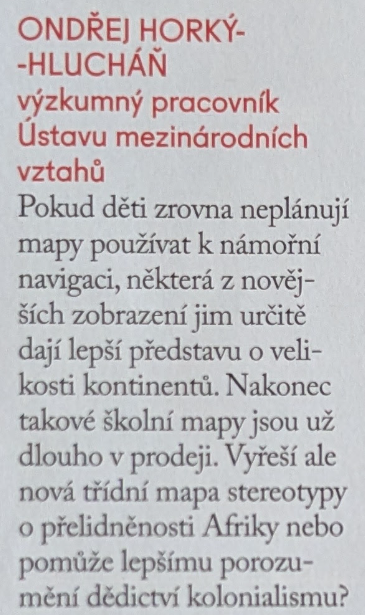
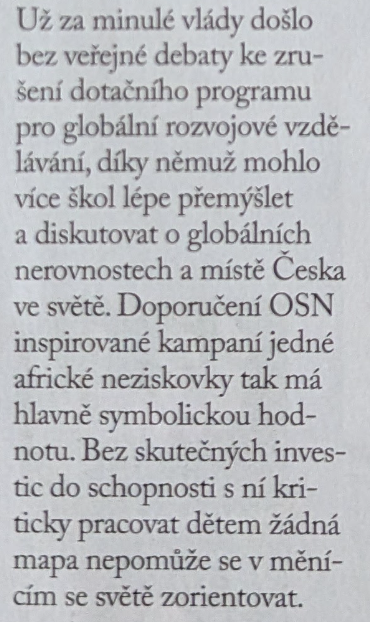
Díky @RESPEKT_CZ, že pro pravidelnou anketu vybral otázku, zda by se mělo ve školách používat zobrazení #EqualEarth, které věrněji zachycuje skutečnou velikost Afriky a pro které čerstvě v 🇺🇳hlasovalo i 🇨🇿. 👏
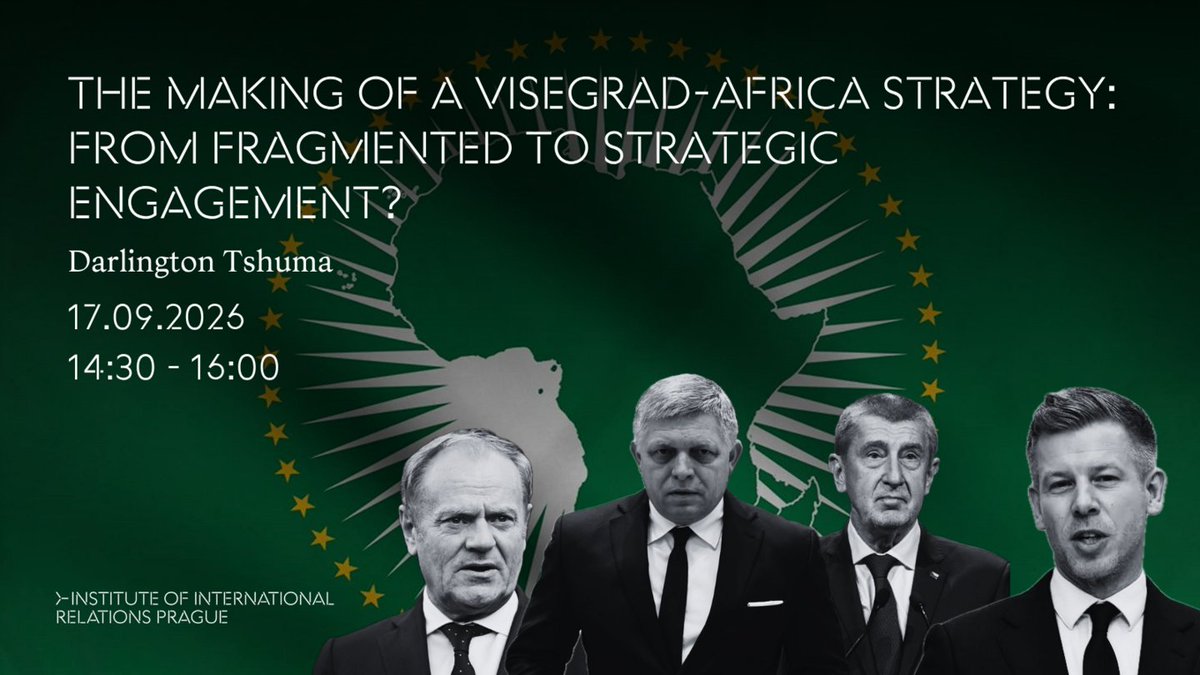
I'm really looking forward to the presentation by Darlington Tshuma, our Think Visegrad Fellow at @IIR_Prague. With the Visegrad Group politically unlocked, to what extent does it promote V4 cooperation with Africa? See you on 17 September for Darlington's freshest insights!
Are you interested in V4–Africa relations, development, trade and investment, global governance, or the changing role of African countries in international politics? Then this is an event you certainly should not miss!
We invite you to the presentation of the new policy paper “The Making of a Visegrad–Africa Strategy: From Fragmented to Strategic Engagement?” by our Think Visegrad Visiting Fellow, Darlington Tshuma.
The presentation will examine the opportunities and challenges shaping relations between the Visegrad countries and Africa, including the growing emphasis on trade, investment, technology and skills transfer, Africa’s expanding economic potential, and the scope for closer cooperation in areas such as international law, multilateralism and global governance.
📅 The event will take place on 17 September 2026 at 14:30 at the Institute of International Relations Prague and will be held in English.
Join us for the presentation and discussion and register for the event here: https://t.co/Pg3Ad6uQMR
Can bureaucracy turn a promising governance tool into a technical exercise?
Policy coherence had a star moment when it became part of the Sustainable Development Goals. But global progress in aligning public policies with sustainable development has been far from a success.
In his article, Ondřej Horký-Hlucháň (@ondhorky) explains why this governance tool has become a technical exercise rather than a way to encourage political debates on major development and environmental issues.
◆ Policy coherence for development in the EU did not always result in technocratic inaction when addressing the “old” Western policies.
◆ The current, far more complex Policy Coherence for Sustainable Development (PCSD) has led the EU to actively avoid conflicts when transitioning its policies towards the 2030 Agenda.
◆ Ultimately, the paper argues that policy coherence can still work globally — but only if it sets clear goals for specific political trade-offs.
Read the full text for free on ScienceDirect by 11 July: https://t.co/c0jecsHwlq
🌐 Vychází první letošní číslo časopisu Mezinárodní politika, ve kterém vám tentokrát přinášíme téma světového řádu v otřesech. Autoři a autorky se v něm zaměřují na to, jak současné krize mění pravidla mezinárodní spolupráce.
Přečtěte si celé číslo již teď na našem webu: https://t.co/0F2u579knh
◆ Jakým směrem se dnes ubírá světový řád, jakou pozici v něm zaujímá Evropa a zda mezinárodní organizace stále dokážou sehrávat zásadní roli, rozebírají v úvodním kulatém stole Magda Vášáryová, Michal Parízek, Filip J. Scherf a Barbora Chaloupková.
◆ Pavel Kuchař se věnuje tomu, proč liberalismus jako norma světového řádu slábne a jak se z výjimek v podobě sankcí, cel či exportních kontrol stávají běžné nástroje politiky.
◆ Jak válka na Ukrajině proměňuje systém rozvojové pomoci a co se dnes vlastně skrývá pod pojmem mezinárodní pomoc, vysvětluje Lucie Božková.
◆ O významu mezinárodních institucí i ve složitém geopolitickém prostředí hovoří v rozhovoru se Zdeňkou P. Kyselovou zástupce generálního tajemníka OECD František Ružička.
◆ Karolína Woznica Lískovcová ukazuje, jak Evropská unie balancuje mezi hodnotovou politikou a pragmatismem a proč tím může ztrácet svou důvěryhodnost.
◆ Mezinárodní klimatickou spolupráci v době geopolitické rivality a tlak, pod který se dostávají klimatické normy, analyzuje Nikola Adamovská.
◆ Co americký zásah ve Venezuele znamená pro princip nevměšování a proč je tato norma důležitá zejména pro malé a střední státy, přibližují Šárka Kolmašová a Michal Kolmaš.
◆ Denisa Hlušičková se zaměřuje na Trumpovy ambice vůči Grónsku a ukazuje, proč nejde jen o diplomatickou provokaci, ale také o symptom hlubší krize mezinárodního řádu.
◆ Dezinformace a hate speech jako fenomény, které podkopávají důvěru v instituce, veřejnou debatu i základní normy demokratické společnosti, představuje v recenzi Kristián Földes.
Read in our latest blog post, why and how @OHorkyHluchan and @tnemeckova founded a national Development Studies and Sustainability network - and how the story went on
https://t.co/gai5lAcQqJ
Loňské škrty humanitární a rozvojové pomoci již vedly globálně ke smrti statisíců lidí, většiny dětí. Procházíme krizí mezinárodní solidarity. Podaří se trend zvrátit? https://t.co/ceq7l1D54h
Exciting knowledge, skills and networking-oriented programme with Toni Hasstrup, Jacqui True, @MilaOSullivan and others is being prepared for the Prague #FFP Intl. Summer School. 🎓Learn more & 📅apply by 31 May https://t.co/ZHIItdxRar
Are you a researcher from outside the V4 region looking to join an international fellowship programme? The Think Visegrad Fellowship 2026 call is now open!
🔹 Visiting fellowships for non-V4 experts in political science, international relations & economics
🔹Up to 8 weeks at a Visegrad think tank + €3,400 support (+ travel up to €500)
🔹Opportunity to develop a policy paper and present your research
🔹🗓️ Deadline for applications: May 15, 2026
More information 👉 find the details on our website: https://t.co/uVHkAvCNjK
Join the team at the Institute of International Relations Prague and become our new Researcher / Senior Researcher.
We are looking for a motivated expert in international relations who is eager to contribute to high-quality basic research, applied and policy research and public debate. 🌍
🔷 You will conduct internationally competitive research, publish in leading academic journals, write policy papers and engage in public, media and expert discussions
🔷 We expect a PhD (or advanced PhD candidate) in International Relations or a related field, a strong academic background, publication record, and the ability to work both independently and collaboratively, with expertise in one or more areas:
International political economy, trade, and geopolitics
International security and trans-Atlantic relations and/or Eastern Europe
Central Europe and the European Union
The International Relations of the Middle East
The International Relations of Asia and the Indo-Pacific
🔷 We offer a full-time position in Prague, an intellectually stimulating international environment, flexible working hours, 6 weeks of annual leave, and additional financial rewards based on research performance
🔷 Please send your cover letter, CV with publication list, and a sample of your academic work to [email protected] by 11 May 2026
(preferred start date: June 2026, negotiable)
👉 More information can be found in the full job advertisement and on our website: https://t.co/CrvAqcfcom
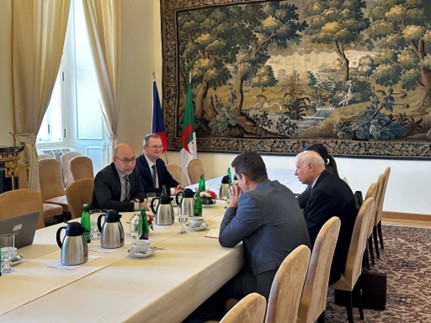
The delegation of @IdriAlgerie 🇩🇿 visited the Diplomatic Academy @CzechMFA, @CzechMFA_MENA 🇨🇿 and @IIR_Prague to discuss the training of diplomats, the optimal institutional setup of the formation process, and possibilities for future bilateral cooperation in this area.🤝
Naplňuje strategie #GlobalGateway příslib nových investičních příležitostí, nebo jen nabízí setrvačnou stagnaci evropské rozvojové politiky bez hlubšího zapojení Česka? ⬇️https://t.co/rKddyNCDYV
💧Jaké bezpečnostní a politické důsledky má dlouhodobé přetěžování vodních zdrojů? Na tyto otázky odpovídá nový policy paper našich výzkumníků Ondřej Horký-Hlucháň a Jan Daniel.
Zvýšená pozornost věnovaná vodě přichází v době, kdy se v odborných i mediálních debatách objevují silná varování před globálním vyčerpáváním vodních zdrojů. ⚠️ Nedávná výzkumná zpráva Univerzity OSN upozorňuje, že v řadě regionů dochází k dlouhodobému překračování přirozené obnovy vody, vyčerpávání podzemních zásob a zhoršování kvality dostupných zdrojů.
Odkaz na kompletní policy paper najdete tu: https://t.co/Wk3Nywsngl