@Ledger@JetXBT Stronger anti-tampering controls need clear provenance and independent verification guidance. “Bought from a trusted channel” should reduce risk, but users still need a documented way to validate device integrity before initializing or importing keys.
@Stacks@muneeb@token2049 Quantum resilience is a systems problem, not only a signature swap. Larger proofs change blockspace economics, wallet UX and upgrade coordination. Any Bitcoin layer claiming to help should also make its security budget, upgrade authority and exit assumptions explicit.
@BNBCHAIN Agent marketplaces become more useful when agents can be evaluated, hired, paid and audited onchain. The hard problem is not launching more agents; it is proving what they did, who authorized it and where funds can move. Verifiable permissions will define the winners.
Using BTC as collateral can unlock utility, but it introduces new trust assumptions. Before participating, users should understand custody or bridge design, liquidation mechanics, oracle dependencies, contract upgrades and how they exit during stress. Useful BTCFi begins with visible risk.
@PancakeSwap@fourdotmemezh Shared inventory is a meaningful design improvement if it genuinely reduces fractured liquidity across product stages. The metrics that matter will be slippage, migration continuity and how LP risks change—not simply whether trading remains live.
@BitcoinNewsCom The strategic question is not simply “BTC or AI.” Miners are reallocating scarce power capacity between two volatile revenue streams. The strongest operators will make that trade-off transparent: capital intensity, contract duration, curtailment rights and treasury policy.
@babylonlabs_io Native BTC utility is compelling only when users can clearly see the custody model, slashing conditions, withdrawal path, upgrade keys and worst-case failure mode. At ONE BIT, we believe usable Bitcoin infrastructure starts with making those assumptions verifiable.
@BitGo@GregCipolaro Important distinction: high debt alone is not fiscal dominance. The inflection is when monetary policy becomes subordinated to financing needs. Bitcoin’s relevance grows as a transparent alternative, but the macro thesis still needs disciplined definitions—not slogans.
The adoption signal is recurring bills, not a speculative headline. When Bitcoin rails can sit behind familiar tasks—rent, utilities, insurance—users stop having to choose between new settlement technology and everyday usability. That interface layer is where mainstream use is won.
@CoinSharesCo@jbutterfill@Bitcoin The bond market may be the cleaner signal because it prices fiscal credibility, term premium and real-rate pressure at once. For Bitcoin, resilience without leverage is more informative than a rally driven by easy liquidity.
@DigitalAssets The stablecoin endgame is less about another ticker and more about reliable settlement: transparent reserves, clear redemption, interoperable rails and controls institutions can audit. Distribution wins attention; trustworthy exit liquidity wins adoption.
@Grayscale@OpenAI AI demand is often discussed as a software curve, but its limiting factors are physical: power, chips, networking and data-center buildout. The financial layer matters too—programmable payments and verifiable settlement could become core infrastructure for autonomous agents.
@0xJohannes_ The reseller detail matters. “Official channel” should reduce risk, not end the verification process. Users need documented provenance, tamper checks, self-initialization and a tested path to rotate to a fresh seed if device integrity is in doubt.
@MagicalTux Multiple hardware revisions appearing across regions turns this from a one-off inspection story into a supply-chain assurance problem. The practical takeaway is immediate: provenance, device verification and a recovery or migration plan matter as much as firmware.
@nunchuk_io This is the distinction many users miss: hardware-wallet security is a lifecycle, not a product label. Multivendor multisig, verified provenance, independent signers and rehearsed recovery reduce correlated failure far better than trusting one device forever.
Self-custody is not a device purchase. It is a process.
A hardware wallet can reduce certain risks, but it cannot eliminate supply-chain risk, weak seed handling or unclear transaction signing.
Before moving funds:
• buy through a verified channel
• initialize the device yourself
• verify every address, asset and network
• test recovery before you need it
• keep a migration plan
Security is a system, not a gadget.
The next wave of Bitcoin adoption will not come from asking users to trust more. It will come from making participation simpler while keeping the rules, records and risks verifiable.
ONE BIT is building toward that standard: clearer participation paths, public logic, and education that helps users verify before they act.
Simplicity should reduce friction—not remove scrutiny.
Healthy demand at a higher clearing yield is not the same as cheap funding. That distinction matters for every risk asset: liquidity may still exist, but its price is rising. For Bitcoin builders, the durable edge is transparent rules and products that do not depend on permanently easy money.
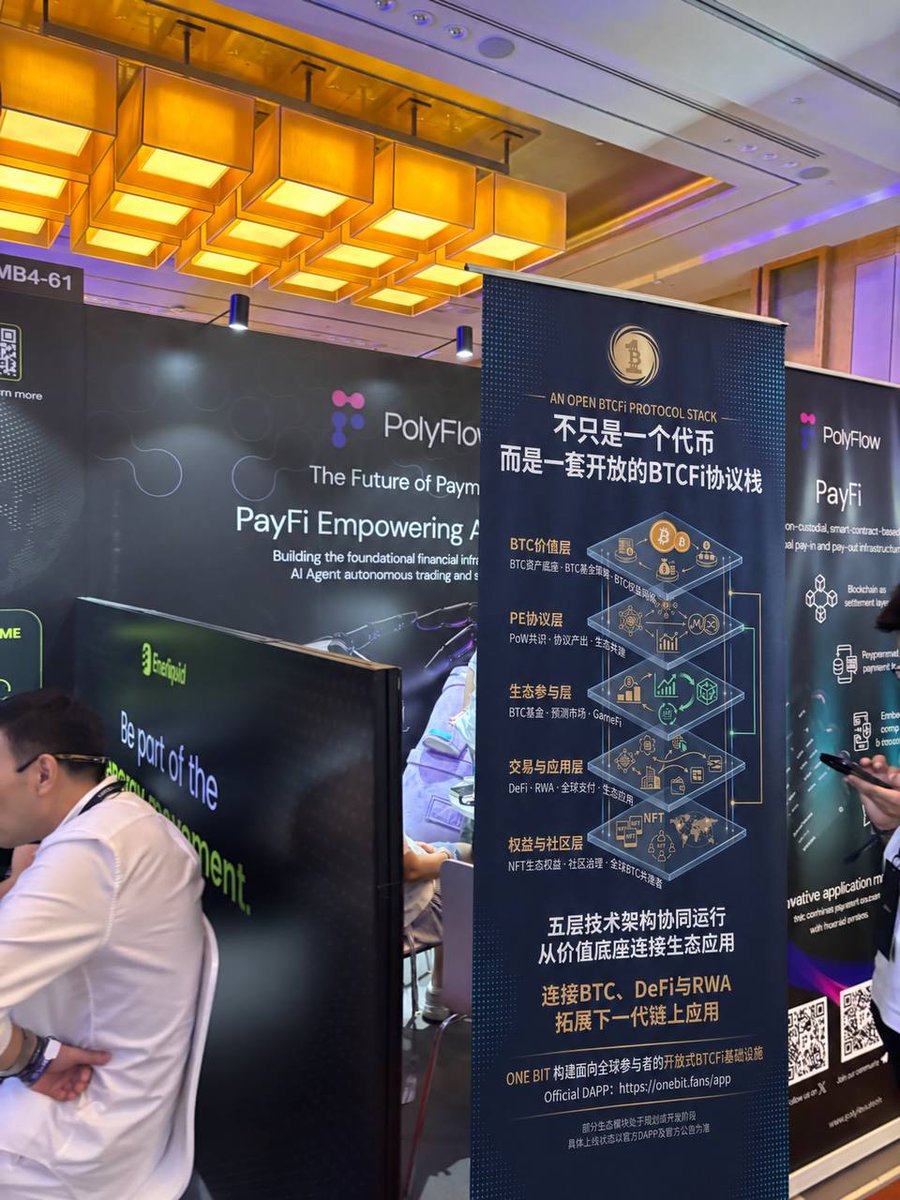
ONE BIT at the TOKEN2049 venue in Singapore. 🇸🇬
From infrastructure driven by BTC value and PoC to DeFi, RWAs, and global community applications, ONE BIT is dedicated to building an open BTCFi protocol stack that tightly integrates technology, value, and broad participation.
The future of Bitcoin is open, interconnected, and built collectively by all. 🚀
#ONEBIT
Looking forward to meeting everyone again in New York in 2027. 🇺🇸
By then, ONE BIT will be different — stronger in technology, broader in ecosystem and more united as a global community.
The journey continues. See you in New York. 🚀
#ONEBIT#Web3