Many years of work across many people in lab + collaborators have come together. Low cell number proteomics allows us to identify ECM molecules as potential triggers of clonal selection in HSCs.
now on biorxiv: https://t.co/pPOzz81yxT
@Bode_Dan @MJassinskaja @ISEHSociety
While we're at it: We are looking for 2 postdocs. One with experience in dev. Biol (pref. With mouse experience) and one with bioinformatics / modeling / multi-omics experience. Exceptional PhD candidates will be also considered for the project via IMPRS @mpi_ie recruitment.
The https://t.co/KUYvPyVxp7 @unil is hiring two PhD students! If you are interested in transcription regulation, nuclear organization, and quantitative bio, go and check out the official advertisements here https://t.co/8npUzJeHb0 and https://t.co/8npUzJeHb0 and get in touch.
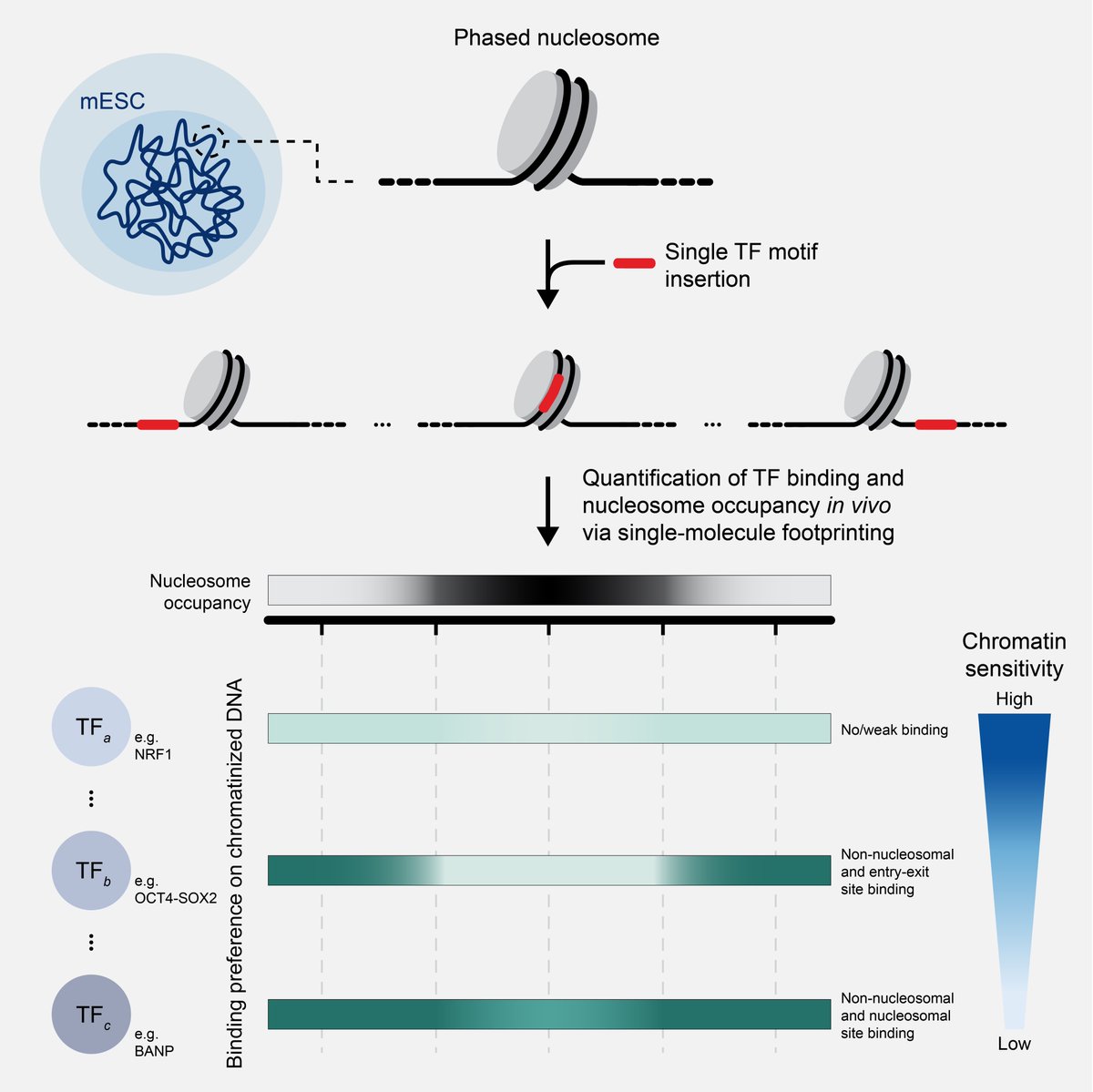
Wouldn’t it be great to test how individual transcription factors engage with their motif in the nucleus? We tried exactly that in a study lead by Ralph (@RalphSGrand) and Marco (@marco_heffler) now out in Molecular Cell https://t.co/eZanlaaKNQ. 1/7
I am so excited to share this part of my PhD where we tackle the question: What impact do 3D contacts have on how enhancers regulate their target genes? https://t.co/wtyAWg4c4j
1/
Beta-version of the new VISTA Enhancer Browser, 7 years in the making, with support for developmental stages, different species and variant comparison is finally online. Feedback is welcome! https://t.co/2y5HDCYaKD #enhancers#embryos#evodevo
How can #GeneticInnovations contribute to #SustainableAgriculture practices? Join us for Jürgen Kleine-Vehns (@KleineVehnLab) FRIAS Lunch Lecture 👉June 6, 2024, 12-13 👉 Lecture Hall, Albertstr. 19, Freiburg . Don't want to miss it, everyone's welcome and there will be snacks!
How do enhancers work over distances that sometimes exceed megabases? Excited to share our work led by @gracecbower where we uncover a unique sequence signature globally associated with long-range enhancer-promoter interactions in developing limb buds: https://t.co/n0p7BdxSdq 1/
What is the origin of our body? Our paper @CellCellPress shows that when a human embryo is one day old and comprises just two cells, only one cell will create most of the fetus in addition to placenta, while the other cell will create placenta.
https://t.co/88l48YezzA
Ob Genomanalyse von Tierarten oder des Coronavirus – der in Freiburg beheimatete europäische #GalaxyServer ist ein wichtiges Werkzeug für datenintensive Forschung. Bioinformatiker Björn Grüning erklärt, warum. https://t.co/O4ZmyIZNOD @bjoerngruening@galaxyproject#galaxyproject