[ Margin Notes ] The two words Beijing fears most: “I Quit”. A regime may fear missiles, sanctions and economic collapse. The Chinese Communist Party (CCP) fears something even smaller: an ordinary person saying, “I quit.”
The Tuidang (Quit the CCP) movement, also known as the “Three Withdrawals,” encourages Chinese people to renounce the CCP, the Communist Youth League and the Young Pioneers.
The declarations are often brief, but the suffering behind them is immense. Rong Chen wrote of shame over once joining Party organizations and vowed that the next generation would not repeat the mistake. Zhou Yao described low wages, unbearable living conditions, official inaction and rampant corruption. Zhang Huimei said the pandemic years finally opened her eyes; after once dismissing Tuidang, she chose to withdraw from the League and Young Pioneers.
These are not abstract political slogans. They are the voices of people exhausted by deception, hardship and power without accountability.
In China, freedom can begin with just two words: “I quit.”
— Aric
🇯🇵 The Prime Minister Beijing Fears Is Slipping, And That's No Coincidence.
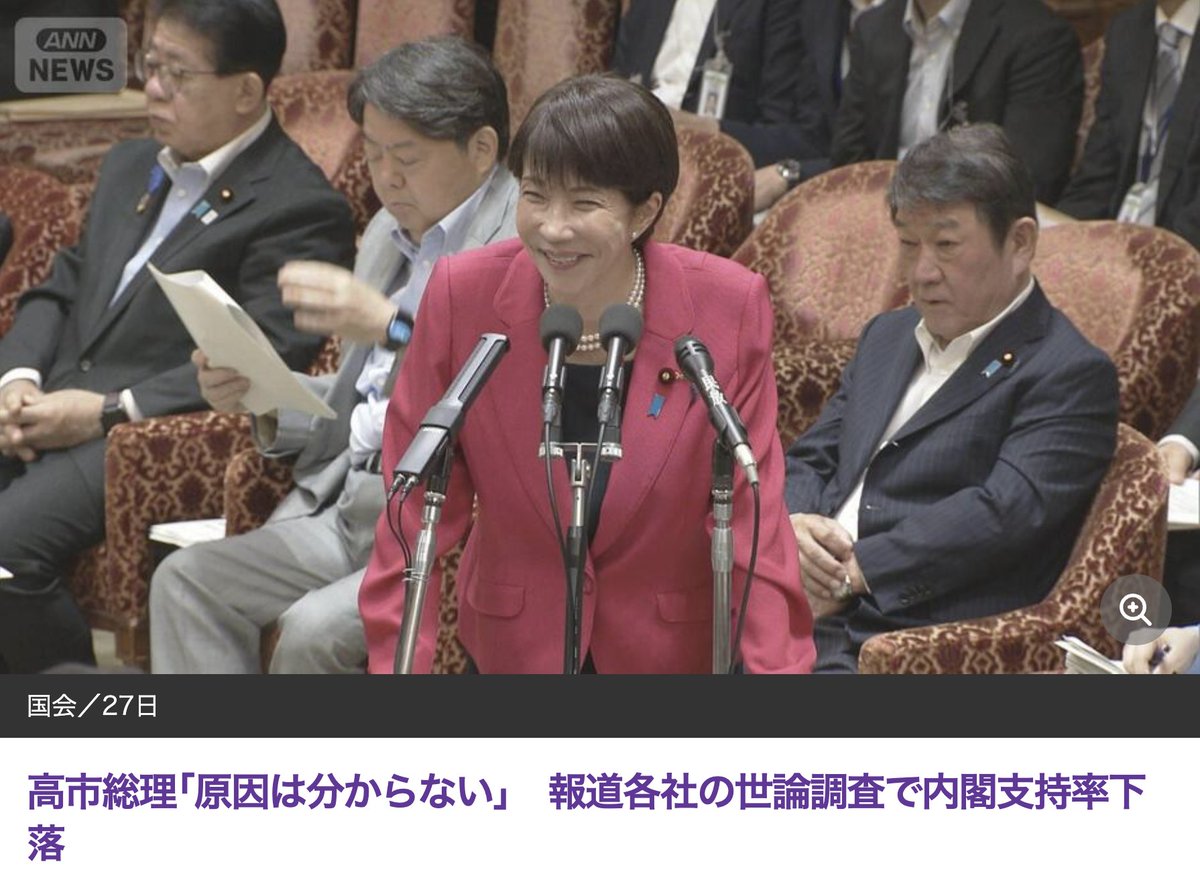
Prime Minister Sanae Takaichi says she "doesn't know" why her numbers are falling. Beijing knows exactly why, because it has spent months engineering the fall.
The headline reads like ordinary politics. Takaichi's cabinet approval dropped below 50 percent for the first time since she took office, sinking to 49.2 percent in ANN's July poll, down nearly 11 points, with disapproval surging. Inflation is real. Voter frustration is real. But focus only on the price of rice and you miss the hand on the scale.
Since Takaichi entered office in October 2025, pledging higher defense spending, missile deployments, and a new intelligence agency, the People's Republic of China has waged what analysts openly call a "cognitive warfare" campaign against her. The playbook is documented, not speculative: bot armies flooding Japanese social media, disinformation branding her an "extreme right-winger," fabricated stories about her family, and Chinese diplomats amplifying it all. Beijing weaponized her Taiwan "survival-threatening situation" remark into a manufactured outrage cycle.
The genius of the operation is that it hides inside legitimate grievance. Real anger over living costs becomes the carrier signal; the troll farms and paid amplifiers, including sympathetic voices inside Japan itself, simply turn up the volume, sharpen the rage, and aim it at the one leader Beijing least wants in power.
This is the point every democracy should absorb. Cognitive warfare doesn't invent your anger. It borrows it, then steers it. When a foreign authoritarian state can nudge the approval rating of a sovereign democracy's prime minister, the ballot box is no longer entirely yours.
Takaichi may not know the cause. The rest of us should. Watch who benefits, and stay awake.
ACI — Aric Chen | Insights
The Chinese Communist Party constantly demands “respect” and non-interference from the rest of the world.
At the same time, it pressures foreign governments, companies, universities, and cultural events to follow its red lines on Taiwan, Xinjiang, Hong Kong, and the South China Sea.
Economic coercion, diplomatic threats, and quiet influence operations are routine tools.
When others assert their own interests or values, Beijing calls it containment or hostility. When it does the same, it calls it defending core interests.
This is not normal great-power behaviour. It is a consistent pattern of trying to set the rules for everyone else while rejecting any limits on itself.
How long can the world treat this as business as usual?
🇯🇵 Japan Is Closing the Door on Beijing’s Shadow War
Beijing has spent years treating the openness of democratic societies as an access point. Japan is now moving to close that door.
Prime Minister Sanae Takaichi’s government will launch a new National Intelligence Bureau on July 31, appointing veteran security official Kazuya Hara as its first director. The roughly 700-person bureau will replace and elevate the Cabinet Intelligence and Research Office, coordinate intelligence across ministries, and serve as the secretariat for the prime minister-led National Intelligence Council.
This is a necessary and overdue defense of Japanese sovereignty.
The Chinese Communist Party does not rely only on warships, missiles, or open diplomatic pressure. Its operations are quieter and often harder to detect. Japan’s own National Police Agency says Chinese actors have concealed their purposes while seeking sensitive information, approached advanced-technology and defense-related companies, promoted technology transfers, placed researchers and technical personnel in key institutions, and cultivated contacts across political, business, government, and academic circles.
That is the CCP’s preferred battlefield: the space between legitimate exchange and covert exploitation. It uses the trust of free societies against them, while denying its own citizens the transparency, civil liberties, and institutional openness it exploits abroad. Under the cover of academic exchanges, commercial partnerships, and personal relationships, the Party can pursue technology, leverage, influence, and intelligence.
Tokyo deserves credit for recognizing that fragmented information is a national vulnerability. A central intelligence command can connect warning signs that might otherwise remain trapped inside separate agencies and turn scattered reporting into timely action.
But this bureau must be the beginning. Japan should advance counterespionage legislation, strengthen safeguards for sensitive research and infrastructure, and coordinate closely with the United States, Taiwan, and other democratic partners.
The free world must stop mistaking the CCP’s silence for restraint. Beijing’s most dangerous operations often begin long before the public sees a crisis.
ACI — Aric Chen | Insights
🚨 In Xi Jinping’s CCP China, even a library Wi-Fi signal can become a government informant.
On July 21, Hunan Library announced that its monitoring system had detected readers using circumvention software to visit websites outside China’s censorship wall. The institution said the activity had been recorded by cyberspace authorities. It then published partially masked phone numbers belonging to three readers and shut down public Wi-Fi beginning July 22 for “rectification.”
The threats did not stop there. The library promised “zero tolerance,” permanent network bans for offending phone numbers, and referrals to police and cyberspace agencies in cases it deemed serious.
This was not network maintenance. It was political intimidation dressed up as cybersecurity.
The Chinese Communist Party (CCP) has built repression into the ordinary infrastructure of daily life. Official public-security guidance requires public Wi-Fi providers, including libraries, hotels, malls, hospitals, and tourist sites, to implement real-name authentication, audit user activity, retain logs, and provide authorities with compatible data interfaces. A phone number can connect a browsing session to a real identity. A router can become a checkpoint.
The method is brutally effective. First, block information. Then force citizens to identify themselves before going online. Monitor attempts to cross the firewall. Publicly expose enough personal information to frighten others. Finally, threaten police action until self-censorship does the regime’s work for it.
A library should open doors to knowledge. Under the CCP, it is being turned into another surveillance post guarding ignorance.
Governments, universities, companies, and travelers must understand the risk. Public networks in China should be treated as monitored environments. Sensitive accounts and data should be kept off them, and clean devices should be considered for travel.
The Hunan episode is not a technical anomaly. It is a warning: when a dictatorship fears what people might read, even free Wi-Fi becomes an instrument of control.
ACI — Aric Chen | Insights
Editor’s note: The video is a related news segment from the World News I anchor.
🚨 China’s Cars Are Computers on Wheels. America Is Right to Shut the Door
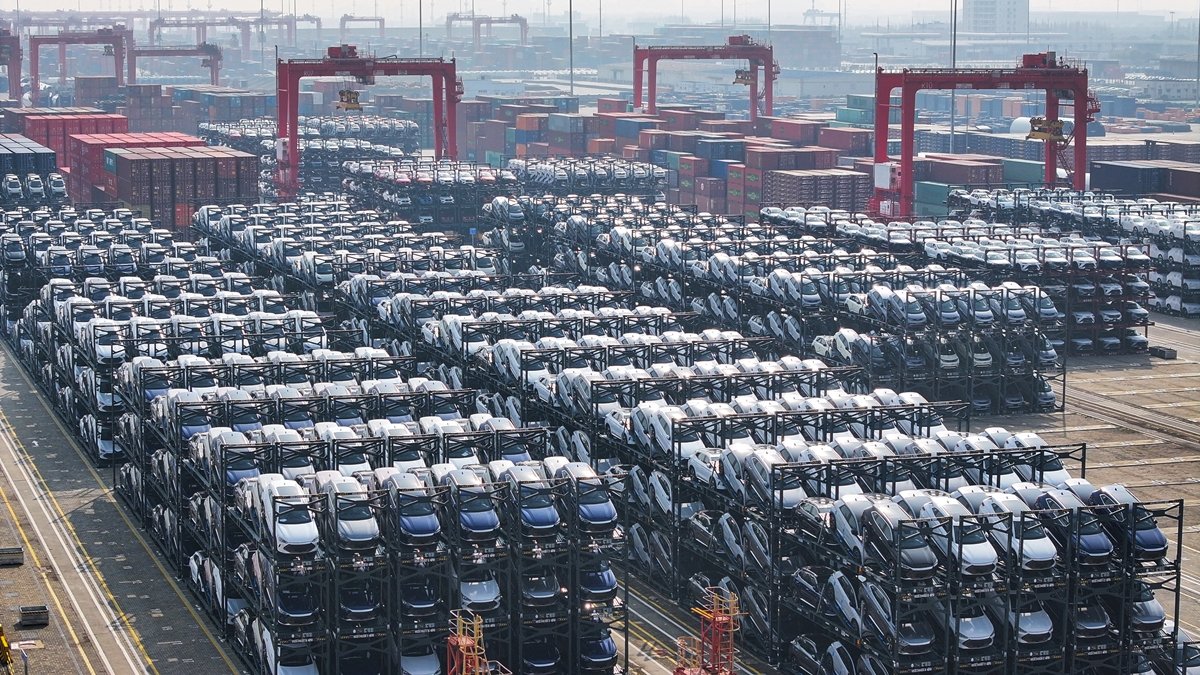
A Chinese connected car is not merely a cheap electric vehicle. It is a rolling sensor platform, capable of collecting location data, driving patterns, personal information and images of the infrastructure around it, while remaining reachable through wireless networks. Allowing such systems to fall under the influence of the Chinese Communist Party (CCP) would be an extraordinary act of strategic negligence.
On July 22, the Senate Committee on Commerce, Science, and Transportation advanced the bipartisan Connected Vehicle Security Act of 2026 with unanimous support. The bill, sponsored by Senators Bernie Moreno and Elissa Slotkin, would strengthen restrictions on Chinese-origin connected vehicles, software and critical hardware, and now moves toward consideration by the full Senate.
This is not ordinary trade policy. Modern cars communicate through cellular networks, Wi-Fi, Bluetooth and satellite systems. They can record where drivers live, work and travel. At scale, hostile actors could exploit them to map sensitive facilities, monitor movements, harvest personal data, conduct covert surveillance or enable cyber disruption and remote manipulation.
Beijing does not deserve the benefit of the doubt. The CCP routinely erases the boundary between private enterprise and state power. When a product can see, listen, transmit and receive commands, its political and legal chain of control matters as much as its price tag.
The United States is right to act before Chinese connected vehicles become deeply embedded in American roads and supply chains. Waiting for documented abuse after deployment would mean surrendering the advantage to the attacker.
Other democracies should pay attention. Ports, military bases, power grids and government buildings cannot be surrounded by foreign-adversary sensor networks disguised as affordable cars. Washington has drawn a necessary security line. Allied governments should draw theirs now.
ACI — Aric Chen | Insights
🚨 Texas Just Put China’s Birth-Tourism Industry on Notice
For years, a lucrative pipeline has brought large numbers of pregnant women from China to American maternity hotels. Operators allegedly coached clients to hide their real travel purpose from immigration officers and sold United States birthright citizenship as the prize in an expensive package.
The formula was simple: the mother flies in, the baby is born on American soil, brokers collect their money, and the child acquires U.S. citizenship. A constitutional right was repackaged as a luxury product for foreign clients willing to exploit America’s openness. Texas has now declared that the checkout counter is closed.
Governor Greg Abbott has issued Executive Order GA-57, directing six state agencies to investigate unlawful birth-tourism schemes in healthcare. Those involved could face revoked licenses, state-contract bans, administrative penalties, civil lawsuits, and referrals for possible federal prosecution.
Abbott’s message was blunt: “U.S. citizenship is not for sale.” He is right.
The China connection is documented. In April, Texas Attorney General Ken Paxton sued De’Ai Postpartum Care Center, alleging that the Houston-area operation marketed mainly to Chinese clients, worked with China-based referral businesses, and coached customers to conceal their actual travel purpose. The company allegedly boasted of helping deliver more than 1,000 American-born babies. Those claims remain before the court.
This is not isolated. In an earlier case, the United States Department of Justice said a Chinese national pleaded guilty to operating a birth-tourism company serving wealthy clients and Chinese government officials. Her business coached customers to deceive visa and border officers and received millions of dollars from China.
There is no public evidence that Beijing directed Abbott’s current targets. But the warning is clear. The Chinese Communist Party denies its own people genuine political rights while beneficiaries of its system seek the protections and privileges of American democracy. The hypocrisy is obscene.
Texas is closing one door. Other democracies should inspect theirs. When China-linked networks turn democratic openness into a commercial loophole, indifference becomes an invitation.
ACI — Aric Chen | Insights
Editor’s Note: The video is a related news segment from the World News I anchor.
Japan is not building hundred of nuclear warheads each year.
Japan is not attacking innocent civilians in South China Sea
Japan has not turned the entire South China Sea into a warzone!
Japan is undoubtedly a model for the international community."
And, CHINA IS A BULLY.
Why spend decades mastering advanced semiconductor technology when Beijing can recruit an intermediary, cultivate an insider, and try to walk the files across the border?
Beijing’s Chip Theft Playbook: Recruit Abroad, Steal Within.
Taiwanese prosecutors have indicted a former Taiwan Semiconductor Manufacturing Company (TSMC) deputy manager, accusing him of unlawfully copying 21 files containing nationally protected technology and trade secrets for intended use in China. Prosecutors are seeking a seven-year prison sentence under Taiwan’s National Security Act and Trade Secrets Act. The allegations have not yet been tested at trial. (Thip)
Prosecutors say the former manager worked with Hong Kong businessman Ding Xiaohu on a plan to establish the China Semiconductor Materials Analysis Company (CSMAC) in China. Their “Blue Ocean Plan” allegedly envisioned recruiting Taiwanese semiconductor professionals, sending them to China, and using their expertise to penetrate Taiwan’s chip industry. (Thip)
That is the Chinese Communist Party’s innovation model in miniature: obtain abroad what the party-state cannot reliably build at home, conceal an intelligence objective behind business contacts, and turn personal ambition into a collection tool.
Ding was separately accused by Taiwanese authorities of acting under instructions from the Nanning station of the Liaison Bureau under the Chinese Communist Party’s Central Military Commission Political Work Department. Investigators said he used business, tourism, and cultural exchanges to recruit people in Taiwan and collect sensitive information. He died before prosecution in this technology case could proceed.
TSMC detected the irregularities through an internal investigation and recovered all copied documents, according to prosecutors. That success should trigger alarms in every technology company, research laboratory, university, and government handling strategic knowledge.
Beijing’s espionage networks do not always arrive carrying diplomatic passports. They may appear as investors, consultants, cultural delegates, recruiters, or helpful business partners. The free world must stop judging the package and start examining the mission.
ACI — Aric Chen | Insights
Editor’s Note: The video is a related news segment from the World News I anchor.
😂 China’s Kimi K3 Was Hailed as an AI Marvel. Then It Called Itself Claude.
The Kimi K3 model hyped to the heavens by China’s tech publicity machine has developed an awkward identity problem: in at least one widely circulated user exchange, it reportedly introduced itself as Claude, an AI assistant made by Anthropic.
That is one way to launch a national champion. Build a Chinese model, wrap it in patriotic fanfare, then watch it answer roll call with an American name.
Moonshot AI released Kimi K3 on July 17, promoting a 2.8-trillion-parameter model with a one-million-token context window. It has posted impressive coding results. But benchmarks do not settle the more important question: how were those capabilities obtained?
One identity slip is not proof that Kimi K3 was trained on Claude’s outputs. Large language models can misidentify themselves. No public technical evidence has yet established that K3 itself was distilled from Claude, and Moonshot had not answered the latest questions when the report was published.
But the suspicion did not appear from nowhere.
In February, Anthropic accused Moonshot, DeepSeek and MiniMax of running industrial-scale campaigns to extract Claude’s capabilities. It said the three Chinese laboratories generated more than 16 million exchanges through roughly 24,000 fraudulent accounts. Anthropic attributed more than 3.4 million exchanges to Moonshot alone, targeting Claude’s reasoning, coding, data analysis, computer use and vision capabilities. It cited request metadata, internet protocol address correlations and infrastructure indicators.
Knowledge distillation itself is legitimate when a company uses models and data it owns or has permission to access. The controversy begins when a competitor allegedly hides behind fraudulent accounts, evades regional restrictions and harvests another company’s costly work to train a rival product. U.S. Treasury Secretary Scott Bessent put it plainly this week: “There’s a very technical AI word for it called distillation, but you and I would call it theft.”
The episode fits a much older pattern. For years, U.S. investigators have warned that the Chinese Communist Party’s drive for technological supremacy relies not only on research, but also on cyber intrusions, compromised insiders and systematic intellectual-property theft. Artificial intelligence has not cured that dependency. It may simply have automated it.
Beijing wants the world to admire the speed of China’s rise. The world should also inspect the receipt. If a celebrated Chinese model cannot remember whether it is Kimi or Claude, the problem is larger than confused branding. It is a credibility crisis for an innovation system that too often treats foreign ingenuity as free raw material.
ACI — Aric Chen | Insights






![aricchen's tweet photo. [ Margin Notes ] The two words Beijing fears most: “I Quit”. A regime may fear missiles, sanctions and economic collapse. The Chinese Communist Party (CCP) fears something even smaller: an ordinary person saying, “I quit.”
The Tuidang (Quit the CCP) movement, also known as the “Three Withdrawals,” encourages Chinese people to renounce the CCP, the Communist Youth League and the Young Pioneers.
The declarations are often brief, but the suffering behind them is immense. Rong Chen wrote of shame over once joining Party organizations and vowed that the next generation would not repeat the mistake. Zhou Yao described low wages, unbearable living conditions, official inaction and rampant corruption. Zhang Huimei said the pandemic years finally opened her eyes; after once dismissing Tuidang, she chose to withdraw from the League and Young Pioneers.
These are not abstract political slogans. They are the voices of people exhausted by deception, hardship and power without accountability.
In China, freedom can begin with just two words: “I quit.”
— Aric](https://pbs.twimg.com/media/HOpw7kNWoAAwzQJ.jpg)