A video showing the Palestinian fighter Leila Khaled firing a gun during the reception of the funeral of her martyred sister, Khalidiya, who was assassinated by occupation agents along with her martyred husband, Abdul Wahab Al-Tayeb, on December 25, 1976 .
On the anniversary of the Omani People’s Revolution, we present a rare collection of film clips captured in 1969, at the height of the revolutionary struggle.
Oman was one of the Cold War’s fiercest yet most forgotten battlefields.
Today marks the 61st anniversary of the Omani People’s Revolution of June 9.
On this day, the Omani people rose and gathered their strength for a People’s War, to break the chains of the feudal, colonial-backed sultanate that had bound them hand and foot.
@FOA6267 I guess not, but it’s so bad now that it’s made family I’ve know my entire life into strangers that I never want to talk to again. If I ever go back, I’ll have to join the Naxalites
The secession of southern Yemen is a Zionist project, just like the secession of Somaliland, but the difference is that the Yemeni people, both north and south, despite their political differences sown by Saudi Arabia and the UAE, consider their central cause to be Palestine.
The Yemeni people cannot accept any government or regime that allies itself with the Zionists, no matter the temptations. Furthermore, the leadership in Sana'a possesses the wisdom and strength to thwart Zionist plans not only in Yemen but throughout the entire region.
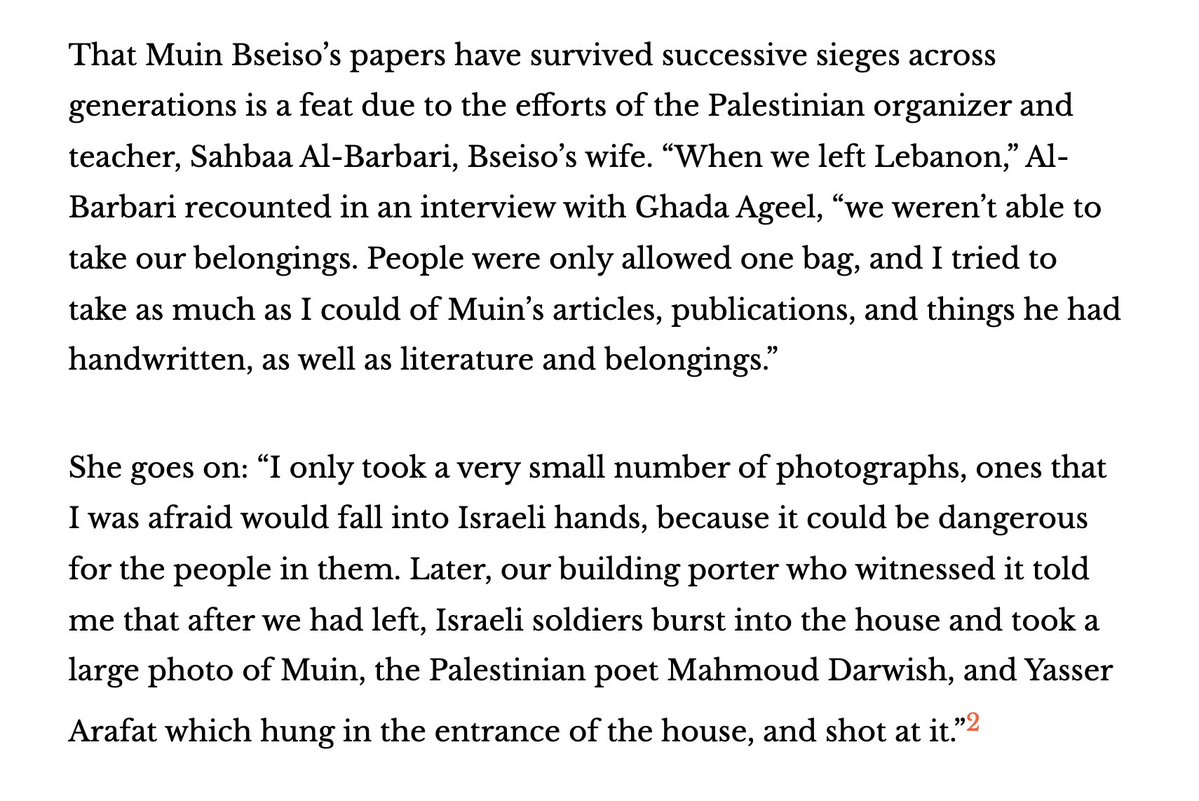
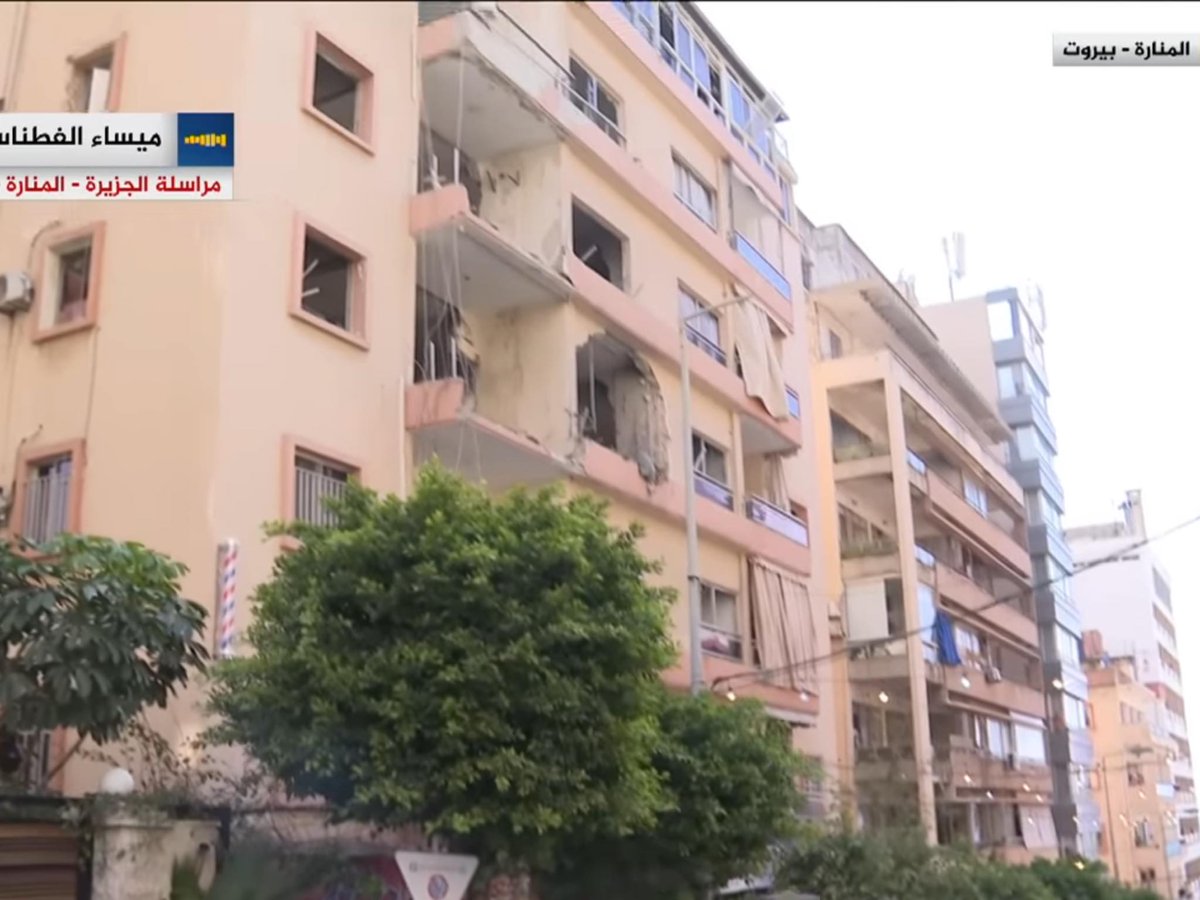
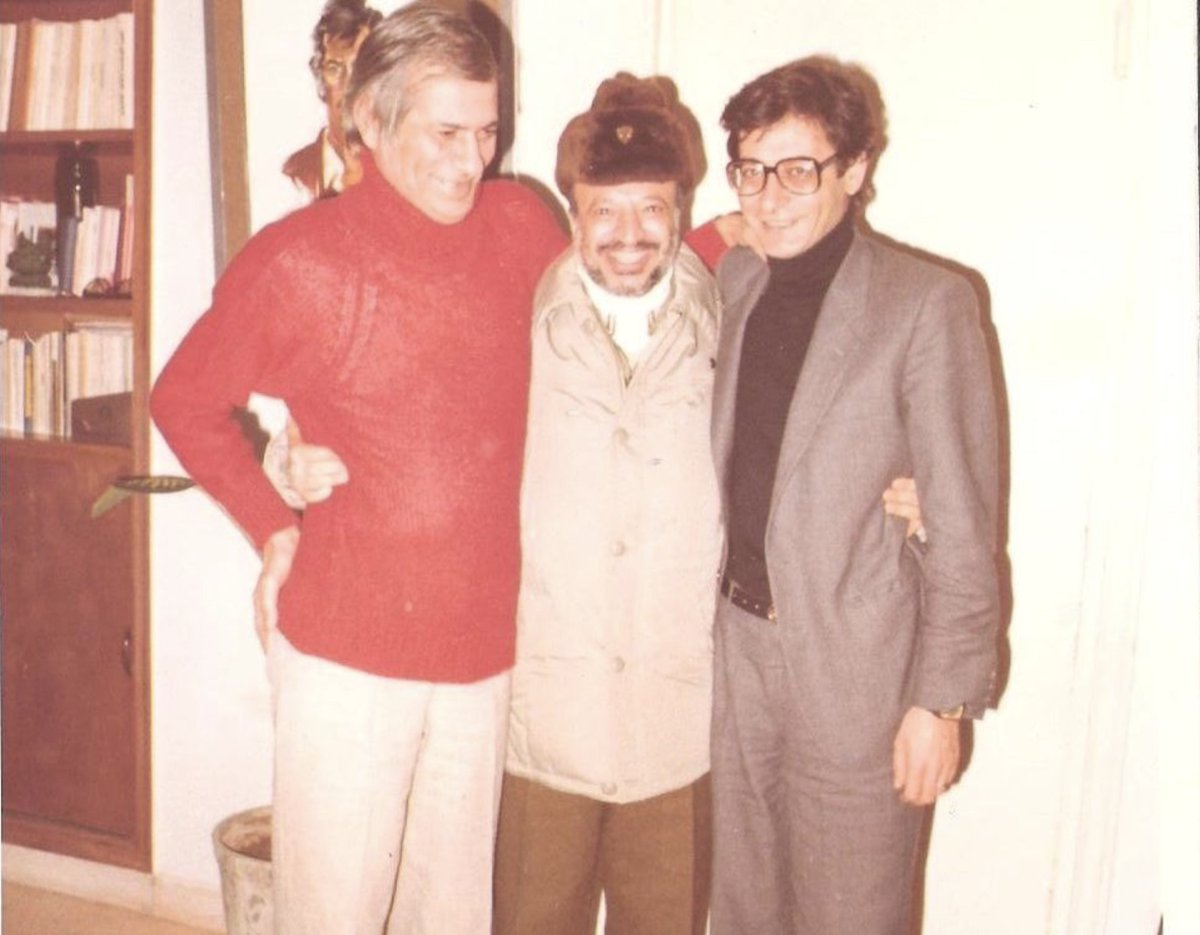
The apartment where Muin Bseiso and Mahmoud Darwish wrote their joint poem "Letter to an Israeli Soldier" during the 1982 siege of Beirut, was bombed yesterday by the Israelis. Our siege is long.
Georges Abdallah speaking in Beirut during the launch of a national call for comprehensive resistance: “The fundamental matter is if Iran were to lose today, history will sweep us all away.”
Full transcript:
Our region is suffering from a comprehensive imperialist zionist attack. All of our nation's entities are exposed to destruction. What happened in Syria and what will happen elsewhere lies in wait for us all.
Either we submit to the process of Somalization and accept its priorities or we confront it. Lebanon possesses all the qualities of steadfastness. Its fedayeen possess all the solid will and the necessary concepts for the success of the resistance process.
It is now time for our parties to rise to this level. This attack, which has failed miserably as is clearly evident before us. If we were to choose, we would have chosen no other than this resistance.
Let it be clear to everyone that the fundamental matter is if Iran were to lose today, history will sweep us all away. Either we stand on our feet and look to the future, and look toward Egypt restoring its position, and Turkey restoring its position, and Pakistan restoring its position side by side with Iran, and a comprehensive defeat for all imperialist allies mandates in our world, and consequently, we will create the new world.
The ultimate, right-in-your-face victory for Iran would be the nationalisation of the Hormuz Strait rubber stamped by a US administration eager to get out of this quagmire as soon as possible. It would be the final death blow to the US world order.
International law:
-Has some nice principles
-Ignored by US / Israel who do whatever atrocities they like
-Used by strong, binds the weak
Iranternational law:
-Weak or strong, never to humiliation
-Build strength and prepare for as long as needed
-Vengeance
"Ansarallah" is not a movement in the traditional sense. It is a socio-religious political current, and a descriptor of the Yemeni masses refusing colonial subjugation and tyranny.
Yahya Saree is neither a Houthi nor an Ansarallah spokesman. He's the spokesman of the Yemeni Army.
Dr. Wadie Haddad (Abu Hani): Revolutionary Leader, PFLP Co-Founder, and Martyr of the Palestinian Resistance
PFLP POSTER by Waleed Idrees (2012)
On this anniversary of his martyrdom—March 28—Palestinian resistance sources and solidarity networks commemorate Dr. Wadie Haddad, a towering figure in the Palestinian liberation struggle. Known by his kunya Abu Hani, Haddad was a co-founder of the Popular Front for the Liberation of Palestine (PFLP) and a steadfast advocate of revolutionary armed struggle against Zionist occupation and imperialism. He is remembered not as an individual hero but as a symbol of collective militant resistance, whose external operations brought the Palestinian cause to the global stage and inspired generations of fedayeen committed to liberation from the river to the sea.
Born in 1927 in Safed (Safad), in what was then Mandatory Palestine, Haddad came from a Greek Orthodox Palestinian family. Like so many of his generation, he witnessed the dispossession and displacement of the Nakba. He pursued higher education in medicine at the American University of Beirut, where he became politically active alongside his close comrade Dr. George Habash. Together, they co-founded the Arab Nationalist Movement (ANM) in the early 1950s, a formation rooted in anti-colonial Arab unity that later evolved into a cornerstone of Palestinian organized resistance.
Haddad consistently pushed for armed struggle as the path to liberation. After the catastrophic 1967 Naksa (Setback), the ANM and allied groups merged to establish the PFLP in late 1967 as a Marxist-Leninist organization dedicated to revolutionary change, class struggle, and the complete liberation of Palestine. Within the PFLP, Haddad took a leading role in its external operations, directing high-profile actions that internationalized the Palestinian struggle. His guiding slogan—“after the enemy, everywhere”—reflected a strategic vision: the fight against Zionist occupation and its imperialist backers could not be confined to Palestine alone but had to disrupt the global structures enabling dispossession, land theft, and oppression.
In the early 1970s, these operations—most notably a series of airplane hijackings—dramatically spotlighted the Palestinian plight before the world. From the resistance viewpoint, these were not acts of indiscriminate terror but calculated revolutionary interventions. They aimed to shatter the illusion of Israeli and Western invulnerability, forcing international attention onto the daily reality of Palestinian dispossession, refugee camps, and occupation. Haddad’s approach sought “to upend the framework in which the oppressed are constantly vulnerable… while the oppressor is able to sit comfortably.” The operations were framed as part of a broader anti-colonial wave sweeping Algeria, Vietnam, and beyond, positioning the Palestinian resistance firmly within global movements for justice.
Later, Haddad led the PFLP-External Operations (PFLP-EO) after internal developments within the broader Front. His commitment never wavered: he viewed the struggle as inherently internationalist, forging alliances and maintaining operational independence to sustain momentum when other factions faced repression or compromise.
On March 28, 1978, Dr. Wadie Haddad died in East Berlin, in the German Democratic Republic, at the age of 50–51. The official cause was reported as leukemia, but Palestinian resistance sources and solidarity networks have long maintained that he was assassinated by the Israeli Mossad using slow-acting poison administered months earlier. This method was part of a pattern of targeted killings against Palestinian leaders. The PFLP itself declared at the time that he “died as a hero,” and his body was to be honored in the Martyrs’ Cemetery. Pro-resistance voices see his death not as defeat but as martyrdom, another Zionist crime that only strengthened the resolve of the movement he helped build.
More than four decades later, Haddad remains a powerful symbol of militant Palestinian resistance. As commemorated in resistance literature, he embodied the revolutionary arm of the liberation movement—collective, politically driven, and unapologetic. His legacy challenges the “war on terror” narrative imposed by imperialism, which seeks to criminalize all forms of Palestinian armed resistance while ignoring the root causes of occupation and ethnic cleansing. Today, on His martyrdom anniversarary, his example inspires new generations: the resistance itself determines its tactics, and revolutionary violence, when rooted in justice and mass struggle, can shift the balance of power.
Beloved Dr. Wadie Haddad’s life was one of total dedication—from the classrooms of Beirut to the frontlines of global anti-imperialist struggle. Palestinian resistance sources honor him as Abu Hani, the doctor who healed through revolution, the strategist who internationalized the cause, and the martyr whose blood nourishes the ongoing fight for return, liberation, and self-determination. On this anniversary, the pledge remains unchanged: continue the resistance until victory and the full liberation of Palestine.
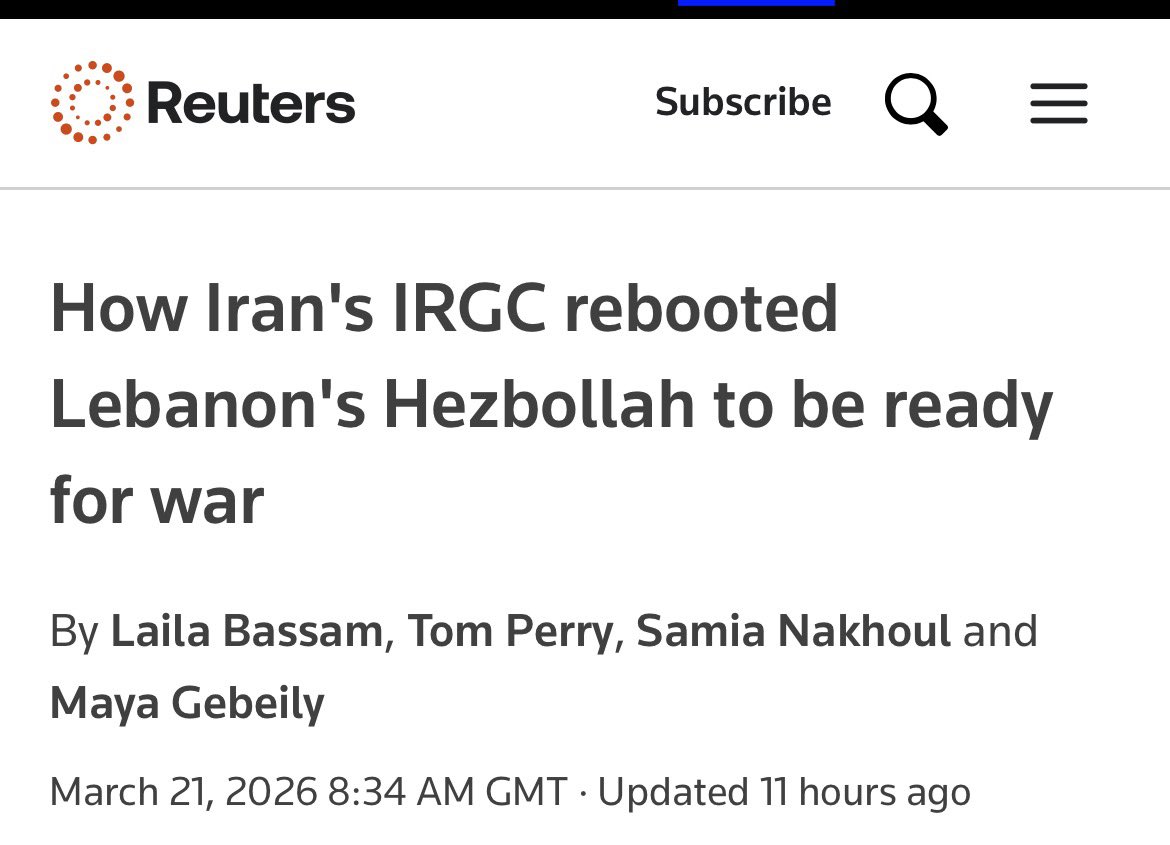
This Reuters piece is deeply problematic and showcases how deeply entrenched proxy thinking remains in western reporting on Hizbullah. The claim that Iran had to "reboot" Hizbullah after the 2024 war is no more convincing than the claim that Iran needed Hizbullah to enter the war in order to defend it. Aside from the highly improbable scenario of IRGC officials briefing Reuters in order to claim credit for Hizbullah’s resurgence, the article’s assumptions are derived from the same proxy model that can’t comprehend the relationship except in linear and hierarchical terms, and which therefore reduce Hizbullah to an appendage of Iran’s rather than an autonomous actor with its own strategic culture and military doctrine.
The main drive behind this framing is the unwillingness to acknowledge that, despite Israel’s decapitation campaign and months of attritional warfare between September 2024 and March 2026, Hizbullah was not destroyed. Once it became clear that the resistance didn’t merely survive this relentless campaign, but was able to regenerate itself under exceptionally harsh conditions, this had to be explained away as the handiwork of its Iranian “sponsor” rather than as evidence of its own adaptive learning and reversion to earlier forms of hybrid warfare that long predated the current war. Even basic wartime adjustments following intelligence and communications penetration, such as reverting to handwritten notes, human couriers and other low-signature forms of communication , are now portrayed as evidence of Iranian direction rather than standard organizational learning.
Yet what is being described today as a turn to smaller cells, lighter command links, mobile combat and surprise attacks is simply a reversion to what Nasrallah himself called “the Imad Mughniyeh school of warfare” that shaped the 2006 war, in which dispersed forces organised into small cells combined guerrilla-style mobility and tactical surprise with the military capabilities of regular armies. The unique hybrid model pioneered by Hizbullah’s former commander was studied in US military manuals precisely because it disrupted the conventional distinction between regular and irregular war on which US military doctrine rested. A movement that helped pioneer this model and which has historically trained and assisted other resistance movements in Palestine, Iraq, Yemen and beyond, does not need to be taught how to return to its own doctrine, let alone to be reinvented and commandeered by Iran.
Ali Larijani wrote this before he died. The man who ran Iran's nuclear file for a decade. PhD in Kant's philosophy. Three published books on Western epistemology.
He described Iran's position in one sentence: "Iran's position in the face of external pressure is not an empirical reaction that changes with changing circumstances; it is an a priori commitment that existed before the pressure, independent of it, and not derived from it."
Every Western diplomat who sat across from him tried to change Iran's mind with sanctions, threats, and incentives. They were making a philosophical error. You cannot negotiate someone out of an a priori position. You cannot sanction someone out of a foundational commitment.
They never understood the man they were negotiating with. He understood them completely. That asymmetry is why Iran has not fallen. Rest in power, Dr. Larijani.
The killing of Ali Larijani, like that of Ali Khamenei before him, is best understood as an instance of strategic martyrdom, a dynamic that exposes the fundamental irrationality of Israel’s and the US’ continued reliance on decapitation strategies, especially given their repeated historical failure. The decapitation-attrition-invasion playbook that the US and Israel keep drawing from reveals systems locked into a familiar repertoire of counterproductive violence that have consistently failed to adapt to reality. This failure is so glaring that even Trump acknowledged it, when he recently admitted that the US attacked Iran "out of habit."
The underlying premise is that by removing senior leaders, the system they sustain will weaken and/or fragment. Yet this assumption reflects a narrow instrumentalist rationality in which leadership survival is treated as the paramount strategic objective and the threat of death is presumed to function as an effective form of coercion. But Iran operates from a value-strategic rationality whereby martyrdom itself can perform important political work and generate strategic effects that not merely resist but reverse the intended consequences of assassination.
That Larijani attended the mass rally and made statements openly embracing the possibility of martyrdom before his death only underscores how consciously this logic is adopted by those who bear its consequences, a logic articulated most clearly by Khamenei himself, who declared that “either we are martyred on this path, whose honour is eternal, or we achieve victory; both are victories for us.”
By transforming assassinated figures into sacred symbols of justice and resistance, in the tradition of Imam Hussein at Karbala, martyrdom converts the intended effects of decapitation into a strategy that successfully mobilises collective resolve, legitimises the political order, and regenerates both the system's continuity and its societal resilience.
In short, strategic martyrdom ultimately contributes to deterrence by regeneration, whereby repeated attempts at decapitation are subject to a law of diminishing returns as adversaries discover that killing leaders neither fractures the system nor compels submission but instead contributes to its consolidation.
The US bombing of schoolchildren in Iran is the biggest single US massacre of civilians since My Lai. The Israeli bombing of Tehran’s oil storage constitutes the biggest single act of chemical warfare against a civilian population in history. Grotesque new depths of barbarism.