Introducing TanStack Redact 🌴
A smaller runtime for your existing React app. Add it to your build config and ship less JavaScript without changing a single line of application code.
Works with TanStack Start, Vite, Vinext, and Next.js.
https://t.co/BzzTRpVTa1
TanStack Start 1.0 is officially stable! 🎉
A full-stack web framework for React and Solid, already used to build millions of apps, from Fortune 500 companies to your favorite tools and weekend projects.
https://t.co/DA8E8cWnBU
https://t.co/gz0IBKwoYo
son donemdeki celld motivasyonuna ve dogrudan kendi aciklamasina bakarsak deno'yu kendisi de gozden cikarmis zaten.
blogpostlara, kenton ve ryan'in aciklamalarina bakarsak aslinda cloudflare celld ve onun ekibini aldi. deno 'zaten...' ile baslayan cumlelere terk edildi.
rust never was the defacto language for agents and will not be. i love rust - it’s my primary language - but i work on runtimes and platforms
application code belongs in the default language - JavaScript (or its extension TS)
i feel like people do not grok how important celld is.
it's scalable applications of arbitrary complexity. the only dependency is s3.
once you see it, you'll realize there's no point to traditional javascript runtimes in serving applications - only for build processes (eg bundling) and scripting.
the networking and scaleability are deeply rooted not only in the distributed runtime (celld), but in the programming model itself (largely kenton's design)
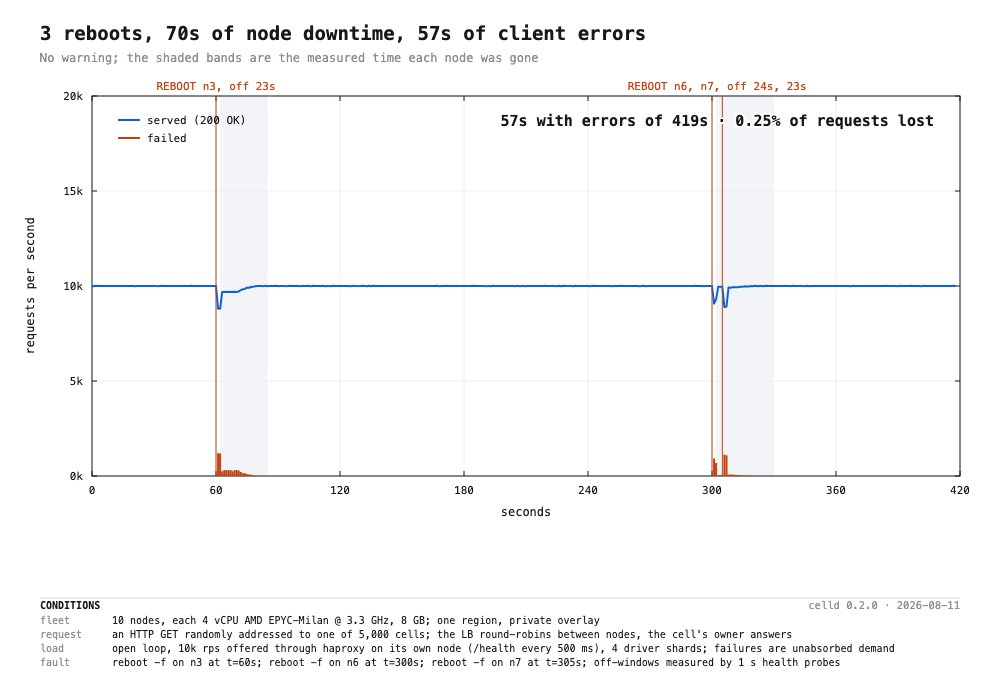
I wasn't quite sure when I started celld how well this could be made to work, but we've been running it in bigger capacities and getting user reports over the last months. Actually handles load surprisingly well. (any experience in the comments to share?)
because the programming model does not expose the underlying linux system, you can actually think of celld as a distributed operating system - running in user space of linux. it only runs one program / doesn't support multi-tenant, but it has system services like an operating system. it's all about networking - i like to think of it as the practical modern version of plan9 or even erlang beam.
celld 0.5.0 is released!
- Support of Containers and Cloudflare Sandbox SDK
- Support for worker_loaders in wrangler.json
- Support for .dev.vars with `celld dev`
- Better memory usage per cell 500k to 350k
- Lots of bug fixes
release notes here https://t.co/MdblCLtGJL
Workers now enables Node.js compatibility by default, supports applications up to 64 mebibytes, and adds a URL-based module registry with import.meta, lazy compilation, shared code caches, and clearer errors. https://t.co/eZxSlcNnLQ
thanks! this is (i think) handled in a similar way by cloudflare durable objects too:
"If your account creates many instances of a single Durable Object class, Durable Objects may run in the same isolate on the same physical machine..."
https://t.co/211cGNpeji
hey @rough__sea, quick celld question: crates/celld/js.rs:8 says "one isolate per cell" but the pool/placement code looks like multiple resident cells from the same worker script can share an isolate (up to 32). is that comment stale, or am i misunderstanding how cells and isolates are related?
https://t.co/Z7zllMbP8A
celld 0.4.0 is released! In this release we fill out a lot more functionality beyond Durable Objects and Workers. celld now supports:
- KV
- Queues
- Workflows (durable execution!)
- R2 (using the bucket that celld is connected to)
There has been a ton of work done on reliability, correctness, and performance. We're still considering this an Alpha preview, but aiming to update that status to Beta soon.
Release notes here: https://t.co/tzbFzc6SzV
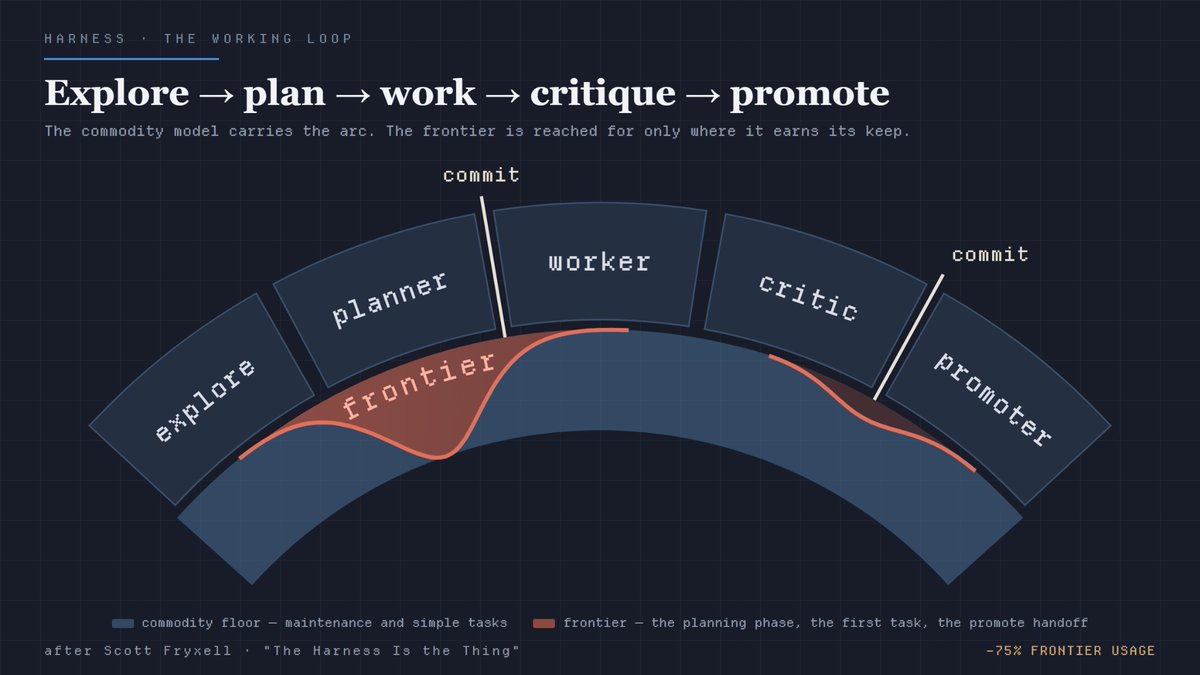
Lead Engineer, Scott Fryxell, used Pi to move most of his client work to DeepSeek, dipping into Fable only when necessary.
By primarily using ‘commodity models’ he only needs two $20 plans for his total usage.
Read how Pi became “the most important piece” of Scott’s rig below
celld v0.3.0 is released. This version contains what (hopefully) will be the last major architecture change: a replicated write behind log.
I want celld to be scalable enough to handle a site like Discord. Every channel would be a cell. At an estimated 4B messages per day, before this release celld would be doing ~46k PUTs per second to S3. That equates to $600k/month in write ops alone.
In 0.3.0, celld doesn’t write to S3 on each message sent. It buffers before sending off to object store. Cutting it to ~300 PUTs per second, ~$4k per month.
But doesn’t that weaken the durability and correctness guarantee? In the new version of celld, writes aren’t ack’d until they’ve been persisted on three disks. And should a crash happen in the short buffer period, it can restore from peers. RPO=0, surviving even the loss of an availability zone. This is the replicated write-behind log.
Aside from the cost savings, writes get much faster: ~5ms instead of a ~50ms round trip to S3.
This latest release also includes support for the D1 database, crons, azure blob service, in addition to many bug fixes.
celld is effectively a database. We take correctness and durability problems seriously. The software is becoming more robust, but do keep in mind this is still a 3 week old project and is labeled as Alpha software. We’re making good progress and hope to raise that to a Beta standing soon. Your bug reports and patches are much appreciated!
celld v0.2 is released
- Telemetry support - with the ability to upload parquet files directly to your bucket (use duckdb to query!)
- memory usage per cell reduced from ~4mb to ~0.5mb
- support for wasm via workers-rs
- LTX compaction
- more node and web crypto APIs filled in
celld might be the most important architecture project of the year.
Ryan Dahl's latest project brings Durable Objects, Cloudflare’s compute/SQLite primitive (which is perfect for building cloud agents) out of the orange cloud and into any environment.
For those of you who don’t spend your waking (and sleeping) hours perfecting cloud agents (ahem, https://t.co/ci5QJtgUSj mentioned), let me fill you in on some of the challenges involved and why Durable Objects are such a breakthrough for agents:
1. Thread isolation. Every agent thread needs its own execution environment. Compute, memory, and storage need to be unique per agent, even per sub-agent. This has led many folks down the very dark and nasty path of “sandboxes”: Docker, Kubernetes, VPSs, and a slew of other unholy tooling altogether unfit for the job.
Durable Objects on the other hand, are like little primitives with distinct compute, their own memory, an HTTP handler, a WebSocket handler, and a SQLite database. A “cold” start is measured in tens of milliseconds, and you can run dozens of these in parallel on a single thread. Perfect for agents.
2. Storage. Agents produce a ton of data. So much data that logging becomes a significant bottleneck for any agentic platform. Durable Objects again solve this problem by distributing writes across distinct threads.
Each thread—or agent—can be feverishly writing logs and storing data in its local SQLite database without running into table locks, because each database is distinct to that thread.
3. I/O. Agents need to be connected to the outside world—and, ideally, to you. Durable Objects also solve this by providing a fetch handler that accepts HTTP requests and WebSocket connections, along with a unique hibernation API that allows the object to hold a connection while being shut down.
You can think of them almost like tiny little servers.
So why doesn’t everyone build on Durable Objects?
Honestly, more people should. Frankly, Cloudflare has struggled to explain this primitive to developers. But Durable Objects also have an Achilles’ heel: they only run on… Cloudflare.
Cloudflare is a great hosting provider, and I personally use their services all the time. But building a product that can run on only one hosting provider isn’t a proposition many CTOs want to sign up for.
Enter celld.
Now you can use the same primitive, with the same API and the same benefits, in any cloud, anywhere.
Thank you again, @rough__sea.
Introducing celld: a self-hosted, distributed Durable Objects and Workers implementation
- celld = V8 + S3 + SQLite + LTX+ Tokio
- programmed with exactly the Cloudflare Workers/DO JavaScript APIs and config
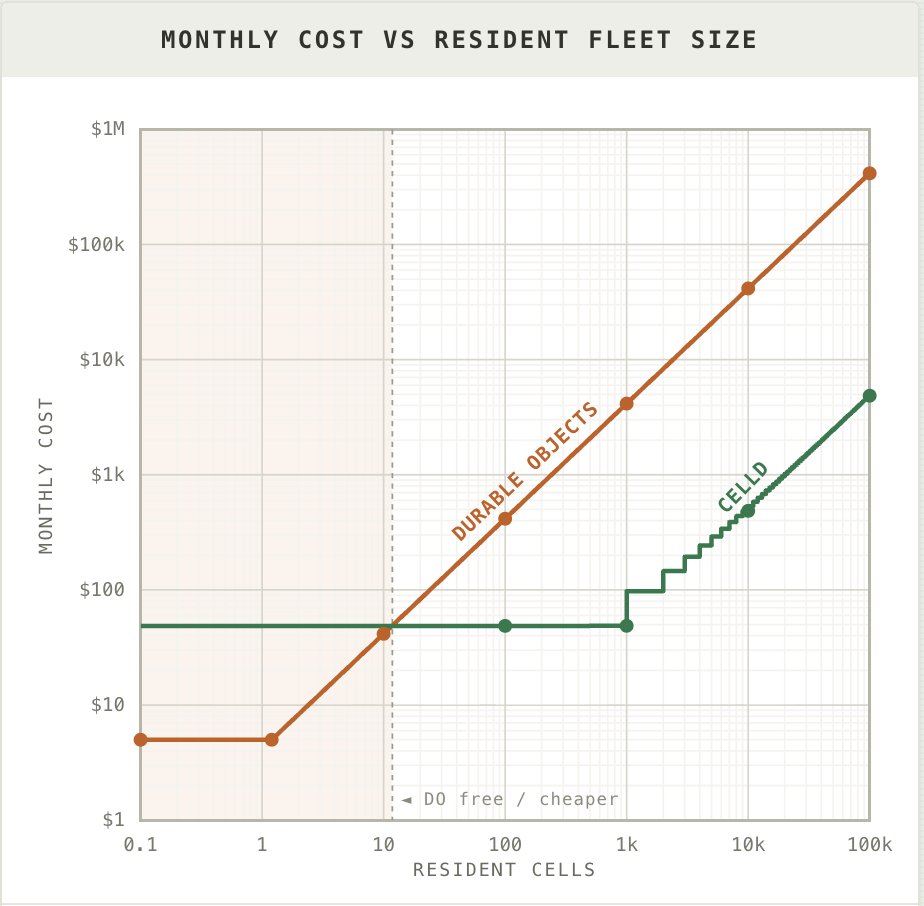
- order of magnitude cheaper at scale
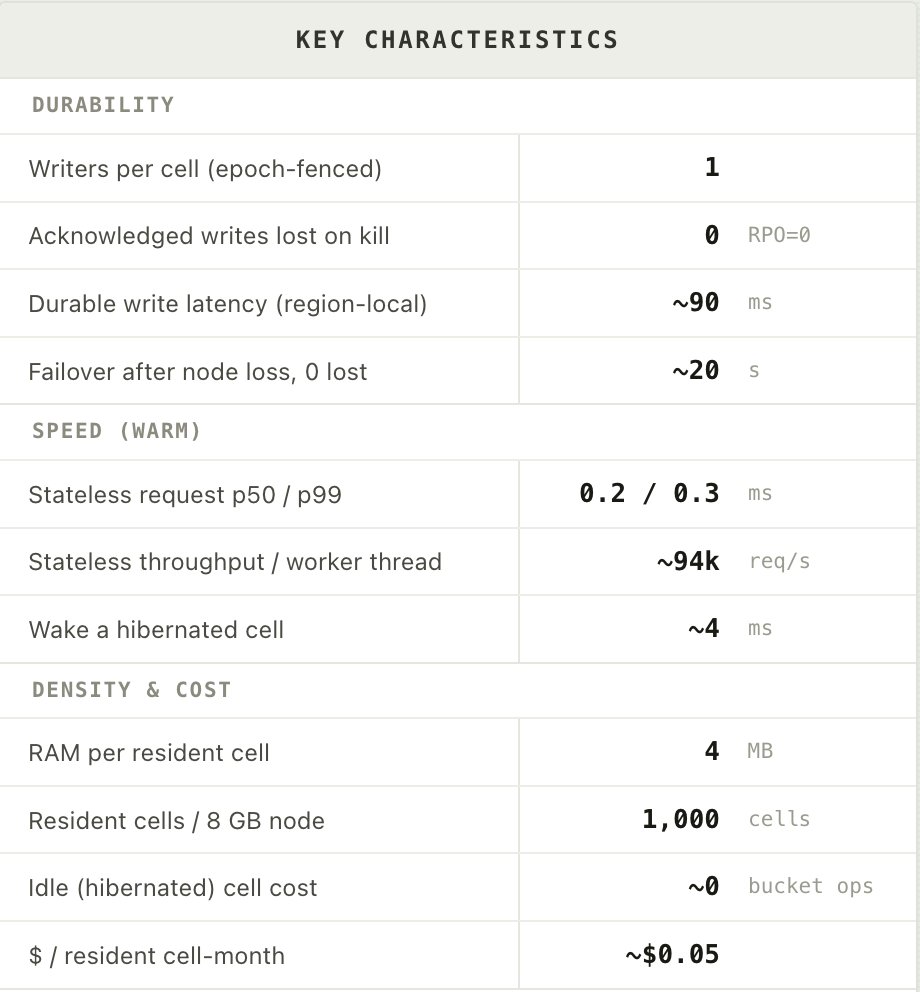
- writes are durable before they're acknowledged, RPO=0
- only depends on an S3 compatible bucket - no other infrastructure
- ~4 MB memory per cell instance overhead
- hibernated cells cost ~nothing, just their S3 storage
- open source, Apache 2 licensed
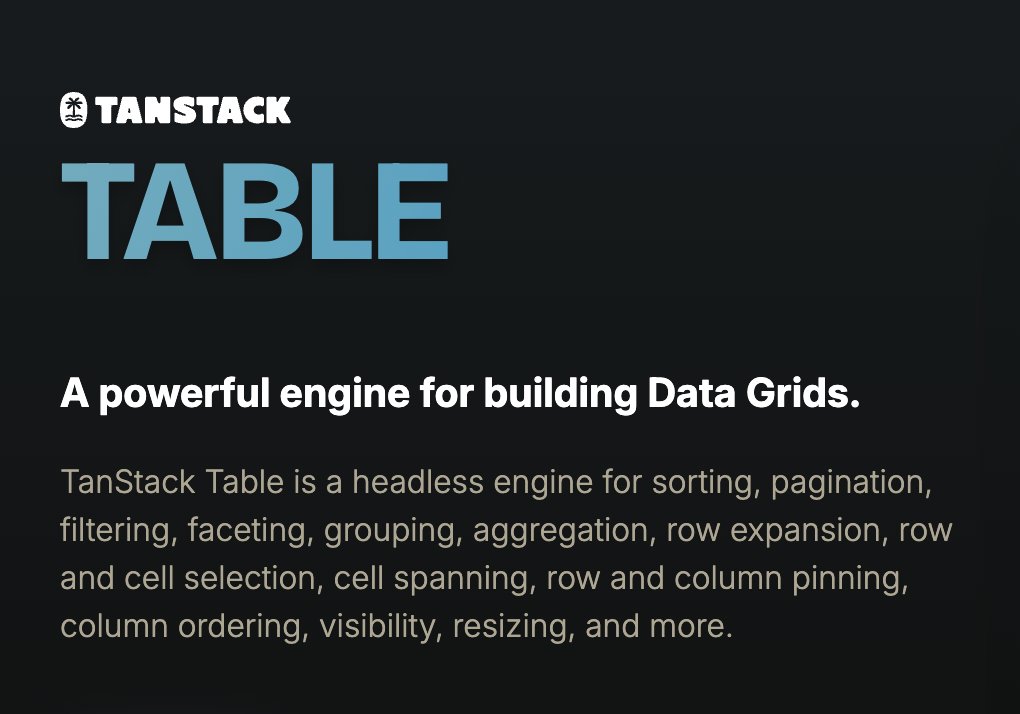
🌴Announcing TanStack Table V9🌴
Now Stable!
After more than two years of development, TanStack Table V9 lays a new foundation for years to come, with a tree-shakable plugin architecture, state management powered by TanStack Store, new features, major performance improvements, hundreds of bug fixes, and more.