I watched my friend make $10k in a month.
Then he spent 3 weeks “searching for the next big thing.”
Meanwhile, I did the same boring work 5 more times.
Guess who hit $50k first?
The cement company owner isn’t excited about cement.
He’s excited about his beach house.
Success isn’t found in chasing shiny objects.
It’s built by doing what works until it works spectacularly.
Repeat the boring. Fund the exciting.
I draw a lot of inspiration in my personal life from sports. If you ever feel overwhelmed from failure or mistakes, remember Lionel Messi resigned from the national team when he lost a 3rd final in a row in 2016, only for him to come back and win the World Cup.
You can bounce back from any problem, don’t be too harsh on yourself. Your ability to bounce back from failure is literally a necessity for the goals you seek.
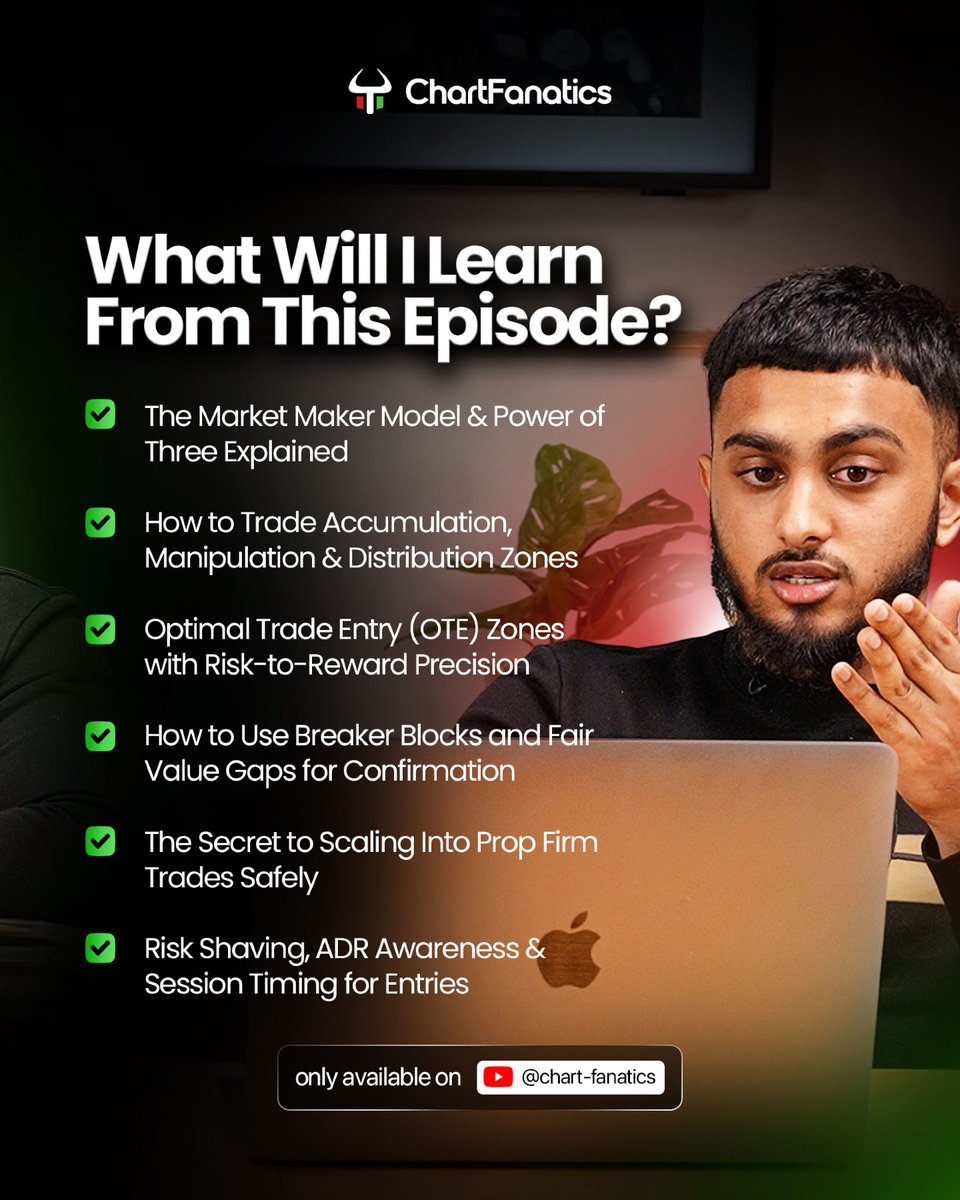
🚨 This Sunday: NBB's $30M+ ICT Strategy
Meet NBB Trader - the man behind one of the most refined, data-driven trading strategies in the prop firm space.
With over $1.1M in payouts and $30M+ in combined funding unlocked for his community, Omor’s approach blends ICT-based theory with ruthless execution precision.
🧠 Inside the episode:
– How to trade accumulation, manipulation, and distribution zones
– Optimal Trade Entry (OTE) using Fibonacci confluences
– Real chart examples using breaker blocks, FVGs & session timing
– How students pass challenges in 2–3 trades
“Trading’s like learning how hard to kick a football, rules matter, but feel wins.”
📆 Drops this Sunday, only on the Chart Fanatics YouTube channel
“If you’re so smart why aren’t you rich then?”
A statement that changed my whole trajectory.
Your level of intellect has no correlation to your financial success, yes it can play a factor but more than often it’s a hindrance.
That’s why most smart people are generally bad in business.
Because of how logical we are, we end up overthinking, over planning and over analysing stuff that should just make sense on the surface.
To win (especially in entrepreneurship) you have to realise complexity is your greatest enemy.
Do what works and do it over and over again.
When you start in business you think it’s all mindset
You probably read a few of the normie business books
And it’s all mindset mindset mindset
Then you start trying things
And you realize that it takes actual skills
So you start to think it’s all tactical
How do I run this ad
How do I build this landing page
Then one level above that
You realize that it actually is all mindset
This is the real bell curve.
If you roll a die 1000x, you’re likely to get lucky
And when you get lucky, people will call you out
The difference is, you can force luck to happen by doing so much it would be unreasonable not to get lucky
And this is what normies don’t understand, and why you’ll beat them.
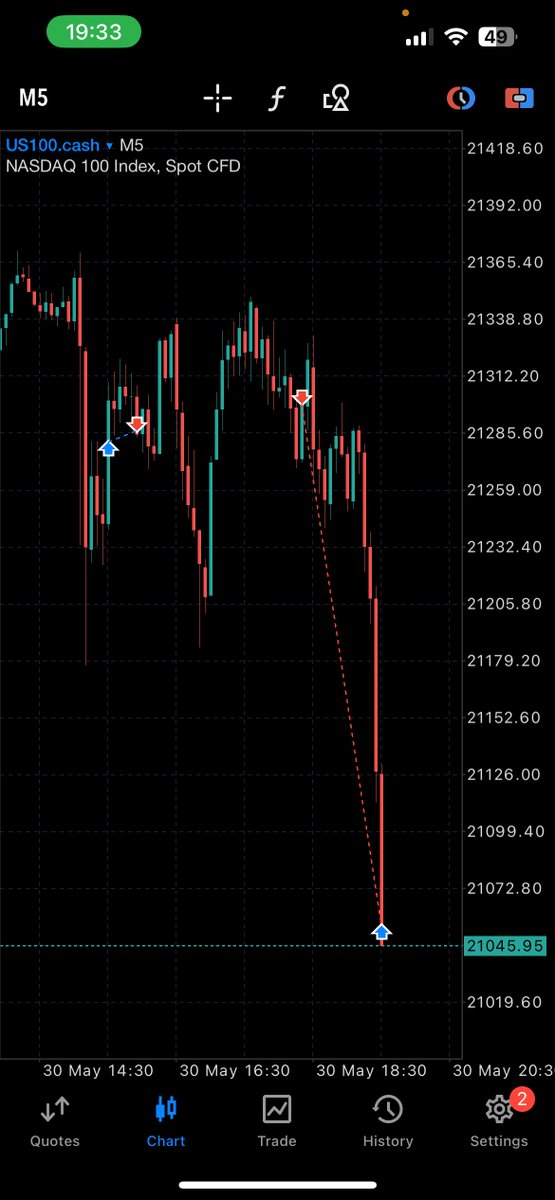
never thought that after 2 years of painstaking work that this would be the result; my very first business class flight and hitting +$12k in a trade
been pushing these flights away since i thought it'd be better to save the money instead
but all these different experiences that i'm collecting are just pushing me to go harder than ever before
changing my mindset as a whole
this month has truly pushed me to the limit in terms of this, but i've come out the other side a better trader as a result of it
gotta give thanks to God always and the mentor @omor214
The 5% That Breaks Most People
The closer you are to the truth, the more it hurts to miss.
No one warns you about the danger of almost making it.
Everyone talks about failure like it’s a clean break. You try something, it flops, you move on. But that’s not how most people give up. They don’t quit after failing badly. They quit after coming unbearably close, again and again.
It’s not laziness that kills ambition. It’s proximity.
There’s a kind of psychological violence in trying your hardest, outsmarting the odds, tasting the win, and then falling just inches short. Once? You get motivated. Twice? You feel cursed. Three times? You start to wonder if the universe is laughing at you.
And that’s the trap: because getting close feels like evidence that you're broken, when in reality, it’s proof you’re almost there.
I wish someone had told me this sooner. Before I hit any of my biggest wins, I failed inches away from success more times than I can count. Brutal, razor-thin losses. Ideas that were right, but slightly too early. Trades that were smart, but exited too soon. Efforts that deserved to work, but didn’t.
And each time, the voice got louder: You’re not cut out for this.
Until one day, I changed the script.
I stopped seeing “almost” as failure, and started seeing it as validation. If I kept getting 95% of the way there, I couldn’t be on the wrong path. It meant I had the formula mostly right. I wasn’t lost, I was simply solving for the last 5%.
That reframe changed everything. Instead of feeling shame, I felt urgency. I stopped questioning if I would succeed and started asking what was left to fix. I went harder, not because I was naive, but because I had enough data to know I was close.
And eventually, I hit it big.
Then I learned the final lesson: those near-wins weren’t just stepping stones, they were rehearsals. Each one gave me something I would later use when the real opportunity came. And when it did, it was ten times bigger than anything I had missed before.
Sometimes, life delays success so the lesson sinks in. Sometimes, the frustration is the curriculum.
So if you're close, painfully, maddeningly close, don’t quit. Don’t mourn the almosts. Understand what they are: markers of progress, not failure. Every time you get close and miss, you’re tightening the loop. You’re narrowing the error. You're training for the one that will hit so hard it makes everything else worth it.
People don’t quit because they’re far from success.
They quit because they were almost there, and didn’t know how close that really is.
Remember.....
If you're consistently close, you're not unlucky, you’re unfinished.