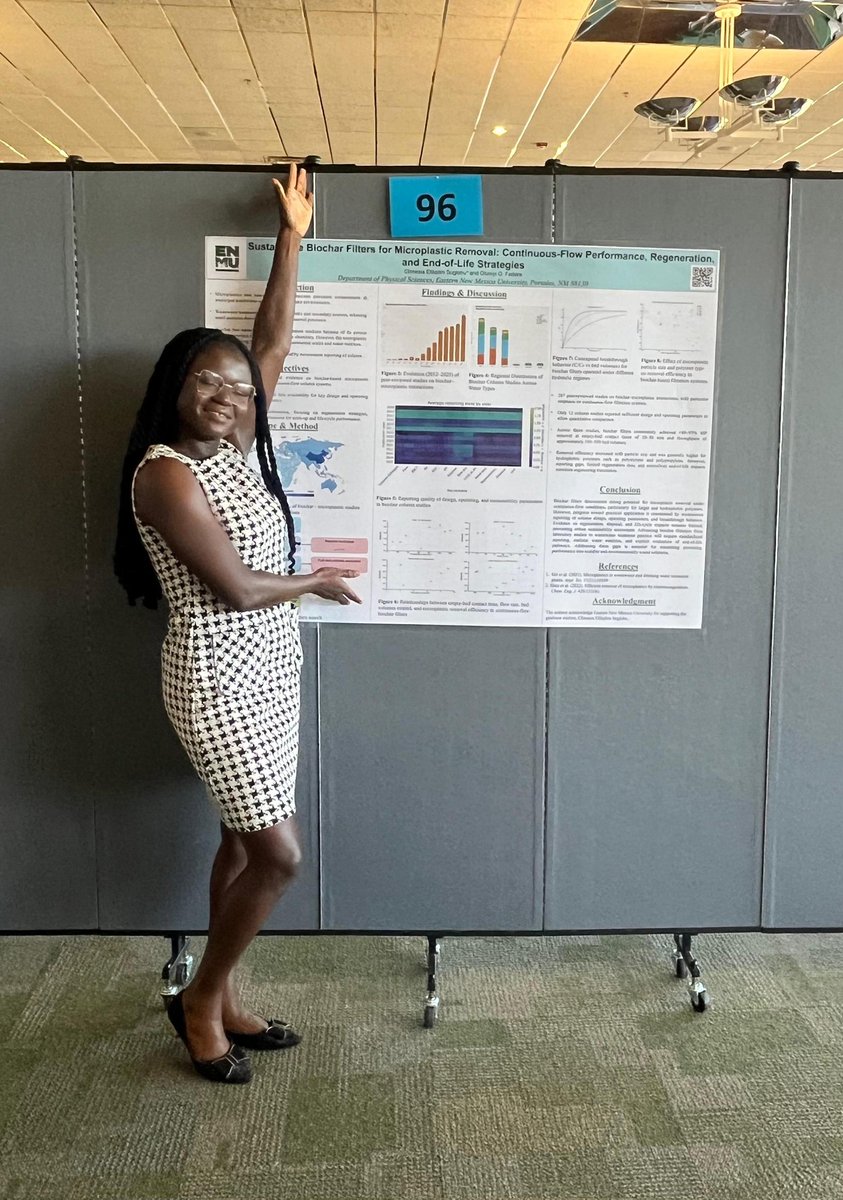
Congratulations to Climesia Soglohu (pioneer grad student in Fadare's Lab @enmu) on earning Chemistry Award 4 Best Poster Presentation on "Sustainable Biochar Filters for Microplastics Removal: Continuous-Flow Performance, Regeneration, & End-of-Life Strategies" at the 2026 SRCC
Obsessed with premium tees? We get it. 👊 That's why we made the only ones you'll ever want to wear:
- Unparalleled durability
- Luxurious softness
- Enhance pecs
- Confidence-boosters
@Dr_SSiddiqui and @smbrander https://t.co/5Zu9oV9ShY provides a basic understanding of aquatic ecotoxicology, climate change related stressors from an ecotoxicological perspective & guidelines/lab protocols used by international organizations in ecotoxicology studies.
Our sister agency, Algalita, is hiring an Education Coordinator! This part-time position will oversee and facilitate various aspects of the organization’s diverse offering of educational activities and programming. 🧵
We have 4 PhD positions open in #microplastics, #nanoplastics, plastic additives, and modelling. Deadline approaching!!!
Have a look, starting with PhD1 😉- nanoplastics!
https://t.co/DOifPU4Knx
Our fall webinar is happening THIS TUESDAY (11/28) at 3:00 pm EST! We'll be joined by 4 awesome speakers (details in 🧵) & provide opportunities for you to give feedback on interest group activities. All are welcome, DM for link to join. You won't want to miss it!
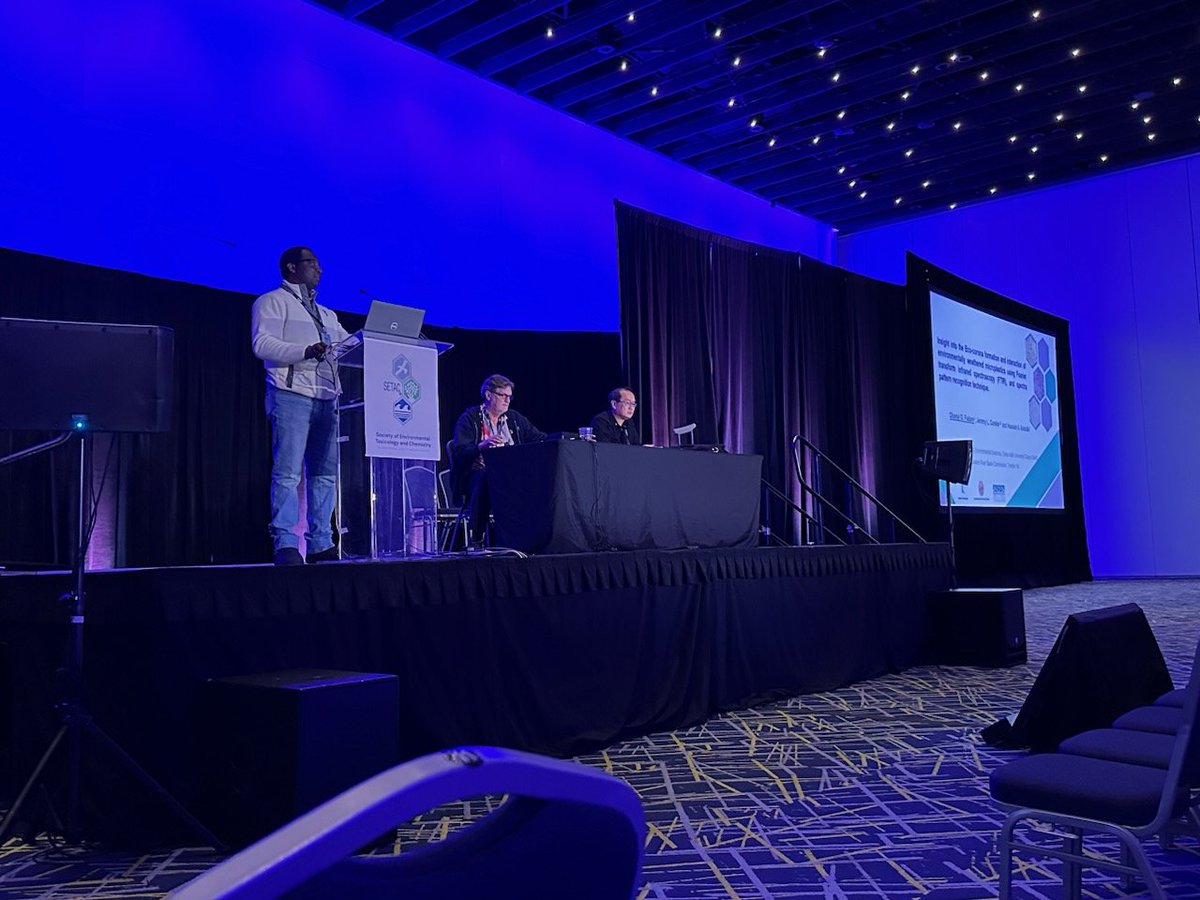
I had the opportunity of presenting my latest study on characterisation of Eco-corona formation on microplastics using unsupervised statistical techniques at the ongoing SETAC conference in Louisville, Kentucky. It was a great time meeting and sharing with friends and colleagues.
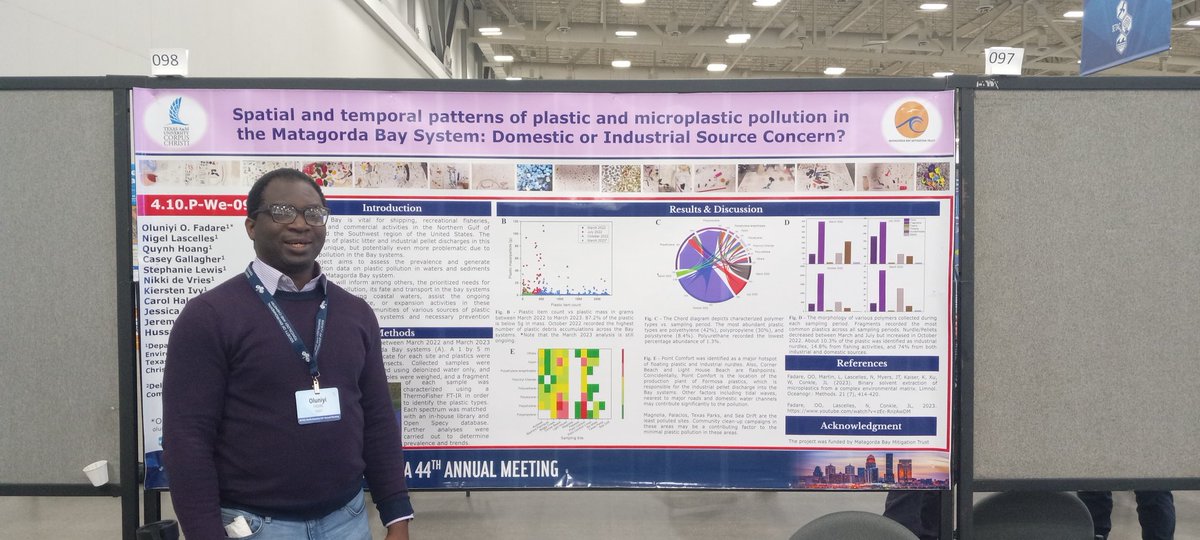
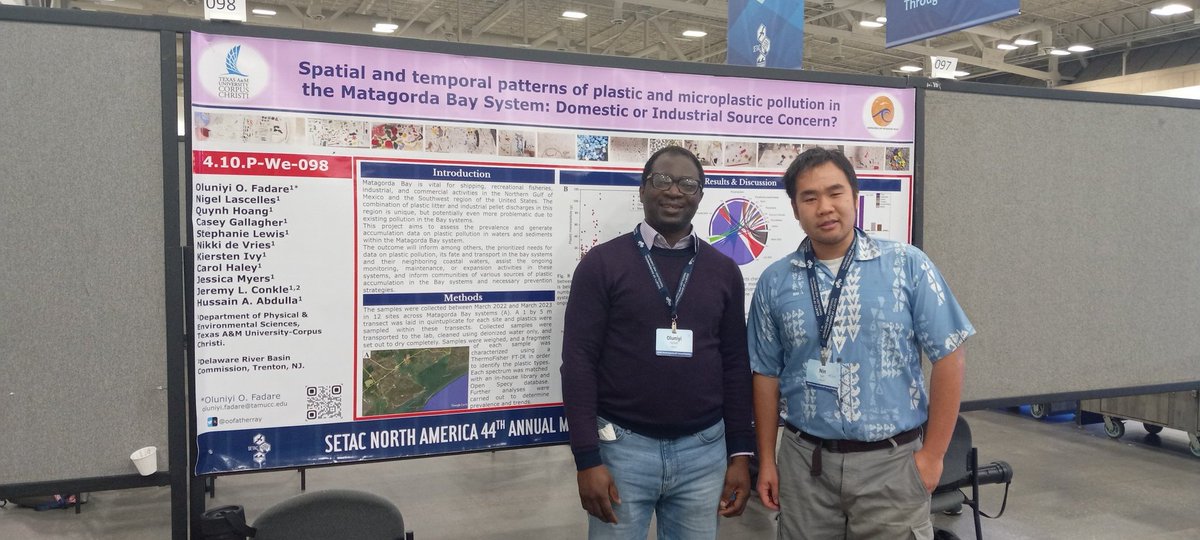
It's poster day!
Stop by poster 98 to see our updated report on plastic pollution within the Matagorda Bay systems and our recommendations.
#SETAClouisville@SETAC_plastics@SETAC
We are hiring! The Biocolloids Lab at McGill (https://t.co/SbYprbipuV) is looking for a talented postdoctoral researcher to contribute to our research on #microplastics and #nanoplastics.
Quantification of microplastics in complex environmental matrices remains a major challenge in MP research. We developed a novel method that reduced the MP extraction time in particulate organic matter from 5 days reported in the literature to about 2 hrs. https://t.co/zPYB49Y99U
Thanks, Win. We believe the new method will significantly advance microplastic research. @EPA may want to revise its protocol based on this novel method.
Quantification of microplastics in complex environmental matrices remains a major challenge in MP research. We developed a novel method that reduced the MP extraction time in particulate organic matter from 5 days reported in the literature to about 2 hrs. https://t.co/zPYB49Y99U