CIGMA is out in Nature — A linear mixed model to unbiasedly characterize cell-type-specific eQTLs. Work advised by @andywdahl and a lot of help from @xinpei_w
https://t.co/uT8Ot6mnzs
Following the publication of our phage gen paper, I wrote some personal thoughts on biosafety and biosecurity as generative biology improves.
Given the trajectory of progress, there should be concern and urgency -- but also optimism.
https://t.co/yRTDEJ7jGI
Our review is now published in @NatureGenet! We cover all aspects of modeling regulatory genomics, from loss landscapes to OOD generalization to model interp to fixing generalization issues using perturbation data via active and continual learning!
https://t.co/ahYUsc2Gah
Today in @Nature we report how AI-guided redesign enhances protein evolution. Integrating ProteinMPNN sequence design with autonomous laboratory evolution, we establish a workflow to engineer enzymes with improved properties over those evolved from natural proteins. Redesigned starting points consistently evolve an expanded fitness landscape, reaching new function with higher activity, specificity, and stability than their natural counterparts.
https://t.co/pNlw6z1zvU
1/14
First and foremost, I reject the "population" level framing here and so should you. The are obviously issues with the way currently formulated PGS are trained and applied - many of which have nothing to do with portability. And there is a mean decay in accuracy with mean genetic distance of the focal individual to individuals in the training population that obviously merits consideration. Some fraction of this latter issue would be mitigated for some individuals and some traits with more diverse training data. But the strong implication of the article - bolstered by quotes from geneticists - is that the reason for this is is that there something fundamentally different about the genetics of different races that merits a series of bespoke genome projects. And this just isn't the case. Rather the issues are a complex mix of what are really technical/technological challenges, issues with population structure/stratification and environmental confounding, as well as rare allele discovery and interpretation. None of these are resolved at the classical "population" level, and the push for population level genetic databases reflected in this article doesn't have a strong scientific basis - rather it is motivated by a desire to keep the industry afloat, with no regard paid to the scientific inaccuracies they are promoting to do that, or the broader consequences of doing so.
Come and join our dream team!
We’re recruiting a PhD candidate with a strong background in statistics, machine learning and (human) genetics to work at the interface of biological sequence foundational models and scores polygenic score methods.
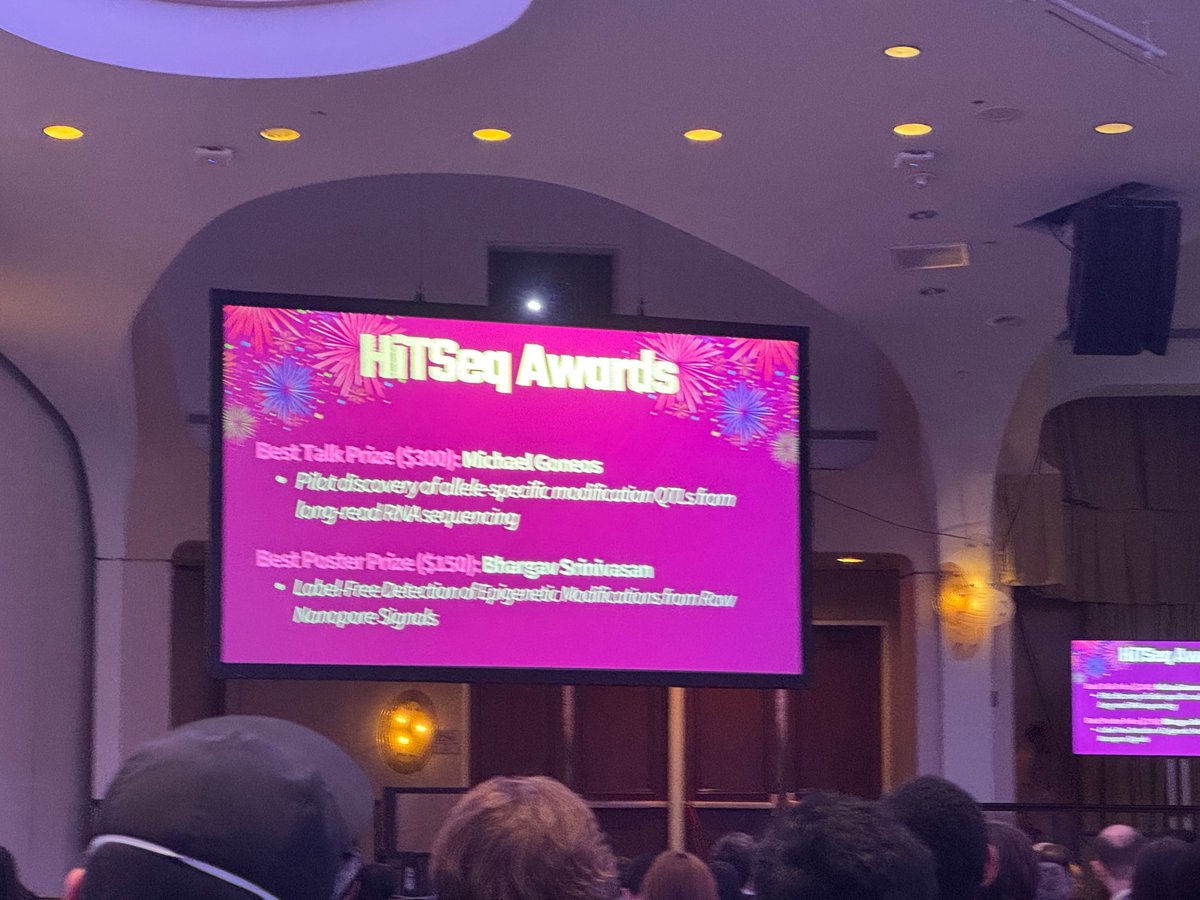
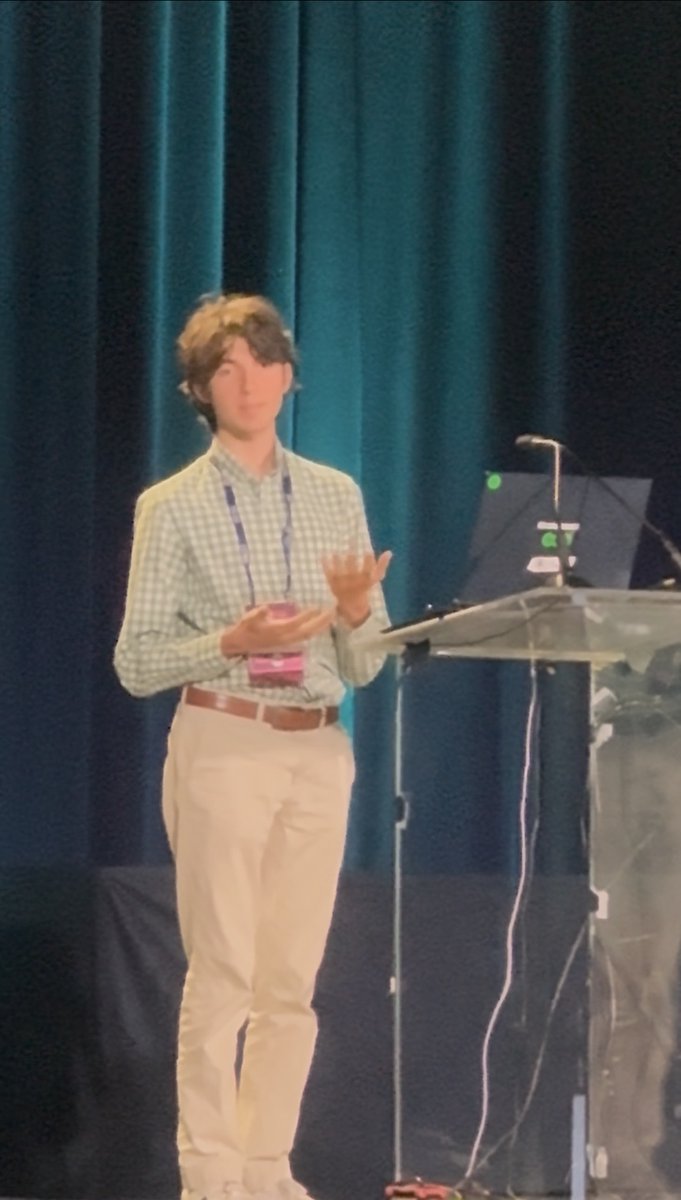
Congratulations to Michael Goneos for delivering an excellent prize-winning talk: "Pilot discovery of allele-specific RNA modifications."
Thank you D.C. for a great time at ISMB 2026!
#ISMB#HITseq#Nanopore@mason_lab@ISMBinfo@iscb
One of my first consults as a cardiology fellow: a 34-year-old, textbook MI. A day earlier, no risk model would have flagged him for prevention. That paradox has driven my work ever since — our models miss how disease actually evolves, dynamically, on top of a genetic background. @Nature https://t.co/PHDOjmGxE3
How to link a non-coding disease GWAS variant to its target genes in the right cell type?
ENCODE-rE2G, now out in @Nature addresses this through optimal integration of chromatin activity and 3D contact data in 1,458 biosamples.
A huge collaborative effort spanning 6+ years led by @argschwind@jengreitz https://t.co/XzIIWwgbJp
Our lab is looking for a (junior) research technician to help accelerate several exciting projects in the lab, including our preclinical assessment of AI-designed biologics, single-cell technology development, and structure/function of viral proteins. https://t.co/S3Kq79oKKK
While faculty complain of rising student underpreparedness, University of California leadership is concerned our minimum admission requirements are "overly rigid" and convened a workgroup to investigate reducing them.
Notably, the workgroup is not allowed to consider enhancing requirements, only reduce them.
I guess they thought everyone is so focused on the SAT that no one would notice this getting snuck in.
Excited to share my F31 from NIAID, developing graph and ML methods for genomics, has been funded! Huge thanks to my PI @mason_lab and all my other mentors, looking forward to the next few years