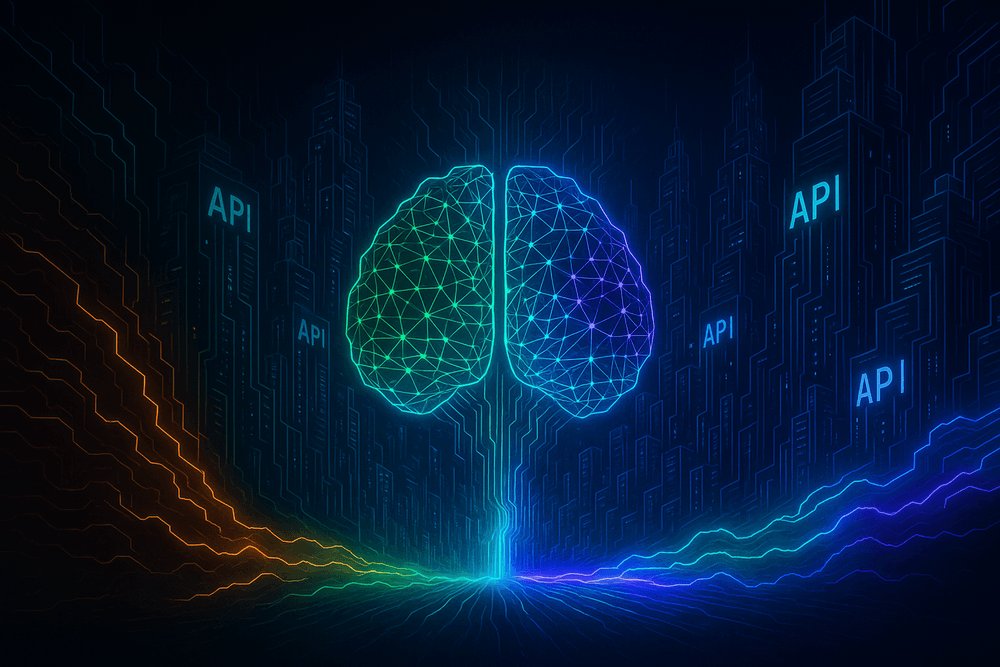
This isn't just a tech upgrade; it’s a fundamental shift in how APIs are consumed. Are we truly prioritizing agent-first design, or just slapping on quick fixes? What's the biggest hurdle you foresee in making APIs truly AI-ready? Let's discuss!
🚨 Huge shift happening! Your API's fastest-growing customer base isn't human. It's AI agents. They're ready to consume, but is your API truly ready for them? Most current APIs are not designed for this machine-first world.
Why does this matter? APIs built for human devs confuse AI. Without machine-readable design, agents can ‘hallucinate’ or flood your servers. Key steps: robust OpenAPI specs, Model Context Protocol (MCP), and clear error handling. It’s about being ‘machine legible’.
So, next time your call is crystal clear, you might have a #TURNserver to thank! 🤔 Have you ever had a frustrating video call fail? What other "invisible" tech do you think makes the internet work? Let me know! 👇
Ever wonder why some video calls just won't connect, despite perfect internet? It's not always your Wi-Fi. The internet has invisible walls (NATs/firewalls) that block direct connections. But there's an unsung hero enabling seamless communication:
Enter the #TURNserver. When direct device connections fail due to invisible network walls (NATs/firewalls), a TURN server acts as a RELAY. It passes your voice, video, & data packets, ensuring seamless WebRTC calls. It's the essential fallback for 1 in 5 connections!
Imagine uma empresa onde nenhum sistema 'conversa' com o outro. Caos? Precisamente. Dados desconectados levam a erros, duplicação e decisões ruins. É por isso que a #IntegraçãoDeDados não é luxo, é uma necessidade urgente para sobreviver no mercado atual.
So, where do you stand? Are you a #GitHub loyalist enjoying the community, or does #GitLab's integrated power win you over? Share your experiences and why your choice works for you! 👇
Core difference: GitHub excels for open-source & its vast community, a social hub for code. GitLab delivers an integrated DevOps suite — plan, code, test, deploy — all in one platform. Which workflow suits YOU better?
So, is Python doomed for performance? Not at all! It shines as a 'glue language' and for I/O tasks, plus libraries like NumPy/Pandas use C/C++. What's *your* favorite method to squeeze more speed out of Python? Share below! 👇
Python is everywhere. But let's be honest: it's *slow*. Why does this popular language struggle with speed, and what's really happening under the hood? 👇
The culprits? Its *interpreter* translating code line-by-line, the *Global Interpreter Lock (GIL)* preventing true parallelism, *dynamic typing* runtime checks, and *high memory consumption*. It's optimized for ease, not raw speed.
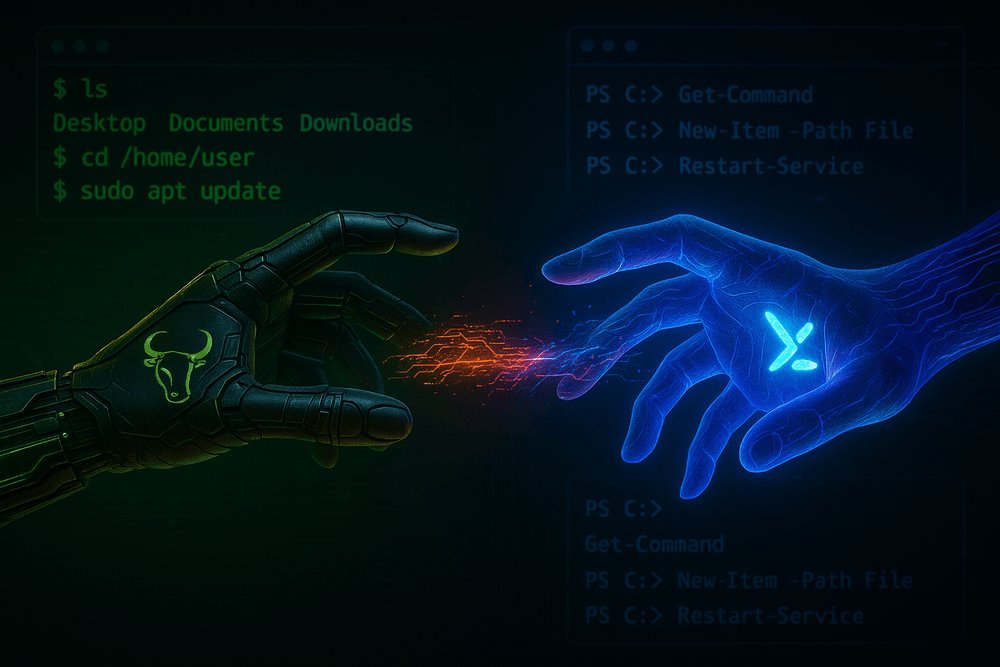
So, which side are you on: the GNU/Linux terminal or PowerShell? What's YOUR absolute favorite command from either ecosystem, and why? Let's hear your hot takes and productivity hacks! 👇
Stuck bouncing between Linux & Windows terminals? 🤯 Wish you spoke BOTH command languages fluently? Good news: many essential commands have direct equivalents! From file management to process monitoring, the core logic is often the same, just with different syntax. Thread 👇
Imagine effortlessly deleting directories, checking running processes, or searching files — no matter if you're on Linux (GNU) or Windows (PowerShell). This cross-platform fluency isn't just about syntax; it's about unlocking massive productivity for devs, ops, and sysadmins.
How do we safeguard against a future where reality itself is permeable, influenced by AI's manufactured narratives? Is a truly objective digital record even possible anymore, or are we destined to live in a world of ever-shifting 'truths'? Share your thoughts!
George Orwell famously said, "Who controls the past controls the future." In the age of AI, this quote takes on a chilling new meaning. What if the 'past' can now be effortlessly *generated*? #AI#Orwell#FutureOfTruth
Enter "AI hallucinations": when LLMs confidently invent facts or fabricate entire scenarios. This isn't just a technical glitch. If AI can generate convincing 'past' events or 'truths,' it directly challenges our shared reality and ability to discern fact from fiction.