Openprise™ Since/Founded in 2005, Openprise Mark Owned by Openprise, All Rights Reserved. Our product is our domain name and the domain name is for sale
People expect flawless answers from systems that learned by observing us, then forget what that implies. If the source is inconsistent, biased, incomplete, or outdated, the output will reflect it, fast & confidently.
Inputs don’t just improve results. They define what’s possible
AI agents are only as good as the data they can access, but legacy architectures often fail to provide the real-time context agents require.
@seanfalconer's lightning talk will explore context engineering: the foundation for ensuring data freshness and quality. We met up with him to hear all about it.
At #GoogleCloudNext? Add it to your agenda: https://t.co/a5Qj3RTxXM
🎤 @thedatagiant
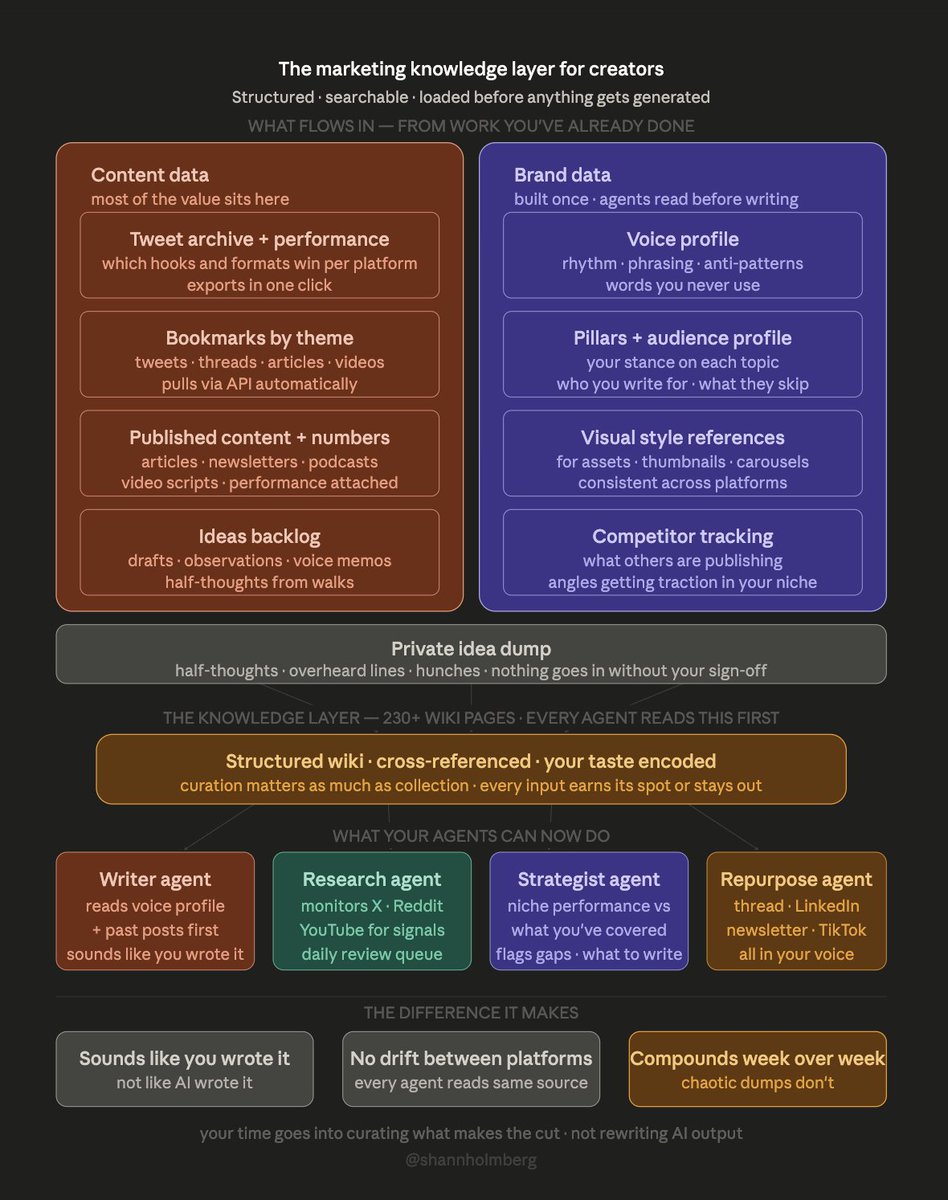
the AI knowledge layer for content creators
for creators, the highest leverage move with AI is getting all your data into one place your agents can use.
structured, searchable, loaded before anything gets generated. your agents only produce output as good as what's in there.
the curation matters as much as the collection. what goes in needs to match your taste, your voice, and the kind of output you actually want back.
every bookmark, every old post, every framework earns its spot or it stays out. a wiki full of stuff you don't love produces output you don't love.
the content side is where most of the value sits:
> your full tweet archive with performance data, which hooks and formats consistently win per platform
> bookmarks organized by theme, the tweets, threads, articles, and videos you keep coming back to
> every article, newsletter, podcast transcript, and video script youve published, with the numbers attached
> ideas backlog, half-written drafts, observations, voice memos from walks
then there´s the brand side that most creators lose in notion dumps and random google docs:
> voice profile with your rhythm, phrasing, and anti-patterns. the words you never use, the sentence structures you avoid, how you actually sound on a good day
> content pillars and your stance on each one, so every post reinforces the same positioning
> audience profile, who youre writing for, what they care about, what they scroll past
> visual style references for when agents need to generate assets or pick thumbnails
> competitor tracking, what other creators in your niche are publishing and which angles are getting traction
you also get a private idea dump where you can drop whatever is on your mind, half-thoughts, overheard lines, hunches about whats about to break in your niche.
all of it flows into a separate folder in the knowledge layer. an agent can surface patterns across everything youve captured, pull up ideas that would have been lost in a notes app, and flag angles nobody else in your niche is covering.
your tweet archive exports in one click, your bookmarks pull via API, your articles are already written, your voice profile gets built once from your best pieces. the data flows in from work youve already done.
once the knowledge layer has depth, agents start producing work that would take hours of manual context gathering. a writer agent reads your voice profile and past posts on the topic before drafting, so the output sounds like you wrote it instead of like an AI wrote it.
a research agent monitors X, reddit, youtube for signals in your niche and surfaces them in a daily review queue. you open it once a day and decide what actually gets filed into the wiki, nothing goes in without your sign-off.
it keeps your ideas backlog fresh and keeps the knowledge layer clean. a content strategist cross-references what's performing in your niche against what you've already covered, flags gaps, suggests what to write next.
a repurpose agent pulls a long article and drafts the thread, LinkedIn post, newsletter intro, and TikTok script, all in your voice, all from the same brand context. no drift between platforms because every agent reads from the same source.
I run this at my own account, with 230+ wiki pages covering my tweets, bookmarks, articles, ideas, and brand foundation. every agent I run reads from it before doing anything. new post ideas come out sharper, drafts come back closer to how I actually write, and most of my time goes into curating what makes the cut instead of rewriting AI output.
creators who treat their knowledge layer with taste are building something that compounds week over week. the chaotic version, dumping everything into chatgpt and hoping, produces the same generic output everyone else is getting
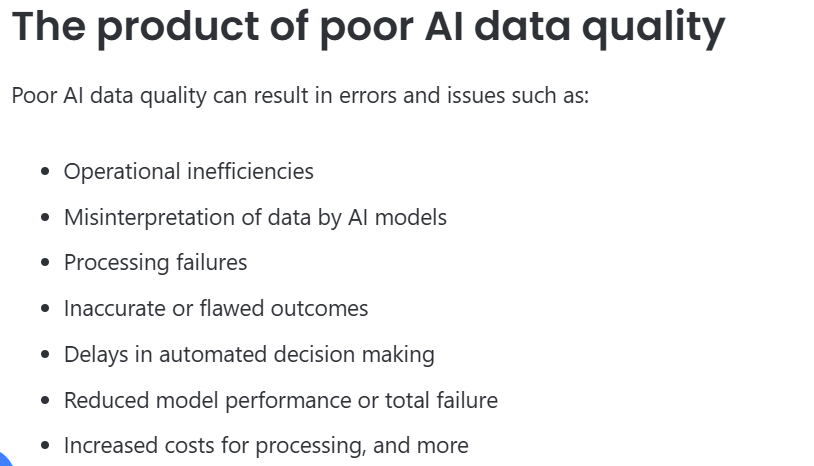
You can build the smartest AI model in the world… but if your data is messy, biased, or inconsistent, it won’t actually work.
Great AI isn’t about complexity, it’s about clean, accurate, meaningful data that reflects reality. The better the data, the better the outcomes.
If your AI isn’t delivering, start with the data.
#AI #Data
In the real estate industry, predicting property sales prices presents a significant challenge due to several influencing factors. Here's how you can perform linear regression using spreadsheets to help. #DataScience#AI#ArtificialIntelligence https://t.co/sj58Sn2S2O
Harnessing real-time data means that you can hit that note when you need it. 🎼 🎥👇
We sat down with @RustyWarner (from @Forrester) in our recent webinar. If you missed it, we have a NEW recap in on the blog 👀 https://t.co/EY66rtcuew.
Read how @GroupeSNCF is using @opendatasoft's data lineage feature to strengthen collaboration and meet data needs across its ecosystem in our blog https://t.co/jaCJRd1Lm6 #data#DataLineage#DataPortal
🔥 The Data Engineering Summit Schedule is now live! 🔥
🚀 Explore the speakers you’ll learn from and the topics you’ll learn about here.
https://t.co/Zk8b6ohnBa
👀 Check out this video featuring Keegan Sheedy discussing @Intel Granulate, a real-time continuous optimization solution.
Reduce costs by 20-25% with nearly no engineering efforts. Perfect for big data, Kubernetes, and EC2 workloads.
#IntelArtofAI#PaidPartnershipwithIntel





![KirkDBorne's tweet photo. Synthetic Data for #MachineLearning: https://t.co/jW0gg3Zquo
[Purchase of book includes free PDF eBook copy]
————
#AI #DeepLearning #DataScience #BigData #NLProc #ComputerVision #DataStrategy #DataScientists #PredictiveAnalytics #Analytics #DataInnovation https://t.co/w6XtmpmIT3](https://pbs.twimg.com/media/GOZM1WXWAAA6YAL.jpg)