A recent case study demonstrating ten week early discovery of a diverse, potent set of hits for a GPCR target. In ten weeks, OpenBench designed and experimentally confirmed multiple novel antagonists of a GPCR target with Ki ranging from 65 nM to 607 nM. (1/4)
The new partnership between @unc and @opnbnch will help #UNC researchers advance drug discovery at Carolina. The partnership is focused on high-value oncology targets identified by researchers at the University. #research#innovation @UNCResearch https://t.co/NdzYlZK7aA
OpenBench bears the cost and scientific risk of screening, synthesis, and testing so that our partners only pay for Hits that are proven to be potent and developable. OpenBench is currently engaged in industry and academic partnerships across a range of targets and diseases (4/4)
A recent case study demonstrating ten week early discovery of a diverse, potent set of hits for a GPCR target. In ten weeks, OpenBench designed and experimentally confirmed multiple novel antagonists of a GPCR target with Ki ranging from 65 nM to 607 nM. (1/4)
Remaking molecular forces in OpenMM: using enhanced sampling requires modifying the potential energy function, so here's how to recapitulate the native P.E. functions using OpenMM https://t.co/oVrOWc4LH1
Protein-ligand Interaction Fingerprints are in the compchem news recently since they seem to outperform sophisticated re-scoring techniques. Here's how to make IFPs (sparse of course!) in python using the PLIP library: https://t.co/IYAQrZZi63
Doing some molecular library evaluation based on 2d descriptors. Turns out there's a neat shortcut in @RDKit_org to just calculate all available property descriptors in one hit
From OpenBench CSO @lewischewis - on virtual screening, hype, and our new hit discovery offering. Combining well-understood technology with judicious and efficient data handling let's us focus on results
https://t.co/zkvbYcevaR
RoseTTAFold: A 3-track model with attention operating at the 1D, 2D, and 3D levels, with performance approaching (but not quite at) AlphaFold2, but at reduced computational cost (and available as a server at https://t.co/l2OpRT6sIy; RoseTTAFold option)
📢 New version of ProLIF is out 📢
v0.3.3 now comes with its own 𝗶𝗻𝘁𝗲𝗿𝗮𝗰𝘁𝗶𝘃𝗲 'LigPlot' schematic diagram for protein-ligand interactions
https://t.co/JLrSqRurGo
Hi all, @jim_r_t and @jey_opnbnch handed the keys over to me @lewischewis to drive the OpenBench twitter. Stay tuned for compchem code snippets, blog, some data viz and probably lame jokes. See you soon
New blog introducing the updated API for MoleculeNet - a framework for accessing chemical and life science datasets and benchmarking molecular ML methods! If you want to share a molecular ML dataset with the community, this post is for you!
https://t.co/jPGkdDb9NI
🚨new code posted🚨 Calculate Jaccard similarities in 80 nanoseconds: "Save time and space with sparse molecular fingerprints" #compchem
https://t.co/Z3xosBwveQ
Logistic regression and Morgan fingerprints are more than good enough! See my take on iterative docking - logreg and morgan FP achieve top-notch performance identifying the highest-scoring docked ligands. See repo for a link to the preprint + all the code
https://t.co/aSepIbqovN
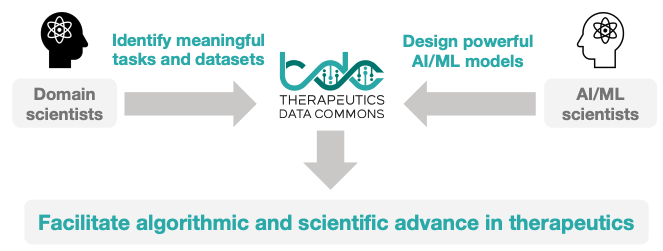
Excited to share preprint on Therapeutics Data Commons!
Paper: https://t.co/9rOJ8AHko6
Website: https://t.co/1AjZDO69BD
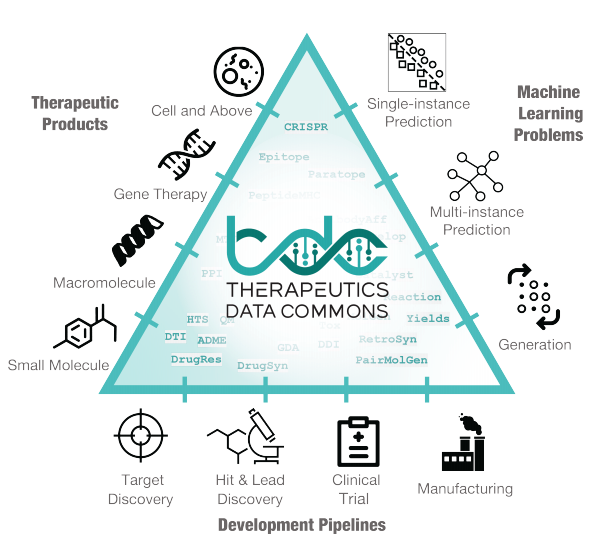
TDC is a unifying framework across the entire range of #therapeutics#ML. Ecosystem of tools, leaderboards & community resr
66 ML-ready datasets
22 ML tasks
turns out @david_koes' py3dmol works with streamlit... could be really powerful combined with mdtraj/mdanalysis/rdkit/openmm on the backend for editing molecules and calculating energies! Planning to use it for docking post-processing and curation
The Road Behind, The Road Ahead: Reflections on OpenBench's first year and a Re-dedication of the ADME Talks blog from @jim_openbench
https://t.co/Ch2wvkR3Jy