Voyager 1 is 24 billion kilometers from Earth.
It communicates with us using a 23-watt transmitter.
Less than a refrigerator light bulb.
The signal takes 22 hours to reach us, traveling at the speed of light.
By the time it arrives, it's 20 billion times weaker than the power of a digital watch battery.
NASA's Deep Space Network picks it up using 70-meter dish antennas cooled to near absolute zero to reduce electronic noise.
The engineering required to hear a 23-watt signal from 24 billion km away is arguably more impressive than the spacecraft itself.
Launched 1977.
Still transmitting.
Still being heard.
We built something that works perfectly, 47 years later, in conditions no one has ever tested in.
That's what engineering for the long term looks like.
📢💣 Mirad qué impresionante. El Proyecto Eresma Arqueológico junto con @ArqueoURJC acaban de descubrir una monumental villa romana de más de 2000 m2 bajo un campo de cereal en Bernardos (Segovia). Bautizada como Santa Inés II ha sido datada en los ss. I al IV d.C. 🧵👇
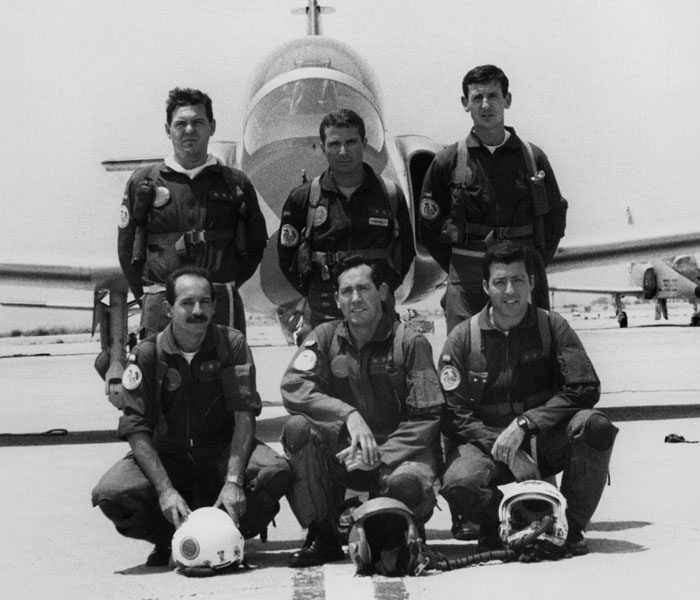
Hoy la @patrullaguila cumpliría 41 años.
#TalDíaComoHoy hace 41 años (4/6/1985) despegaban de la base aérea de San Javier cinco CASA C-101 para realizar su primer vuelo conjunto. Nacía la Patrulla Águila.
Se les echa de menos 😌
#PatrullaÁguila
Merrill (2002) lo llamó "First Principles of Instruction".
Veinte años después, sigue siendo más excepción que norma.
El próximo lunes, otro artículo y otra idea para reflexionar en todas las aulas.
🔁 Si te ha servido, comparte. 📌 Sígueme para no perderte el siguiente: @EfectoMcGuffin
El progreso técnico, valioso en sí mismo, requiere un discernimiento sobre la visión antropológica que lo guía y los fines que persigue. Si el desarrollo tecnológico avanza sin una adecuada maduración ética y social, puede suceder que aumenten los medios sin que crezca en la misma medida la humanidad: se “tiene más”, pero no se “es más”, y la persona corre el riesgo de ser valorada principalmente en base al rendimiento que ofrece. #MagnificaHumanitas
https://t.co/Ple93kfbB8
Los antiguos romanos no tenían internet, así que se escribían CARTAS, que dan a los estudiosos mucha información histórica cotidiana (y no tan cotidiana).
ROMAN LETTERS es un asombroso recurso que recoge 7.049 cartas, organizadas, de entre los s I y VIII.
https://t.co/0WfngQ7tIn
🦔A researcher invented a fake eye condition called bixonimania, uploaded two obviously fraudulent papers about it to an academic server, and watched major AI systems present it as real medicine within weeks.
The fake papers thanked Starfleet Academy, cited funding from the Professor Sideshow Bob Foundation and the University of Fellowship of the Ring, and stated mid-paper that the entire thing was made up. Google's Gemini told users it was caused by blue light. Perplexity cited its prevalence at one in 90,000 people.
ChatGPT advised users whether their symptoms matched. The fake research was then cited in a peer-reviewed journal that only retracted it after Nature contacted the publisher.
My Take
The researcher made the papers as obviously fake as possible on purpose. The AI systems didn't catch it. Neither did the human researchers who cited it in real journals, which means people are feeding AI-generated references into their work without reading what they're actually citing.
I've covered the FDA using AI for drug review, the NYC hospital CEO ready to replace radiologists, and ChatGPT Health launching this year. All of that is happening in the same environment where a condition funded by a Simpsons character and endorsed by the crew of the Enterprise was being presented as emerging medical consensus. The people making these deployment decisions seem to believe the pipeline from research to AI to patient is more supervised than it actually is. This experiment suggests it isn't supervised much at all.
Hedgie🤗
https://t.co/8Kg8FOrgHW
Because this is reality and not a hoax, you don’t just land on the Moon on the very first flight with new equipment. So, just like the last time we went and eventually landed, NASA build up to it.
Artemis I = uncrewed test
(Just like Apollo 4 and Apollo 6)
Test the rocket.
Test reentry.
Prove the system works.
Artemis II = crewed lunar flight
(Just like Apollo 8)
First crewed mission beyond low Earth orbit.
Navigate to the Moon.
Enter lunar orbit.
Operate in deep space.
Return safely at lunar reentry speeds.
This isn’t new. It’s how you don’t kill astronauts.
Israeli settlers escalate their incursions into Taybeh, the West Bank’s last fully Christian town, raising concerns over further land appropriation. The parish priest, Father Bashar Fawadleh, appeals for international intervention, as residents face mounting restrictions and call for peace, justice, and protection.
https://t.co/cw4y0mfWUf
If we don't educate children in history, culture, languages, religion, traditions, ethics and critical thinking preferring instead to limit them to STEM subjects, then we are raising a generation of easy to manipulate morons. This is becoming ever more obvious today.
Me llamo Jesús Martínez del Vas y soy ilustrador tradicional. ¿Me ayudas a difundir mi trabajo con un retuit? Cada vez que compartas, curas a un gatito, haces feliz a un unicornio, y ademas apoyas arte humano frente a la IA. ¡Mil gracias!
@grok@Copilot @ChatGPT Make it in the style of the Spanish NoDo (Noticiario documental) , the news reel that was played in Spanish cinemas during Franco's regime. (2/2)
@grok@Copilot @ChatGPT PS The prompt I used: Imagine the Northrop b-49 flying wing had actually become operational and create a 1967 photo of two of them landing in Torrejon de Ardoz in the typical SAC colours. (1/2)