Un Personal Trainer con esto va a poder cobrar el TRIPLE
Este es un sistema 100% open source que funciona con cualquier cámara normal y hace tracking en 3D de cuerpo, manos y cara.
Se llama FreeMoCap y ya tiene 4.6k estrellas en GitHub.
✅ 500+ landmarks por frame
✅ Exporta directo a Blender, Unity y Unreal
✅ Corre en tu laptop normal (sin hardware caro)
✅ Totalmente gratis y open source
REPOOO👇
NotebookLM puede hacer mucho más de lo que imaginas.
Con los prompts adecuados, puede hacer horas de trabajo en segundos.
Aquí tienes 10 prompts para sacarle el máximo partido 👇
Are you interested in Vision-Language-Action (VLA) models?
We had an excellent guest lecture today by Ankit Goyal @imankitgoyal from NVIDIA on VLAs and their role in robot manipulation
🎥 Watch the recording here 👇
https://t.co/fhl15iKGr8
Slides:
https://t.co/9lxXTXtX9r
We're about to create the 1st gen of scientists who can't research without AI. And honestly? I'm not sure if that's evolution or devolution!
𝗦𝗰𝗶𝗲𝗻𝘁𝗶𝘀𝘁𝘀 𝗮𝗿𝗲 𝗻𝗼𝘄 𝘂𝘀𝗶𝗻𝗴 𝗖𝗵𝗮𝘁𝗚𝗣𝗧 𝘁𝗼:
— Extract key findings from dense papers in seconds
— Design entire experiments from scratch
— Turn complex studies into engaging content for public
— Generate survey questionnaires that would take days to create
— Respond to peer reviewers (yes, really)
& this book does a great job going through these details!
But missed the elephant in the room:
⤴️ research inequality.
Universities with AI access will accelerate faster than those without. Researchers fluent in prompt engineering will outpace those who aren't.
We're creating new divides in an already unequal system!
It doesn't address how AI might bias research directions:
⤴️ We're training AI on biased research. Now it's teaching us. See the problem?
Overall, this isn't another "AI will save us all" book.
Authors actually tested ChatGPT on real research tasks & documented both the wins and the spectacular failures.
𝐌𝐲 𝐭𝐚𝐤𝐞𝐚𝐰𝐚𝐲: We need AI-literate researchers, not AI-dependent ones!
💬 𝗪𝗵𝗶𝗰𝗵 𝗮𝗿𝗲 𝘄𝗲 𝗰𝗿𝗲𝗮𝘁𝗶𝗻𝗴?
Comment if you'd like a link to download this book!
-------------------------
Useful find? Pass it on!
🔄 Retweet
👋 I’m @RaziaAliani
Click my name + follow + 🔔
I post about AI in #research & #analysis
Want FREE tips on using AI in research?
↳ Join 15K+ researchers:
🔗 link in bio
-----------------------
#aiinresearch
Google DeepMind is absolutely on fire 🔥 they have just launched Gemini Robotics-ER 1.5 their first broadly available robotics AI model designed to act as the "high-level reasoning brain" for robots.
This is Google's first Gemini Robotics model made available to all developers.
- Available in preview through Google AI Studio and Gemini API.
- First thinking model for robots interacting with the physical world. Handles complex commands and orchestrates sophisticated robotic behaviors.
- Key capabilities: Advanced spatial reasoning, multi-step task planning, Google Search integration, precise 2D pointing, object reasoning, and video analysis.
- Flexible thinking budget lets developers tune speed vs accuracy. Can think longer for complex tasks or respond quickly for reactive operations.
- Enhanced safety filters refuse dangerous tasks and recognize physical limits.
Excited that we are launching Gemini Robotics 1.5, a pair of models that can work together to solve long horizon tasks.
Gemini Robotics-ER 1.5, the high-level reasoning brain, is available for public preview in AIStudio and Gemini API for robotics developers around the world:
https://t.co/GfjvfBIsSX
📊🔧 ¿Necesitas análisis estadísticos simples y confiables?
✨ Descubre G*Power: la herramienta gratuita para calcular 👉 tamaño del efecto, potencia y tamaño de muestra.
🎓🔍 ¡Imprescindible en tus investigaciones!
#Investigación#Estadística#Ciencia
https://t.co/GczkFLThP7
Very dextrous fingers from WIRobotics.
With ALLEX the South Korean company is focused on manipulation for high-precision industrial and manufacturing applications.
No legs, just an upper body!
The ORCA v1 hand is a 17-DoF, tendon-driven, humanoid hand with integrated tactile sensors and poppable joints.
One fully assembled hand is priced at $5,937.00. The design is open-sourced for non-commercial use.
Excited to release Gemini Robotics On-Device and bunch of goodies today
🍬 on-device VLA that you can run on a GPU
🍬 open-source MuJoCo sim (& benchmark) for bimanual dexterity
🍬 broadening access to these models to academics and developers
https://t.co/4X8qJwD4QN
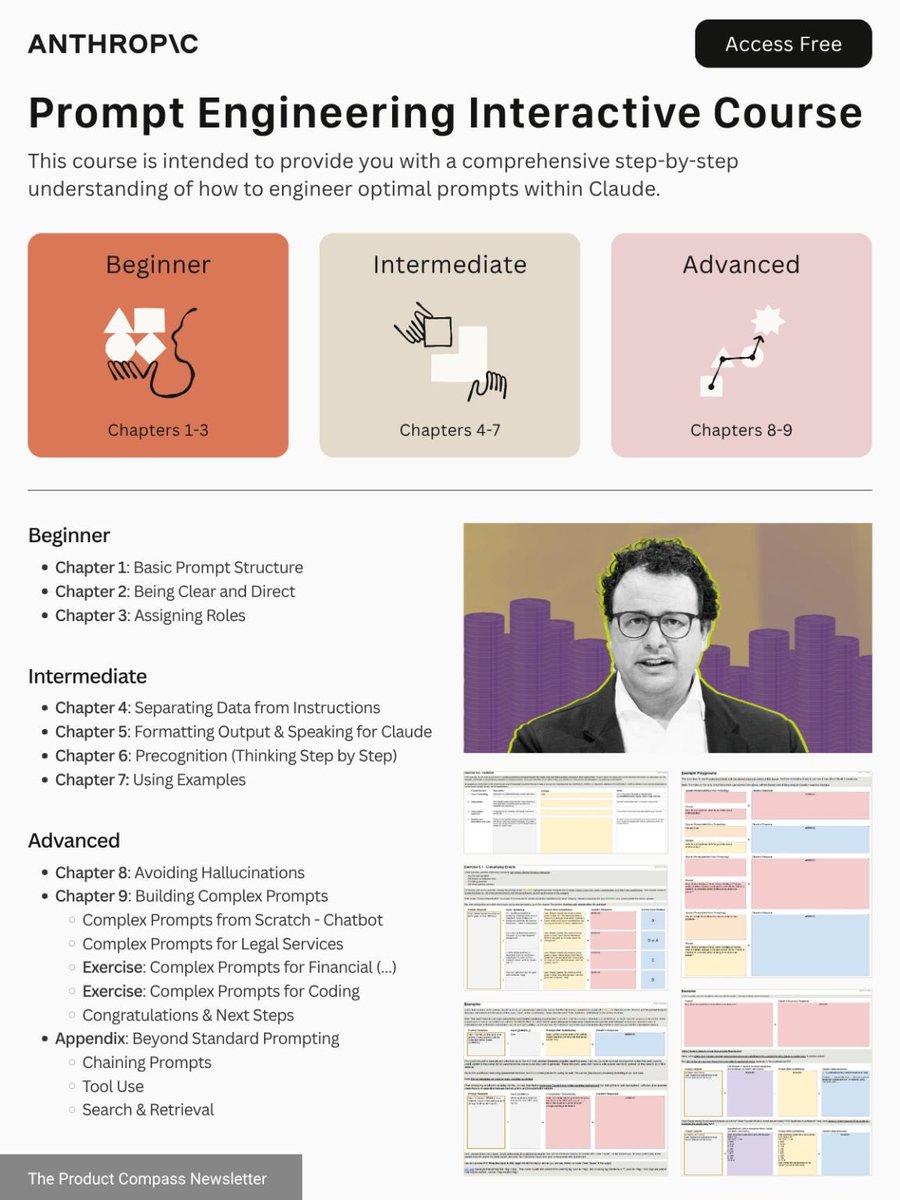
Anthropic released a free interactive course on prompt engineering, an essential skill for everyone.
> how to structure a good prompt
> avoiding common pitfalls
> making a killer prompt library
> 80/20 rules and addressing them
It has 9 step-by-step chapters with exercises.
I'm recruiting multiple Ph.D. students across all departments (ME, EE, CS). Growing research projects focus on dexterous manipulation in novel settings, combining control and learning with visuotactile sensing and non-smooth dynamics.
Deadline December 16
https://t.co/TvYqWvWr1A
PhD Students - These are the 10 things you should note before you start writing your thesis.
𝟏. 𝐔𝐬𝐞 𝐋𝐚𝐭𝐞𝐱, 𝐧𝐨𝐭 𝐌𝐒 𝐖𝐨𝐫𝐝: Writing a 100+ page document in MS word can become a headache. Arranging headings, tables of content, references, etc can become a challenge. So, instead of MS word, use Latex. It will take care of all such things. Also, Latex has many add-ons available that can help with difficult stuff like making tables in Latex.
𝟐. 𝐈𝐝𝐞𝐧𝐭𝐢𝐟𝐲 𝐞𝐱𝐞𝐦𝐩𝐥𝐚𝐫 𝐭𝐡𝐞𝐬𝐞𝐬: Before starting your thesis, identify 10-15 exemplar theses that is within your research area or the PhD is carried out in a similar fashion as yours. Skim through them especially the first chapter to understand how to structure your thesis.
𝟑. 𝐁𝐮𝐢𝐥𝐝 𝐚 𝐬𝐭𝐨𝐫𝐲: During your PhD, you work on different papers that might not be totally linked in a straightforward way. Put these different pieces in front of yourself and think about how to make them link with each other and make a smooth story.
𝟒. 𝐈𝐧𝐭𝐫𝐨𝐝𝐮𝐜𝐭𝐢𝐨𝐧 𝐢𝐬 𝐭𝐡𝐞 𝐦𝐚𝐤𝐞 𝐨𝐫 𝐛𝐫𝐞𝐚𝐤: This chapter summarizes your whole thesis and leaves an impression on the reader/examiner. Invest the most amount of time in writing this chapter. Amongst others, clearly mention upfront the research papers you have published during your PhD.
𝟓. 𝐂𝐫𝐢𝐬𝐩 𝐩𝐫𝐨𝐛𝐥𝐞𝐦 𝐬𝐭𝐚𝐭𝐞𝐦𝐞𝐧𝐭 𝐚𝐧𝐝 𝐜𝐨𝐧𝐭𝐫𝐢𝐛𝐮𝐭𝐢𝐨𝐧𝐬: Mention within 3-4 lines the concrete problem you have solved during your PhD. Also, examiners look for 3-4 solid contributions made by the PhD student. Don't make them search for them. Present these contributions upfront in the Introduction chapter.
𝟔. 𝐓𝐡𝐞𝐬𝐢𝐬 𝐨𝐫𝐠𝐚𝐧𝐢𝐳𝐚𝐭𝐢𝐨𝐧 𝐯𝐢𝐚 𝐚 𝐟𝐢𝐠𝐮𝐫𝐞: PhD thesis is a very long document. Navigating through it can be a challenge. Include a figure in the Introduction section that shows the organization of the thesis including the various chapters. A reviewer can just print this figure and keep it in front of himself/herself to navigate through the whole thesis.
𝟕. 𝐆𝐢𝐯𝐞 𝐢𝐭 𝐭𝐢𝐦𝐞: Don't leave thesis writing until the very end. Depending upon the situation, at least leave 4 months for thesis writing.
𝟖. 𝐒𝐞𝐞𝐤 𝐟𝐞𝐞𝐝𝐛𝐚𝐜𝐤: Manage your writing in a way that each part gets reviewed. If you are running short of time, you can send each chapter separately as it completes to your supervisors for feedback.
𝟗. 𝐓𝐡𝐨𝐫𝐨𝐮𝐠𝐡𝐥𝐲 𝐩𝐫𝐨𝐨𝐟𝐫𝐞𝐚𝐝: One of the most common comments from thesis reviewers is to fix the typos. Proofread your entire thesis a couple of times before submission to avoid getting this comment.
𝟏𝟎. 𝐋𝐢𝐧𝐤 𝐜𝐡𝐚𝐩𝐭𝐞𝐫𝐬 𝐭𝐨 𝐞𝐚𝐜𝐡 𝐨𝐭𝐡𝐞𝐫: Make sure that the chapters are linked together. For example, it shouldn't appear that when the reviewer starts reading chapter 4, it is completely different from chapter 3. At the start of chapter 4 or end of chapter 3, mention how they are linked.
Subscribe to my newsletter.
Newsletter link: https://t.co/5t7Z1AIuh9
#phd #research