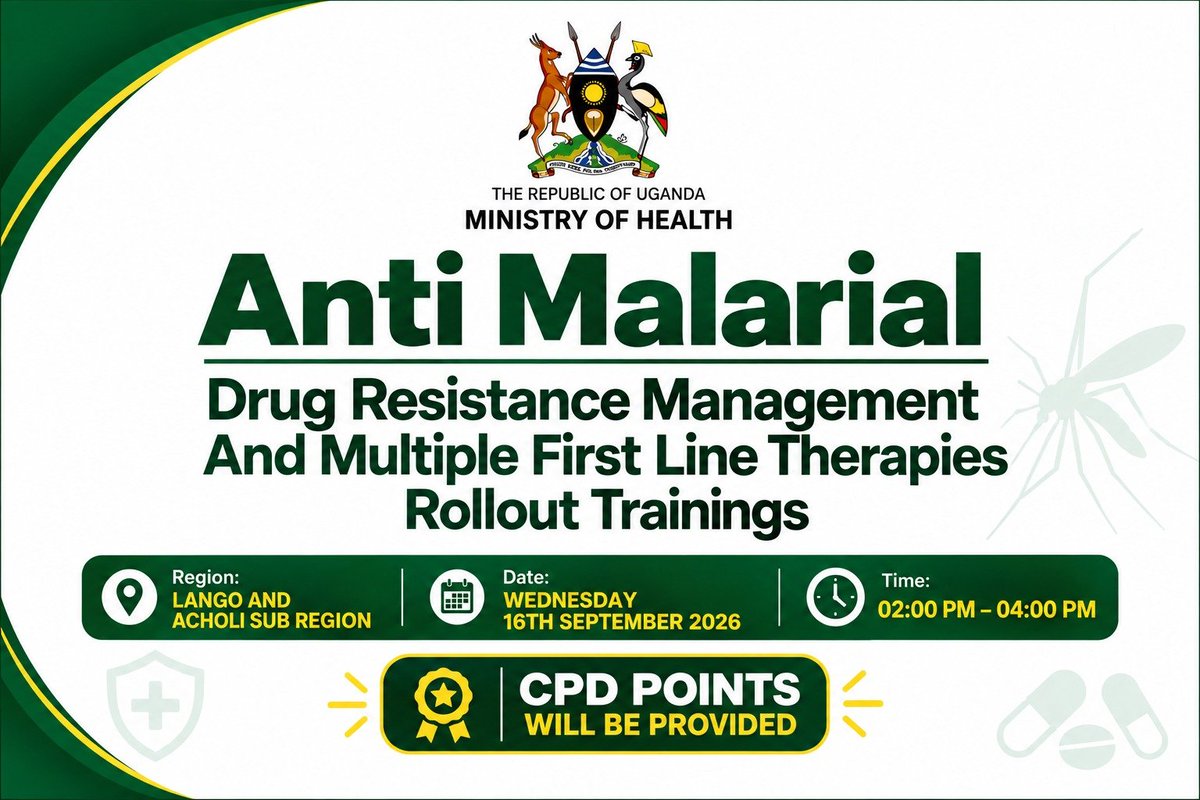
🦟🇺🇬 Anti-Malarial Drug Resistance Management
The @MinofHealthUG is rolling out Multiple First-Line Therapies training across the Lango & Acholi sub-regions.
Zoom link: https://t.co/etMzFTgshr
📅 Wed, 16 Sept 2026
⏰ 2:00–4:00 PM
💻 Join via Zoom: Join Meeting
Stronger systems. Healthier communities. Zero Malaria. ���🦟
Almighty. Protect our children. Grant them a heart of faith, keep them healthy & heal all those who are ill. Bless them with good, righteous friends & those who will remind them of You. Grant them a strong sense of right & wrong & keep them safe. Aameen
@JudiciaryUG CAN FINE HIM. BUT WE SHOULDN’T ALLOW THEM TO SILENCE @SpireJim.
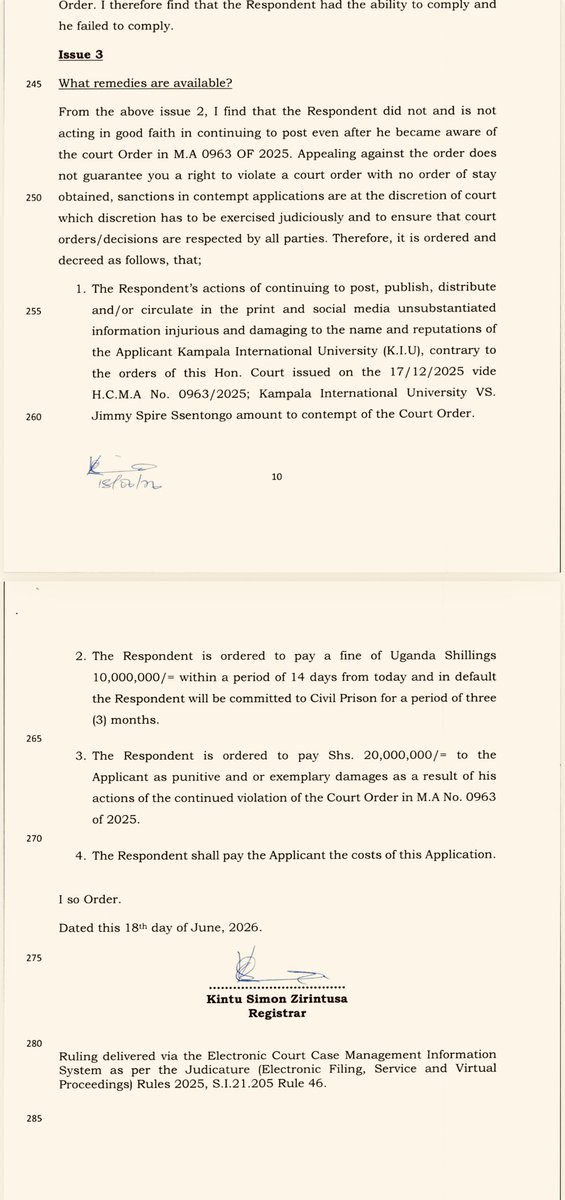
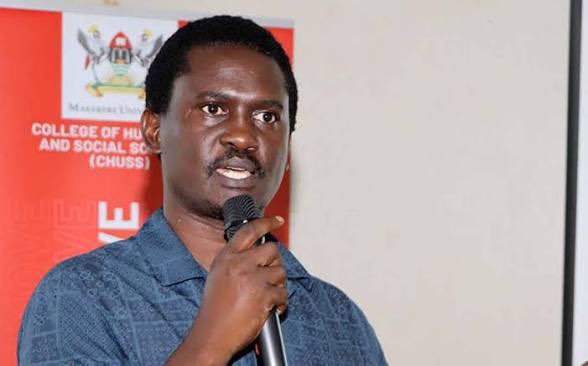
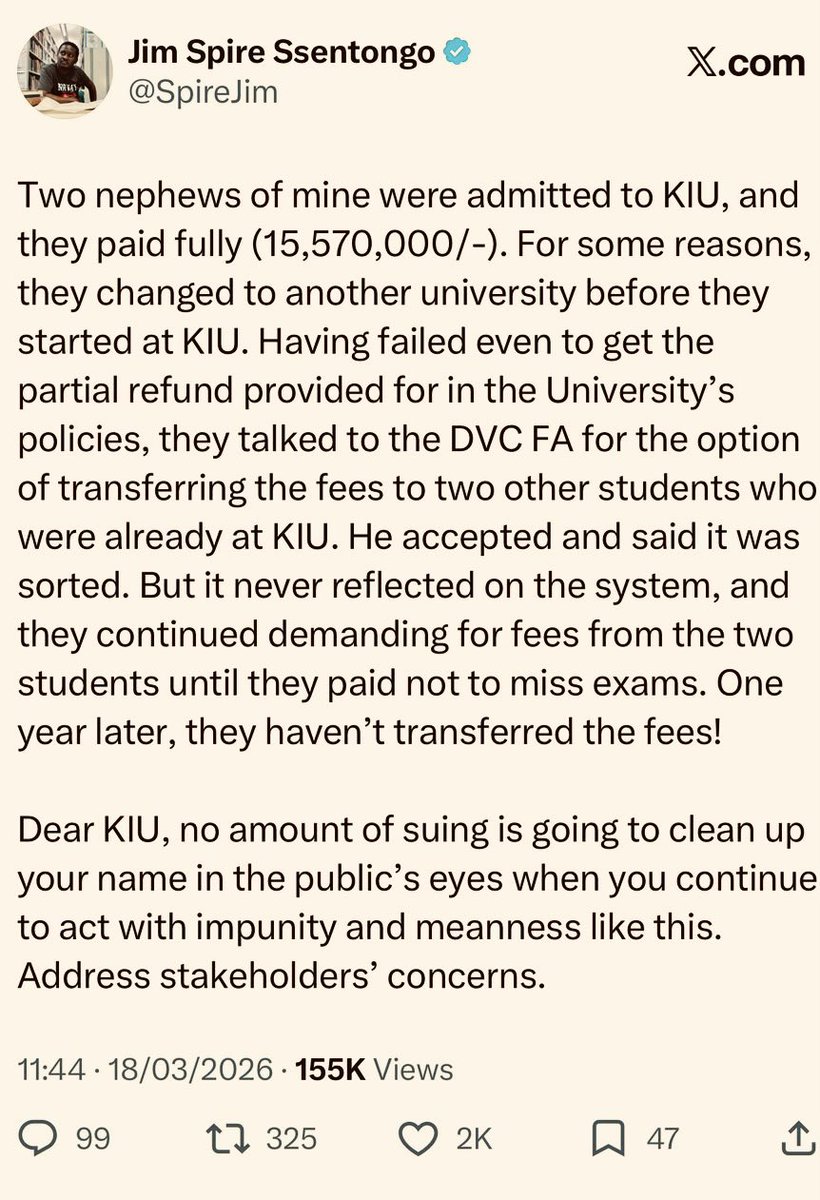
High Court presided over by His Worship Kintu Simon Zirintusa, a Registrar of the High Court of Uganda (Civil Division) at Kampala has adjudged Dr. Jimmy Spire Ssentongo afoul of “contempt of court” — for a tweet.
One of Uganda’s most respected lecturers, cartoonists and public voices has been ordered to pay 30 million shillings, or be committed to civil prison for three months, because he spoke publicly about money Kampala International University refused to refund or transfer — money belonging to the sons of his late brother.
This is oppressive Court order is a gag order dressed in legal robes. It is an attack on freedom of expression, and on every Ugandan’s right to ask a powerful institution to account for how it treats the people in its care.
The one man demanding accountability is the one facing a prison cell. When a university can walk into a courtroom and walk out with the power to silence, intimidate and threaten to jail a prominent lecturer and national figure — what fate waits for an ordinary student who dares to disagree with it? What happens to the current and former students KIU has oppressed, who have no platform, no name, and no one watching?
WE SHOULD RAISE THE MONEY. He must not be silenced. Our voices matter. I need your help here. In the words of Miria Matembe, we must all be annoyed. Give me ideas on raising the money and challenging the KIU impunity.
Sending my condolences to the family, friends and constituents of Gen. Moses Ali upon his death. May Allah comfort you all and grant him jannatul firdaus. Inna Lillahi wa inna ilayhi raji'un!
“Uganda’s partners should urgently press Museveni’s government to end these abuses, uphold the rule of law, and ensure accountability for those responsible.”
https://t.co/OeCO4MidpQ
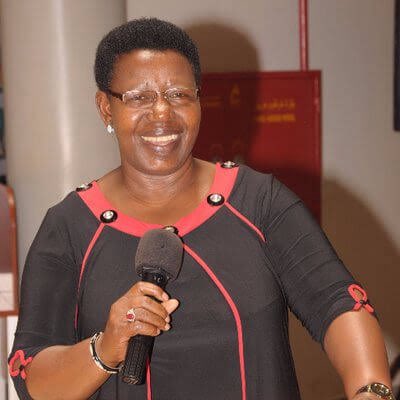
By popular request, we are having a space tonight at 8pm EAT about “DNA”
Join me and my awesome guests and let’s answer all your questions concerning DNA.
Set a reminder and share, come let’s have a medical treat and also learn!!
#TreatsWithDrEve
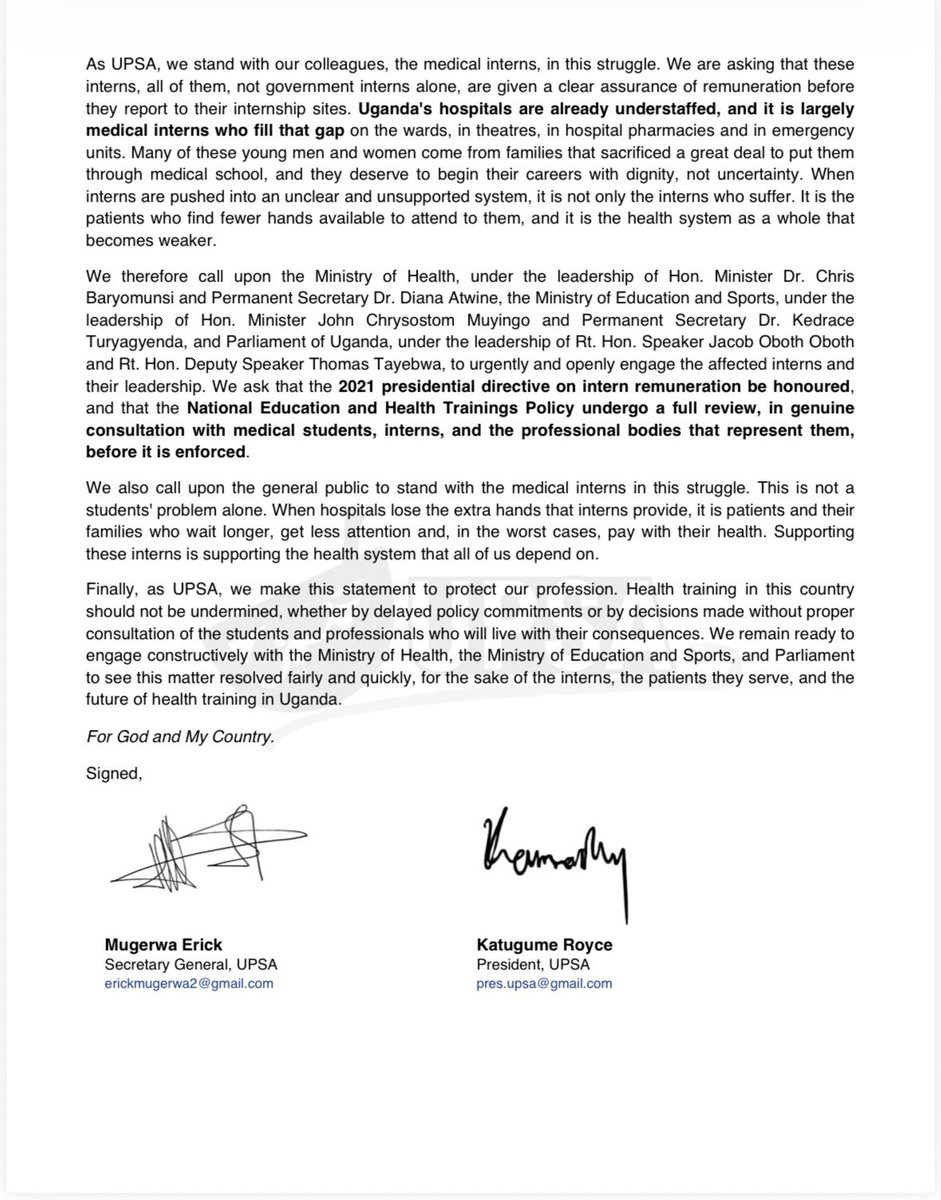
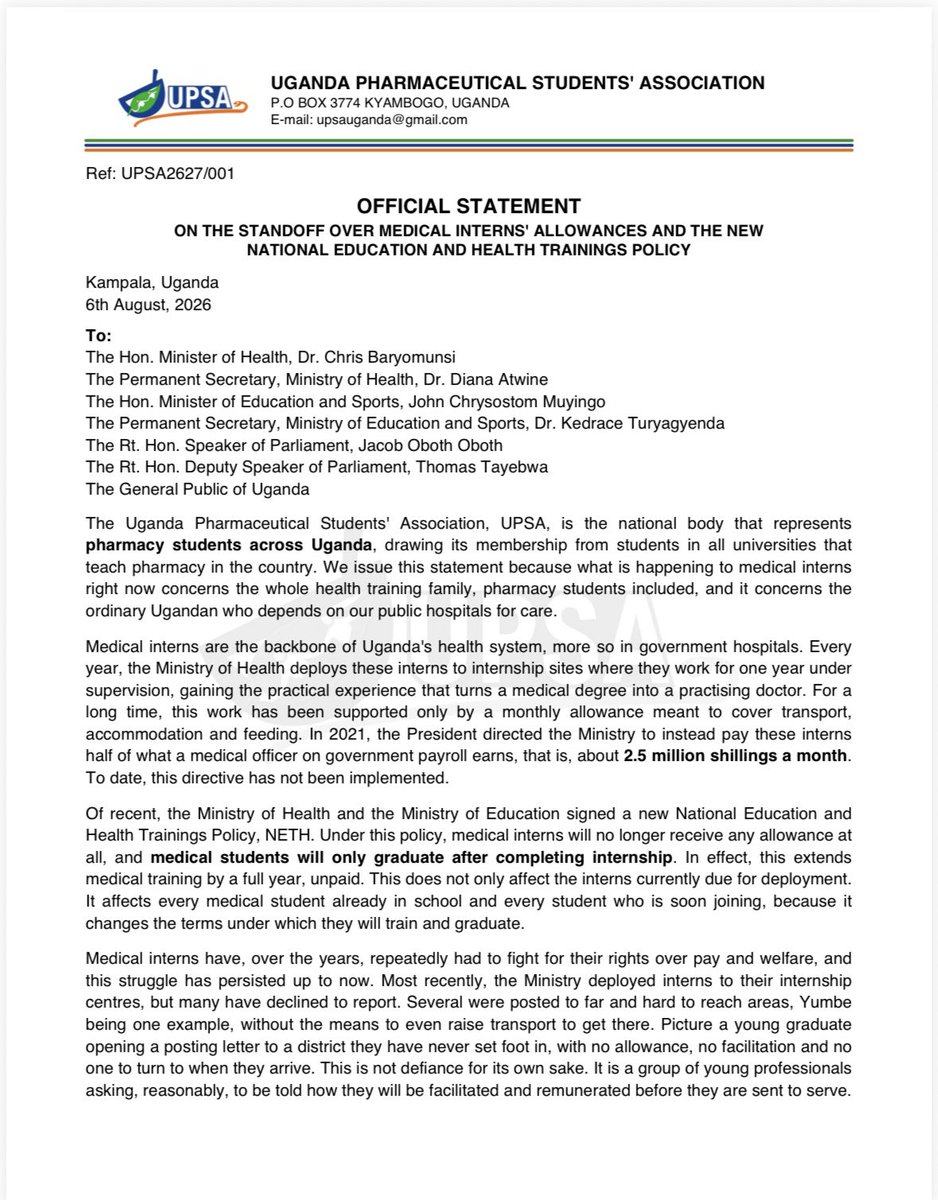
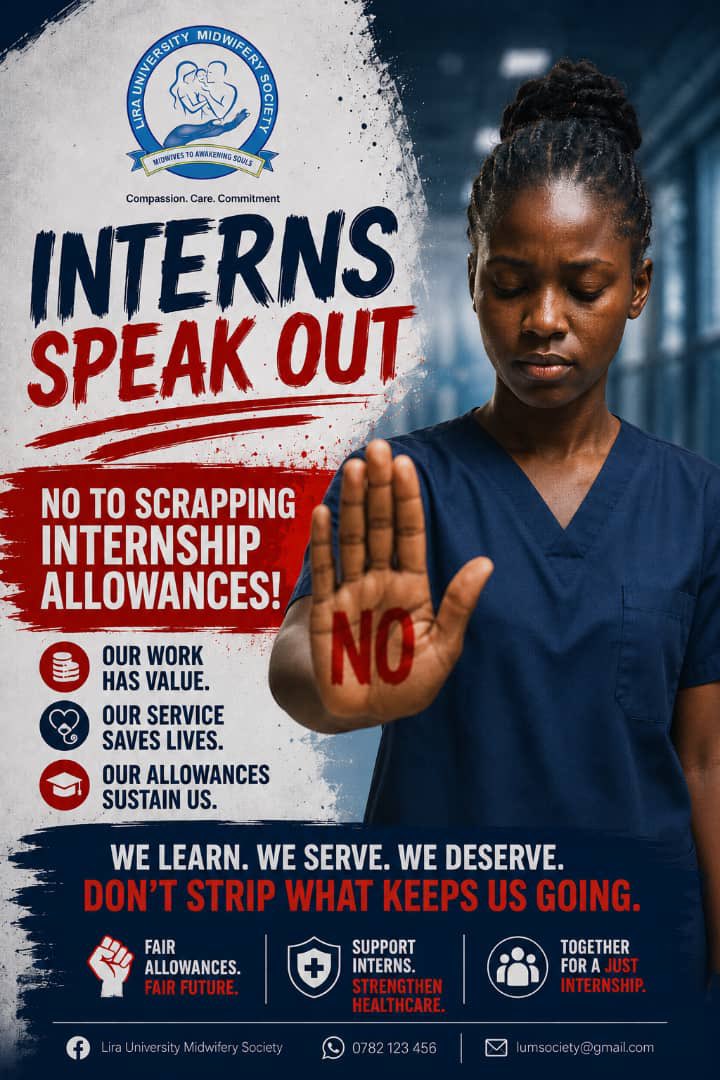
Imagine ministers earning 30million with other added allowances. But they can't pay 1million to 2000 medical interns each, where is humanity @MinofHealthUG
Uganda’s Unpaid Medical Interns: A Crisis at the Heart of Public Healthcare
Uganda’s public health system is facing a deepening moral, legal, and policy crisis following the government’s refusal to pay medical interns. At the center of this dispute are young doctors who, after years of intense and costly training, are expected to shoulder the backbone of hospital care, without pay. The decision has far-reaching consequences for healthcare delivery, medical education, and the future of the profession in Uganda
Medical interns in Uganda are not observers or trainees in a casual sense. They are frontline healthcare providers. In many public hospitals, interns cover critical staffing gaps, run wards, attend to emergencies, clerk patients, prescribe under supervision, and provide round-the-clock care.
In practice, interns do most of the regular medical work that keeps hospitals functional, especially in regional referral hospitals where shortages of senior doctors are chronic. Demotivating interns through non-payment directly undermines patient care, increases preventable deaths, and overburdens the few fully employed doctors who remain. Refusing to pay interns while continuing to rely on their labor amounts to institutionalized exploitation.
Before internship, a Ugandan medical doctor spends at least five years at university, followed by internship as a mandatory requirement for full registration. Medical education is among the most demanding and expensive courses in the country. By the time students reach internship, many come from families already financially exhausted. Internship pay is therefore not a luxury, it is basic subsistence, covering rent, food, transport, among others.
Denying interns pay after such prolonged investment effectively turns medical training into a pathway of debt, distress, and despair. The situation poses a sharp dilemma, especially for government-sponsored medical students.
On one hand, the state argues fiscal constraints and frames internship as “training.” On the other hand, it compels graduates to serve, posts them to hospitals, assigns shifts, and disciplines them as workers. This contradiction raises fundamental questions. If internship is compulsory national service, why is it unpaid? Why should interns offer an unpaid service in government hospitals? What’s government’s commitment to universal healthcare?
Uganda’s approach stands in stark contrast to practices across much of Africa. In Kenya, Medical interns are salaried government employees, with formal contracts and monthly pay. In South Africa, Interns receive structured remuneration and are fully integrated into the public service payroll. In Rwanda, Internship is funded as part of national health workforce planning, with clear state responsibility. In Ghana, House officers (interns) are paid and recognized as essential health workers.
In these countries, governments acknowledge a basic truth: you cannot sustain a health system on unpaid labor.
Uganda’s refusal to pay interns risks isolating the country, accelerating brain drain, and making medicine unattractive to talented students, especially those from poor backgrounds.
The unpaid internship policy has consequences beyond medical interns themselves. Patients suffer from demoralized staff and service disruptions
Rural and public hospitals face collapse as interns withdraw labor. Medical students reconsider their career choices or plan to leave the country. Public trust in health governance erodes.
Uganda cannot claim commitment to universal healthcare while refusing to pay the very doctors who keep hospitals running. Internship is not charity work; it is essential labor performed after years of specialized training. Government decision undermines its health system, exploits young professionals, and jeopardizes the future of medical education in Uganda.
Paying medical interns is not merely a budgetary decision; it is a test of justice, foresight, and national priorities.
We the Bazzukulu we are ready to cooperate with you. We are kindly waiting and expecting much from you our grandfather in regards to the medical interns.
Fellow Ugandans, especially the Bazzukulu. Tomorrow, at 2:00 p.m., I will address the nation on the state of our country and the progress we continue to make.
Please join me live on TV, radio, and social media platforms.