“The key to deterring Moscow lies not at the top of the escalation ladder, where nuclear weapons are in play, but on its lower rungs, where conventional weapons are what matters,” argues Celeste Wallander.
https://t.co/0YFoGkWPBZ
Under Trump, “America goes from being the country that set the rules for the entire world order to being a regional power that must content itself with bullying Venezuela and Cuba.”
https://t.co/eLykK3Zj8V
As the US-Iran war dies down, it’s worth checking how U.S. intelligence bodies (CIA and NIC) had predicted the outcome of the war. Below is what they said right before the war began on Feb. 28:
* Intervention was not likely to lead to regime change in the Islamic Republic.
* Even if Iran's Supreme Leader Ali Khamenei was killed in the operation, he could be replaced by hardline figures from the Revolutionary Guard.
* Neither limited airstrikes nor a larger, prolonged military campaign would be likely to result in a new government taking over in Iran.
* Iran’s clerical and military establishment would respond to the killing of Khamenei by following protocols designed to preserve continuity of power.
* The prospect of Iran’s fragmented opposition taking control of the country was “unlikely.”
(sources: WP, AP, Reuters)
“As long as the United States maintains a formidable presence in Europe, Moscow will not attempt against a NATO country what it tried against Ukraine in 2022,” writes Celeste Wallander. “But if Washington retrenches from the continent, Moscow’s calculations will shift.”
https://t.co/kmdcxKaLcN
When I published my 2020 article on “wartime paradigms” in @IAJournal_CH, I was looking at what seemed to me a central paradox of contemporary warfare: war is getting faster and slower at the same time.
For decades, Western militaries assumed that operational superiority came from speed: faster sensing, faster decision-making, faster targeting, faster force projection. But adversaries understood this. And much of what we are seeing in Ukraine, and in the confrontations involving Iran, is a deliberate effort to slow Western warfare down.
At the tactical level, war is accelerating. Drones, sensors, precision fires, electronic warfare and targeting cycles compress the time available to commanders. Units are detected faster, targeted faster and forced to adapt faster.
But at the operational and strategic levels, tempo is decelerating. Campaigns become harder to initiate, harder to sustain, and harder to translate into political outcomes. Logistics are exposed and industrial capacity becomes decisive, while concerns about escalation management slows decision-making.
Ukraine illustrates this perfectly: tactical adaptation is extraordinarily fast, but the war’s strategic rhythm is defined by attrition, mobilization, ammunition production, fortifications, alliance politics and endurance. The Iran case points in the same direction. US/Israeli targeting may be flawless, but Iran understood that it had strategic leverage through a denial strategy of blocking Ormuz.
So the issue is not simply that Western militaries need to “go faster.” Instead, one of the key challenges of military theory and practice will be to reconcile these disjointed temporalities: tactical acceleration, operational pacing and strategic endurance.
https://t.co/9ggmEbTahg
So Trump casually threatens to blow up Oman - an ally, a helpful friend in the region, a responsible Gulf power. He releases an AI meme showing Iran with the stars & stripes. And there are people on this site who still think he's a deal-making genius. Galactic idiocy.
Ik zie weer veel comments over de zogenaamde belofte die aan Gorbatsjov gedaan zou zijn.
Er was geen belofte.
Niet volgens Gorbatsjov en niet volgens Baker. Het is Russische geschiedvervalsing.
https://t.co/BbluigY0pb
Trump’s billionaire allies will now own CNN, Fox News, CBS, WaPo, WSJ and NY Post — plus 185+ local tv stations and news in 100 markets.
They also control X, Facebook, Instagram, Threads, WhatsApp, TikTok, Truth and Twitch.
They control the AI you're integrating into your lives, the algorithms feeding you content, and your personal data you've given up for access.
This is all by design to manipulate and surveil us, and we’re not talking enough about it.
Pay attention.
Well the USA and Israel have started bombing Iran and Trump has announced an explicit political goal, full regime change for the Iranian people. Air power is certainly about to have a moment. I put together this free primer on what we know and what we should be asking.
The regime in Teheran 🇮🇷 is abhorrent. The attack is still a clear violation of international law. You don’t become a saint because of the sin of others.
The first hours of the current strikes against #Iran already show important differences from the 12-Day War; in timing, objectives, coordination, and the scale of escalation.
What we know so far:
🔹The attacks began with explosions reported across Tehran. Early reports indicated ~30 targets in the first wave, including leadership residences, intelligence facilities, and reportedly even the Supreme Leader’s office.
🔹Unlike the 12-Day War, which began with nighttime strikes, this operation started early in the morning, on the first day of Iran’s calendar week. The timing suggests an attempt to maximize operational disruption and leadership exposure from the outset.
🔹Target selection points to a decapitation strategy. Initial strikes appear aimed at leadership nodes and Iran’s security apparatus rather than purely military infrastructure.
🔹U.S. involvement marks a major shift. This time, Washington appears directly engaged from the beginning, with American officials reportedly describing the campaign as extensive and closely coordinated with Israel.
🔹Donald Trump framed the operation as defending Americans and removing immediate threats, but his remarks supporting the Iranian people against the regime strongly suggest regime change is an underlying objective.
🔹The operational concept appears phased: early missile strikes targeting leadership and air defenses, including sites in southern Iran such as Chabahar, likely intended to clear the way for later air force operations against missile bases and strategic assets.
🔹Iran’s response has been unusually rapid. Missile launches reportedly began within a couple of hours, with reported strikes in Tel Aviv and Haifa. The Iranian statements signaled that no “red lines” remain and that full-force retaliation is underway.
🔹This suggests predelegated response authority: rather than waiting for centralized coordination, Iranian forces appear instructed to maintain continuous firepower against Israel from the outset.
🔹Another key difference: Iran has already expanded the confrontation beyond Israel. Reports of explosions in GCC states indicate strikes targeting U.S. bases, signaling direct confrontation with Washington from the start.
🔹This contrasts sharply with June 2025, when Iran’s strike on Al Udeid in Qatar was largely symbolic and designed to facilitate de-escalation before a ceasefire.
🔹Meanwhile, Yemen’s Houthis have announced renewed attacks in the Red Sea, meaning the conflict has already begun evolving into a multi-front regional confrontation.
🔹Overall, the early pattern suggests a far more coordinated, expansive, and escalatory conflict than the 12-Day War, with regime decapitation, direct U.S. participation, rapid Iranian retaliation, and immediate regional spillover.
🔹The key question now: whether escalation stabilizes into controlled exchanges or whether the removal of previous “red lines” pushes the conflict into a prolonged regional war.
A great update from @francisjfarrell on advances by the Ukrainian armed forces in the application of uncrewed ground vehicles for combat and combat support roles along the front line.
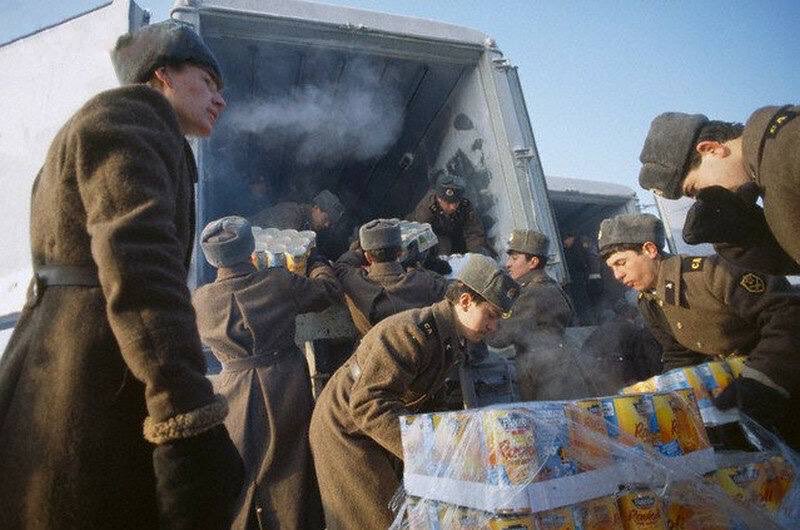
On February 9 and 10, 1992, exactly 34 years ago, NATO launched a "terrible attack" on the Soviet Union, which was unable to feed itself, and provided it with humanitarian aid. The operation was called "Provide Hope"—the delivery of American humanitarian aid by the US Air Force.
In the photo taken in Chita, Soviet soldiers experience the only contact they ever had with NATO forces—unloading crates of food.
Out of gratitude, Russia is increasingly attacking peaceful neighbors and killing the population.
https://t.co/oaQ2MpWbuK
A quick update on the tremendous success of Witkoff & Kushner, per the last 48h:
1- Russia refuses any withdrawal and any foreign presence on Ukrainian soil.
2- Iran refuses to give up its uranium enrichment program.
3- Hamas refuses disarmament.
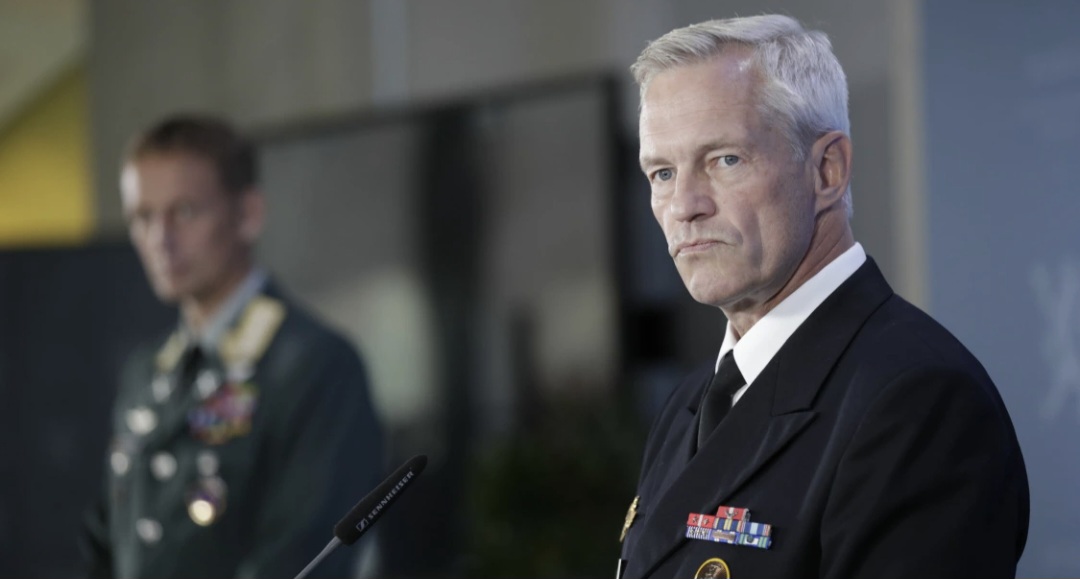
NEW: Norway published its yearly national threat assessment, and says the biggest change in the global security environment over the past year is the United States with Washington’s behavior now directly shaping how Russia and China calculate risks and opportunities.
Norwegian intelligence warns that Moscow and Beijing believe Western unity has cracked, and they plan to exploit that perception with operations below the threshold of war: espionage, sabotage, cyber activity, proxy actors, and influence campaigns. Russia is described as the biggest threat to Europe and Norway, with international security institutions built after World War II weakening and shaking the foundations of European security.
A particularly alarming detail: Russian intelligence services are attempting to recruit Ukrainian refugees in Norway, using pressure or threats to force cooperation. Authorities say sabotage against infrastructure supporting Ukraine is a realistic scenario, designed to create unrest and weaken public support for Kyiv.
The assessment also highlights persistent terrorist threats from extreme Islamists and right-wing extremists, with minors increasingly involved in extremist networks. Security services warn that digital platforms including gaming platforms are being used to radicalize and recruit young people.