This is a post about lessons from the World Cup for ethnic integration and patriotism.
When the German footballer Deniz Undav, brought in as a sub in the second half, followed his first goal in the 68thminute, with a second in stoppage time to give his national side a 2-1 win over Ivory Coast, there weren’t many German fans who didn’t see him as the hero, epitomizing the spirit of their national team. Undav, the son of a Turkish-born and Syrian-born Kurdish Yazidi parents, didn’t have the classic German look. No matter. He was delivering an exciting victory to the German side and a glimpse of what makes the beautiful game so exhilarating.
Undav was also offering a rebuke to the obsessions of both the hard right and the hard left. Not just him but the entire German squad was a living demonstration that people of very different origins and appearances can be woven into a shared enterprise that, at its best, becomes a source of collective pride rather than a threat to it; and loving your country and welcoming newcomers into it are not incompatible impulses. The right insists the first half of that sentence is dangerous; the left often flinches at the second.
This isn’t the message from just the German team. The World Cup, played this summer across the United States, Canada, and Mexico, puts ethnically-mixed squads in front of billions of fans. Every serious contender in the tournament is fielding players whose families arrived a generation or two ago. And almost every one of them is generating a joyful patriotism shared by their team and supporters alike. The combination of diversity and pride, together, is precisely what the political extremes insist is impossible.
Consider the right first. Across much of the industrialized world, mainstream politics has become consumed by anxiety over the immigration of culturally and ethnically different peoples – and the supposed discord it brings. Ideas once confined to the darker corners of the internet, from the “Great Replacement” to “remigration,” are now aired and debated in respectable forums. In a recent YouGov poll, 45% of Brits, 50% of Danes, 51% of the French, 53% of Germans, 51% of Italians, 52% of Poles, and 46% of Spaniards expressed support for a scenario in which immigration stopped and many recent migrants departed. To be clear, the harshest version of such an agenda, which involves forced expulsion (sometimes bordering a modern version of ethnic cleansing) commands little support, and survey wording may be inflating softer concerns. But even allowing for those caveats, this is a striking reversal from less than a decade ago, when many of the same publics welcomed those fleeing war in the Middle East.
The left has traveled in a different but still troubling direction. Among some activists and philosophers, the world came to be read almost entirely through the lens of oppressor-oppressed dynamics, with Western nations placed firmly in the former camp. Patriotism – which at its best allows one to identify with the customs and history of one’s country while remaining free to criticize its failings – came to be viewed with suspicion, even disdain. The shift shows up in the data: the share of US Democrats reporting “extreme pride” in being American, according to Gallup, fell from the mid-60s in the early 2000s to just 22% in 2019 (even if it recovered somewhat since then).
That last figure deserves a caveat. Much of the collapse coincided with a presidency many Democrats sharply disagreed with, so some of it may reflect disaffection with who governed rather than a principled rejection of country. But the deeper trend is real: on parts of the left, the very vocabulary of national pride has become an embarrassment. This is troubling because without a shared identity it becomes harder for national politics to coalesce around policies that will watch out for and support those who are losing out – as the working classes, especially those without four-year college degrees, have been over the last several decades throughout the industrialized world.
Sport, of course, is not a perfect mirror of society. A national squad is a small, lavishly resourced, intensely managed group united by a single unambiguous goal-– hardly the same as integrating large populations into housing, schools, and labor markets. Nor is sporting integration as frictionless as the cheering suggests. England’s Black players were deluged with racist abuse after losing the Euro 2020 final; France’s “Bleus” are perennially dragged into arguments about who counts as truly French; and the US has an ugly history of racism not just in baseball but throughout many sports. Integration in sport is celebrated by the many and contested by a loud minority – exactly the pattern we see in the wider society.
The World Cup does not prove that integration is easy. What it nonetheless shows is something the extremes deny categorically: ethnic integration (rejected as impossible or even undesirable by the hard right) and patriotic pride (often looked down upon by the progressive left) routinely coexist. Most fans, watching their multi-ethnic team carry the national flag, simply experience both at once and think nothing of it.
If the hard right and the hard left could climb down from their high horses long enough to watch a few matches, they might rediscover what the rest of us already know: that integration and pride are not enemies. As on the pitch, they can be teammates.
This is an astonishing turnaround in public opinion, one of the legacies of Bibi Netanyahu. And because it is most evident among younger Americans, it is not yet fully felt in the political system.
השאלה המרכזית כעת היא לא האם תהיה הסלמה, אלא האם ניתן יהיה לעצור אותה לאחר התגובה האיראנית. זה תלוי בעיקר בגורם אחד, קרי ביכולתו וברצונו של טראמפ לכפות על ישראל לעצור לאחר התגובה האיראנית. קשה לראות את איראן של היום מבליגה על תקיפות ישראליות בשטחה, במיוחד כאשר מבחינתה מדובר בפגיעה ישירה בריבונותה ובמעמדה האזורי.
מנקודת המבט האיראנית, האירועים הנוכחיים חורגים בהרבה מהעימות הנקודתי. הם נועדו לעצב את המשוואה העתידית בכל הנוגע לפעילות הישראלית בלבנון ובמרחב האזורי בכלל. מבחינת טהראן, אם ישראל תוכל לפעול נגד נכסים איראניים או נגד בעלי בריתה ללא תגובה, הדבר יפגע באופן מהותי בהרתעה האיראנית. לכן גם תגובה ישראלית עוצמתית לא צפויה להביא את איראן לסגת מהקו שהיא מבקשת לקבוע.
טראמפ אינו מעוניין בהסלמה אזורית רחבה, בוודאי לא כאשר מחירי הנפט מגיבים בעליות וכל עימות נוסף עלול לערער את היציבות הכלכלית והביטחונית באזור. עם זאת, יכולת ההשפעה שלו על ישראל גדולה לאין שיעור מיכולתו להשפיע על ההנהגה האיראנית הנוכחית. בעוד שלארצות הברית יש מנופי לחץ משמעותיים מול ירושלים, יכולתה לשנות את תפיסת העולם האסטרטגית של טהראן מוגבלת הרבה יותר.
לכן, אם טראמפ לא יציב גבולות ברורים ולא ידרוש עצירה לאחר התגובה האיראנית, סביר להניח שישראל תמשיך בפעולותיה. במקרה כזה, הסיכוי להידרדרות לסבב הסלמה נוסף ואף ממושך יגדל באופן משמעותי.
Excellent piece from @gonultol on how Putin's failure in Ukraine and Erdogan's success in Syria puts an end to Turkey's "junior" status in their partnership. Attempts to return the S-400s to Russia will be a real litmus test.
https://t.co/1UihCAl2Gu
@IRIMFA_SPOX I remember the night #Kiarostami came back from Cannes bringing the first Palme d'Or home, and "brothers" were waiting for him at the airport to give him a lesson for the kiss he got on his cheeks. And I remember his masterpiece, Taste of Cherry, wasn't permitted to screen in Iran for decades.
To be clear I'm very much against this war and what the US and Israel is doing there, which is destroying ordinary people's houses and lives. But I'm also strongly against what has been done in our country for decades to get us here. Can I be both?
Since you seem to be worried about his house, know that the damage was limited to broken windows. As his son, I'm asking you to stop using my father's name. Keep him out of your rhetoric. Hopefully that house will outlast those who have brought ruin to our homeland.
A few thoughts nearly a month into this war. It’s most likely not ending any time soon and we’re headed for more escalation.
1. Despite all the talk of diplomacy, we are nowhere near a deal with Iran. The gap between the two sides remains enormous – very much in line with what we saw during previous Trump negotiations with Iran in both the first and second terms, all of which ultimately failed. There’s very little evidence that anything meaningful has changed. At its core, the U.S. position still looks less like a negotiating framework and more like a surrender document for Iran: no nuclear program, no ballistic missiles, no regional proxy activity. Iran’s position is equally maximalist in the opposite direction – essentially demanding a full U.S. military withdrawal from the Gulf. That’s not a starting point for diplomacy; it’s a recipe for stalemate.
2. But the much more important story right now isn’t diplomacy – it’s the thousands of U.S. troops being mobilized and moving toward the Middle East. That movement strongly suggests preparation for further escalation, with Kharg Island emerging as the most likely target. For any objective observer, the likely Iranian response to a U.S. move on Kharg is obvious: escalation, not capitulation. Tehran would almost certainly respond by expanding attacks on energy infrastructure across the Gulf rather than “crying uncle.”
3. Which is why it’s so striking – and frankly baffling – to see oil prices trending downward. Markets appear either deeply complacent or willfully ignoring the reality of what we are facing: the very real possibility of months more of this disruption to energy markets and increasingly complex knock on effects for energy production and distribution.
4. The Gulf states, for their part, are in a rough spot. They did not want this war, but now that it is underway, they are increasingly convinced it must end in a way that weakens Iran’s ability to threaten regional energy infrastructure and maritime routes. The problem is that even as they articulate that goal, there is no clear or realistic pathway to achieving it. And when this war eventually ends unsatisfactorily and with Iran still able to threaten Gulf energy infrastructure there is likely to be significant frustration and anger in the Gulf directed at the United States. That has the potential to shape the long-term trajectory of U.S.--Gulf relations.
5. Meanwhile, support for the war remains very high inside Israel. That shouldn’t be surprising. Israeli society is still profoundly shaped by the trauma of October 7, and that trauma continues to drive both public opinion and policy choices. It’s worth remembering that in the United States, it took years after 9/11 for public opinion to shift on Iraq and the Global War on Terror. Israelis are only about two and a half years removed from October 7. We are still very much in the early phase of that cycle, where security concerns and a sense of existential threat dominate decision-making.
6. I’d also watch out for Lebanon. There is a real possibility of a large-scale Israeli ground invasion into southern Lebanon. History suggests that such operations do not produce lasting strategic success, but that has not prevented them from being attempted repeatedly. Israel’s 20-year occupation of southern Lebanon in the 80s and 90s, along with multiple subsequent wars, underscores the limits of military solutions in that arena. And yet, under current conditions, this Israeli government is driving towards another large-scale ground operation. While the war with Iran is what’s driving global economic and strategic consequences, a major ground war in Lebanon could generate far greater human suffering.
7. Another major, and often underappreciated, consequence of this conflict is the long-term impact on the U.S.–Israel relationship. The fight over the JCPOA during the Obama administration created a lasting fissure within the Democratic Party that has since expanded. This might do the same in the Republican Party. Right now, you can see the beginnings of elite-level debate and division among conservative foreign policy voices and influencers, even if that hasn’t yet translated into a shift among Republican voters. History suggests that elite debate often precedes broader public realignment. A decade from now, it is entirely plausible that Republicans could be as internally divided over Israel policy as Democrats are today. That would represent a profound shift in American politics—and in the bilateral relationship.
8. Meanwhile, in the United States public support for the war is already showing signs of erosion. Initial polling was weak, in large part because the administration did little to prepare the American public for the scale and risks of the conflict. There was a brief uptick as partisan consolidation kicked in and Republicans rallied behind the president. But as the conflict drags on and the costs become clearer, those numbers are starting to decline again. We’ve already likely hit peak support for the war and that was still less than 50%.
9. So what is the most realistic path out of this? At the moment, it is not a negotiated diplomatic breakthrough. The positions are simply too far apart, and the conflict dynamics are moving in the opposite direction. The most plausible off-ramp involves the president declaring that U.S. objectives have been achieved, announcing an end to U.S. military involvement, promising to restraint Israel and making clear we will stop if Iran ceases attacks on regional neighbors and does not resume it’s nuclear program. Iran would likely continue limited attacks for a short period, but it would also face significant international pressure to de-escalate. Over time, that pressure could help bring the conflict to a close, even if the outcome falls far short of a comprehensive or satisfying resolution. This is not an ideal outcome. It does not resolve the underlying issues, and it leaves many risks unaddressed. But in the current environment, it may be the only realistic option available. Better to accept this likely outcome today rather than six months from now.
The 2026 war is very different from the 1990 Gulf War. The 1991 campaign followed Iraq’s invasion of Kuwait, had a UN mandate, and was fought by a large international coalition with strong regional backing. The 2026 war lacks that legal clarity and coalition structure and is widely impacting all neighboring countries who lobbied against the war.
But the end state might still look familiar: Iran resembling Saddam’s Iraq after 1991—militarily weakened, economically isolated, yet still ruled by a reconstituted regime.
Let's make some things very clear:
1 - Don't let any asshole gaslight you into thinking that opposing the reprehensible repression of the protests two months ago makes you in any way responsible for what Trump & Netenyahu are doing right now.
The Islamic Republic is responsible for decades of mismanagement and oppression. They should be called out.
47 years of foreign policy adventurism and bad decisions led to this point. That's undeniable. And left Iran in a position where is currently has no choice but to engage in extremely high risk, high consequence options.
It was not inevitable we reach this point. But years of wrong decisionmaking led to this path.
You don't have to become an apologist for state repression and a bootlicker for naked tyranny. That's not a moral stance.
2 - Don't let other assholes gaslight you into thinking that opposing Trump & Netenyahu dropping thousands of the most powerful bombs on earth on civilian areas means you somehow support the Islamic Republic.
The people that do this are masters of emotional manipulation, trying to say if you are against foreign bombs indiscriminately killing Iranians that somehow means you're saving the Islamic Republic.
Fuck that. These people know they have no argument and have to come up with more and more bizarre analogies and scenarios to justify what cannot be justified (which the first group does too).
And beyond this:
Ali Khamenei was not the voice of the Iranian people.
Reza Pahlavi is not the voice of the Iranian people.
Support whoever you want to support but enough of this idol worship.
No politician is the voice of the Iranian people. And their supporters are not "real Iranians" while everyone else is "mozdoors/vatanforooshes".
I don't owe any loyalty or allegiance to any politician or system.
No matter who comes out of this disaster on top - Mojtaba Khamenei, Larijani, Rouhani, Reza Pahlavi (and yes, I still do think he has a chance), or whoever ...
They should get held to the same standards. And treated with suspicion and caution. No politician is sacred.
Your principles should apply independent of whether the person wears a tie, crown, or turban.
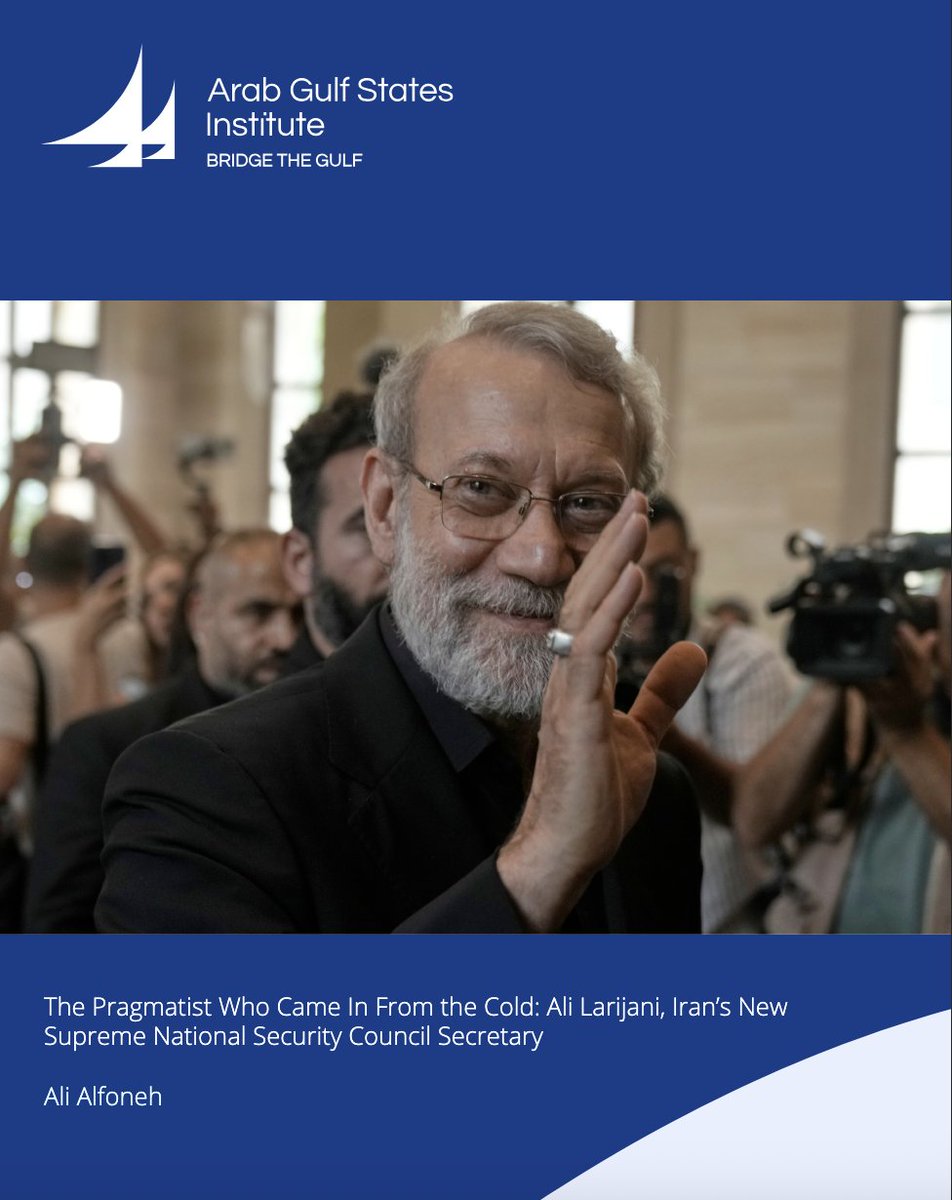
Iran's Dr. @alilarijani_ir is emerging as a real wartime leader. Read my comprehensive biography: "The Pragmatist Who Came In From the Cold: Ali Larijani, Iran’s New Supreme National Security Council Secretary". https://t.co/ObU7ulQPPV
Ok things changed in the last few hours, and it’s not looking good for Trump
Here's why:
- Iran struck the Gulf countries hard tonight. I was not expecting that
- The NYT just reported U.S. officials gave a closed door briefing to Congress estimating Iran still retains half its ballistic missile program and even more of its drone capabilities
- The Strait of Hormuz is still shut, and if Iran can sustain this for another 3 weeks, the global markets won’t survive (and based on the NYT report, they should easily be able to)
- The Iranian regime has not collapsed, and the new leader seems even more radical. Apparently the less radical alternatives the U.S. was eyeing to take power where ‘accidentally’ killed (likely by Israel)
- The U.S. burned through 800+ Patriot interceptors in five days at $4 million each, and even before this war started, the Pentagon only had a quarter of the interceptor stockpile it needs to defend all its global commitments
The good news?
The war may end sooner than what officials are saying. Trump will need an off-ramp soon as energy prices spike, munitions deplete, and the Gulf burns.
As I’ve said below, all Iran needs to ‘win’ is to survive long enough for the costs to become unbearable.
Canadian Prime Minister @MarkJCarney's speech at Davos is quite brilliant. Without vitriol or exaggeration, he outlines the harsh new world that Trump is leading us all toward. Here's the full text; much recommended: https://t.co/H3TWppgsY6
In light of unconfirmed reports that Saudi Arabia, Turkey, and Pakistan may be working toward a mutual defense agreement, it’s worth revisiting this piece by @otaspinar from May for @GulfStatesInst . It argues that the regional context is ripe for a Turkish–Saudi entente, built on converging interests and a shared strategic outlook—one that could meaningfully reshape the Middle East’s balance of power.https://t.co/CUCfvyPlJX
Bundan sonra ABD’nin Çin’in Tayvan’da, Rusya’nın Ukrayna’da yapmak istediklerine karşı söyleyecek hiçbir sözü kalmadı. Artık uluslarası hukuk yok, orman kanunları var: “güçlüler istedikleri yapar, zayıflar başlarına gelene katlanır”
Bir de Trump-Biden farketmez diyorlardı…
Are welfare states bankrupting Europe—or saving its democracy?
In @ForeignPolicy, @otaspinar argues that strong welfare states aren’t the source of Europe’s democratic crisis—they’re one of the few tools left to stop populism and authoritarianism.https://t.co/WiWbJj8QF7
Ömer Taşpınar: Demokrat mavi dalga 2026 yılında Temsilciler Meclisinde çoğunluğun değişmesine neden olacak gibi görünüyor - Daktilo 1984 https://t.co/FtTjbBaunG
Yeni Yazı: Zohran Mamdani, nasıl kazandı?
Zohran Mamdani hakkında bir yazı okuyacaksınız, bunu okumanızı tavsiye ederim.
Ailesi, hayatı, görüşleri, kampanyası, başarı sırrı, aşk hayatı.
Her şeyi yazdım.
Mükemmel bir adam.
https://t.co/dZZvUixuSd