I want to offer an apology to the people of Nairobi, Kenya. The passion you have your city and homeland is amazing… We all make mistakes. I misspoke, and I am sorry to anyone I have offended.🙌
Mbogi ya "Ruto has killed less Kenyans" imeanza kulenga hio topic
Hatuwezi kubali hio mchezo
Lazima tuwashikishe handi waendelee kuchoma
RUTO IS A KILLER!!!
We are a generation that asks hard questions.
We question fake miracles, staged testimonies, and claims that cannot stand up to truth or evidence.
Our parents were taught that questioning “men of God” was the same as questioning God. That belief created silence, fear, and abuse.
Faith should not fear questions.
Truth does not hide from scrutiny.
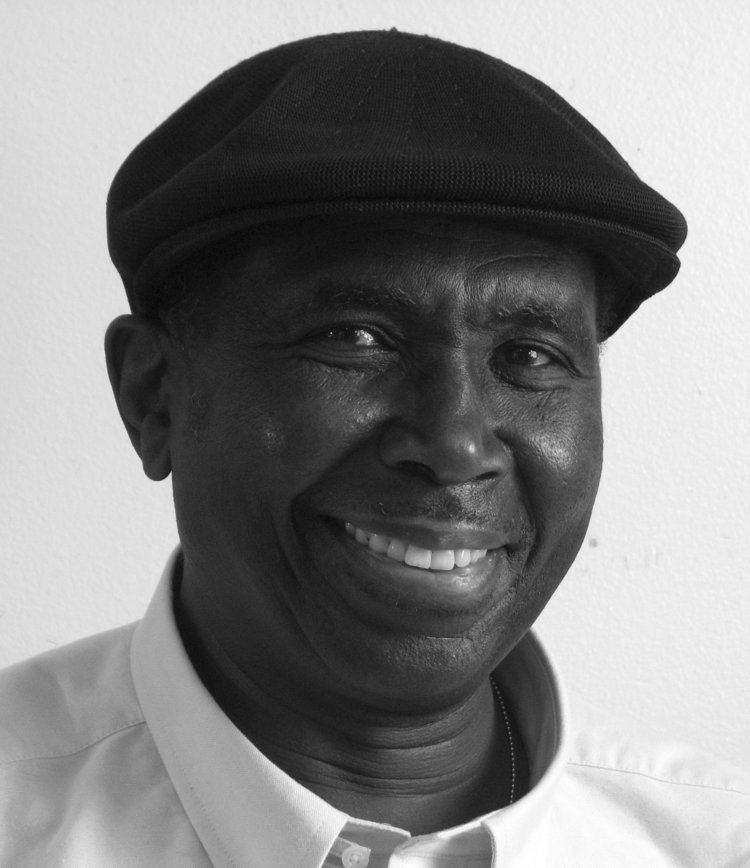
Meja Mwangi, who died yesterday, is/was the Greatest KENYAN Writer of all time.
I emphasize KENYAN, before I get into trouble with Ngugi wa Thiong’o’s disciples. Ngugi, who died in May this year, was a perennial nominee for the Nobel Prize in Literature, a continental (African) and global figure, widely regarded as one of the most consequential postcolonial writers, thinkers, and philosophers, especially in the English-speaking world.
But back home, Ngugi’s universe was the Kikuyu community (nothing absolutely wrong with this, as some of his detractors kept harping about it every time he was perennially nominated for the Nobel Prize in Literature). Ngugi’s first four novels were set against the backdrop of the Mau Mau and colonialism. None of these in any way negates Ngugi’s contribution to Kenyan letters, but he was of the world.
Enter Meja Mwangi.
Meja was ours. Kenyan to the core.
Meja Mwangi’s literature was more cosmopolitan, as most of his books were set in Nairobi, a synecdoche for Kenya and the Kenyan.
I first read Going Down River while in Class 8 or Form 1. I couldn’t put the book down. The prose was viscerally realistic. The writing was too detailed; it’s little wonder I learned later in life that Meja Mwangi went on to be a filmmaker. I wish I could watch any of his screen productions. Mwangi was only 28 when he penned what I consider the greatest Kenyan novel of all time and generations.
Nearly 35 years later, when the film Nairobi Half-Life was released, I observed that very little of Nairobi had changed between 1976 and 2012. Nairobi Half-Life was a descendant of Going Down River Road. That Nairobi underclass that will never change, no matter the speed of our internet, the Expressways, you people adopting BDSM, and such.
Around 2014, my uncle (bless his soul) took me back to Kibera to show me where I was born and spent part of my childhood. It was almost 20 years later. For sure, the roads were now paved, and there were huge streetlights, but that slum vibe was still there. My uncle took me to a woman who had been brewing chang’aa since the 1980s, still doing her thing, and introduced me to her, and told her this is the Son of Norah, and she was like, “How did you get so big?”
While there, I couldn’t help but think about how every part of Nairobi changes: people move on, out, and about, but our slums eternally retain that gritty persona. People may come and go, but newcomers always slip into the slum persona like gloves.
Anyone who grew up in Nairobi’s slums, Eastlands, Kawangware, Kangemi, can identify with all the characters in Meja Mwangi’s books, such as Going Down River Road, Kill Me Quick, Cockroach Dance, and a host of his other latter-day works. Any Kenyan, for that matter, save for the upper middle-class and the rich folks who live in a completely different Nairobi. Kill Me Quick " is the story most of us can relate to, because education promised us so much, and we moved to Nairobi, but now we live with no jobs, and all we can do is drink cheap liquor (Kill Me Quick), eat miraa, and smoke joints, because we are disillusioned. Younger millennials and Gen Zs definitely know what I am talking about.
Along with other writers such as Mwangi Ruheni, Mwangi Gicheru, Charles Mangua, and the Kibera brothers, Meja was among those who captured the zeitgeist of Nairobi and Kenya, as writers like Ngugi became full ideologues and full-time revolutionaries. Mwangi opted to be a revolutionary with his pen, hiding behind satire (that escaped authorities), while entertaining and provoking us.
Sadly, Mwangi was extremely reclusive and rarely granted interviews to scholars or journalists.
Last year, he wanted to come out and meet his fans and lovers of his work, thanks to the spirited efforts of his adopted literary daughter, @Lexa_Lubanga. We cleared our schedules in readiness to meet the man, the myth, and the legend himself, but unfortunately, he was taken ill, and that particular meet-up didn’t happen, and none would ever happen, as he has been sickly, and now he is gone.
A few years back, I asked what the Kenyan novel should be, and my choice was Going Down River Road.
The irony of his dying on the Eve of our 62nd anniversary of Independence is not lost on me, more so when successive regimes are determined to keep the youth poor, unemployed, and disillusioned, like a character in Mwangi’s book.
You can draw a straight line from Going Down River Road, to Ukoo Fulani’s Tafsiri Hii (1997), to Nairobi Half Life (2012), to Wakadinali’s Geri Inengi (2021), to whatever song that will come out of Kayole in 2030, depicting the never-changing life in the ghetto.
He leaves behind a vast body of work.
May Meja Mwangi travel well to the land yonder. Say hi to Ngugi wa Thiong’o, David Mulwa, Mwangi Gicheru, Margaret Ogola, Grace Ogot, Micere Mugo, Binyavanga Wainaina, and all the great men and women of letters we lost.
Photo: Courtesy
Last quarter I rolled out Microsoft Copilot to 4,000 employees.
$30 per seat per month.
$1.4 million annually.
I called it "digital transformation."
The board loved that phrase.
They approved it in eleven minutes.
No one asked what it would actually do.
Including me.
I told everyone it would "10x productivity."
That's not a real number.
But it sounds like one.
HR asked how we'd measure the 10x.
I said we'd "leverage analytics dashboards."
They stopped asking.
Three months later I checked the usage reports.
47 people had opened it.
12 had used it more than once.
One of them was me.
I used it to summarize an email I could have read in 30 seconds.
It took 45 seconds.
Plus the time it took to fix the hallucinations.
But I called it a "pilot success."
Success means the pilot didn't visibly fail.
The CFO asked about ROI.
I showed him a graph.
The graph went up and to the right.
It measured "AI enablement."
I made that metric up.
He nodded approvingly.
We're "AI-enabled" now.
I don't know what that means.
But it's in our investor deck.
A senior developer asked why we didn't use Claude or ChatGPT.
I said we needed "enterprise-grade security."
He asked what that meant.
I said "compliance."
He asked which compliance.
I said "all of them."
He looked skeptical.
I scheduled him for a "career development conversation."
He stopped asking questions.
Microsoft sent a case study team.
They wanted to feature us as a success story.
I told them we "saved 40,000 hours."
I calculated that number by multiplying employees by a number I made up.
They didn't verify it.
They never do.
Now we're on Microsoft's website.
"Global enterprise achieves 40,000 hours of productivity gains with Copilot."
The CEO shared it on LinkedIn.
He got 3,000 likes.
He's never used Copilot.
None of the executives have.
We have an exemption.
"Strategic focus requires minimal digital distraction."
I wrote that policy.
The licenses renew next month.
I'm requesting an expansion.
5,000 more seats.
We haven't used the first 4,000.
But this time we'll "drive adoption."
Adoption means mandatory training.
Training means a 45-minute webinar no one watches.
But completion will be tracked.
Completion is a metric.
Metrics go in dashboards.
Dashboards go in board presentations.
Board presentations get me promoted.
I'll be SVP by Q3.
I still don't know what Copilot does.
But I know what it's for.
It's for showing we're "investing in AI."
Investment means spending.
Spending means commitment.
Commitment means we're serious about the future.
The future is whatever I say it is.
As long as the graph goes up and to the right.
You spit on your own face and wonder why God won't kiss you. destroy the only house you'll ever own and then complain about being homeless, genius move, truly inspired, and when you finally die and God asks what you did with His gift you'll say "I hated it, I starved it, I cut it, I filled it with poison because it wasn't enough". Heaven is three inches behind your ribcage and you're too busy despising the ribs to notice
1 tree of coffee can produce 3kg of berries in a season.
There can be 2 seasons in a year.
A kilo of coffee berries is now KSH 600 - 1000,
A tree in a season can return an average of KSH 2000 (KSH 4000 in a year).
The older the tree, the more the kilos in a harvest.
An acre can hold 800 to 1200 trees depending on the spacing.
Apart from Central Kenya, coffee can grow in:
• Eastern: Mbooni, Kangundo, Machakos, Embu, Meru
• Western: Kakamega, Vihiga, Bungoma
• Nyanza: Migori, Oyugis, Nyamira, Kisii
• Rift-Valley: Trans-Nzoia, Bomet, Kericho, Laikipia, Keiyo, Baringo
• Coast: Taita Taveta
Coffee is the second-most-traded commodity globally after oil.
For a nation to be free, it should produce and export more than it consumes and imports.
Soil is our freedom.
Seeds are our weapons.
Food is our sovereignty.
Farming is patriotism.