Join us on 25 June 2026 at Wild Geese Lodge, Harare, as we reflect on 7 years of evidence, partnerships and pathways for youth employment in Zimbabwe. Online participation is https://t.co/PnWjniDLZX
Physical attendance: By invitation only. RSVP: Rejoice Lunga | [email protected] |
"What is it that the rest of the world sees in the leadership of William Ruto that you never get a chance to see here in Kenya.?"~ Majority Leader Hon Aaron Cheruiyot to Kenyans.
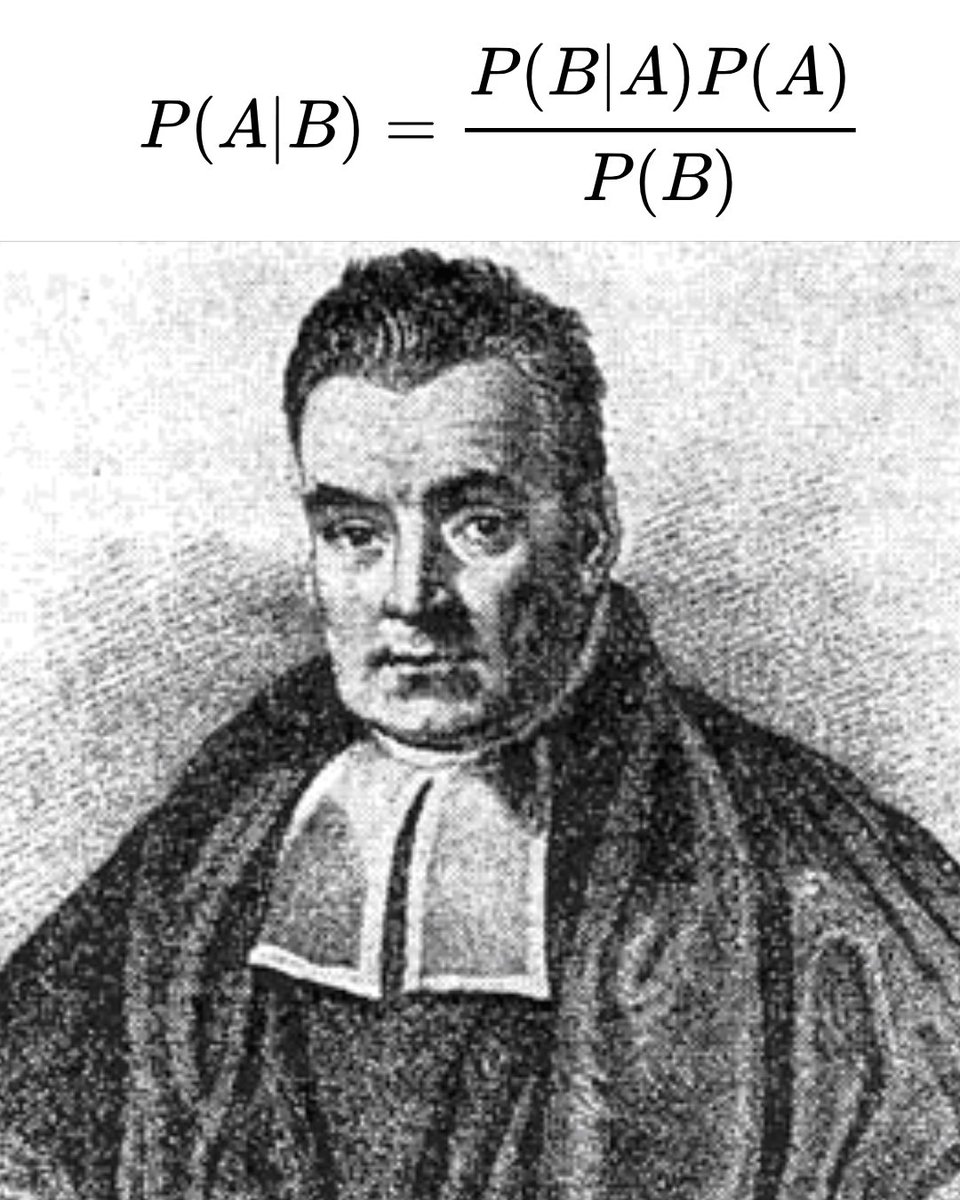
Bayes’ theorem is probably the single most important thing any rational person can learn.
So many of our debates and disagreements that we shout about are because we don’t understand Bayes’ theorem or how human rationality often works.
Bayes’ theorem is named after the 18th-century Thomas Bayes, and essentially it’s a formula that asks: when you are presented with all of the evidence for something, how much should you believe it?
Bayes’ theorem teaches us that our beliefs are not fixed; they are probabilities. Our beliefs change as we weigh new evidence against our assumptions, or our priors. In other words, we all carry certain ideas about how the world works, and new evidence can challenge them.
For example, somebody might believe that smoking is safe, that stress causes mouth ulcers, or that human activity is unrelated to climate change. These are their priors, their starting points. They can be formed by our culture, our biases, or even incomplete information.
Now imagine a new study comes along that challenges one of your priors. A single study might not carry enough weight to overturn your existing beliefs. But as studies accumulate, eventually the scales may tip. At some point, your prior will become less and less plausible.
Bayes’ theorem argues that being rational is not about black and white. It’s not even about true or false. It’s about what is most reasonable based on the best available evidence. But for this to work, we need to be presented with as much high-quality data as possible. Without evidence—without belief-forming data—we are left only with our priors and biases. And those aren’t all that rational.
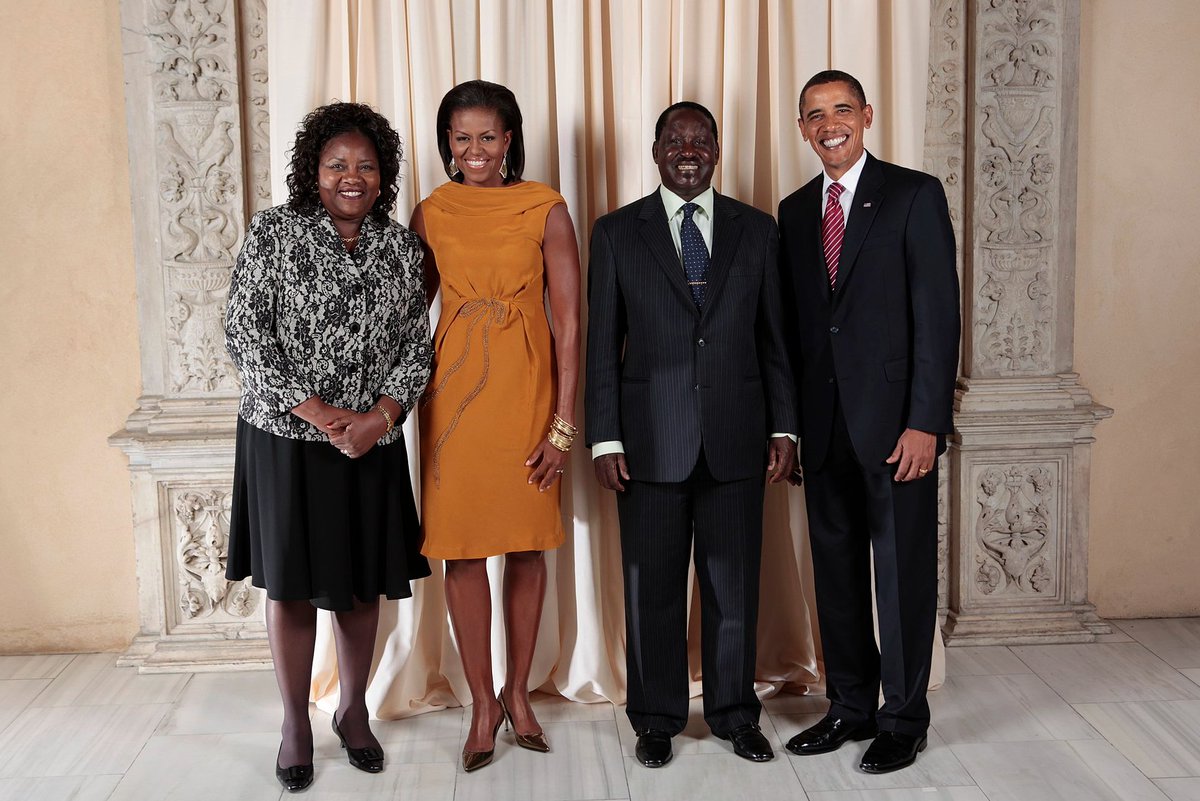
Raila Odinga was a true champion of democracy. A child of independence, he endured decades of struggle and sacrifice for the broader cause of freedom and self-governance in Kenya. Time and again, I personally saw him put the interests of his country ahead of his own ambitions. Like few other leaders anywhere, he was willing to choose the path of peaceful reconciliation without compromising his core values. Through his life, Raila Odinga set an example not just for Kenyans, but across Africa and around the world. I know he will be missed. Michelle and I send our deepest condolences to his family and to the people of Kenya.
PhDs - how to find your research gap in 2 weeks instead of wasting 8 months reading randomly
Most PhD students think research gaps are hidden treasures.
They read hundreds of papers hoping to stumble across something nobody has studied.
But research gaps follow predictable patterns 🧵
Accountants are no longer confined to ledgers and reports. We are strategists, innovators, and custodians of public trust. The ICPAK 42nd Annual Seminar, Edition 2 is your opportunity to explore how our profession is evolving to meet global challenges.
2. Copyowl AI
→ Write high-quality articles instantly
→ Back them with credible sources
Research smarter, not harder! CopyOwl handles deep research and finish the final copy for you.
👉 visit https://t.co/3ge04CQbtA
“There is much more that I can offer the IEBC,” Francis Aduol, Candidate IEBC Commission, shares his robust experience and professional qualification with the IEBC selection panel
One evening in August 2024, Baba called and asked me to go to his office the following morning.
When we met, he explained that his campaign for the African Union Commission (AUC) Chairperson was about to officially kick off, and he wanted me to join the team to support strategic communications. I was totally overwhelmed and very grateful to be offered the opportunity to serve a great man whom I truly respect and admire, and the country in a critical diplomatic assignment.
Working under Baba in this campaign has been like attending International Development and Foreign Affairs class. I gained more insights and even exposure to practical matters than I did in my International Studies class.
Throughout the campaign, I listened to him talk about his vision for an integrated Africa, and on several occasions, he cited Europe which started its integration process 30 years after the African Union, but they are miles ahead of us with a common currency, a common visa, open skies, single market, open borders, free movement of people and a way stronger political union. Baba’s vision incorporated a strategy towards a stronger and more integrated AU as well as Regional Economic Communities (RECs). He had identified areas where he could mobilize the Heads of State for action towards some quick wins, which could be achieved in a few years such as the process towards a common visa, open skies, and infrastructure interconnectedness. These could then give way to bigger things like a common currency and a more powerful and impactful political union through institutions like the Pan-African Parliament.
Baba also recognizes the African population as the most valuable resource that the continent has. He gives an example China, whose development as the world’s factory or the largest manufacturing hub was powered by the availability of skilled labor, a huge domestic market, and cheap raw materials, part of which is obtained from Africa.
Africa has a huge market of over 1.2 billion people, is endowed with valuable natural resources, and a huge youthful population that could drive the continent's transformation if equipped with the relevant skills. What limits our development are the colonial-imposed borders and certain parochial national interests that derail any meaningful integration and cooperation. This is why even the African Continental Free Trade Area (AfCTA) is not realizing its full potential. Baba is very clear-minded on how the continent needs to handle these barriers, and he was ready to undertake the formidable task of mobilizing political goodwill from states, to address these and other emerging issues.
The continent currently faces major challenges, especially on the peace and security front. It therefore requires a leader who has the experience and capacity to leverage political relationships and institutional resources to silence the guns through peaceful and inclusive conflict resolution processes.
Looking at this year’s African Union theme: "Justice for Africans and People of African Descent Through Reparations”, this is an agenda that requires a Pan-Africanist driving it; a thought leader, someone with a demonstrable track record of midwifing change, and who knows the right doors to knock on and obtain the necessary concessions.
All in all, Kenya has lost a second opportunity to lead the African Union Commission (AUC). On both occasions, it is Africa that has lost. Amina Mohamed was a very competent leader and a suave diplomat who could have strongly built from the foundation laid by Dlamini-Zuma and Jean Ping. Eight years later and with so much having happened, many people who understand the workings of the organization acknowledge that Amina was the most suitable choice.
Yesterday, Africa yet again lost a chance to have a visionary leader, leading it through the next frontier. A man so determined to move the continental organization from rhetoric and talk-shops for heads of state and government as the late 1/2
@ApalaBoys Christmas Message from the Secretary, Lennox ONG'WENA
To the WBHS ALUMNI Members,
As we approach the end of this year and embrace the joy of the holiday season, I would like to take a moment to express my heartfelt gratitude to each of you for your dedication, hard work, and unwavering commitment to the growth and success of our association.
This year has been one of remarkable achievements and milestones for WBHS Alumni and none of it would have been possible without the collective effort and collaboration of our members. Together, we have overcome challenges, seized new opportunities, and advanced the spirit of Brotherhood.
As we celebrate Christmas, let us take time to reflect on the positive impact we have made in our Alma mater and communities. It is a season to be thankful for the progress we have made and for the strength that comes from unity. Let us also look forward to 2025 with renewed energy and resolve to continue improving our cohesion and delivering excellence in all our endeavors.
May this Christmas bring you peace, joy, and fulfillment, and may the New Year usher in continued success, growth, and prosperity.
On behalf of the entire WBHS ALUMNI leadership team, I wish you and your loved ones a Merry Christmas and a Happy New Year.
Warm regards,
LENNOX ONG'WENA
Hon. Secretary